
Electric warmth built for San Juan's mild winters.
No chimney, no gas line, no venting—just ambiance and a little supplemental warmth for the handful of cool nights the Rio Grande Valley actually gets. Find the right unit and connect with a trusted local dealer.
Every Project Starts From One of These Five Situations
The right fit for a climate that rarely gets cold.
San Juan sits at just 106 feet elevation in the Rio Grande Valley, where the average winter low hovers around 49°F and the city has one of the shortest, mildest winter heating seasons around—compare that to a place like Duluth, MN, which sees a winter heating season more than 15 times as demanding. In climate zone 2A, wood stoves and pellet stoves are essentially non-existent here; there's simply no sustained cold to justify them, even though oak, pecan, and mesquite are common local woods for backyard grilling and smoking. Electric fireplaces, by contrast, fit this climate well precisely because they're not really about heat.
In Hidalgo County, most electric fireplace installs are about ambiance, a warm-looking focal point in a living room, and a bit of real supplemental heat for the occasional January cold snap or the rare event like the February 2021 freeze that caught much of South Texas off guard. Depending on the exact address, service comes from AEP Texas Central Company, Oncor Electric Delivery, or Magic Valley Electric Cooperative, and at a residential rate around $0.102 per kWh, running an electric unit costs pennies an hour. No masonry, no combustion byproducts, no annual chimney sweep—just a plug-in or hardwired unit a local dealer can size and install correctly the first time.
Three steps. No salesperson until you're ready.
Tell us about your project
Your zip code, your situation, and the fuel you're leaning toward—or let the answers point you to one.
See what's actually available
The brands dealers within 100 miles genuinely carry—real options, never a catalog mirage.
Get your dealer & Project Guide
A trusted local dealer, plus the free Project Guide & Parts List that names every component of the job.
Frequently Asked Questions
How much does an electric fireplace installation cost in San Juan?
Most electric fireplace projects in San Juan run $300 to $2,500. A plug-in insert or mantel package on the low end needs no electrician at all—it just needs a standard outlet. A built-in linear unit set into a wall or existing masonry opening, which is the more popular choice in newer San Juan and McAllen-area construction, typically requires a dedicated 20-amp circuit run by a licensed electrician, which pushes cost toward the higher end. Because there's no venting, gas line, or chimney work involved, electric installs are consistently the least expensive hearth option in the Rio Grande Valley.
Will an electric fireplace actually heat my San Juan home?
It'll take the chill off a room, but it's not designed to be your primary heat source—and in San Juan, it doesn't need to be. Most electric fireplaces put out around 5,000 BTU from a 1,500-watt heater, which is plenty for supplemental warmth on the handful of nights each winter that dip into the 30s or 40s. With one of the shortest, mildest winter heating seasons around, San Juan homes are built and sized for cooling, not heating, so an electric unit's modest output is a feature, not a limitation—it's ambiance-first with real warmth as a bonus.
Do I need a permit to install an electric fireplace in San Juan?
Usually not. A plug-in electric fireplace or insert that uses an existing outlet requires no permit at all. If you're having a built-in unit hardwired on a new dedicated circuit, that electrical work typically requires a permit through the local building department and should be pulled and inspected by your licensed electrician—most local dealers coordinate this as part of the installation so you're not chasing paperwork yourself.
Electric vs. gas fireplace—which makes more sense in San Juan?
Both are considered standard, practical choices here, but they solve different problems. Gas fireplaces, run on natural gas or propane, deliver real, consistent heat output and the look of a live flame—a better fit if you actually want to feel warmth on a cool Valley evening. Electric fireplaces cost less to install, run for pennies at San Juan's roughly $0.102 per kWh residential rate, need zero venting, and can go anywhere with an outlet—including rentals, condos, and manufactured homes, which are common throughout Hidalgo County. If ambiance and flexibility matter more than raw heat, electric wins; if you want genuine supplemental warmth with flame realism, gas is worth the extra install cost.
What about a wood-burning fireplace instead?
Wood-burning stoves and fireplaces are essentially not part of the picture in San Juan—the climate doesn't call for them, and you won't find many local installers stocking wood stoves the way you would in a colder market. A few homeowners still love the look of a wood-burning fireplace for atmosphere, or use oak, pecan, or mesquite for outdoor cooking and smoking rather than home heat, but as a heating appliance, wood makes little practical sense with one of the shortest, mildest winter heating seasons around. Electric or gas covers the same ambiance goal without the smoke, ash, or chimney maintenance.
What type of electric fireplace fits my San Juan home?
It depends on your home's layout. Wall-mounted and linear built-in units are popular in the newer stucco and brick homes going up around San Juan and the greater McAllen area, since they read as a modern focal point without any masonry. Insert-style units that slide into an existing fireplace opening work well for older homes with a masonry firebox that's rarely or never used. Freestanding electric stoves and mantel packages are the easiest option for renters or manufactured homes, since they just need an outlet and can move with you. A local dealer can walk your space and recommend the right format.
How much does it cost to run an electric fireplace in San Juan?
At San Juan's typical residential rate of about $0.102 per kWh, a standard 1,500-watt electric fireplace running on high costs roughly 15 cents an hour. Even left on for several hours a day through the coolest stretch of winter, you're looking at a few dollars a month in added electricity cost—a fraction of what heating a similar space with gas or propane would run, and effectively free compared to what wood heat would cost in a colder climate.
Will my electric fireplace still work during a power outage?
No—and this is worth planning around. Unlike a wood stove or a battery-backed gas fireplace, an electric unit goes dark the moment power drops, whether that's from AEP Texas Central, Oncor, or Magic Valley Electric Cooperative lines. San Juan residents got a hard reminder of this during Winter Storm Uri in February 2021, when ERCOT grid strain left much of the Rio Grande Valley without power during a rare hard freeze. If backup heat during outages matters to you, a gas fireplace with a battery-backed ignition system is worth considering alongside—or instead of—an electric unit.
Which electric utility serves my San Juan address?
Coverage varies by exact location within the 78589 zip code and surrounding Hidalgo County—AEP Texas Central Company, Oncor Electric Delivery, and Magic Valley Electric Cooperative all serve parts of the area. Your provider affects your exact rate and any rebate programs, but all three currently land close to the area's typical $0.102 per kWh residential rate, which is part of why electric fireplaces are such an inexpensive way to add ambiance and light supplemental heat here.
Does an electric fireplace need a vent or chimney?
No—that's its superpower. An electric fireplace needs a wall and an outlet, period. No vent pipe, no gas line, no clearances to design around, which is why it works in bedrooms, offices, apartments, and walls where venting a gas or wood unit would be impractical or impossible. Installation is typically the simplest and least expensive of any fireplace type.
Can I put a TV above my fireplace?
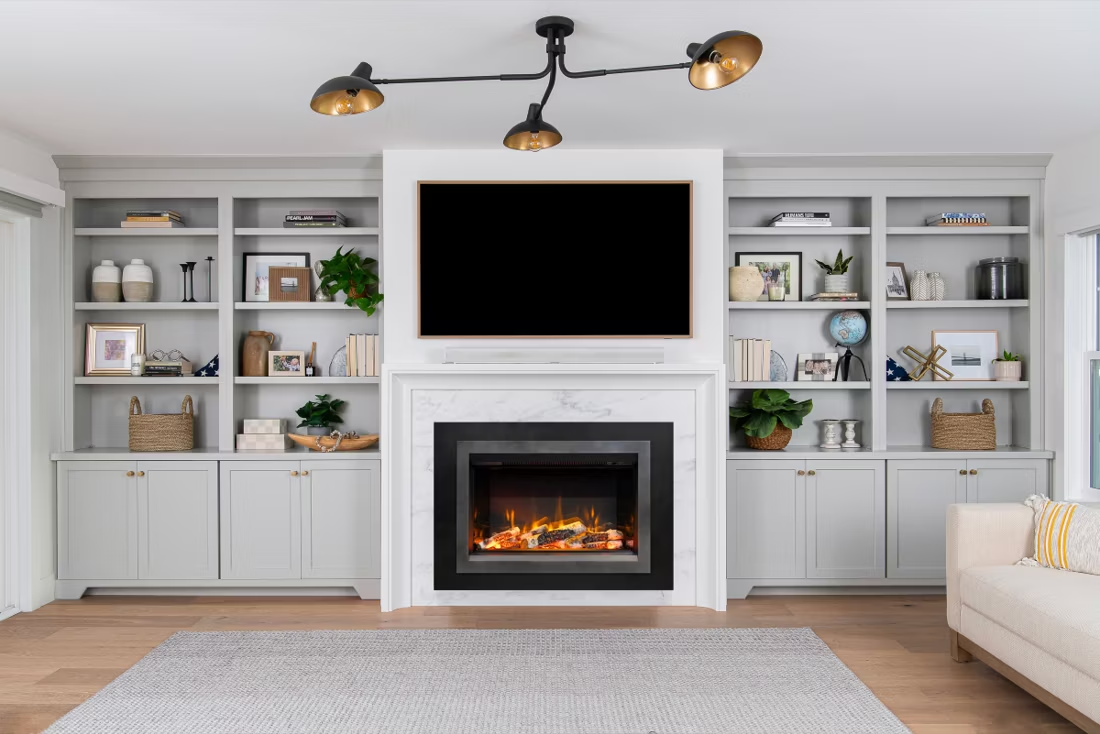
Yes—with an asterisk. Fireplaces are hot and TVs don't like heat. Either put a mantel between them to deflect rising warmth, or choose a fireplace with heat-management technology that creates a cool zone on the wall above—the wall stays around 125 degrees, barely warm, while the room still gets full heat. If you like clean lines and don't want a mantel, heat management is the answer.
Can a fireplace actually lower my heating bill?
Yes—by creating a comfort zone. A furnace heats every square foot of the house just to warm the one room you're in; a gas fireplace on low burns roughly a sixth of the gas a typical furnace does. Set the furnace around 55–60 degrees as a baseline, then heat the rooms your family actually uses. Families who heat this way commonly save $20–$60 a month.
Can I install a fireplace myself?
If you're putting a fire in your house on purpose, it's best to work with an expert. Unless you're genuinely experienced in framing, gas line, vent pipe, and the national code on clearances to combustibles, have a professional do it—and ideally the same company that sells you the fireplace, so warranty, service, and liability all live under one roof.
Nearby Dealers
Hearth shops serving San Juan and the surrounding area.
Electric Service in San Juan
An electric fireplace's heater draws about 1,500 watts—pennies per hour at local rates.
Aep Texas Central Company
Oncor Electric Delivery Company LLC
Magic Valley Electric Coop Inc
Find your electric fireplace in San Juan.
Tell us a bit about your home and we'll match you with the right electric fireplace or insert, and hand you a free Project Guide & Parts List with your recommended local dealer.
Find Your Fireplace →