
Find your gas fireplace in San Jacinto County.
Mild winters around Lake Livingston mean gas heat here is mostly about comfort and ambiance rather than survival heat—but the right unit still warms a room fast on the county's cool December and January nights. Find the right fireplace and connect with a trusted local dealer.
Every Project Starts From One of These Five Situations
Comfort heat for a mild Piney Woods winter.
San Jacinto County sits in climate zone 2A with a short, mild winter and lows that average 39°F—a fraction of what a place like Duluth, MN sees in a single hard week. That means a gas fireplace here isn't carrying the heating load for the house; it's supplemental warmth for the handful of genuinely cold nights, plus year-round ambiance in a living room or den. Homes around Coldspring, Shepherd, and Point Blank still see enough chilly, damp evenings near Lake Livingston that a gas unit gets real use from November through February.
With a population under 5,000 spread across a rural, wooded county, most San Jacinto homes are outside any municipal natural gas footprint, so propane is the practical fuel choice for a majority of installs—supplied by tank from regional propane companies rather than piped gas. A direct-vent gas fireplace or insert gives homeowners instant, no-mess heat without hauling the oak and pecan firewood that's common locally, and it still fires up during a power outage if you choose a unit with the right ignition system—a meaningful consideration given how often rural East Texas power lines go down after a storm.
Three steps. No salesperson until you're ready.
Tell us about your project
Your zip code, your situation, and the fuel you're leaning toward—or let the answers point you to one.
See what's actually available
The brands dealers within 100 miles genuinely carry—real options, never a catalog mirage.
Get your dealer & Project Guide
A trusted local dealer, plus the free Project Guide & Parts List that names every component of the job.
Frequently Asked Questions
How much does a gas fireplace installation cost in San Jacinto County?
Most gas fireplace and insert installations in San Jacinto County run in the same general range seen across rural East Texas—roughly $4,500 to $9,000 depending on whether you're converting an existing wood fireplace, running new propane line to a fresh installation, or setting up a freestanding gas stove. Homes already on propane service with a tank in place tend to land on the lower end. New construction or installs requiring a new propane tank setup and longer gas line runs push toward the higher end. A local dealer will give you a firm number after seeing your home and existing fireplace or chimney.
Do I need natural gas, or does propane work for a gas fireplace?
Propane is the standard fuel for the vast majority of San Jacinto County homes, since the county's rural footprint means most properties are outside any piped natural gas service area. That's not a downside—modern gas fireplaces and inserts are built to run on propane with the correct orifice and regulator setup, and performance is identical to a natural-gas equivalent. If you don't already have a propane tank, your local dealer can coordinate a tank installation through a regional propane supplier as part of the project.
Can I convert my existing wood fireplace to gas?
Yes, and it's a common project for older homes around Coldspring and Shepherd that were originally built with a wood-burning masonry fireplace. A gas insert slides into the existing firebox, uses a stainless liner run through your current chimney for venting, and eliminates the need to split and haul oak, pecan, or mesquite firewood. Typical cost for the conversion runs $4,500 to $8,500 in this area, with the range depending mostly on whether you're on propane already and how much venting and liner work the existing chimney needs.
Will my gas fireplace still work if the power goes out?
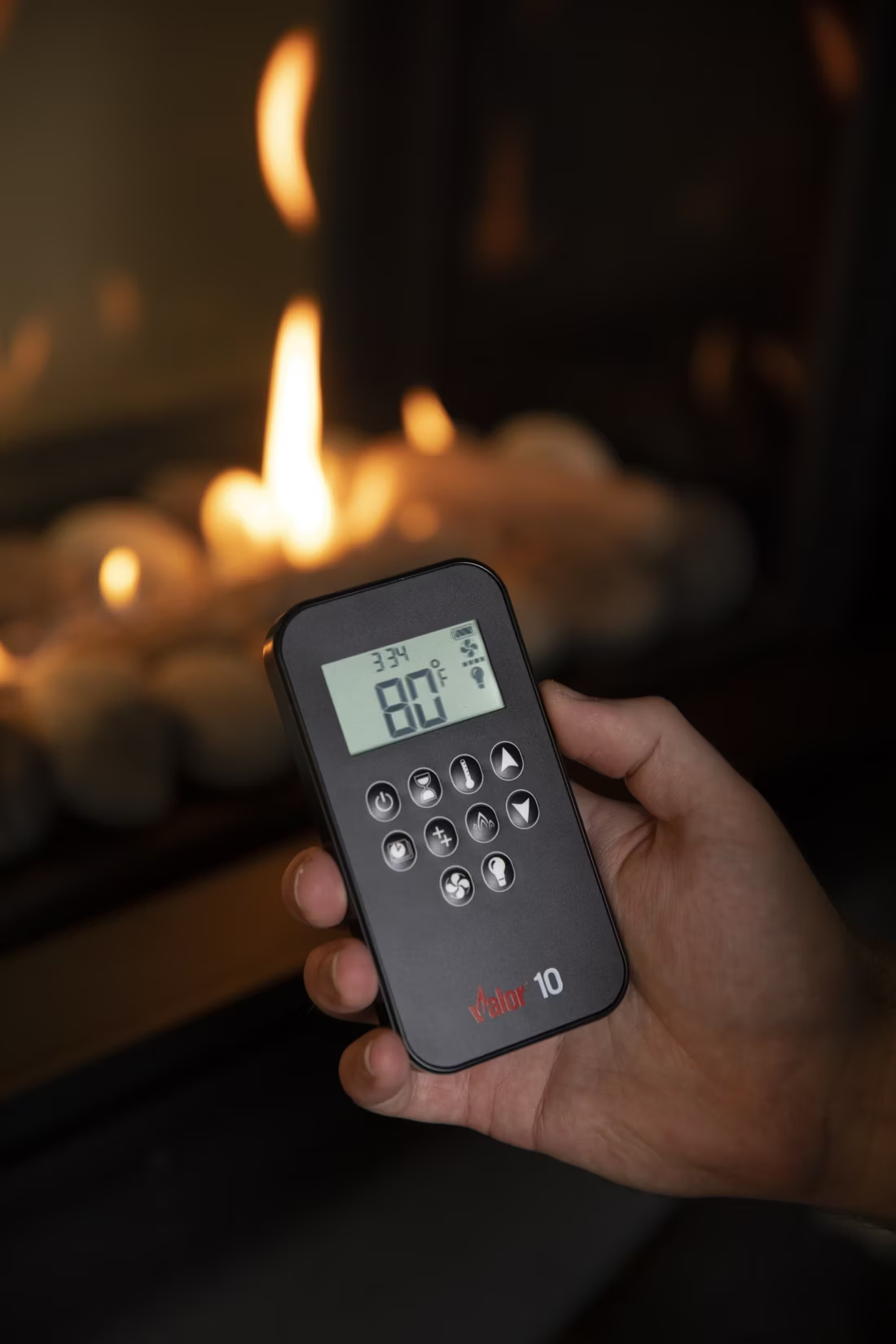
It can, if you pick the right ignition system. Units with intermittent pilot ignition (IPI) include a battery backup that keeps the fireplace operational when the power drops—the sort of thing worth prioritizing given how frequently rural San Jacinto County loses power during Gulf storms and ice events. Valor fireplaces take a different route: the pilot's thermocouple generates the small amount of electricity the unit needs, so there's no battery to remember or replace. Ask your local dealer which ignition setup a given model uses before you buy.
What's the difference between a gas fireplace, insert, and gas stove?
A gas fireplace is a built-in unit, typically installed during new construction or a remodel where there's no existing masonry fireplace. A gas insert is built to slide into an existing wood fireplace opening, using the current chimney for venting after a liner is added—this is the more common upgrade for older San Jacinto County homes. A gas stove is a freestanding cabinet-style unit that sits out from the wall, similar in footprint to a wood stove, and works well in a room without any existing fireplace or chimney. Most homeowners here with an existing brick fireplace go with an insert; new rooms or additions usually call for a built-in fireplace or freestanding stove.
Do I need a permit to install a gas fireplace in San Jacinto County?
Yes—San Jacinto County requires a building permit for gas fireplace installations, and any new gas line or propane line work should be done by a licensed installer. Most local hearth dealers handle the permitting directly as part of the installation, so you're not left coordinating separate trades for the fireplace, the gas line, and the inspection. Given the county's rural layout, confirm with your installer whether the work falls under county permitting or a specific municipal jurisdiction if you're inside Coldspring or Shepherd city limits.
What's the difference between vented and vent-free gas fireplaces?
Vented (direct-vent) gas fireplaces draw combustion air from outside and exhaust the byproducts back outside through a sealed pipe—they're the cleaner, safer, and more universally code-compliant option. Vent-free units burn without any external venting, releasing some water vapor and combustion byproducts into the room, and they're legal in Texas but come with room-sizing and ventilation rules that matter more in smaller or tightly sealed spaces. For San Jacinto County's mild winters, either option is workable, but direct-vent units are the more common recommendation from local dealers because they deliver real heat without any indoor air quality tradeoffs.
How often does a gas fireplace need to be serviced?
An annual inspection is the standard recommendation for any gas fireplace or insert, even in a mild climate like San Jacinto County where the unit might only run a few months a year. A technician checks the burner, pilot assembly, venting, and any gas connections, and cleans the glass and interior components. Because usage here tends to be lighter than in colder climates, some homeowners stretch this to every other year—but skipping it for a propane-fed unit isn't worth the risk given how gas connections can loosen or corrode in humid East Texas conditions.
Gas vs. wood—which fuel makes more sense in San Jacinto County?
Wood is genuinely popular here—oak, pecan, and mesquite are all locally available, and a wood-burning fireplace or stove has real appeal for a county with this much surrounding timberland. But given the mild winters (a short heating season and average lows around 39°F), most households don't need wood as a primary heat source, and gas wins on convenience: no splitting, stacking, or hauling firewood, and instant on-off operation for the handful of genuinely cold nights. Many homeowners in the county end up with both—a wood-burning option for weekend ambiance or backup heat, and a gas insert or fireplace in the main living space for easy daily use.
Is my gas fireplace wasting gas?
If it was installed more than 15 years ago, probably. Older gas fireplaces keep a standing pilot light burning all the time, and that little flame can cost a couple hundred dollars a year. Newer models use pilot-on-demand ignition—the pilot lights only when you use the fireplace and goes out when you turn it off.
Why is my open fireplace making my house colder?
Open fireplaces suck—literally. As the fire burns, it consumes air your furnace already paid to heat and pulls it out through the chimney, so the house is actually colder after the fire goes out than before you lit it. An insert fixes this: it seals the chimney, puts fixed glass across the front, and turns that hole in your house into a real heat source.
Does a fireplace add value to my home?
On average, a fireplace adds back to the home about the same amount you spent installing it. Add the monthly savings from heating the rooms you actually use instead of the whole house—often hundreds of dollars a year—and the value case is strong before you even count what a fire does for how your family uses the room.
What is an in-home preview and do I need one?
It's a visit where a hearth professional measures your space, confirms the model you picked actually works in your home, and walks the specs—framing, gas line, venting, finish work—before anything is ordered. Some details you just can't know until you see the house. Never make a down payment without one; it's the single most-skipped step that burns buyers.
Stove and Fireplace Dealers in San Jacinto County
Listings include WhyFire partner dealers, dealers we have verified as authorized for the brands we recommend, and established local businesses that carry hearth products. Every listing shows which one it is. The ones marked Preferred run on WhyFire's software, so they can show you real pricing and book your appointment right here. No manufacturer pays for placement. How we verify dealers →
Fireplace & Patio Shop
Tri-Supply - Conroe
Creekstone Outdoors
Creekstone Custom
All Fired Up Fireplace & Outdoor
Find your gas fireplace in San Jacinto County.
Tell us a bit about your home and we'll match you with a trusted local dealer and send over a free Project Guide & Parts List—the exact parts, including the vent kit, for your gas fireplace project in San Jacinto County.
Find Your Fireplace →