
Find the right hearth for mild Piney Woods winters in San Jacinto County.
Wood, gas, pellet, and electric fireplace resources for every community in San Jacinto County—from Coldspring to Point Blank on Lake Livingston. Find the right unit and connect with a trusted local hearth retailer.
Every Project Starts From One of These Five Situations
Mild winters, real wood heat, in the Piney Woods of San Jacinto County, Texas.
San Jacinto County sits in the Piney Woods of southeast Texas, wrapped around Lake Livingston, with winter lows averaging around 39°F and only about 1,845 heating degree days a year—a fraction of what a place like Duluth, MN sees in a single month. That's not a climate that demands all-day heating, but it is one where oak, pecan, and mesquite grow locally and get burned in fireplaces and wood stoves for genuine warmth on the county's colder nights, plus the ambiance that draws people to lake-house living here in the first place. There are no wood-burning air quality restrictions in San Jacinto County, so the decision comes down to what fits your home and how you want to heat it, not what's permitted.
What you'll find on this hub: hearth retailers, service technicians, and fuel suppliers covering the whole county—Coldspring, Shepherd, Point Blank, and the lake communities around Lake Livingston. Pick your fuel below to get into the specifics: local dealers, typical installation costs, and the resources that match your project, whether you're heating a full-time home or a weekend place on the water.
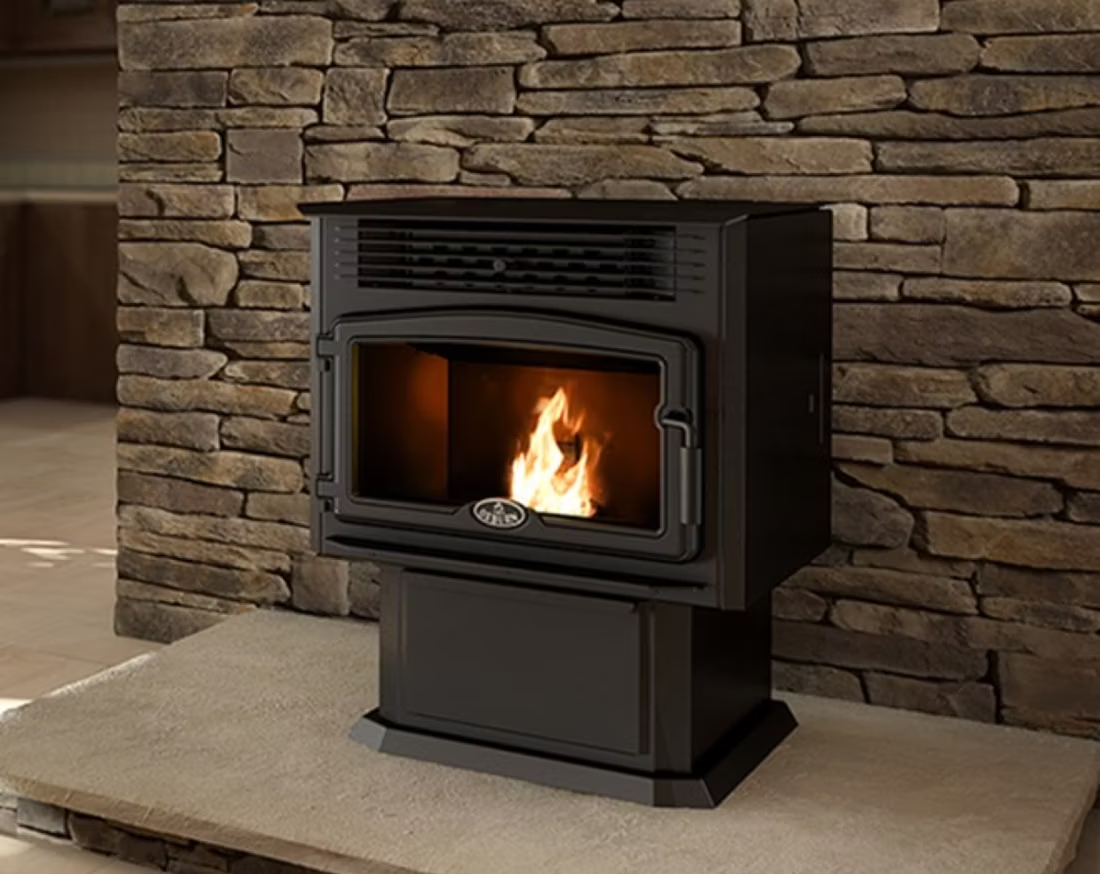
Four fuels. One honest answer for San Jacinto County.
Wood
55 models available near San Jacinto County.
Find your wood stove →Gas
358 models available near San Jacinto County.
Find your gas fireplace →Pellet
See what's available near San Jacinto County.
Find your pellet stove →Electric
11 models available near San Jacinto County.
Find your electric fireplace →Three steps. No salesperson until you're ready.
Tell us about your project
Your zip code, your situation, and the fuel you're leaning toward—or let the answers point you to one.
See what's actually available
The brands dealers within 100 miles genuinely carry—real options, never a catalog mirage.
Get your dealer & Project Guide
A trusted local dealer, plus the free Project Guide & Parts List that names every component of the job.
Frequently Asked Questions
Which fuel works best in San Jacinto County?
With winter lows averaging around 39°F and under 2,000 heating degree days a year, no fuel here is doing the heavy lifting that it would in a colder climate—so the choice comes down more to preference than necessity. Wood is popular locally because oak, pecan, and mesquite are all regionally available and burn well, and a lot of homeowners here like the ritual of a real fire on cool evenings, whether that's a wood stove or an open masonry fireplace. Gas is the low-maintenance option for full-time residents who want instant on/off heat without tending a fire—propane is the common gas source in most of the county, since natural gas service is limited outside town centers. Pellet stoves work well for anyone who wants wood-look ambiance without splitting and stacking firewood, and regional brands like Forest Energy and Lignetics keep fuel reasonably accessible. Electric is a strong fit for lake houses and weekend places where you want supplemental heat and ambiance without any venting or fuel storage at all.
Do I need a permit to install a fireplace in San Jacinto County?
It depends on where the property sits. Inside city limits—Coldspring or Shepherd—building permits are typically required for new wood stoves, wood inserts, gas fireplaces, gas inserts, gas stoves, and pellet stoves, along with a separate gas line permit for any propane or natural gas connection work. In unincorporated areas of the county, which make up most of San Jacinto County's geography, permitting requirements are less consistent and it's worth calling the county before you assume you're exempt. Electric fireplaces generally don't require a permit unless you're doing a built-in installation with new wiring. Most local hearth retailers handle the permitting conversation as part of a quote, so you're not left guessing.
Are there air quality restrictions on wood burning in San Jacinto County?
No. San Jacinto County has no air quality non-attainment status, no winter inversion issues, and no burn-ban patterns tied to wood smoke the way some higher-elevation or urban Texas counties do. That means wood stove and fireplace use isn't subject to voluntary or mandatory curtailment days here. The main practical consideration is simply choosing a stove that meets current EPA emissions standards if you're installing new, which most retailers will already be selling by default.
Can one local hearth retailer handle all four fuel types?
In a county this size, it's common to find retailers that carry two or three fuel types rather than a large multi-fuel showroom stocking all four. Some dealers based in Coldspring or Shepherd specialize in wood and gas, since those are the two most requested fuels locally; others lean toward pellet and electric for lake-house and second-home customers who want lower-maintenance options. If you're not sure which fuel fits your home, retailers in nearby Livingston and Conroe tend to carry broader lineups and are worth a call if you want to compare wood, gas, pellet, and electric side by side before deciding.
How does service work in the more rural parts of San Jacinto County?
Most chimney sweeps, gas technicians, and pellet stove service providers covering San Jacinto County are based in Coldspring, Livingston, or Conroe and travel out to serve the lake communities and rural roads around Lake Livingston. Expect a modest travel fee for properties further from those hubs. Because the heating season here is short, service appointments are easier to schedule outside of the brief cold stretch in December and January—booking your annual chimney sweep or gas inspection in early fall avoids the seasonal crunch.
What's the typical cost range for fireplace installation across all fuel types in San Jacinto County?
Costs vary by fuel and by whether it's new construction or a retrofit. Wood stove or insert installation: roughly $3,500–$7,500 for a typical retrofit into an existing hearth, more if new chimney or hearth pad work is needed. Gas fireplace, insert, or stove: roughly $3,500–$9,000, with propane tank and line work adding to the lower end of that range for rural properties without existing gas service. Pellet stove or insert: roughly $3,500–$6,500 for most installs. Electric fireplace: $200–$2,500 for the unit itself, with $300–$1,000 in labor for anything beyond a plug-and-play wall unit. For details tied to specific local retailer pricing, see the county + fuel pages above.
Can I install a fireplace myself?
If you're putting a fire in your house on purpose, it's best to work with an expert. Unless you're genuinely experienced in framing, gas line, vent pipe, and the national code on clearances to combustibles, have a professional do it—and ideally the same company that sells you the fireplace, so warranty, service, and liability all live under one roof.
How much should I budget for a fireplace?
For an average home—covering the fireplace, the vent pipe, and basic installation—a budget between $3,900 and $5,500 gives you a lot of options across wood, gas, and pellet. By the time you add finish work, gas line, and electrical, the average complete installation lands between $5,000 and $12,000 all-in. In a remodel or new build, a good rule is to put about 2.5% of the total project cost toward the fireplace.
Does a fireplace add value to my home?
On average, a fireplace adds back to the home about the same amount you spent installing it. Add the monthly savings from heating the rooms you actually use instead of the whole house—often hundreds of dollars a year—and the value case is strong before you even count what a fire does for how your family uses the room.
I know I want a fireplace—where do I actually start?
Do two things today: snap a photo of the wall or fireplace you want to transform, and take a tape measure to the space—width, height, depth. Those two artifacts answer most of a hearth professional's first questions. Then settle fuel (wood, gas, pellet, or electric) and set a realistic budget: $3,900–$5,500 covers fireplace, vent, and basic install for most homes.
Find your fireplace in San Jacinto County.
Pick your fuel below and we'll match you with a trusted local dealer and send you a free Project Guide & Parts List—the parts, the vent kit, and the recommended installer for your home.
Find Your Fireplace →