
Keep Your Family Warm and Safe—No Matter What
Wood heat isn't the default here, but plenty of San Angelo homeowners still want a real mesquite or oak fire for ambiance, ranch-house character, or backup warmth during an ice storm. We'll help you find the right unit and a local dealer who actually installs them.
Every Project Starts From One of These Five Situations
Wood heat is the exception here, not the rule.
San Angelo sits in climate zone 3B with an average winter low around 34°F and only about 2,130 heating degree days a year—roughly a quarter of what a place like Duluth, MN sees in a typical winter. Central air and heat pumps handle the overwhelming majority of Tom Green County homes, and most new construction here isn't built around a chimney the way homes are in genuinely cold climates. That's why we flag wood as a niche choice for this market rather than a standard one.
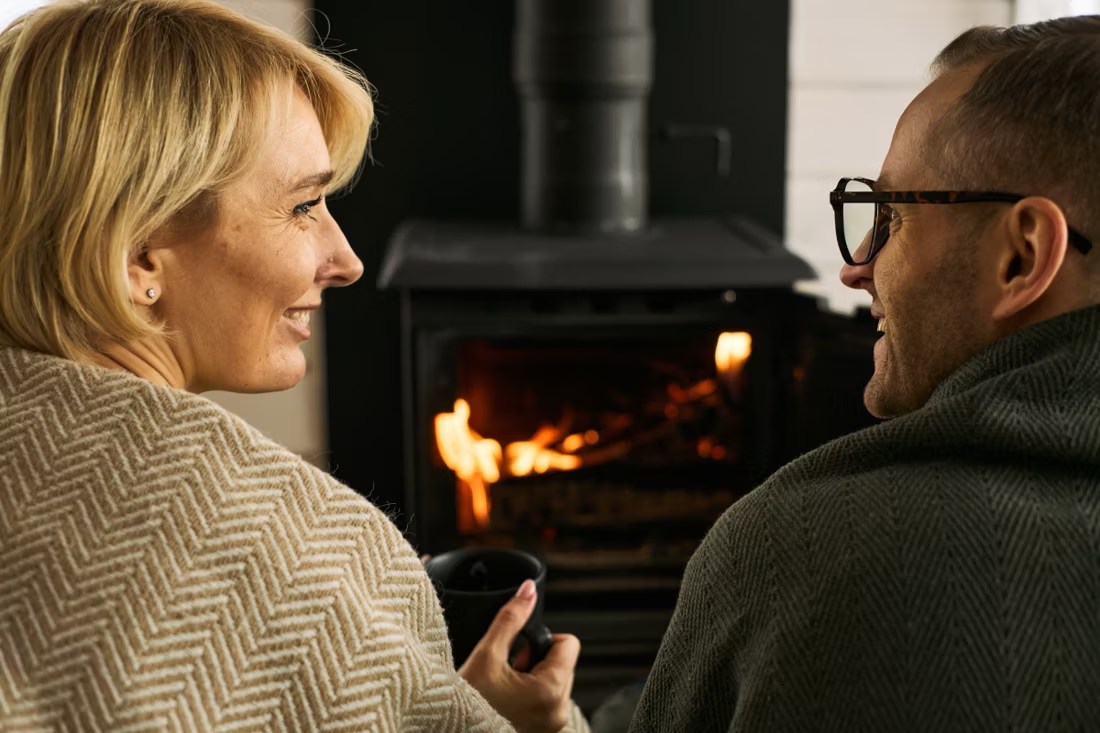
That said, wood fireplaces and stoves haven't disappeared from San Angelo—they've just shifted purpose. Ranch-style homes throughout the Concho Valley often keep a wood-burning fireplace or freestanding stove for the atmosphere of a real fire on the handful of genuinely cold nights each winter, and as backup heat during events like the February 2021 freeze, when the regional grid buckled and homes without a non-electric heat source went cold. Local mesquite, oak, and pecan—all common on area ranchland and already familiar to anyone who smokes brisket—make good firewood if you go this route.
Three steps. No salesperson until you're ready.
Tell us about your project
Your zip code, your situation, and the fuel you're leaning toward—or let the answers point you to one.
See what's actually available
The brands dealers within 100 miles genuinely carry—real options, never a catalog mirage.
Get your dealer & Project Guide
A trusted local dealer, plus the free Project Guide & Parts List that names every component of the job.
Frequently Asked Questions
How much does a wood stove or fireplace installation cost in San Angelo?
Because wood-burning installs are less common here than in colder parts of the country, pricing isn't as standardized locally as it is for gas or electric units. Nationally, a comparable freestanding wood stove install with new Class A chimney pipe typically runs $4,500 to $9,000, while a wood-burning insert into an existing masonry fireplace tends to run less. Expect fewer San Angelo dealers to specialize in wood specifically compared to gas—get a couple of in-home quotes before committing, since venting through a roof designed for a mild climate can add cost if there's no existing chimney chase to use.
Does a wood stove even make sense in a climate this mild?
For most San Angelo homes, no—a wood stove isn't going to be your primary or even your main supplemental heat source given winter lows that average around 34°F. Where it does make sense is as an occasional-use amenity: a real fire on the coldest nights, ambiance in a living room or den, or a non-electric backup for grid outages during ice events like the one that hit West Texas in February 2021. If year-round heating performance is the goal, gas is the more practical fit here; if you want the experience of a wood fire a few dozen nights a year, a smaller stove or insert can absolutely work.
What firewood species are available locally?
Oak, pecan, and mesquite are the three woods you'll find most readily around San Angelo and the broader Concho Valley, largely because they're the same species local ranches and orchards already produce and that pitmasters use for smoking. Mesquite burns hot and fast with a distinctive smell—great for shorter evening fires but not ideal for an overnight burn. Oak and pecan burn longer and more evenly, closer to what you'd want if you're using the stove for actual heat rather than just atmosphere.
Do I need a permit to install a wood stove in San Angelo?
Most jurisdictions in Tom Green County require a building permit for a new wood-burning appliance and chimney, and San Angelo is no exception—check with the city's Development Services Department if you're inside city limits, or the county if you're outside them. Because wood installs are infrequent here, it's worth confirming permit requirements directly rather than assuming your installer has done one recently; a reputable local hearth dealer will pull the permit as part of the job either way.
Wood vs. gas—which actually makes sense for a San Angelo home?
Gas is the standard choice here for a reason: natural gas and propane service are widely available, installation is more straightforward, and a gas fireplace gives you instant, consistent heat without sourcing or storing cordwood in a climate where you might only burn it a dozen nights a year. Wood makes more sense if you specifically want the experience of a real fire, already have access to mesquite or oak, or want a heat source that works without electricity during a grid outage. Plenty of homeowners here end up with gas for daily use and skip wood entirely—it's a legitimate answer, not a compromise.
What kind of wood stove works best for occasional use in a mild climate?
Skip the large, cold-climate catalytic stoves built for 20-hour overnight burns in sub-zero weather—they're oversized for San Angelo's needs and will smolder inefficiently if you're only burning a few nights a month. A smaller or mid-size EPA-certified non-catalytic stove, or a wood-burning insert if you already have a masonry fireplace, is a better match for intermittent use. A local dealer can size it to your room rather than your climate zone, which matters more here than it would in a place that actually needs sustained heat output.
Where can I buy or source firewood in San Angelo?
Local tree services, ranch suppliers, and seasonal firewood vendors around Tom Green County typically sell oak, pecan, and mesquite by the rick or cord, with mesquite often priced at a premium given its popularity for smoking as much as heating. Because San Angelo doesn't have the public national forest cutting-permit culture you'd find in a wood-heavy Western state, most homeowners here buy cut and seasoned wood rather than harvesting their own—budget roughly $150 to $300 per cord depending on species and season.
How often should a wood stove be inspected if I only use it occasionally?
Even light, occasional use warrants an annual inspection—the CSIA recommends yearly chimney checks regardless of how many cords you burn through, since creosote and animal nesting can build up in a flue that sits unused for months at a time. In San Angelo specifically, chimneys and stovepipes that go quiet for most of the year are actually more prone to blockages from birds or debris than ones in constant winter use, so don't skip the pre-season check just because you didn't burn much last year.
Wood-burning fireplace vs. a zero-clearance insert—which fits a San Angelo home better?
If you already have an existing masonry fireplace, a wood-burning insert is usually the better upgrade—it dramatically improves heat output and efficiency compared to an open hearth, which matters if you actually want warmth on those rare cold nights rather than just a view of flames. If you're building new or don't have an existing chimney, a zero-clearance wood fireplace or a small freestanding stove is simpler to install and more in line with occasional-use expectations in this climate. Either way, a local dealer can tell you honestly whether the investment makes sense for how often you'd realistically use it.
Why is a fireplace insert so efficient?
An insert does two things: it seals the chimney completely, so you stop losing air you already paid to heat, and it radiates warmth into the room through the firebox and glass. Most add a heat-exchange fan that pulls cool room air underneath, wraps it around the hot firebox, and pushes it back out warm. Your home is more efficient before you've even lit the first fire.
What's the difference between an insert and a zero-clearance fireplace?
An insert is a fireplace that slides into a pre-existing wood-burning fireplace—if you don't have one, there's nothing to insert it into. A zero-clearance fireplace is built into a framed wall, which makes it the answer for remodels and new construction. Simple test: existing masonry fireplace means insert; blank or framed wall means zero-clearance.
Can a fireplace actually lower my heating bill?
Yes—by creating a comfort zone. A furnace heats every square foot of the house just to warm the one room you're in; a gas fireplace on low burns roughly a sixth of the gas a typical furnace does. Set the furnace around 55–60 degrees as a baseline, then heat the rooms your family actually uses. Families who heat this way commonly save $20–$60 a month.
How much should I budget for a fireplace?
For an average home—covering the fireplace, the vent pipe, and basic installation—a budget between $3,900 and $5,500 gives you a lot of options across wood, gas, and pellet. By the time you add finish work, gas line, and electrical, the average complete installation lands between $5,000 and $12,000 all-in. In a remodel or new build, a good rule is to put about 2.5% of the total project cost toward the fireplace.
Nearby Dealers
Hearth shops serving San Angelo and the surrounding area.
Find your wood fireplace in San Angelo.
Tell us about your home and how you'd actually use a wood fire, and we'll match you with a trusted local dealer plus a free Project Guide & Parts List—the exact parts, including the vent kit, for your San Angelo installation.
Find Your Fireplace →