
Find dependable gas heat for Roberts County's ranch homes.
Instant, reliable warmth for the open plains around Miami and the rest of Roberts County—where blue northers can drop temperatures fast and a ranch house needs heat that lights every time. Find the right unit and connect with a trusted local dealer.
Every Project Starts From One of These Five Situations
Instant heat for wide-open panhandle winters.
Roberts County sits in the heart of the Texas Panhandle, with a population under 500 spread across nearly 900 square miles of ranchland around the county seat of Miami. The irony isn't lost on locals: this county sits above part of the Anadarko Basin, one of the most productive natural gas fields in the country, yet most homes here are too far from any municipal gas main to hook up to piped natural gas. For the vast majority of Roberts County households, propane is the practical fuel for a gas fireplace or insert, delivered and stored on-site rather than piped from a utility.
Climate zone 4B means Roberts County sees real winter cold—sharp blue norther cold fronts can drop temperatures 30 degrees or more in an afternoon, and wind across the open plains makes that cold cut deeper than the thermometer suggests. A gas fireplace or insert gives ranch homes instant, consistent heat without babysitting a fire, and with the right ignition system it can still light during the power outages that sometimes follow the county's worst winter storms. With no air quality non-attainment issues or burn restrictions here, gas is simply a matter of convenience and reliability, not regulation.
Three steps. No salesperson until you're ready.
Tell us about your project
Your zip code, your situation, and the fuel you're leaning toward—or let the answers point you to one.
See what's actually available
The brands dealers within 100 miles genuinely carry—real options, never a catalog mirage.
Get your dealer & Project Guide
A trusted local dealer, plus the free Project Guide & Parts List that names every component of the job.
Frequently Asked Questions
How much does a gas fireplace installation cost in Roberts County?
For a rural county this size, most gas fireplace and insert installations run in the $3,500 to $9,000 range, with the low end covering a straightforward propane insert into an existing masonry fireplace and the higher end covering new construction work with a fresh gas line run, a propane tank set, and custom venting. Because Roberts County has so few year-round hearth retailers, expect your installer to factor in some travel time from Amarillo, Pampa, or Perryton—ask for that itemized in your estimate up front.
Can I convert my existing wood fireplace to gas?
Yes, and it's a common project even out here on the ranch. A gas insert can usually be set into your existing masonry fireplace using the current chimney as a liner-protected vent path, which keeps the look of the hearth while eliminating the need to haul oak, pecan, or mesquite firewood every winter. Since natural gas lines don't reach most of Roberts County, the conversion typically means adding a propane line from a tank rather than tapping a municipal main—your installer will size the regulator and orifice accordingly.
Do I need natural gas, or should I plan on propane?
Almost every home in Roberts County should plan on propane. Despite the natural gas reserves under the ground here as part of the Anadarko Basin, piped natural gas service doesn't extend to most residential properties in the county, including much of Miami and the surrounding ranch land. A propane tank—either owned or leased from a regional supplier—is the standard setup, and nearly every gas fireplace, insert, or stove on the market can be configured to run on propane instead of natural gas with no difference in performance.
Will my gas fireplace work if the power goes out?
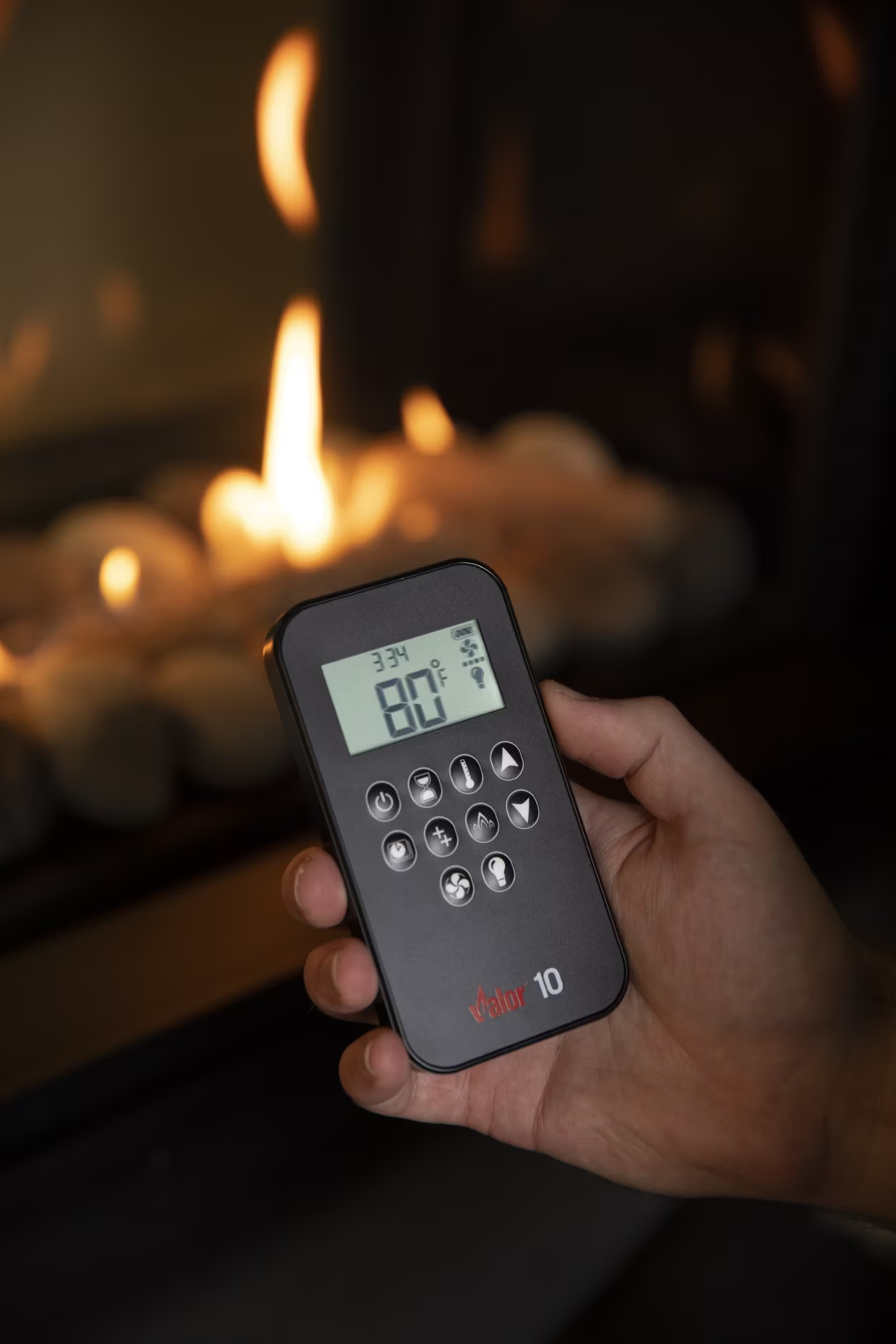
It can, if you choose the right ignition system. Units with intermittent pilot ignition (IPI) run on battery backup and will still light on demand when the grid is down, which matters here given how winter storms on the open plains can knock out rural power lines for stretches at a time. Some manufacturers, including Valor, use a self-generating pilot system that produces its own electricity from the flame itself, so there's no battery to remember to replace. Ask your local dealer about the ignition system on any model you're considering—for a ranch home miles from the nearest neighbor, it's worth the extra question.
What's the difference between a gas fireplace, gas insert, and gas stove?
A gas fireplace is a fully framed-in unit built for new construction or a remodel. A gas insert drops into an existing masonry fireplace opening and uses the chimney as its vent path, converting an old wood-burning hearth into a sealed, efficient heat source. A gas stove is a freestanding cabinet-style unit that can go almost anywhere with proper clearances, which makes it a good fit for outbuildings, shops, or additions on Roberts County properties that don't have an existing fireplace. For most homes here upgrading an old hearth, an insert is the simplest path.
Do I need a permit to install a gas fireplace in Roberts County?
With a population under 500 and no incorporated cities besides Miami, Roberts County doesn't operate the kind of dedicated building permit office you'd find in a larger county—but any propane line work still falls under state LP-gas licensing rules, and your installer should be a licensed gas fitter regardless of whether a local permit is pulled. If you're inside Miami's city limits, check with the town for any local requirements before work begins. Outside city limits, your installer can walk you through what documentation, if any, applies to your specific property.
What's the difference between vented and vent-free gas units?
Vented (direct-vent) gas fireplaces draw combustion air from outside and exhaust it back outside through sealed venting, which makes them the cleaner and more universally recommended option. Vent-free units burn fuel directly into the room without external venting; they're legal in Texas but require careful room-sizing and an oxygen depletion sensor, and they release some combustion byproducts indoors. For Roberts County's larger, often older ranch homes, direct-vent units are generally the better long-term choice, since they don't put any restriction on the size of the room they're heating.
How often should my gas fireplace be serviced?
Plan on an annual inspection, ideally before the first hard cold front of the season hits the panhandle. A technician will check the burner, pilot assembly, venting, and gas connections and clean the glass and interior—a quick job compared to wood chimney sweeping, but important given how much dust and grit blow across open Roberts County land and work its way into appliance intakes. Given the distance to service providers, it's worth scheduling this at the same time each year so you're not calling for an emergency visit during a January cold snap.
Gas vs. wood—which makes more sense for a Roberts County home?
Wood has deep roots out here—oak, pecan, and mesquite are all locally available, mesquite in particular burns hot and long and is a Panhandle ranching staple. Wood also keeps working with no propane delivery or power needed, which matters on properties a long drive from town. Gas, on the other hand, means no hauling or splitting wood, no ash cleanup, and heat at the flip of a switch, which is appealing for a primary living space in a working ranch household with limited time. Many Roberts County homes end up with both: a wood stove or fireplace for backup heat and ranch tradition, and a gas insert or fireplace for daily convenience in the main living area. Pellet stoves, using regional brands like Forest Energy or Lignetics, are a third option worth a look if you want cleaner burning than cordwood without giving up a solid-fuel backup.
Is my gas fireplace wasting gas?
If it was installed more than 15 years ago, probably. Older gas fireplaces keep a standing pilot light burning all the time, and that little flame can cost a couple hundred dollars a year. Newer models use pilot-on-demand ignition—the pilot lights only when you use the fireplace and goes out when you turn it off.
Why is my open fireplace making my house colder?
Open fireplaces suck—literally. As the fire burns, it consumes air your furnace already paid to heat and pulls it out through the chimney, so the house is actually colder after the fire goes out than before you lit it. An insert fixes this: it seals the chimney, puts fixed glass across the front, and turns that hole in your house into a real heat source.
How much should I budget for a fireplace?
For an average home—covering the fireplace, the vent pipe, and basic installation—a budget between $3,900 and $5,500 gives you a lot of options across wood, gas, and pellet. By the time you add finish work, gas line, and electrical, the average complete installation lands between $5,000 and $12,000 all-in. In a remodel or new build, a good rule is to put about 2.5% of the total project cost toward the fireplace.
Can a fireplace actually lower my heating bill?
Yes—by creating a comfort zone. A furnace heats every square foot of the house just to warm the one room you're in; a gas fireplace on low burns roughly a sixth of the gas a typical furnace does. Set the furnace around 55–60 degrees as a baseline, then heat the rooms your family actually uses. Families who heat this way commonly save $20–$60 a month.
Stove and Fireplace Dealers in Roberts County
Listings include WhyFire partner dealers, dealers we have verified as authorized for the brands we recommend, and established local businesses that carry hearth products. Every listing shows which one it is. The ones marked Preferred run on WhyFire's software, so they can show you real pricing and book your appointment right here. No manufacturer pays for placement. How we verify dealers →
West Texas Brick
Reid's Appliance Services
Panhandle Outdoor Living & Fireplaces
Boyd's Equipment
Find your gas fireplace in Roberts County.
Tell us a bit about your home and we'll put together a free Project Guide & Parts List—the right gas fireplace, insert, or stove for your Roberts County property, the exact parts including the vent kit, and a recommended local dealer to handle the install.
Find Your Fireplace →