
Find a gas fireplace built for mild North Texas winters.
Instant ambiance and backup warmth for Red Oak's short, mild heating season. We'll match you with a trusted local dealer who can size and install it right.
Every Project Starts From One of These Five Situations
Ambiance and backup heat, not a furnace replacement.
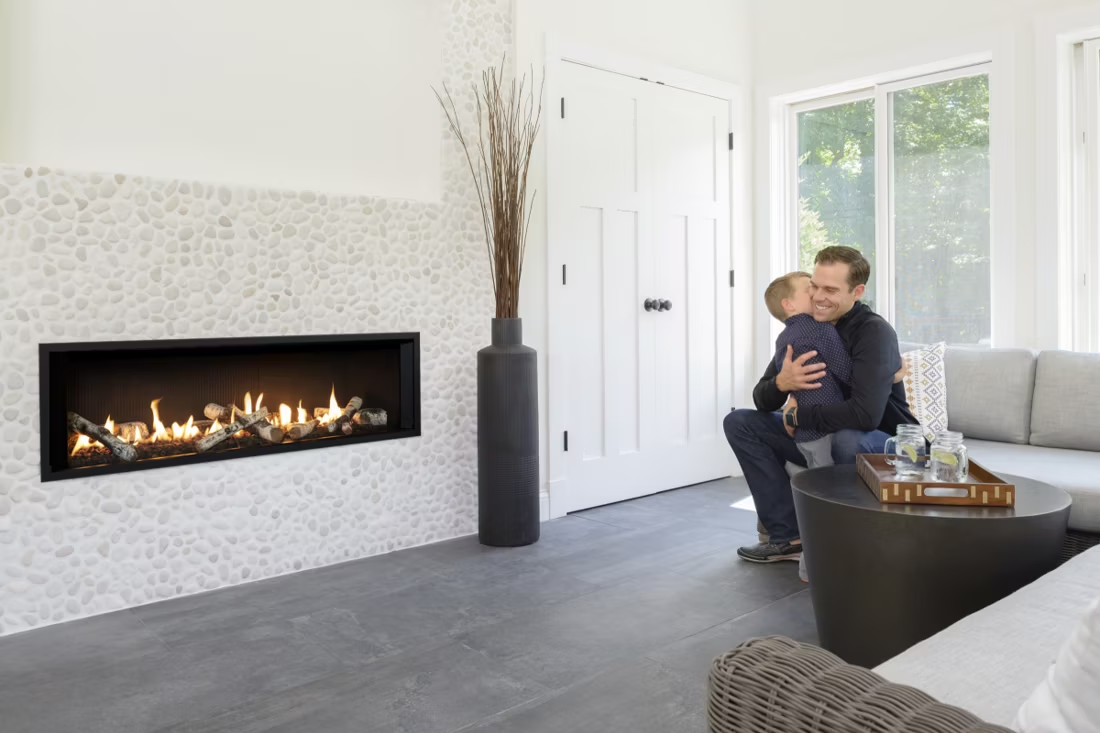
Red Oak sits in Climate Zone 3A with a winter low average around 34 degrees and just under 2,500 heating degree days a year—a fraction of what a place like Fargo, ND sees. That means most Red Oak homes lean on central HVAC for the bulk of their winter heat, and a gas fireplace's job is different than it would be in a colder climate: it's about atmosphere in the living room, a focal point for a remodel, and a reliable heat source if an ice storm knocks out power to the Oncor grid.
Ellis County growth has brought a lot of new construction and remodels to Red Oak, and gas fireplaces are a common upgrade in both—a direct-vent unit in a new build, or a gas insert dropped into an existing masonry fireplace during a renovation. Whether you're on Oncor Electric Delivery, United Electric Cooperative, or Navarro County Electric Cooperative service, a properly vented gas unit gives you instant flip-a-switch heat without relying on the grid at all.
Three steps. No salesperson until you're ready.
Tell us about your project
Your zip code, your situation, and the fuel you're leaning toward—or let the answers point you to one.
See what's actually available
The brands dealers within 100 miles genuinely carry—real options, never a catalog mirage.
Get your dealer & Project Guide
A trusted local dealer, plus the free Project Guide & Parts List that names every component of the job.
Frequently Asked Questions
How much does a gas fireplace installation cost in Red Oak?
Costs vary by unit, venting path, and whether new gas line work is needed, but expect a range roughly comparable to other North Texas markets: a direct-vent gas insert into an existing masonry fireplace with gas already run to the chimney sits toward the lower end, while a new built-in gas fireplace in a remodel or new-construction room—with framing, venting, and a fresh gas line—runs higher. Propane setups requiring a new tank add to the cost. A local dealer will give you a firm number after seeing your home.
Can I convert my existing wood-burning fireplace to gas in Red Oak?
Yes, and it's a popular project in Ellis County's older homes and ranch-style builds. A gas insert goes into your existing masonry firebox, using a stainless liner run through your current chimney as the vent path. If your home already has natural gas service, the conversion is usually straightforward; homes on propane need a tank in place or newly set. The result keeps the look of your existing fireplace but swaps ash and creosote for a switch-operated flame.
Is natural gas available in Red Oak, or do I need propane?
Red Oak has natural gas service in most developed areas of the city, so homes already running gas appliances—a water heater or range—can typically add a fireplace without much extra infrastructure. In outlying parts of Ellis County still served by rural electric providers like United Electric Cooperative or Navarro County Electric Cooperative, natural gas lines aren't always present, and propane from a local supplier is the standard fallback. Most gas fireplace models can be set up for either fuel with the correct orifice and regulator.
Will a gas fireplace still work if the power goes out?
Most modern gas fireplaces will, which matters in Red Oak given how ice storms occasionally take down Oncor lines across Ellis County for extended stretches. Units with intermittent pilot ignition (IPI) run on battery backup that kicks in the moment power drops, so the fireplace lights the same way it always does. Valor fireplaces go a step further—the pilot's thermocouple generates its own electricity, so there's no battery to check or replace at all. If backup heat during an outage is a priority for your household, ask your local dealer specifically about the ignition system on any unit you're considering.
What's the difference between a gas fireplace, insert, and stove for a home like mine?
A gas fireplace is a fully built-in unit framed into a wall—the right call for new construction or a full remodel in a Red Oak build. A gas insert drops into an existing masonry firebox and uses the chimney as its vent, which fits most of the older homes and existing hearths around town. A gas stove is a freestanding cabinet-style unit that sits on the floor, useful when there's no existing chimney and you want a self-contained footprint. For most Red Oak homeowners upgrading an existing fireplace, an insert is the simplest and most cost-effective path.
Do I need a permit to install a gas fireplace in Red Oak?
Yes—the City of Red Oak requires a building permit for gas fireplace installations, and any new or modified gas line needs to be run by a licensed gas-fitter and inspected. Most established hearth dealers handle the permitting and inspection scheduling as part of the installation, which is one of the practical reasons to go through a certified local installer rather than a general handyman.
Vented vs. vent-free gas fireplaces—which should I choose in Texas?
Vented (direct-vent or B-vent) units pull combustion air from outside and exhaust it back outside through sealed venting—they're the safer, more universally code-compliant choice and the most common installation in Red Oak. Vent-free units burn directly into the room and are legal in Texas, but they come with strict room-sizing requirements and release some combustion byproducts indoors, which matters more in tightly sealed newer construction. Given Red Oak's mild climate, a direct-vent unit rarely creates a heat-output problem, so most local dealers steer homeowners toward vented models unless there's a specific reason—like no existing flue access—to consider vent-free.
How often does a gas fireplace need to be serviced?
Plan on an annual inspection, ideally before the first cool front of the season. A technician checks the burner, pilot assembly, venting, and gas connections, and cleans the glass and interior. It's a lighter lift than wood-stove chimney sweeping but still matters for safety and keeping the glass from clouding over from mineral deposits, which is common with Texas water hardness affecting humidifier-equipped units. Expect to pay in the range most gas service providers in the North Texas area charge for a standard annual visit.
Is wood heat even worth considering in Red Oak instead of gas?
For most Red Oak homes, not really as a primary heat source—with winter lows averaging around 34 degrees and only about 2,400 heating degree days a year, there simply isn't enough sustained cold to justify running a wood stove the way homeowners in colder climates do. Wood-burning fireplaces still show up in some older Ellis County homes, often burning local oak, pecan, or mesquite for ambiance on the occasional cold night, but they're the exception rather than the rule here. Gas is the far more practical choice for anyone wanting reliable heat and a low-maintenance flame in this climate.
What's the difference between an insert and a zero-clearance fireplace?
An insert is a fireplace that slides into a pre-existing wood-burning fireplace—if you don't have one, there's nothing to insert it into. A zero-clearance fireplace is built into a framed wall, which makes it the answer for remodels and new construction. Simple test: existing masonry fireplace means insert; blank or framed wall means zero-clearance.
Why is a fireplace insert so efficient?
An insert does two things: it seals the chimney completely, so you stop losing air you already paid to heat, and it radiates warmth into the room through the firebox and glass. Most add a heat-exchange fan that pulls cool room air underneath, wraps it around the hot firebox, and pushes it back out warm. Your home is more efficient before you've even lit the first fire.
Can I install a fireplace myself?
If you're putting a fire in your house on purpose, it's best to work with an expert. Unless you're genuinely experienced in framing, gas line, vent pipe, and the national code on clearances to combustibles, have a professional do it—and ideally the same company that sells you the fireplace, so warranty, service, and liability all live under one roof.
How much should I budget for a fireplace?
For an average home—covering the fireplace, the vent pipe, and basic installation—a budget between $3,900 and $5,500 gives you a lot of options across wood, gas, and pellet. By the time you add finish work, gas line, and electrical, the average complete installation lands between $5,000 and $12,000 all-in. In a remodel or new build, a good rule is to put about 2.5% of the total project cost toward the fireplace.
Nearby Dealers
Hearth shops serving Red Oak and the surrounding area. Every listing shows whether it is a WhyFire partner, a dealer we have verified as authorized for the brands we recommend, or a local business carrying hearth products. No manufacturer pays for placement. How we verify dealers →
Fuego Fireplaces
Jacksons Home & Garden
Get your free Project Guide & Parts List for Red Oak.
Tell us about your home and we'll match you with a trusted local dealer and send a free Project Guide & Parts List—the exact parts, vent kit, and installer recommendation for your gas fireplace project in Red Oak.
Find Your Fireplace →