
Find the right fireplace for your Ellis County home.
From Waxahachie to Midlothian, Ennis to Red Oak—get matched with a local dealer who knows what actually makes sense in a North Texas winter, and what doesn't need to.
Every Project Starts From One of These Five Situations
Mild winters, 2,431 heating degree days, and a county built around gas heat.
Ellis County sits just south of the Dallas-Fort Worth metroplex, with average winter lows near 34°F and only 2,431 heating degree days a year—a fraction of the heating load carried by a place like Fargo, North Dakota, or Duluth, Minnesota. That mild climate zone 3A profile means most homes here need supplemental warmth during cold snaps rather than an appliance built to run continuously from October through April. Gas fireplaces and inserts are the standard choice across Waxahachie, Midlothian, Ennis, and the rest of the county, sized for quick warm-up and occasional use rather than round-the-clock output.
Wood and pellet stoves aren't really part of the everyday hearth market here the way they are further north—with winters this short and no meaningful air quality restrictions, a wood-burning appliance sized for sustained heat output doesn't pencil out for most households. That said, oak, pecan, and mesquite are all locally available (mesquite especially, given the county's ranching and barbecue tradition), and a small number of homeowners still install a wood-burning fireplace for ambiance, weekend use, or the occasional hard freeze. Electric fireplaces have a solid foothold too, particularly as no-venting supplemental heat in bonus rooms or homes without gas service. This hub rolls up hearth retailers, service techs, and fuel suppliers across the whole county—pick your fuel below for local dealers, install costs, and recommendations specific to your town.
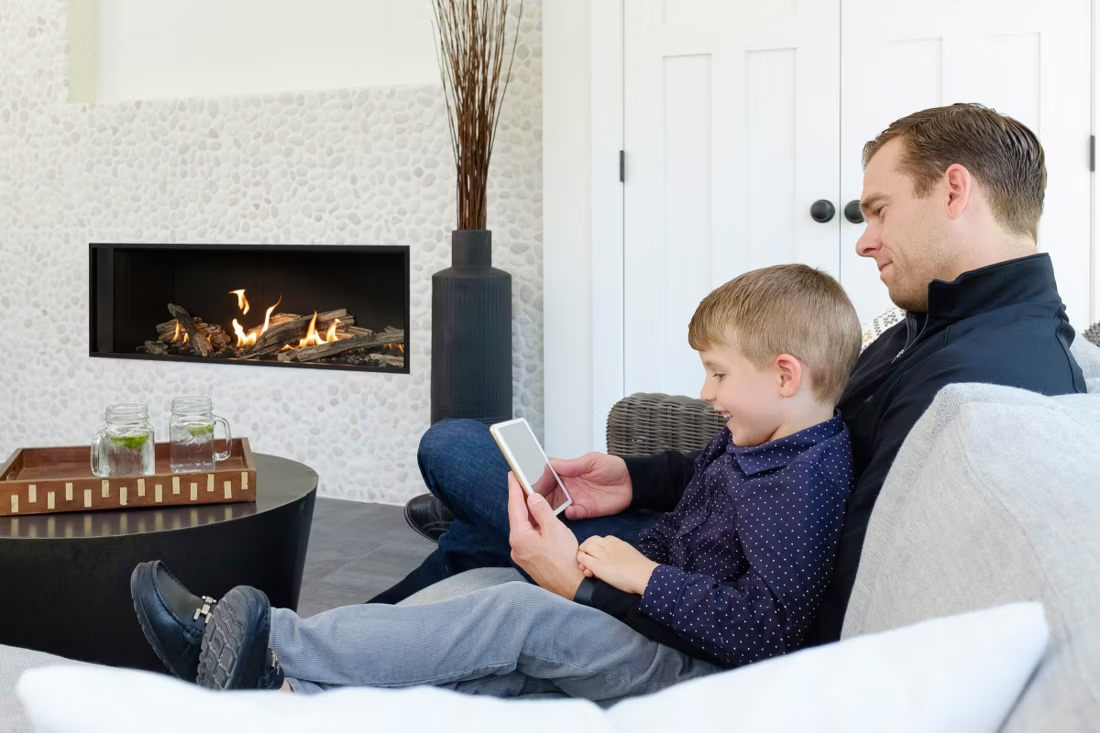
Four fuels. One honest answer for Ellis County.
Three steps. No salesperson until you're ready.
Tell us about your project
Your zip code, your situation, and the fuel you're leaning toward—or let the answers point you to one.
See what's actually available
The brands dealers within 100 miles genuinely carry—real options, never a catalog mirage.
Get your dealer & Project Guide
A trusted local dealer, plus the free Project Guide & Parts List that names every component of the job.
Frequently Asked Questions
Which fireplace fuel makes the most sense in Ellis County?
Gas is the default choice for most homes here—with average winter lows around 34°F and only 2,431 heating degree days a year, a gas fireplace or insert sized for occasional cold snaps covers what Ellis County winters actually demand, and natural gas service is widely available in Waxahachie, Midlothian, and Ennis. Electric fireplaces are a genuine second option, especially for bonus rooms, rentals, or homes on propane where running a new gas line isn't worth it. Wood-burning fireplaces are less common as a primary heat source given how short the season is, but they're not absent—plenty of Ellis County homeowners with ranching or barbecue roots keep a wood fireplace going with local oak, pecan, or mesquite purely for ambiance and the occasional hard freeze. Pellet stoves have essentially no local market; the mild climate and lack of any wood-heat infrastructure here mean most dealers simply don't stock them.
Do I need a permit to install a gas fireplace in Ellis County?
Yes, in most cases. If you're inside Waxahachie, Midlothian, Ennis, or another incorporated city, permitting runs through that city's building department; unincorporated parts of the county go through Ellis County's development services office. A licensed gas fitter typically needs to sign off on any new gas line run or connection, and electric fireplace installs only require a permit if you're adding a new dedicated circuit rather than plugging into an existing outlet. Wood-burning fireplace installs are less common but still require a building permit and inspection, particularly for new masonry chimneys. Most local retailers we match homeowners with handle this paperwork as part of the install.
Is a wood-burning fireplace even worth it in a climate this mild?
It depends on what you want out of it. If you're looking for a household's primary heat source, a wood fireplace doesn't make much sense in Ellis County—with only 2,431 heating degree days a year, compared to the heavy wood-heat load of a place like Bozeman, Montana, most of the burn season here amounts to a handful of genuinely cold nights. But plenty of homeowners in Waxahachie and Midlothian install one anyway for the ambiance, for entertaining, or because it fits the county's ranching and cookout culture—oak, pecan, and mesquite are all locally sourced and burn well. If you're weighing cost against actual heat output, gas or electric will do more work for less money; if you want the look and occasional use of a real wood fire, it's a reasonable choice, just not the county's primary heating strategy.
What if my home isn't on natural gas service?
A good number of properties outside Waxahachie, Midlothian, and Ennis city limits run on propane rather than natural gas, and gas fireplaces and inserts work fine off a propane tank with the correct orifice kit—your installer swaps the burner assembly to match the fuel. This is common enough in the more rural stretches of the county that most local retailers stock both natural gas and propane versions of their popular units. Electric fireplaces sidestep the question entirely since they only need a standard or dedicated circuit, which makes them a practical option for homes further from town where propane delivery adds an ongoing cost.
Can an electric fireplace handle Ellis County winters on its own?
For most homes, yes—given how mild the climate is here, an electric fireplace can reasonably serve as the main supplemental heat for a room during the handful of genuinely cold weeks each winter, especially in newer, well-insulated construction around Midlothian or Red Oak. It won't carry a whole house through an extended freeze the way a furnace does, but Ellis County rarely asks it to. Electric units are also the simplest option for converted garages, sunrooms, or bonus rooms that don't have existing gas or chimney infrastructure, since there's no venting to install and no combustion byproducts to manage.
What does a fireplace installation typically cost in Ellis County?
Gas fireplace, insert, or stove installs generally run $4,500–$11,000, with the range driven mostly by whether you're extending a gas line or converting an existing wood-burning firebox to gas. Electric fireplaces are the most affordable option—$200–$3,000 for the unit, plus $400–$1,200 in labor for anything beyond a plug-and-play placement, and often less if no new wiring is needed. Wood-burning fireplace installs, while less common here, typically run $4,500–$9,000 depending on chimney and masonry work; because there's little pellet-stove demand in the county, pricing and inventory for those units is limited compared to gas or electric. The county + fuel pages above break these numbers down further with local retailer pricing.
Can I install a fireplace myself?
If you're putting a fire in your house on purpose, it's best to work with an expert. Unless you're genuinely experienced in framing, gas line, vent pipe, and the national code on clearances to combustibles, have a professional do it—and ideally the same company that sells you the fireplace, so warranty, service, and liability all live under one roof.
What is an in-home preview and do I need one?
It's a visit where a hearth professional measures your space, confirms the model you picked actually works in your home, and walks the specs—framing, gas line, venting, finish work—before anything is ordered. Some details you just can't know until you see the house. Never make a down payment without one; it's the single most-skipped step that burns buyers.
Does a fireplace add value to my home?
On average, a fireplace adds back to the home about the same amount you spent installing it. Add the monthly savings from heating the rooms you actually use instead of the whole house—often hundreds of dollars a year—and the value case is strong before you even count what a fire does for how your family uses the room.
How much should I budget for a fireplace?
For an average home—covering the fireplace, the vent pipe, and basic installation—a budget between $3,900 and $5,500 gives you a lot of options across wood, gas, and pellet. By the time you add finish work, gas line, and electrical, the average complete installation lands between $5,000 and $12,000 all-in. In a remodel or new build, a good rule is to put about 2.5% of the total project cost toward the fireplace.
Stove and Fireplace Dealers in Ellis County
Listings include WhyFire partner dealers, dealers we have verified as authorized for the brands we recommend, and established local businesses that carry hearth products. Every listing shows which one it is. The ones marked Preferred run on WhyFire's software, so they can show you real pricing and book your appointment right here. No manufacturer pays for placement. How we verify dealers →
Fuego Fireplaces
Get matched with a local Ellis County dealer.
Pick your fuel below and we'll put together a free Project Guide & Parts List—the right unit, the vent kit it needs, and the local dealer we recommend for your project.
Find Your Fireplace →