
Instant ambiance for Rains County's mild winters.
From Emory to the cabins ringing Lake Fork Reservoir, electric fireplaces give Rains County homeowners real-looking flame and quick supplemental heat without a flue, a fuel delivery, or a chimney to maintain. We'll match you with a local dealer who can size and install the right unit for your space.
Every Project Starts From One of These Five Situations
Zone heat that matches how East Texas actually winters.
Rains County sits in climate zone 3A, with an average winter low around 33°F and a mild, short heating season—a fraction of what a place like Duluth, MN or Fargo, ND racks up in a single hard month. Furnaces here rarely run flat-out, which is exactly the environment where an electric fireplace earns its keep: it's not trying to replace the HVAC system, it's adding instant, controllable warmth to the room you're actually sitting in, whether that's a living room in Emory or a den looking out over Lake Fork.
Plenty of older homes around the county still have the masonry wood fireplaces that came standard with oak, pecan, and mesquite country—good for looks, less practical for a household that doesn't want to split, stack, and clean up after cordwood. An electric insert drops into that existing opening and keeps the mantel and surround while trading ash and creosote for a switch on the wall. For the weekend and seasonal cabins around Lake Fork Reservoir, electric is often the simplest call of all: no fuel to stage before a visit, no flue to inspect after months of vacancy, and no combustion appliance to worry about in a property that sits empty during the week.
Three steps. No salesperson until you're ready.
Tell us about your project
Your zip code, your situation, and the fuel you're leaning toward—or let the answers point you to one.
See what's actually available
The brands dealers within 100 miles genuinely carry—real options, never a catalog mirage.
Get your dealer & Project Guide
A trusted local dealer, plus the free Project Guide & Parts List that names every component of the job.
Frequently Asked Questions
How much does an electric fireplace cost to install in Rains County?
A plug-in electric fireplace or insert that runs on a standard 120-volt household outlet typically costs $200 to $1,200 for the unit itself, with little to no installation labor if an outlet already exists nearby. A built-in electric fireplace or a linear wall unit wired on its own dedicated circuit runs closer to $1,500 to $4,000 once you factor in the unit, any surround or mantel carpentry, and an electrician to run wiring—especially in older Rains County homes where panel capacity or outlet placement doesn't line up with where you want the fireplace. Because there's no venting, chimney, or gas line involved, electric installs are consistently the least expensive and fastest of the fireplace fuel types to put in.
Do I need a permit to install an electric fireplace in Rains County?
A simple plug-in unit that uses an existing outlet generally doesn't require a permit. If the installation involves running new wiring or adding a dedicated circuit—common with larger built-in or linear units—that electrical work typically needs to be pulled through the Rains County building office and performed or inspected by a licensed electrician. Most local dealers who sell built-in electric fireplaces either handle this coordination themselves or can point you to an electrician who regularly works with them, so you're not left tracking down the paperwork alone.
How much does it cost to run an electric fireplace?
Most electric fireplaces draw around 1,500 watts on the heat setting (less on flame-only/ambiance mode), which at typical Texas residential electric rates works out to roughly 18 to 25 cents per hour of heated use. Given Rains County's mild winters—average lows around 33°F and a short, light heating season overall—most homeowners run the heater function on cold evenings and mornings rather than continuously, which keeps the added cost to the power bill modest compared to running central heat harder.
What size electric fireplace do I need for my room?
Sizing an electric fireplace is more about the room than the whole house, since these units are built for zone heating rather than replacing your furnace. A compact 26–34 inch insert or wall unit comfortably heats a bedroom or den up to around 400 square feet. A 40–60 inch linear model can supplement a larger open living area, though you're still relying on your central system to carry the rest of the home. In a mild-winter county like Rains, most homeowners size for comfort and ambiance in the main room they use most rather than trying to heat an entire house on electric alone.
Insert, built-in, or mantel package—which is right for my home?
If you already have an existing masonry fireplace—common in older homes around Emory and the rest of the county—an electric insert is usually the simplest and most cost-effective option: it slides into the existing opening and uses the mantel and surround you already have. If you're finishing a new room or don't have an existing firebox, a built-in electric fireplace framed into the wall gives you a cleaner, more custom look. A mantel package (a freestanding electric fireplace with a matching wood or manufactured mantel) is the fastest option of all and requires no construction—a good fit for renters, lake cabins, or anyone who wants the look without committing to built-in work.
Will an electric fireplace actually heat my home?
Electric fireplaces are built for supplemental, room-level heat—most output the equivalent of a 1,500-watt space heater, or around 4,600–5,000 BTU. That's not enough to heat an entire home, but in Rains County's mild climate, where winter lows average around 33°F and the heating season is light compared to colder parts of the country, that level of output is often plenty to keep a living room or bedroom comfortable on its own without leaning on the central system. Think of it as zone heat and ambiance layered on top of your existing HVAC, not a replacement for it.
Electric vs. wood or gas—which fits my Rains County home?
Wood remains the traditional choice for homes with existing masonry chimneys and access to local oak, pecan, and mesquite, and it keeps working during a power outage—a real consideration in a rural county served by an electric cooperative, where ice storms occasionally knock out power for stretches. Gas offers instant heat without wood handling but needs either a natural gas line or a propane tank. Electric skips both the fuel supply and the venting entirely, which makes it the lowest-maintenance and lowest-cost-to-install option—but it depends entirely on grid power, so it isn't a backup heat source when the lines go down. Many Rains County homeowners land on electric for daily-use ambiance in a main living space and keep a wood-burning option elsewhere for genuine backup heat.
Is an electric fireplace a good fit for a Lake Fork cabin or weekend property?
Yes—it's one of the most common requests we hear for properties around Lake Fork Reservoir. An electric fireplace doesn't need a chimney to inspect after months of vacancy, doesn't require fuel to be delivered or stored, and can safely be left off or on a low setting without the fire-risk concerns of a wood or gas unit in an unattended cabin. Many models also come with remote or app control, which suits a property you're not visiting every week. The tradeoff is the same as anywhere else: no power at the cabin means no fireplace, so it works best as the primary hearth feature rather than an emergency heat source.
Are electric fireplaces safe for households with kids or pets?
Electric fireplaces are generally considered the safest fireplace fuel option for households with young kids or pets. Most models use LED or mirror-flame technology rather than an actual flame, so there's no open combustion, no carbon monoxide risk, and no hot glass front on many designs—though some realistic-flame units do produce heat at the glass, so it's worth checking that spec if pets or toddlers will be nearby. There's also no ash, creosote, or gas line to worry about, which simplifies both day-to-day safety and homeowner's insurance conversations compared to wood or gas alternatives.
Can I put a TV above my fireplace?
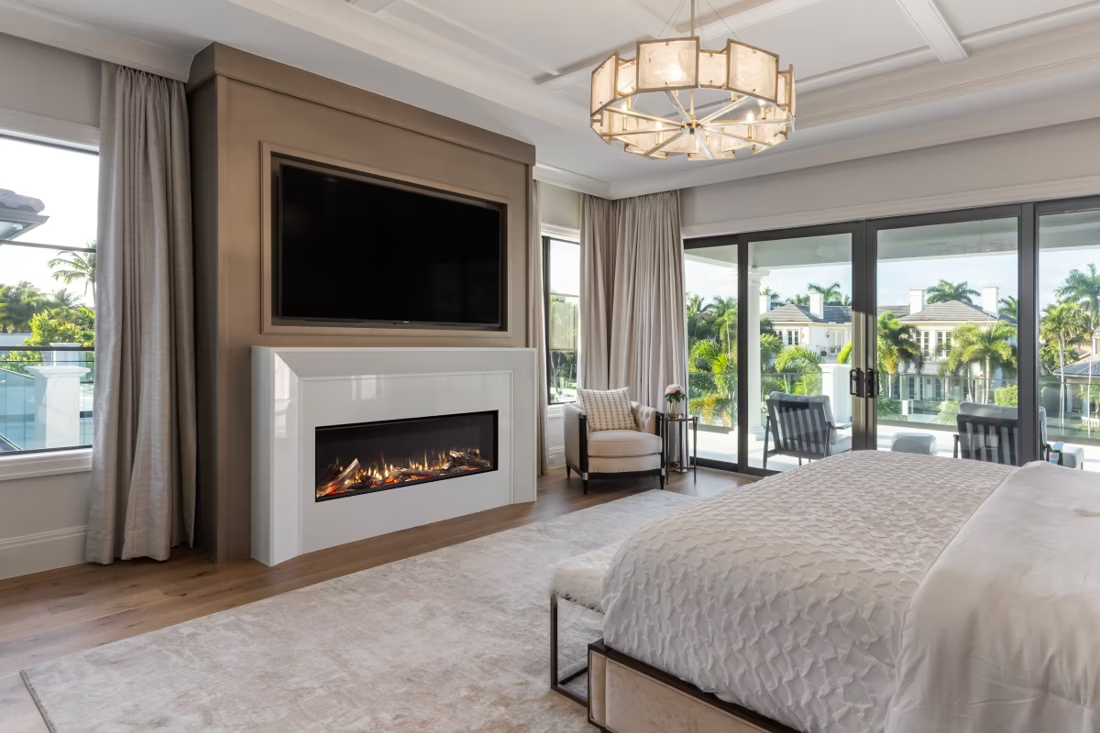
Yes—with an asterisk. Fireplaces are hot and TVs don't like heat. Either put a mantel between them to deflect rising warmth, or choose a fireplace with heat-management technology that creates a cool zone on the wall above—the wall stays around 125 degrees, barely warm, while the room still gets full heat. If you like clean lines and don't want a mantel, heat management is the answer.
Does an electric fireplace need a vent or chimney?
No—that's its superpower. An electric fireplace needs a wall and an outlet, period. No vent pipe, no gas line, no clearances to design around, which is why it works in bedrooms, offices, apartments, and walls where venting a gas or wood unit would be impractical or impossible. Installation is typically the simplest and least expensive of any fireplace type.
Does a fireplace add value to my home?
On average, a fireplace adds back to the home about the same amount you spent installing it. Add the monthly savings from heating the rooms you actually use instead of the whole house—often hundreds of dollars a year—and the value case is strong before you even count what a fire does for how your family uses the room.
How much should I budget for a fireplace?
For an average home—covering the fireplace, the vent pipe, and basic installation—a budget between $3,900 and $5,500 gives you a lot of options across wood, gas, and pellet. By the time you add finish work, gas line, and electrical, the average complete installation lands between $5,000 and $12,000 all-in. In a remodel or new build, a good rule is to put about 2.5% of the total project cost toward the fireplace.
Stove and Fireplace Dealers in Rains County
Listings include WhyFire partner dealers, dealers we have verified as authorized for the brands we recommend, and established local businesses that carry hearth products. Every listing shows which one it is. The ones marked Preferred run on WhyFire's software, so they can show you real pricing and book your appointment right here. No manufacturer pays for placement. How we verify dealers →
Youngs Brothers Buck Stove
Fireside Corner
Clay Structures Inc
Find your electric fireplace in Rains County.
Tell us a bit about your home or cabin and we'll match you with a local Rains County dealer, plus a free Project Guide & Parts List—the exact parts your electric fireplace project needs and who nearby can install it.'
Find Your Fireplace →