
The Right Hearth for Every Rains County Home.
Wood, gas, pellet, and electric fireplace resources for Emory, Point, the Lake Fork area, and every community in Texas's smallest county by land area. Find the right unit and connect with a trusted local hearth retailer.
Every Project Starts From One of These Five Situations
Mild winters, real heating needs, in Rains County, Texas.
Rains County is the smallest county in Texas by land area, anchored by the county seat of Emory and best known outside its borders for Lake Fork Reservoir. Winters here are mild by national standards—climate zone 3A, average lows around 33°F, and just 2,667 heating degree days a season. Compare that to a place like Fargo, North Dakota, which logs closer to 9,000 HDD, and it's clear a fireplace here is doing a different job than one in the upper Midwest. Post oak savannah and bottomland along the Sabine and Lake Fork tributaries mean oak, pecan, and mesquite are the woods most local homeowners burn—the same species that show up in East Texas smokers as much as in wood stoves.
What you'll find on this hub: hearth retailers, service technicians, and fuel suppliers serving every community in the county—from Emory and Point to the lake homes and ranch properties scattered around Lake Fork Reservoir. Because Rains County is small and lightly populated, some of the dealers and technicians who cover it are based in neighboring towns and drive in for installs and service calls; each listing notes their service area. Pick your fuel below to see local dealers, installed costs, and recommended units for your project.
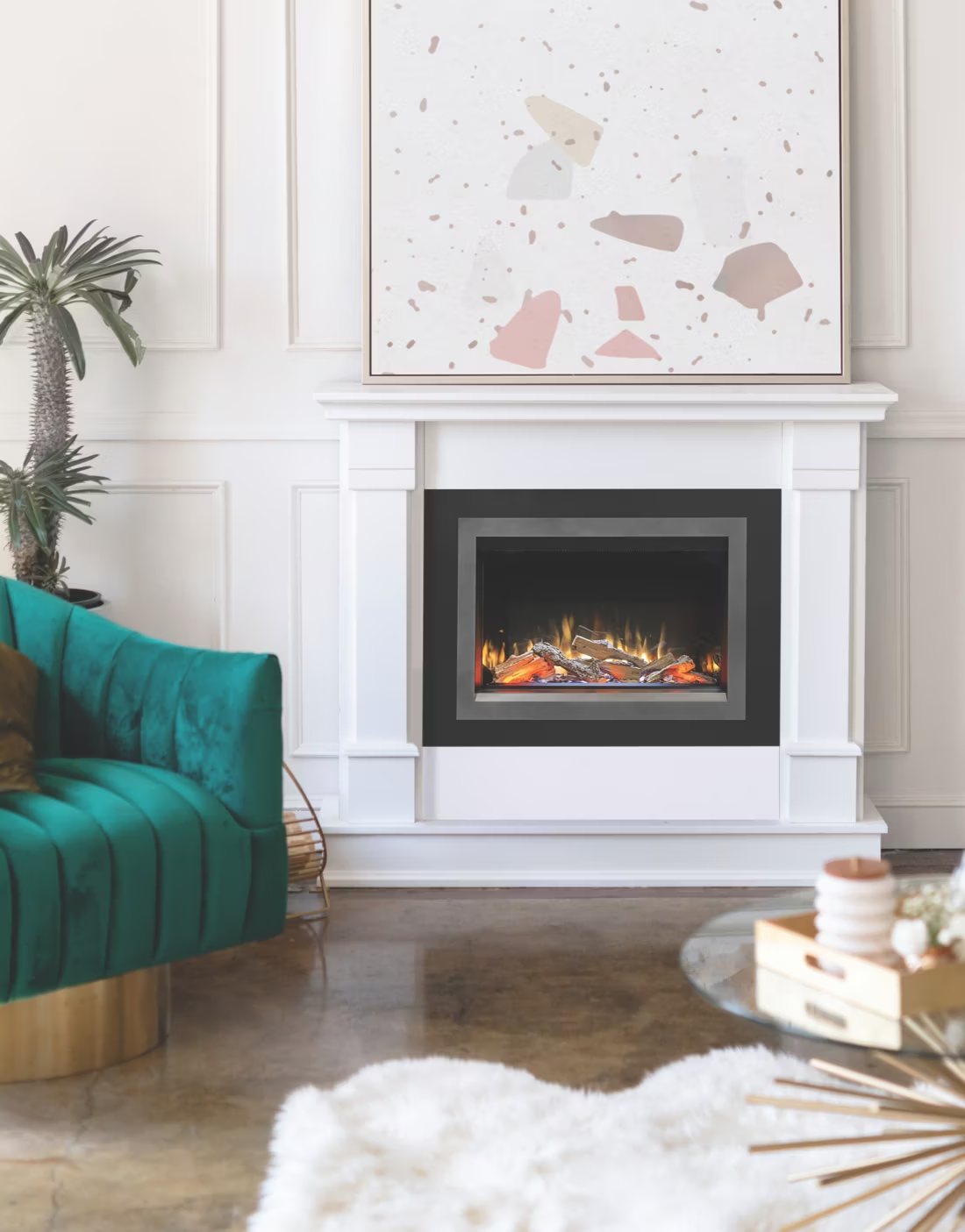
Four fuels. One honest answer for Rains County.
Three steps. No salesperson until you're ready.
Tell us about your project
Your zip code, your situation, and the fuel you're leaning toward—or let the answers point you to one.
See what's actually available
The brands dealers within 100 miles genuinely carry—real options, never a catalog mirage.
Get your dealer & Project Guide
A trusted local dealer, plus the free Project Guide & Parts List that names every component of the job.
Frequently Asked Questions
Which fuel works best in Rains County?
Given how mild the winters are here—average lows in the low 30s and only about 2,667 heating degree days a season—the choice usually comes down to comfort and lifestyle rather than survival heat. Wood stoves and fireplaces are popular for the ambiance and the low fuel cost, especially with oak, pecan, and mesquite readily available from local land and firewood suppliers. Gas is the convenience choice for homeowners who want instant, thermostat-controlled heat without tending a fire, and propane is the common delivery method for homes outside city gas service. Pellet stoves split the difference—set-it-and-forget-it heat with a woodier feel, supplied locally through brands like Forest Energy and Lignetics. Electric fireplaces do well here specifically because the climate is mild enough that a zone-heater unit can genuinely handle a bedroom or living room on most winter nights, not just serve as a decorative accent. Most Rains County homes end up choosing based on which room needs supplemental heat and how much hands-on fuel handling they want, more than which fuel can survive the cold—this isn't Fargo.
Do I need a permit to install a fireplace in Rains County?
For most wood, gas, and pellet installations, yes—a building permit is standard practice, and gas work also requires a separate gas line permit pulled by a licensed installer. Within Emory or Point, permits are handled through the city; outside the incorporated towns, permitting runs through the Rains County building office at the courthouse in Emory. Electric fireplaces typically skip the permit process unless the installation involves a new dedicated circuit or built-in framing. Because Rains County is small, most local hearth retailers and installers already have a working relationship with the county's permitting process and will pull the permit as part of the job rather than leaving it to the homeowner.
Does Rains County have any burn restrictions or air quality rules?
Rains County doesn't sit in an EPA non-attainment area and has no winter inversion or wildfire-smoke advisories like you'd see in a mountain basin. The restriction homeowners are more likely to run into here is a county burn ban, which the Rains County Commissioners Court can issue during dry spells or drought conditions—these typically apply to outdoor burning of brush and debris rather than indoor wood stoves or fireplaces, but it's worth checking current status if you're planning to season or store firewood outdoors. New EPA-certified wood stoves and inserts still meet federal emissions standards regardless of local air quality status, so there's no extra local hurdle for installing a modern unit.
Can one local hearth retailer handle all four fuel types?
It depends on the dealer, and in a county this size, coverage varies more than in a larger metro area. Some of the retailers serving Rains County—typically the ones based in larger neighboring towns—carry wood, gas, pellet, and electric under one roof, which is useful if you're still deciding between fuels and want to see working displays side by side. Smaller or more specialized dealers may focus on just wood and gas, or carry pellet stoves as a secondary line rather than a showroom feature. If you're set on a specific fuel, the county + fuel pages above narrow the list to dealers who genuinely stock and install that type rather than just special-order it.
How does installation or service work for rural and lake-area homes in Rains County?
Most technicians serving Rains County are based outside the county and travel in, covering lake homes around Lake Fork Reservoir as well as rural properties toward Point and the county's outlying roads. Expect a modest trip fee for service calls outside Emory, and plan ahead where you can—scheduling annual chimney sweeps or gas inspections in late summer or early fall is easier than trying to book a technician once cold snaps start in November and December. For camp houses or seasonal lake properties, it's also worth confirming a technician services vacant or part-time-occupied homes, since some limit rural routes to a set day of the week.
What's the typical cost range for fireplace installation across all fuel types in Rains County?
Costs run lower here than in colder climates partly because units and venting don't need to be sized for extreme heat loss. Wood stove or insert installation: roughly $3,500–$7,500 for a typical job, more if masonry chimney work is involved. Gas fireplace, insert, or stove: roughly $3,500–$8,500, with cost driven mainly by whether a new gas or propane line has to be run. Pellet stove or insert: roughly $3,500–$6,000 for most installs. Electric fireplace: $200–$2,500 for the unit itself, plus $300–$1,000 in labor for anything beyond a plug-and-play wall unit. Exact pricing depends on the dealer and how far they're traveling for the install—see the county + fuel pages above for cost detail tied to specific local retailers.
Wood, gas, pellet, or electric—how do I choose?
Match the fuel to your life, not the other way around. Wood: lowest fuel cost and total power-outage independence, but you're hauling and stacking. Gas: press a button, set a thermostat, no maintenance to speak of. Pellet: wood economics with automatic feeding, in exchange for weekly cleaning and a need for electricity. Electric: plugs in anywhere with honest supplemental heat. Nobody regrets the fuel that fits how they actually live.
Does a fireplace add value to my home?
On average, a fireplace adds back to the home about the same amount you spent installing it. Add the monthly savings from heating the rooms you actually use instead of the whole house—often hundreds of dollars a year—and the value case is strong before you even count what a fire does for how your family uses the room.
How much should I budget for a fireplace?
For an average home—covering the fireplace, the vent pipe, and basic installation—a budget between $3,900 and $5,500 gives you a lot of options across wood, gas, and pellet. By the time you add finish work, gas line, and electrical, the average complete installation lands between $5,000 and $12,000 all-in. In a remodel or new build, a good rule is to put about 2.5% of the total project cost toward the fireplace.
Can I install a fireplace myself?
If you're putting a fire in your house on purpose, it's best to work with an expert. Unless you're genuinely experienced in framing, gas line, vent pipe, and the national code on clearances to combustibles, have a professional do it—and ideally the same company that sells you the fireplace, so warranty, service, and liability all live under one roof.
Stove and Fireplace Dealers in Rains County
Listings include WhyFire partner dealers, dealers we have verified as authorized for the brands we recommend, and established local businesses that carry hearth products. Every listing shows which one it is. The ones marked Preferred run on WhyFire's software, so they can show you real pricing and book your appointment right here. No manufacturer pays for placement. How we verify dealers →
Youngs Brothers Buck Stove
Fireside Corner
Clay Structures Inc
Find your fireplace in Rains County.
Pick your fuel below and we'll match you with a trusted local dealer, plus a free Project Guide & Parts List built around your fuel, your home, and your Rains County address.
Find Your Fireplace →