
Find heat that turns on the instant a Big Country norther hits.
Winters in Potosi are mild most of the year, but when a cold front rolls through Taylor County, you want heat that lights on demand. Find the right gas or propane unit and get matched with a trusted local dealer.
Every Project Starts From One of These Five Situations
Short, sharp cold snaps call for instant heat.
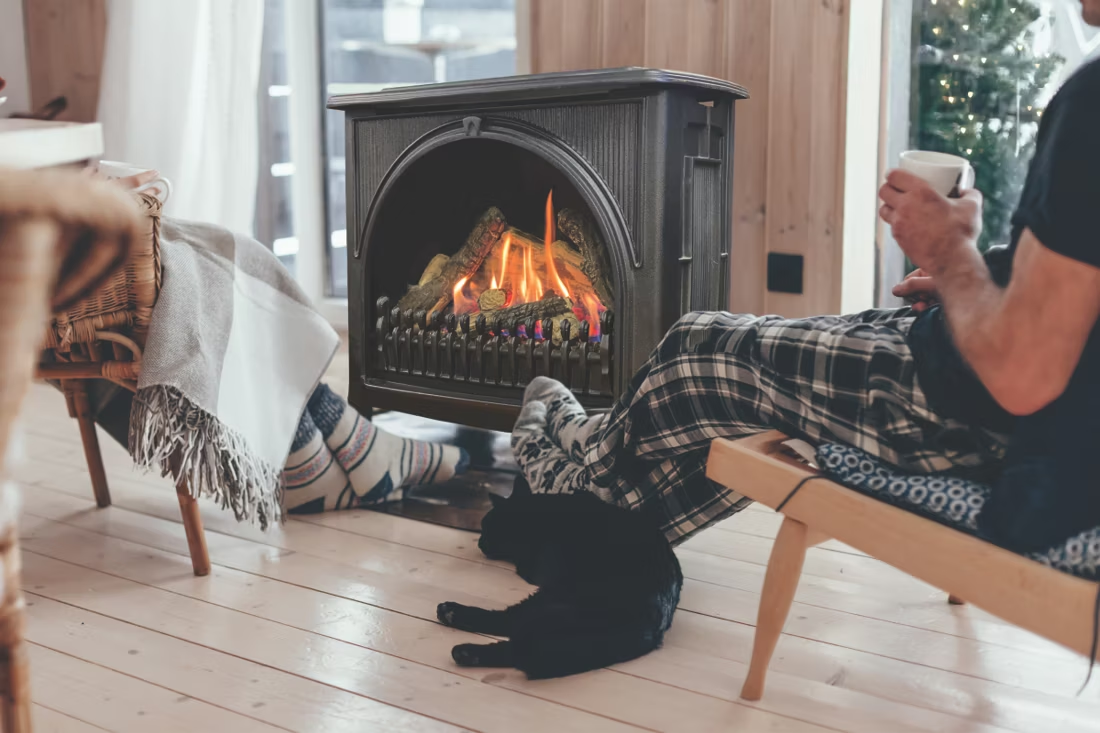
Potosi sits in the Big Country region of Taylor County, just outside Abilene, in climate zone 3B where the average winter low hovers around 34°F and the heating season totals only about 2,319 degree days—nowhere near the sustained cold of a place like Fargo, ND or Duluth, MN. Most winters here are mild, but Texas blue northers can drop temperatures 30-plus degrees in a matter of hours, and that's exactly the kind of heat gap a gas fireplace is built to fill: no wood to split, no waiting for a bed of coals, just heat at the flip of a switch or a wall switch remote.
Potosi is unincorporated and rural, and there's no natural gas utility serving this pocket of Taylor County—so when homeowners here say "gas fireplace," they usually mean a propane-fueled unit fed by a residential tank rather than a municipal gas line. Electric service comes through AEP Texas North Company, Taylor Electric Cooperative, or Coleman County Electric Cooperative depending on exactly where your property sits, and rural co-op lines can see longer outage windows during ice events than in-town Abilene circuits. A direct-vent propane fireplace with battery-backup or self-powered ignition gives you heat that isn't dependent on the grid staying up.
Three steps. No salesperson until you're ready.
Tell us about your project
Your zip code, your situation, and the fuel you're leaning toward—or let the answers point you to one.
See what's actually available
The brands dealers within 100 miles genuinely carry—real options, never a catalog mirage.
Get your dealer & Project Guide
A trusted local dealer, plus the free Project Guide & Parts List that names every component of the job.
Frequently Asked Questions
How much does a gas or propane fireplace installation cost in Potosi?
Because Potosi runs on propane rather than piped natural gas, expect the installation to include either a new propane tank setup or a tie-in to an existing tank, which adds to the base cost compared to towns with natural gas mains. A direct-vent propane fireplace or insert typically runs $3,500 to $8,500 installed in this part of Taylor County, with the low end covering a straightforward insert into an existing masonry fireplace using a tank you already have, and the higher end covering new construction with a fresh tank, buried gas line, and full venting. Your local dealer will size the tank and line run during an in-home visit.
Do I need natural gas, or does propane work fine?
Propane is the standard answer for gas fireplaces in Potosi—there's no natural gas utility line reaching this unincorporated stretch of Taylor County, so nearly every "gas fireplace" installed out here runs on propane from a residential tank, either buried or set aboveground with a screening enclosure. Almost any gas fireplace, insert, or log set on the market can be configured for propane instead of natural gas; your installer swaps the orifice and regulates the pressure accordingly. If you're already set up with a propane tank for your range or water heater, tying in a fireplace is usually a modest add-on to your existing service.
Can I convert my wood-burning fireplace to gas?
Yes, and it's a common upgrade for older Potosi and Abilene-area homes built around a traditional masonry fireplace. A propane insert slides into the existing firebox and vents through a stainless liner run up your current chimney, so you keep the look of the fireplace without hauling and splitting oak, pecan, or mesquite anymore. Conversions here typically run $4,000 to $7,500 depending on whether you already have a propane tank in place or need a new one installed and connected.
Will my gas fireplace still work if the power goes out?
Most direct-vent gas and propane fireplaces with intermittent pilot ignition (IPI) include a battery backup that keeps them lighting even when the grid drops—worth knowing given that rural co-op lines from Taylor Electric Cooperative and Coleman County Electric Cooperative can take longer to restore after an ice storm than in-town Abilene circuits served by AEP Texas North. Just keep fresh AA batteries in the unit. Valor fireplaces go a step further: their pilot assembly generates its own electricity through a thermocouple, so there's no battery to remember at all. Ask your local dealer which ignition system is on any model you're considering.
What permits does Taylor County require for a gas fireplace install?
Potosi is unincorporated, so most permitting runs through Taylor County rather than a city building department, and requirements are generally lighter than inside Abilene city limits. That said, any new propane tank installation must meet NFPA 58 setback distances from the house, property lines, and ignition sources, and your propane supplier typically handles that placement as part of the install. A licensed installer will also confirm whether your specific project needs a county permit for gas line or venting work—most reputable local dealers fold this into the quote so you're not chasing paperwork yourself.
Should I get a vented or vent-free gas fireplace?
Vented (direct-vent) units draw combustion air from outside and exhaust it back outside, making them the safest and most universally recommended choice, and they're what most Potosi-area dealers install by default. Vent-free propane units are legal in Texas and can make sense for supplemental heat in a small, well-sealed room—since Potosi's mild 2,319-degree-day climate means many homes only need a fireplace to bridge the gap during a cold snap rather than run all winter. Vent-free models do require attention to room size and an oxygen depletion sensor. Talk through both options with your local dealer based on the specific room you're heating.
How often does a propane fireplace need servicing?
Plan on an annual inspection before the fall cold-front season starts, even if the unit only gets occasional use during Potosi's short heating season. A technician checks the burner, pilot assembly, gas connections, and venting, and cleans the glass and interior—this typically runs $150 to $250 through a local propane service provider or hearth dealer. Because propane systems also depend on a properly maintained tank and regulator, it's worth having your propane supplier check the tank and lines on the same schedule.
What size gas fireplace do I actually need for a home in Potosi?
With an average winter low around 34°F and a heating season far shorter than northern climates, most Potosi homes need a fireplace for zone heating and cold-snap backup rather than as a primary heat source running all winter. A small to mid-size direct-vent unit (typically rated for the room or open living area rather than the whole house) is usually enough, paired with your existing central HVAC for everyday use. A local dealer will size the BTU output to your specific room rather than the whole square footage—oversizing is a common and avoidable mistake in mild climates like this one.
Gas vs. wood—which makes more sense for a Potosi home?
Wood is genuinely abundant here—oak, pecan, and mesquite are all common locally and mesquite in particular burns hot and produces good coals, and plenty of Taylor County homeowners keep a wood-burning fireplace or stove for that reason. But given Potosi's mild, short heating season, many households want the option of heat without splitting and hauling wood for a handful of cold nights a year, and that's where a propane fireplace wins—instant on, no ash, no chimney creosote buildup to manage. Some homes split the difference: an existing wood fireplace for ambiance and occasional use, plus a propane insert or freestanding unit for genuine on-demand heat when a norther comes through.
Can I put a TV above my fireplace?
Yes—with an asterisk. Fireplaces are hot and TVs don't like heat. Either put a mantel between them to deflect rising warmth, or choose a fireplace with heat-management technology that creates a cool zone on the wall above—the wall stays around 125 degrees, barely warm, while the room still gets full heat. If you like clean lines and don't want a mantel, heat management is the answer.
Why is my open fireplace making my house colder?
Open fireplaces suck—literally. As the fire burns, it consumes air your furnace already paid to heat and pulls it out through the chimney, so the house is actually colder after the fire goes out than before you lit it. An insert fixes this: it seals the chimney, puts fixed glass across the front, and turns that hole in your house into a real heat source.
Can a fireplace actually lower my heating bill?
Yes—by creating a comfort zone. A furnace heats every square foot of the house just to warm the one room you're in; a gas fireplace on low burns roughly a sixth of the gas a typical furnace does. Set the furnace around 55–60 degrees as a baseline, then heat the rooms your family actually uses. Families who heat this way commonly save $20–$60 a month.
Does a fireplace add value to my home?
On average, a fireplace adds back to the home about the same amount you spent installing it. Add the monthly savings from heating the rooms you actually use instead of the whole house—often hundreds of dollars a year—and the value case is strong before you even count what a fire does for how your family uses the room.
Nearby Dealers
Hearth shops serving Potosi and the surrounding area. Every listing shows whether it is a WhyFire partner, a dealer we have verified as authorized for the brands we recommend, or a local business carrying hearth products. No manufacturer pays for placement. How we verify dealers →
Area – San Angelo, Tx
Unlimited Air
Find your gas fireplace in Potosi.
Tell us about your home and your propane setup, and we'll match you with a trusted local dealer and send over a free Project Guide & Parts List—the exact parts, including the vent kit, for your Potosi gas fireplace project.
Find Your Fireplace →