
Find your fireplace in Taylor County.
From Abilene out to Merkel, Tuscola, Trent, and Buffalo Gap, we match Taylor County homeowners with a local dealer who knows what actually gets installed here—and skip the guesswork on fuels that don't fit a Big Country winter.
Every Project Starts From One of These Five Situations
Mild West Texas winters, 2,319 heating degree days, and a hearth market built around gas and electric.
Taylor County sits in the Big Country region of West Texas, anchored by Abilene, in climate zone 3B. Average winter lows hover around 34°F and the county logs just 2,319 heating degree days a year—a fraction of the heating load carried by a place like Fargo, ND, which sees over 9,000 HDD most winters. That mild profile means most homes here don't need a primary wood-heat source at all, and it shapes which fireplace fuels actually show up in local dealer showrooms.
Oak, pecan, and mesquite are the wood species you'll find at local firewood stands, but they're mostly destined for backyard smokers, fire pits, and the occasional decorative fireplace rather than a stove carrying a house through winter. Wood-burning fireplaces and pellet stoves are genuinely rare installs in Taylor County—where they exist, it's usually a gas-log conversion in an older Abilene home or ambiance more than heat. Gas and electric fireplaces are the practical choice for most households, whether that's a gas insert tied into Atmos Energy service or an electric unit that adds warmth to a bedroom or den without any venting at all. This hub rolls up retailers, service techs, and fuel suppliers across the whole county—pick your fuel below for local dealers and install specifics for your town.
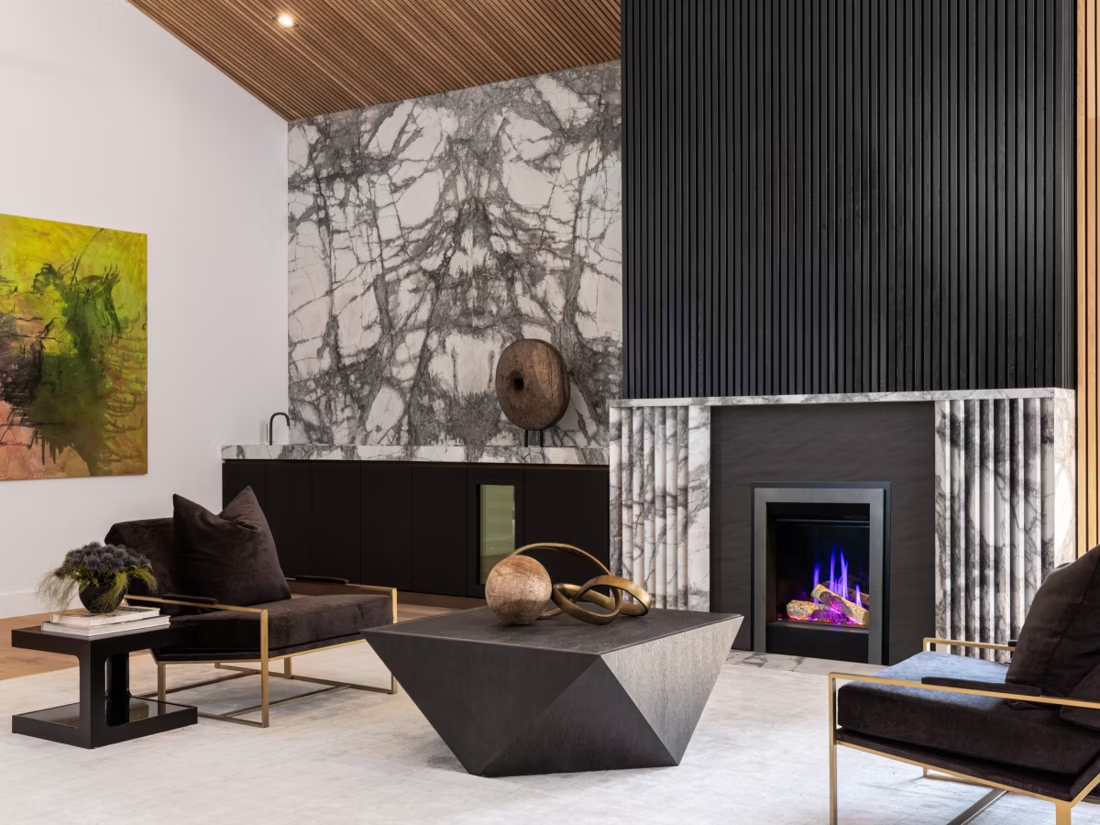
Four fuels. One honest answer for Taylor County.
Three steps. No salesperson until you're ready.
Tell us about your project
Your zip code, your situation, and the fuel you're leaning toward—or let the answers point you to one.
See what's actually available
The brands dealers within 100 miles genuinely carry—real options, never a catalog mirage.
Get your dealer & Project Guide
A trusted local dealer, plus the free Project Guide & Parts List that names every component of the job.
Frequently Asked Questions
Which fireplace fuel actually makes sense in Taylor County?
Gas and electric are the two fuels that fit how Taylor County actually heats. With average winter lows around 34°F and only 2,319 heating degree days a year, nobody here is running a wood stove to survive January the way a homeowner in Fargo or Duluth might. Gas fireplaces and inserts, tied into Atmos Energy service around Abilene or propane further out, give you real supplemental warmth with a flip of a switch. Electric fireplaces are just as common for bedrooms, dens, and rental properties where no venting is worth the trouble. Wood-burning fireplaces still exist, mostly as decorative or occasional-use features burning local oak, pecan, or mesquite, and pellet stoves are genuinely rare—if you want one, expect to special-order it rather than see it stocked.
Do I need a permit for a gas fireplace installation in Abilene or Taylor County?
Yes. A new gas line, a converted wood fireplace, or a new gas insert all require a permit through the applicable city or county building department, and the gas connection itself needs to be run by a licensed gas fitter. Because Taylor County has no air-quality non-attainment restrictions or wood-burning curtailment rules to navigate, the permitting process here is more straightforward than in western states with inversion concerns—it's mainly about gas-line safety and inspection sign-off. Most dealers we match homeowners with handle this paperwork as part of the install.
Are wood-burning fireplaces still built into new Abilene homes?
Rarely, and when they are, it's usually a decorative masonry fireplace that gets fitted with gas logs rather than a true wood-burning setup. Given the mild 2,319-HDD winter here, builders and homeowners generally don't see the return on a full wood chimney system. Older homes in Abilene's established neighborhoods do have working wood-burning fireplaces that burn local oak, pecan, and mesquite on the handful of genuinely cold nights each winter, and a few homeowners keep them as-is for ambiance rather than converting.
Can I still get a pellet stove installed in Taylor County?
You can, but it takes more legwork than in a wood-heat region. Pellet stoves aren't a common install here—the mild climate doesn't create the demand that keeps a dedicated pellet dealer network running the way it does further north. Forest Energy and Lignetics pellets are the regional brands most likely to turn up through general retailers, but you'll want to confirm with a local dealer that they can source the stove itself and handle the venting before committing to one over a gas or electric option.
What does a fireplace installation typically cost in Taylor County?
Gas fireplace inserts and built-ins generally run $3,500–$8,000 depending on whether you're extending a gas line or converting an existing masonry fireplace. Electric fireplaces are the least expensive route—$200–$2,500 for the unit, plus $300–$900 in labor for anything beyond a simple plug-in placement. Converting an old wood-burning fireplace to gas logs typically lands at $1,500–$4,000. Because pellet stoves are a special-order item here, expect installation costs closer to $4,000–$6,500 once venting and delivery are factored in.
Does Taylor County's mild climate change how a fireplace should be sized or vented?
It does. With winter lows averaging 34°F and a heating season a fraction the length of a northern climate, most Taylor County homeowners are sizing a fireplace for supplemental warmth and ambiance rather than whole-home heat, so a smaller BTU gas unit or a compact electric insert is usually the right call rather than the oversized units common in colder climates. Venting requirements for gas fireplaces still follow the same code regardless of climate zone, so a dealer will size the vent kit to the unit and the chimney or wall run, not to the outdoor temperature.
Wood, gas, pellet, or electric—how do I choose?
Match the fuel to your life, not the other way around. Wood: lowest fuel cost and total power-outage independence, but you're hauling and stacking. Gas: press a button, set a thermostat, no maintenance to speak of. Pellet: wood economics with automatic feeding, in exchange for weekly cleaning and a need for electricity. Electric: plugs in anywhere with honest supplemental heat. Nobody regrets the fuel that fits how they actually live.
Can a fireplace actually lower my heating bill?
Yes—by creating a comfort zone. A furnace heats every square foot of the house just to warm the one room you're in; a gas fireplace on low burns roughly a sixth of the gas a typical furnace does. Set the furnace around 55–60 degrees as a baseline, then heat the rooms your family actually uses. Families who heat this way commonly save $20–$60 a month.
Does a fireplace add value to my home?
On average, a fireplace adds back to the home about the same amount you spent installing it. Add the monthly savings from heating the rooms you actually use instead of the whole house—often hundreds of dollars a year—and the value case is strong before you even count what a fire does for how your family uses the room.
I know I want a fireplace—where do I actually start?
Do two things today: snap a photo of the wall or fireplace you want to transform, and take a tape measure to the space—width, height, depth. Those two artifacts answer most of a hearth professional's first questions. Then settle fuel (wood, gas, pellet, or electric) and set a realistic budget: $3,900–$5,500 covers fireplace, vent, and basic install for most homes.
Stove and Fireplace Dealers in Taylor County
Listings include WhyFire partner dealers, dealers we have verified as authorized for the brands we recommend, and established local businesses that carry hearth products. Every listing shows which one it is. The ones marked Preferred run on WhyFire's software, so they can show you real pricing and book your appointment right here. No manufacturer pays for placement. How we verify dealers →
Area – San Angelo, Tx
Unlimited Air
Get matched with a local Taylor County dealer.
Pick your fuel below and we'll put together a free Project Guide & Parts List—the right unit, the vent kit it needs, and the local dealer we recommend for your project.
Find Your Fireplace →