
Warm, no-fuss heat for Motley County's ranch homes and small-town streets.
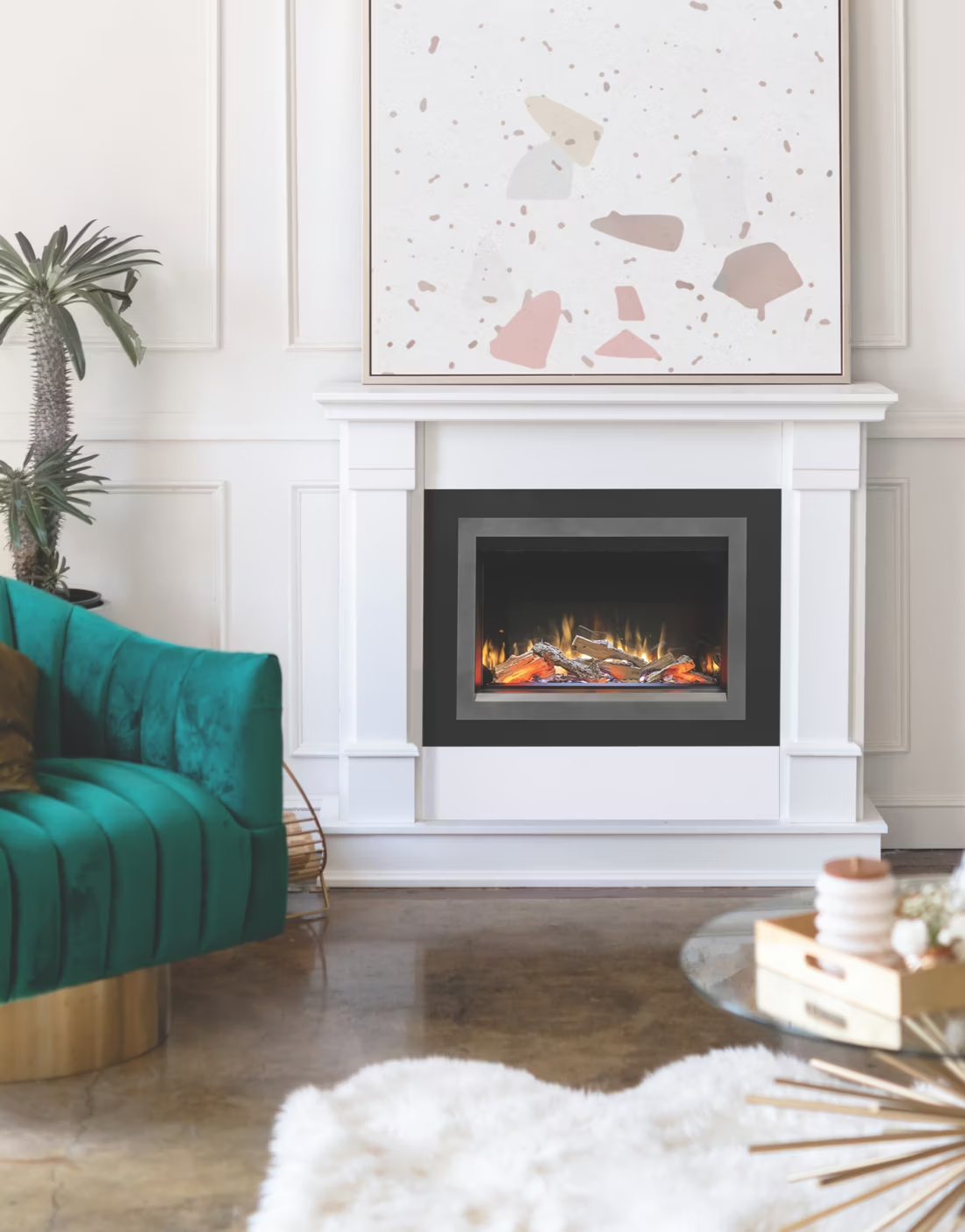
From Matador to Roaring Springs, electric fireplaces bring instant, ventless warmth to Motley County homes—no chimney, no gas line, no wood to split. Find the right unit and connect with a trusted local dealer.
Every Project Starts From One of These Five Situations
Reliable warmth without a chimney or gas line.
Motley County is one of the least populated counties in Texas—just over 900 people spread across ranch country between Matador and Roaring Springs. Zone 3B winters here are generally mild, but the Rolling Plains sit exposed to sudden Panhandle cold fronts, the kind of blue norther that can drop temperatures from the 60s into the teens overnight. Oak, pecan, and mesquite are common on local land and plenty of homes still burn wood, but for many households—especially older ranch houses, manufactured homes, and in-town properties without a gas line—an electric fireplace is the simplest way to add real supplemental warmth to a bedroom, den, or sunroom without opening up a wall for venting.
Most of Motley County is served by Lighthouse Electric Cooperative, and like many rural co-op territories, a hard ice storm can occasionally interrupt service for a stretch. That's worth knowing going in: an electric fireplace is outstanding for everyday zone heating and ambiance, but it won't function as backup heat during an outage the way a wood stove can. With no local air quality restrictions to worry about and no chimney to maintain, electric remains the lowest-hassle way to get supplemental heat and a real fire look into a Motley County home—you just want to go in clear-eyed about what it can and can't do when the co-op grid is down.
Three steps. No salesperson until you're ready.
Tell us about your project
Your zip code, your situation, and the fuel you're leaning toward—or let the answers point you to one.
See what's actually available
The brands dealers within 100 miles genuinely carry—real options, never a catalog mirage.
Get your dealer & Project Guide
A trusted local dealer, plus the free Project Guide & Parts List that names every component of the job.
Frequently Asked Questions
How much does an electric fireplace installation cost in Motley County?
Plug-in electric fireplaces and inserts are the least expensive hearth option available—a freestanding or wall-mount unit typically runs $300 to $1,200 installed, with no venting, gas line, or chimney work required. A hardwired built-in electric fireplace, which needs a dedicated circuit run by a licensed electrician, generally lands closer to $800 to $2,000 depending on how far the unit sits from your panel and whether wall or cabinetry work is involved. Given Motley County's small population, most electricians and hearth dealers who cover the county are based out of Floydada, Plainview, or Lubbock, so factor in a modest trip charge for in-home installs.
Do I need a permit to install an electric fireplace in Motley County?
A simple plug-in electric fireplace or insert generally doesn't require a permit anywhere in Motley County—it's no different than plugging in a space heater. A hardwired built-in unit that requires new wiring is a different story: within the incorporated limits of Matador or Roaring Springs, check with the town office before an electrician runs a new circuit, since electrical work is typically inspected even in small jurisdictions. In the unincorporated parts of the county, there's no countywide building code, but any electrician doing the work should still follow National Electrical Code requirements for the dedicated circuit and GFCI protection where applicable.
What's the best electric fireplace for Motley County's climate?
Because Zone 3B winters here are mild most of the season with occasional sharp cold fronts, most Motley County homes do best with an electric fireplace sized for supplemental zone heat rather than whole-home heating—a unit rated around 1,500 watts (roughly 5,000 BTU) will comfortably take the edge off a bedroom or living room during a cold snap. Look for a model with a thermostat and multiple heat settings so you can run it on flame-only for ambiance during the many mild evenings and dial up the heat when a blue norther rolls through. For older ranch homes with drafty single-pane windows, a slightly larger insert or stove-style unit with a built-in fan will move warm air more effectively.
Electric vs. wood—which makes more sense for a Motley County home?
Wood has deep roots here—oak, pecan, and mesquite are all common on local ranch land, and plenty of households still keep a wood stove going through the coldest stretches, in part because it works even when the power is out. Electric can't do that; if Lighthouse Electric Cooperative service drops during an ice storm, an electric fireplace goes dark along with everything else. Where electric wins is convenience and flexibility: no wood to split and haul, no chimney to sweep, no smoke, and it can go almost anywhere in the house with an outlet. Many Motley County homes end up with both—wood or a wood stove as the serious backup heat source, and an electric unit in a bedroom or den for everyday, low-effort warmth.
Will my electric fireplace work during a power outage?
No—electric fireplaces require power to run both the heater and the flame effect, so they'll shut off the moment the power does. This matters more in Motley County than in a big city, since rural co-op lines served by Lighthouse Electric Cooperative can take longer to restore after an ice storm or high-wind event than lines closer to a substation. If backup heat during outages is a real concern for your household, pair an electric fireplace for everyday convenience with a wood stove, propane heater, or generator plan for the occasions when the grid goes down.
Can I put an electric insert into my existing wood-burning fireplace?
Yes—this is a common project in older Motley County ranch houses that have a masonry or prefab wood-burning fireplace that's gone unused or is due for expensive chimney repair. An electric insert slides into the existing firebox opening, plugs into a nearby outlet or dedicated circuit, and gives you a working heat source and flame display without touching the chimney at all. It's typically the fastest and cheapest way to bring a dead or aging fireplace back into daily use, and there's no masonry work, sweep, or venting inspection involved.
What's the difference between an electric fireplace, insert, and stove?
A freestanding electric fireplace or media console stands on its own and can go against almost any wall with an outlet nearby. An electric insert is built to slide into an existing fireplace opening, whether that's a wood-burning firebox or a zero-clearance unit you're retiring. An electric stove is a compact, freestanding unit styled like a traditional wood stove, popular for smaller rooms or cabins on ranch property where floor space is tight but you still want a real stove look. For most Motley County homes, the choice comes down to whether you already have a fireplace opening to fill (insert) or are starting from a bare wall (freestanding or stove-style).
Where can I buy an electric fireplace near Motley County?
Given Motley County's population of under 1,000, there isn't a hearth showroom inside the county itself—most residents source electric fireplaces and inserts through dealers based in Plainview, Floydada, or Lubbock who are used to serving smaller Panhandle and Rolling Plains communities like Matador and Roaring Springs. A trusted local dealer can confirm what will actually fit your electrical setup, whether your home needs a dedicated circuit, and handle delivery out to the ranch rather than leaving you to guess with a big-box return policy.
Electric vs. propane—which is right for my Motley County home?
Propane is common in rural Motley County because natural gas lines don't reach most properties outside town, and a propane fireplace or stove can put out serious heat and, with the right ignition system, keep running during a power outage. Electric can't match that outage performance, but it's far simpler to install—no propane tank, no gas line, no annual gas appliance service—and it costs less upfront. If your home already has a propane tank for a water heater or range, adding a propane fireplace is a natural extension. If you just want low-hassle supplemental heat and ambiance in a specific room without dealing with fuel deliveries, electric is the easier path.
Does an electric fireplace need a vent or chimney?
No—that's its superpower. An electric fireplace needs a wall and an outlet, period. No vent pipe, no gas line, no clearances to design around, which is why it works in bedrooms, offices, apartments, and walls where venting a gas or wood unit would be impractical or impossible. Installation is typically the simplest and least expensive of any fireplace type.
Can I put a TV above my fireplace?
Yes—with an asterisk. Fireplaces are hot and TVs don't like heat. Either put a mantel between them to deflect rising warmth, or choose a fireplace with heat-management technology that creates a cool zone on the wall above—the wall stays around 125 degrees, barely warm, while the room still gets full heat. If you like clean lines and don't want a mantel, heat management is the answer.
Can a fireplace actually lower my heating bill?
Yes—by creating a comfort zone. A furnace heats every square foot of the house just to warm the one room you're in; a gas fireplace on low burns roughly a sixth of the gas a typical furnace does. Set the furnace around 55–60 degrees as a baseline, then heat the rooms your family actually uses. Families who heat this way commonly save $20–$60 a month.
Does a fireplace add value to my home?
On average, a fireplace adds back to the home about the same amount you spent installing it. Add the monthly savings from heating the rooms you actually use instead of the whole house—often hundreds of dollars a year—and the value case is strong before you even count what a fire does for how your family uses the room.
Stove and Fireplace Dealers in Motley County
Listings include WhyFire partner dealers, dealers we have verified as authorized for the brands we recommend, and established local businesses that carry hearth products. Every listing shows which one it is. The ones marked Preferred run on WhyFire's software, so they can show you real pricing and book your appointment right here. No manufacturer pays for placement. How we verify dealers →
A & A Chimeny Sweep w/Texas Fp
Coastal Insulation
Caprock Brick
Ford Insulation And Fireplaces
Find your electric fireplace in Motley County.
Tell us a bit about your Motley County home and we'll match you with the right electric fireplace, insert, or stove—plus a free Project Guide & Parts List and a trusted local dealer to install it.
Find Your Fireplace →