
Find the right fireplace for your Motley County home.
Wood, gas, pellet, and electric fireplace resources for Matador, Roaring Springs, Flomot, and the ranches in between. Find My Fireplace connects Motley County homeowners with the nearest trusted hearth dealer, whichever fuel fits the house.
Every Project Starts From One of These Five Situations
Rolling Plains heat in Motley County, Texas.
Motley County sits on the Texas Rolling Plains below the Caprock, with a population of roughly 942 spread across open ranch country. Climate zone 3B means winters here are mild by national standards—nothing like the sustained deep freeze of Fargo, ND—but blue northers still roll through most years, dropping temperatures into the teens or single digits for a night or two before clearing out. That swing, plus the county's ranching heritage, keeps wood heat relevant: post oak and pecan from the creek bottoms and mesquite cleared off rangeland have heated Motley County homes and line camps for generations, and self-cut firewood remains cheap and available on working ranches.
This hub covers what's actually available across Motley County—hearth retailers, service technicians, and fuel suppliers serving Matador (the county seat), Roaring Springs, Flomot, Northfield, and Whiteflat. Given the county's small population, most dealers and technicians are based in larger Rolling Plains trade centers like Lubbock, Childress, or Plainview and travel in for consultations and installs. Pick your fuel below for local coverage, install costs, and the dealers that actually reach this part of Texas.
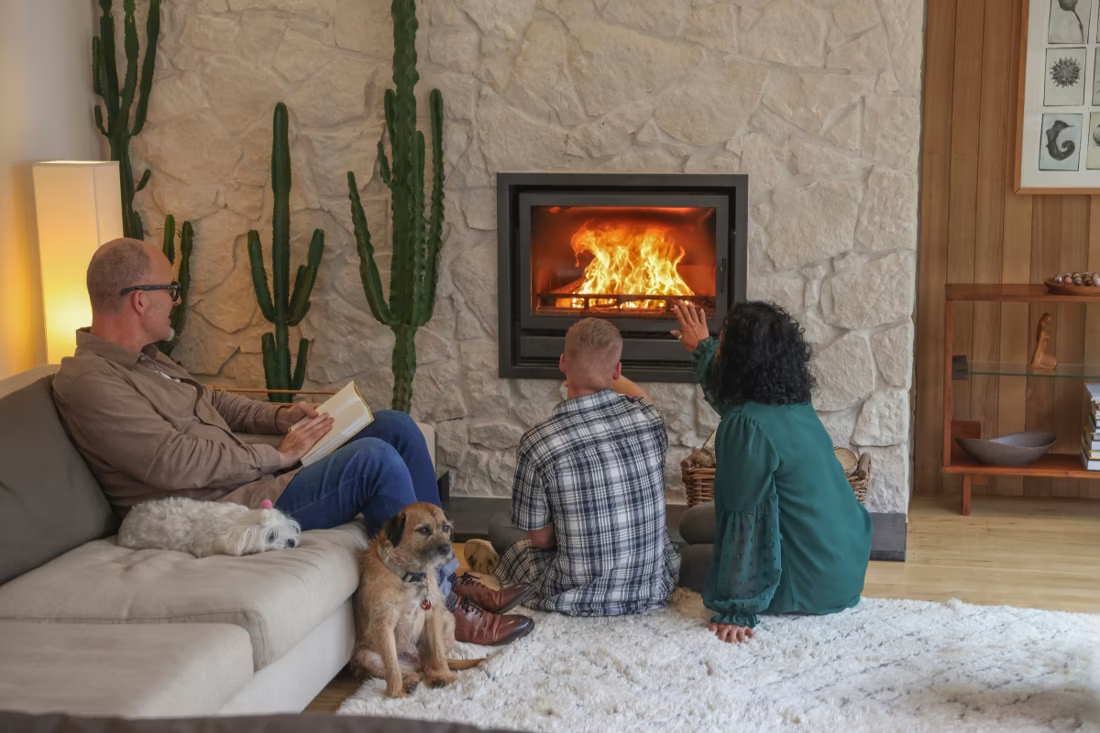
Four fuels. One honest answer for Motley County.
Three steps. No salesperson until you're ready.
Tell us about your project
Your zip code, your situation, and the fuel you're leaning toward—or let the answers point you to one.
See what's actually available
The brands dealers within 100 miles genuinely carry—real options, never a catalog mirage.
Get your dealer & Project Guide
A trusted local dealer, plus the free Project Guide & Parts List that names every component of the job.
Frequently Asked Questions
Which fuel works best in Motley County?
It depends on the property. Wood is the traditional choice on Motley County ranches—post oak and pecan from creek bottoms, plus mesquite cleared off rangeland, are often already on hand and cost little beyond the labor to cut and split. Gas here almost always means propane rather than piped natural gas, since the county has no municipal gas utility; propane fireplaces and inserts give instant heat without hauling wood, which matters for older residents or vacation places that sit empty part of the year. Pellet is a middle ground—Forest Energy and Lignetics pellets are available through regional farm and ranch supply stores, and a pellet stove skips the splitting and stacking that wood requires. Electric works well as supplemental heat in a bedroom or a line shack, but with zone-3B winters running mild overall, it's rarely anyone's only heat source. Many Motley County homes end up with wood or propane as primary heat and something smaller for the rooms that don't need a full stove running.
Do I need a permit to install a fireplace in Motley County?
It varies, and it's worth a call to the county before you start. Much of Motley County is unincorporated ranch land without a formal residential building-permit process for detached construction, so many wood stove and insert installs proceed under manufacturer clearance specs and standard electrical and fire code rather than a county permit. Propane fireplace and stove installs still require a licensed propane technician to run and pressure-test the gas line, regardless of whether a building permit is pulled. If you're inside Matador or Roaring Springs city limits, check with the city office first, since municipal rules can differ from the surrounding county. Most dealers who travel in from Lubbock or Childress can tell you exactly what's required for your specific address.
Are there air quality restrictions on wood burning in Motley County?
No—Motley County has no wood-burning curtailment program or air quality nonattainment designation, unlike some of the larger Texas metro areas that issue ozone-action-day burn advisories. The county's open rolling-plains terrain doesn't trap smoke the way a basin or valley does, so there's no local advisory system to check before lighting a fire. The main local burning concern is agricultural and rangeland fire risk during dry, windy stretches—worth checking with the county before any outdoor burning, though it doesn't affect indoor wood stove or fireplace use.
Can one local hearth retailer handle all four fuel types?
Some can, but with a county population under 1,000, Motley County itself doesn't have a full multi-fuel showroom—the dealers who cover Matador and Roaring Springs are based in Lubbock, Childress, or Plainview and typically carry wood, propane, and pellet lines, with electric fireplaces as a smaller add-on category. Local ranch and farm supply stores sometimes stock a basic wood or pellet stove but generally aren't set up to handle full installation, venting, or propane line work. If you want to compare fuels side by side, a traveling dealer who covers multiple fuels can walk the property and tell you what actually fits the house before you commit.
How does service work in rural areas of Motley County?
Expect technicians to travel a fair distance—most chimney sweeps, propane service techs, and pellet stove technicians covering Motley County are based out of Lubbock, Childress, or Plainview, roughly an hour or more away depending on the road. A trip fee for rural calls is common, and scheduling ahead of the first cold front (September–October) is much easier than trying to book a mid-winter emergency visit after a blue norther hits. For ranch properties, it's worth keeping a small stock of propane regulator parts or pellet stove igniters on hand, since a same-day service call isn't always realistic out here.
What's the typical cost range for fireplace installation across all fuel types in Motley County?
Costs run similar to the wider Rolling Plains region, plus a possible travel charge given the distance dealers cover. Wood stove or insert installation: roughly $3,500–$8,000 depending on chimney work. Propane fireplace, insert, or stove: roughly $4,000–$9,500, with cost driven mainly by tank setup and line length rather than local labor rates. Pellet stove or insert: roughly $4,000–$6,500 for a typical install. Electric fireplace: $200–$2,500 for the unit itself, with most installs being simple plug-in setups that add little to no labor cost. Ask any traveling dealer whether a rural trip fee applies before you get a final quote.
Does a fireplace add value to my home?
On average, a fireplace adds back to the home about the same amount you spent installing it. Add the monthly savings from heating the rooms you actually use instead of the whole house—often hundreds of dollars a year—and the value case is strong before you even count what a fire does for how your family uses the room.
Wood, gas, pellet, or electric—how do I choose?
Match the fuel to your life, not the other way around. Wood: lowest fuel cost and total power-outage independence, but you're hauling and stacking. Gas: press a button, set a thermostat, no maintenance to speak of. Pellet: wood economics with automatic feeding, in exchange for weekly cleaning and a need for electricity. Electric: plugs in anywhere with honest supplemental heat. Nobody regrets the fuel that fits how they actually live.
What is an in-home preview and do I need one?
It's a visit where a hearth professional measures your space, confirms the model you picked actually works in your home, and walks the specs—framing, gas line, venting, finish work—before anything is ordered. Some details you just can't know until you see the house. Never make a down payment without one; it's the single most-skipped step that burns buyers.
Can I install a fireplace myself?
If you're putting a fire in your house on purpose, it's best to work with an expert. Unless you're genuinely experienced in framing, gas line, vent pipe, and the national code on clearances to combustibles, have a professional do it—and ideally the same company that sells you the fireplace, so warranty, service, and liability all live under one roof.
Stove and Fireplace Dealers in Motley County
Listings include WhyFire partner dealers, dealers we have verified as authorized for the brands we recommend, and established local businesses that carry hearth products. Every listing shows which one it is. The ones marked Preferred run on WhyFire's software, so they can show you real pricing and book your appointment right here. No manufacturer pays for placement. How we verify dealers →
A & A Chimeny Sweep w/Texas Fp
Coastal Insulation
Caprock Brick
Ford Insulation And Fireplaces
Get matched with a hearth dealer who covers Motley County.
Tell us about your home in Matador, Roaring Springs, or anywhere else in the county, and we'll match you with a trusted local dealer and send a free Project Guide & Parts List—the exact parts, including the vent kit, and the dealer we recommend for your project.
Find Your Fireplace →