
Keep Your Family Warm and Safe—No Matter What
With winter lows averaging 43°F, wood heat here is about ambiance and storm-season backup, not surviving a blizzard. Find the right unit and connect with a trusted local dealer.
Every Project Starts From One of These Five Situations
Ambiance and backup power, not primary heat.
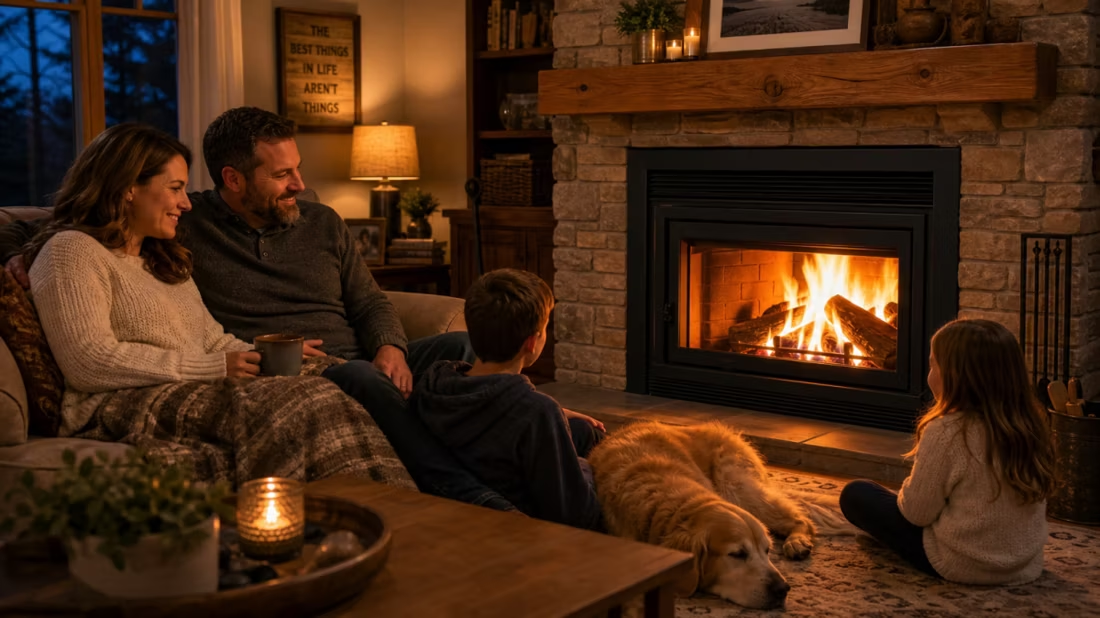
Missouri City sits in climate zone 2A along the Gulf Coastal Plain, with a mild, short winter heating season and an average winter low near 43°F. That's a fraction of what a city like Duluth, MN racks up in a single cold snap, and it means almost no Fort Bend County home is heating primarily with wood. What draws homeowners here to a wood-burning fireplace or stove is different: the look and feel of a real fire on the handful of nights each winter that dip into the 30s, and—increasingly—the ability to keep a room warm and lit when a tropical storm knocks out CenterPoint Energy service for days at a time.
Fort Bend County has no non-attainment or winter inversion concerns tied to wood smoke, so burning isn't restricted the way it is in mountain basins or wildfire-prone regions. Local firewood tends to come from oak, pecan, and mesquite—much of it sourced from land-clearing and storm cleanup rather than public forest permits, since there's no national forest land within Missouri City itself. For most homeowners here, the right wood stove or fireplace insert is sized for occasional use and reliable operation with no electricity required, which matters a great deal during hurricane season.
Three steps. No salesperson until you're ready.
Tell us about your project
Your zip code, your situation, and the fuel you're leaning toward—or let the answers point you to one.
See what's actually available
The brands dealers within 100 miles genuinely carry—real options, never a catalog mirage.
Get your dealer & Project Guide
A trusted local dealer, plus the free Project Guide & Parts List that names every component of the job.
Frequently Asked Questions
How much does a wood stove or fireplace installation cost in Missouri City?
Most wood-burning installations in Missouri City run between roughly $3,500 and $8,500. On the lower end, that's a freestanding wood stove with new Class A chimney pipe run through a wall or roof—common in the area's newer subdivisions, where most homes were built with gas log sets or no fireplace at all rather than a wood-ready masonry chimney. On the higher end, a factory-built zero-clearance wood fireplace with a full chase and cap, or a masonry retrofit, costs more once framing and roofing work are involved. A local installer will give you a firm number after seeing your home's existing venting situation, if any.
What size wood stove do I actually need here?
Smaller than you'd think. With winter lows averaging in the low-to-mid 40s and only a mild, short winter heating season, Missouri City homeowners are almost never trying to heat a whole house with wood the way someone in Fargo, ND would be. A small to mid-size stove—the kind rated for 800 to 1,500 square feet—is plenty to warm a family room or den on a cold snap and double as backup heat during a power outage. Oversizing a stove for this climate just means smoldering, low-temperature fires and creosote buildup, so local dealers generally steer buyers toward the smaller end of a manufacturer's lineup.
Where can I find a certified wood stove installer near me?
Look for NFI (National Fireplace Institute) certification or CSIA (Chimney Safety Institute of America) credentials—the trusted dealers we match Missouri City homeowners with carry these. Because wood-burning installs are less common in Fort Bend County than gas, it's worth confirming the installer has actually run Class A chimney pipe through a roof recently rather than only servicing gas log sets. Proper clearances and cricket flashing matter just as much here as in a cold-climate market, even if the appliance sees less use.
Can I convert my existing gas log fireplace to real wood?
Often, but not always. A lot of Missouri City homes built since the 1990s have a factory-built firebox designed and vented specifically for gas logs, which isn't rated to burn actual wood—the clearances and flue design are different. Converting typically means installing a wood-burning insert or a new zero-clearance wood-burning fireplace unit rather than simply swapping the logs. A local dealer can inspect your existing firebox and tell you within a few minutes whether it's wood-capable or needs a real retrofit.
Do I need a permit to install a wood stove in Missouri City?
Yes—a building permit is required through the City of Missouri City's development services department (or Fort Bend County if you're outside city limits), covering the appliance, hearth clearances, and chimney or vent penetration through the roof. There are no wood-smoke curtailment days here the way there are in ozone- or inversion-prone Western cities—Fort Bend County's air quality concerns are tied to summer ozone from vehicle traffic, not winter wood smoke. Most local installers pull the permit as part of the job.
What's the best wood stove for a mild, hurricane-prone climate like this?
Since you're not trying to hold a 20-hour overnight burn at sub-zero temps, look less at extreme cold-climate catalytic stoves and more at mid-size non-catalytic models from brands like Pacific Energy, Vermont Castings, or Jotul—reliable, easy to operate occasionally, and simple to relight after sitting unused for months between storms. If backup heat during CenterPoint outages is a real priority for your household, ask your local dealer about models with a flat cooktop surface, which lets you also heat water or food on the stove itself with zero electricity.
How often should my chimney be inspected if I only burn a few times a year?
Even light, occasional use warrants an annual inspection—the CSIA standard doesn't change based on how many fires you burn. In Missouri City's humid Gulf Coast climate, a chimney sitting unused for eight or nine months a year is actually more prone to moisture damage, animal nesting, and flue liner deterioration than one in constant winter use farther north. Plan on a Level 1 inspection each fall before the first cool front, and treat it as a quick, inexpensive check rather than an afterthought.
Where does firewood come from in Missouri City?
There's no national forest land in Fort Bend County, so firewood here comes almost entirely from local suppliers, tree services, and land-clearing operations rather than Forest Service cutting permits. Oak and pecan are the most common seasoned firewood sold locally, with mesquite also available and popular for its dense, long-burning coals. Expect to pay by the rick or half-cord from local sellers rather than a full Western-style cord, and buy seasoned wood early in the fall—supply tightens fast after the first real cold snap.
Wood stove vs. pellet stove—which makes more sense here?
For most Missouri City homes, wood has one clear advantage: it works with zero electricity, which matters when a tropical storm takes down power for days at a time. Pellet stoves from brands like Forest Energy or Lignetics burn cleaner and are easier to operate day-to-day, but the auger and blower both require electricity, so a pellet stove goes dark in the same outage a wood stove would keep running through. Given how mild the winters are and how real the hurricane-season outage risk is, wood tends to be the more practical backup choice, while pellet appeals more to homeowners who simply want low-maintenance ambiance and don't need outage resilience.
Why is my open fireplace making my house colder?
Open fireplaces suck—literally. As the fire burns, it consumes air your furnace already paid to heat and pulls it out through the chimney, so the house is actually colder after the fire goes out than before you lit it. An insert fixes this: it seals the chimney, puts fixed glass across the front, and turns that hole in your house into a real heat source.
Why is a fireplace insert so efficient?
An insert does two things: it seals the chimney completely, so you stop losing air you already paid to heat, and it radiates warmth into the room through the firebox and glass. Most add a heat-exchange fan that pulls cool room air underneath, wraps it around the hot firebox, and pushes it back out warm. Your home is more efficient before you've even lit the first fire.
How much should I budget for a fireplace?
For an average home—covering the fireplace, the vent pipe, and basic installation—a budget between $3,900 and $5,500 gives you a lot of options across wood, gas, and pellet. By the time you add finish work, gas line, and electrical, the average complete installation lands between $5,000 and $12,000 all-in. In a remodel or new build, a good rule is to put about 2.5% of the total project cost toward the fireplace.
Does a fireplace add value to my home?
On average, a fireplace adds back to the home about the same amount you spent installing it. Add the monthly savings from heating the rooms you actually use instead of the whole house—often hundreds of dollars a year—and the value case is strong before you even count what a fire does for how your family uses the room.
Nearby Dealers
Hearth shops serving Missouri City and the surrounding area.
Find your wood fireplace in Missouri City.
Tell us a bit about your home and we'll match you with a trusted local dealer and a free Project Guide & Parts List—sized right for occasional use and built to keep working when the power doesn't.
Find Your Fireplace →