
Add cozy, no-hassle heat to your Mills County home.
With mild winters and a lot of ground between Goldthwaite and the county line, electric heat is an easy fit for ranch houses, guest cabins, and manufactured homes across Mills County. No chimney, no gas line, no propane tank—just plug in and warm up. We'll match you with a trusted local dealer.
Every Project Starts From One of These Five Situations
Mild winters call for straightforward heat.
Mills County sits in climate zone 3A with an average winter low around 33°F and roughly 2,372 heating degree days a year—a mild heating season by national standards, closer to the Gulf South than to the hard winters of Fargo or Bismarck. Around 2,100 people live across the county's ranch and farm acreage, pecan bottomland, and the small town of Goldthwaite at its center. For most homes here, a whole-house furnace or heat pump already handles the bulk of the work, and heat only needs real help on the handful of nights each winter that dip into the 20s.
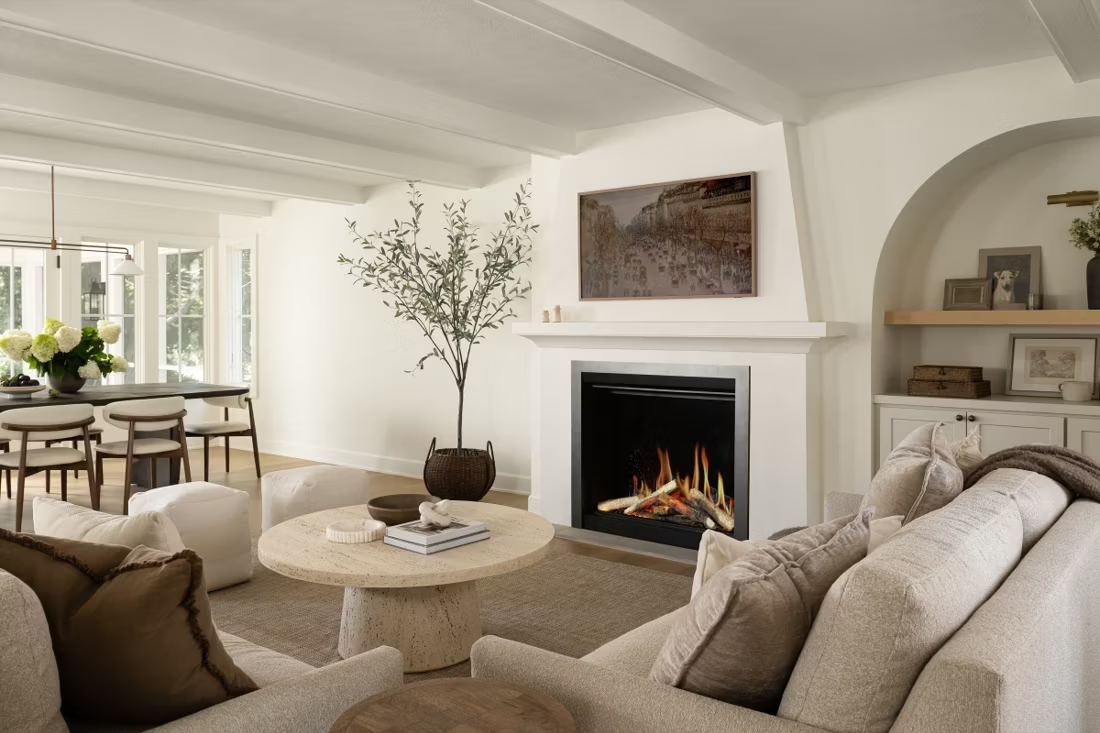
That's exactly the gap an electric fireplace fills. There's no venting to run, no gas line, and typically no burn restrictions to track—Mills County has no listed air quality concerns, but electric units sidestep that conversation entirely since there's no combustion or smoke. Many county homes are manufactured or mobile housing on rural acreage, where running new gas service or a masonry chimney isn't practical; an electric insert or freestanding unit plugs into an existing outlet or a single dedicated circuit and adds real ambiance and zone heat to a living room, bunkhouse, or guest cabin without touching the structure.
Three steps. No salesperson until you're ready.
Tell us about your project
Your zip code, your situation, and the fuel you're leaning toward—or let the answers point you to one.
See what's actually available
The brands dealers within 100 miles genuinely carry—real options, never a catalog mirage.
Get your dealer & Project Guide
A trusted local dealer, plus the free Project Guide & Parts List that names every component of the job.
Frequently Asked Questions
How much does it cost to install an electric fireplace in Mills County?
Plug-in electric fireplaces and freestanding stoves—the kind that use a standard 120V outlet—typically run $200 to $900 for the unit itself, with no installation labor required beyond setting it in place. Built-in electric fireplaces or inserts that get wired into a wall or existing masonry opening run higher, generally $1,500 to $4,000 installed, mostly driven by carpentry and whether an electrician needs to add a dedicated 120V or 240V circuit. Because there's no venting or gas work involved, electric installs in Mills County tend to land on the lower end compared to wood or gas projects—a local dealer can give you a firm number after seeing the space.
Do I need a permit to install an electric fireplace in Mills County?
In most cases, no—a plug-in electric fireplace or stove that uses an existing outlet doesn't trigger a building permit anywhere in the county. If you're having a built-in unit wired with a new dedicated circuit, that electrical work should be done by a licensed electrician and, if you're inside Goldthwaite city limits, may require an electrical permit through the city. Out in unincorporated Mills County, permitting requirements are much lighter, which is typical for rural Texas counties—but it's still worth confirming with your electrician before work starts, especially if the fireplace will be on its own breaker.
What size electric fireplace or insert do I need for my home?
Electric units are rated in BTUs just like gas or wood, but most top out around 5,000-6,000 BTUs—enough to comfortably heat a single room of 400 to 1,000 square feet, not a whole ranch house. For a main living area in a typical Mills County farmhouse or manufactured home, a 40-50 inch insert or wall-mount unit is usually the right scale. If you're trying to take the edge off a larger open floor plan, plan on it as supplemental heat alongside your existing furnace or heat pump rather than a primary source—the mild 33°F average winter low here means most rooms only need a modest boost on the coldest nights.
What's the difference between an electric fireplace, insert, and stove?
An electric fireplace is usually a built-in unit set into a wall or mantel surround, designed to look like a traditional fireplace with a flame-effect display. An electric insert is sized to slide into an existing masonry firebox—useful if you've got an old wood-burning fireplace in a Mills County farmhouse that you'd rather not maintain or fuel with cordwood. An electric stove is a freestanding cabinet-style unit that sits anywhere near an outlet, similar in footprint to a wood stove but with none of the venting. For most rural homes without an existing fireplace, a freestanding stove or wall-mount unit is the simplest option.
Does electric heat make sense compared to wood in Mills County's climate?
With local oak, pecan, and mesquite readily available and standard relevance for wood heat in the county, plenty of Mills County homes still burn cordwood—but electric is the lower-effort choice for anyone who wants supplemental warmth without cutting, stacking, or tending a fire. Given the county's mild 2,372 heating degree days, most homes don't need wood's higher BTU output to get through winter; electric covers the occasional cold snap just fine, and it's the easier call for a guest house, workshop, or a room that only gets used part of the year.
Will my electric fireplace still work during a power outage?
No—electric fireplaces require power to run, which is the one real tradeoff against wood or propane. Much of rural Mills County is served by a local electric cooperative rather than a large investor-owned utility, and outages can run longer to restore than in town. If backup heat during outages matters to you—say, for a remote property away from Goldthwaite—it's worth pairing an electric fireplace for everyday ambiance and convenience with a wood stove or propane heater as a true emergency backup.
Can I install an electric fireplace in a manufactured or mobile home?
Yes, and it's one of the more common installs across rural Mills County, where manufactured and mobile homes make up a meaningful share of the housing stock. Freestanding electric stoves and wall-mount units work well since they don't require any structural cutting for venting—just a stable outlet or a properly rated circuit. The main thing to check is your home's electrical panel capacity if you're adding a dedicated circuit for a larger built-in unit; a local dealer or electrician can confirm your panel can handle the additional load.
What should I look for in an electric fireplace for a Mills County ranch home?
Look for a unit with a strong flame-effect display that reads well even in daylight—Mills County living rooms tend to get a lot of natural light through big windows, and cheaper LED displays can look washed out. A model with a separate heater switch is worth having so you can run the flame for ambiance in warmer months without the heat element kicking on. For open ranch-style floor plans, a wider insert (50 inches or more) will do more visual work filling a large wall than a narrow unit sized for a small den.
Electric vs. pellet stove—which is the better fit?
Pellet stoves burn compressed wood pellets—available regionally from brands like Forest Energy and Lignetics—and put out real, sustained heat with a hopper and auger system, but they need electricity to run the blower and auger, plus a vent through the wall or roof. Electric fireplaces skip the venting and the pellet bags entirely, plugging straight into a standard circuit, but they max out at a few thousand BTUs and won't heat a whole house the way a pellet stove can. For a primary heat source in a larger Mills County home, pellet has more capacity; for ambiance and light supplemental heat in a specific room, electric is simpler and cheaper to install.
Can I put a TV above my fireplace?
Yes—with an asterisk. Fireplaces are hot and TVs don't like heat. Either put a mantel between them to deflect rising warmth, or choose a fireplace with heat-management technology that creates a cool zone on the wall above—the wall stays around 125 degrees, barely warm, while the room still gets full heat. If you like clean lines and don't want a mantel, heat management is the answer.
Do electric fireplaces actually produce heat?
Yes—most put out around 4,800–5,000 BTUs from a standard outlet, which comfortably warms a bedroom, office, or den as a comfort-zone heater. What they won't do is carry a whole house the way wood, gas, or pellet can. Think of electric as ambiance-first with honest supplemental heat: flames on with no heat in July, flames plus warmth in January.
What is an in-home preview and do I need one?
It's a visit where a hearth professional measures your space, confirms the model you picked actually works in your home, and walks the specs—framing, gas line, venting, finish work—before anything is ordered. Some details you just can't know until you see the house. Never make a down payment without one; it's the single most-skipped step that burns buyers.
How much should I budget for a fireplace?
For an average home—covering the fireplace, the vent pipe, and basic installation—a budget between $3,900 and $5,500 gives you a lot of options across wood, gas, and pellet. By the time you add finish work, gas line, and electrical, the average complete installation lands between $5,000 and $12,000 all-in. In a remodel or new build, a good rule is to put about 2.5% of the total project cost toward the fireplace.
Stove and Fireplace Dealers in Mills County
Listings include WhyFire partner dealers, dealers we have verified as authorized for the brands we recommend, and established local businesses that carry hearth products. Every listing shows which one it is. The ones marked Preferred run on WhyFire's software, so they can show you real pricing and book your appointment right here. No manufacturer pays for placement. How we verify dealers →
Hoover True Value Hardware
C&G Products
Quality Fire
Tri-Supply - Temple
Gas Logs Express & Bbq
Area – Georgetown, Tx
Georgetown Energy
Backyard And Patio Store - Waco
Darden Building Materials
Parrish & Company Inc - Round Rock
Fredericksburg Overhead Door
Tri-Co Propane
Jules Design Bar
Backyard & Patio Store - Austin
Find your electric fireplace in Mills County.
Tell us a bit about your home and we'll put together a free Project Guide & Parts List—sized to your space and matched with a trusted local dealer who can install it right.
Find Your Fireplace →