
Fireplace and Stove Options for Every Homestead in Mills County.
Wood, gas, pellet, and electric fireplace resources for every town in Mills County—from Goldthwaite to Priddy, Mullin, and Star. Find the right unit and connect with a trusted local hearth retailer.
Every Project Starts From One of These Five Situations
Mild-winter heating in Mills County, Texas.
Mills County sits in the Cross Timbers region of central Texas, where winters are short and mild compared to the northern half of the country—the average winter low here is 33°F, and the county logs roughly 2,372 heating degree days a year, a fraction of what a place like Duluth, Minnesota sees in a single season. Climate zone 3A means humid summers and brief, manageable cold spells rather than months of hard freeze. That said, ranch families here have burned wood for generations—mesquite and oak cleared from pasture land, pecan salvaged from orchard thinning—and a wood stove or fireplace insert still makes sense for supplemental heat, ambiance, and the occasional hard freeze that does roll through the edge of the Hill Country.
This hub covers hearth retailers, service technicians, and fuel suppliers for every community in the county—Goldthwaite, the county seat, along with Priddy, Mullin, Star, and the ranches and farms scattered along the Highway 84 and 183 corridors. Pick a fuel below to see local dealers, typical installation costs, and the units that make sense for a mild-winter Texas home, whether you're heating a ranch house outside Goldthwaite or adding ambiance to a place in town.
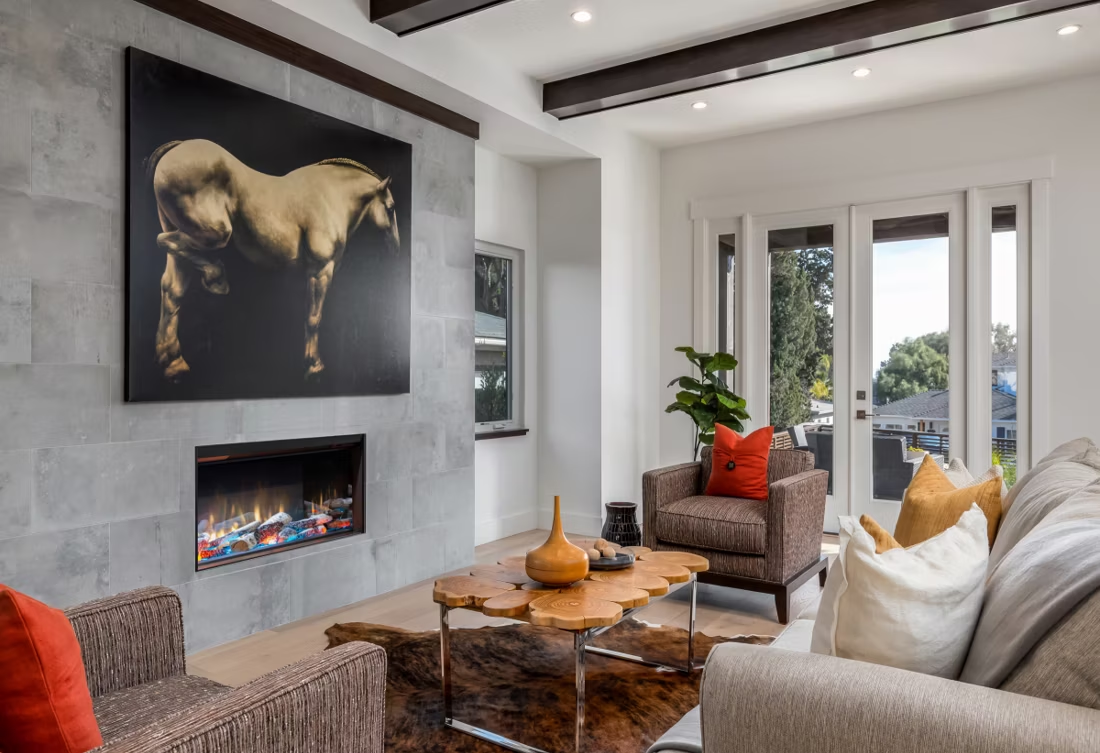
Four fuels. One honest answer for Mills County.
Three steps. No salesperson until you're ready.
Tell us about your project
Your zip code, your situation, and the fuel you're leaning toward—or let the answers point you to one.
See what's actually available
The brands dealers within 100 miles genuinely carry—real options, never a catalog mirage.
Get your dealer & Project Guide
A trusted local dealer, plus the free Project Guide & Parts List that names every component of the job.
Frequently Asked Questions
Which fuel works best in Mills County?
It depends on the home and how much heat you actually need. Mills County's mild winters—average lows around 33°F and only about 2,372 heating degree days a year—mean no single fuel is mandatory the way it would be in a place like Bozeman, Montana. Wood is the traditional choice on ranch properties: oak, mesquite, and pecan cleared from pasture or orchard work are often already on hand, and a mid-size wood stove or insert handles the occasional hard freeze and cold front without running constantly. Gas—almost always propane out here, since piped natural gas is scarce in a county this rural—is the low-maintenance option for anyone who wants instant heat without stacking wood. Pellet stoves are a workable middle ground; Forest Energy and Lignetics both distribute into this part of Texas, so fuel isn't hard to find even though pellet use is less common than in colder states. Electric fireplaces do more work here than they would up north—in a 3A climate, electric can realistically serve as a home's only supplemental heat source in a bedroom or living room, not just as ambiance.
Do I need a permit to install a fireplace in Mills County?
Requirements are lighter here than in more urbanized counties. Mills County, like most rural Texas counties, doesn't enforce a county-wide building code outside incorporated city limits, so a wood stove, insert, or gas fireplace installed on a rural ranch property typically doesn't require a county permit. Inside Goldthwaite's city limits, check with the city before installing—gas line work in particular should go through a licensed propane technician regardless of permitting, since propane tank and line work has its own safety codes. Electric fireplaces rarely need a permit unless the installation involves new wiring or a dedicated circuit. If you're unsure whether your property falls inside city limits, most local dealers can tell you quickly and will handle any paperwork that applies.
Are there air quality restrictions on wood burning in Mills County?
Mills County has no air-quality non-attainment designations and no winter wood-smoke advisories like the inversion-prone parts of the country deal with—there's no equivalent of a curtailment day here. The one thing to watch for is drought-driven burn bans, which Mills County and its neighbors issue periodically during dry stretches; those apply to outdoor burning (brush piles, agricultural burns) rather than indoor wood stoves or fireplaces, but it's worth checking county notices if you're clearing land and planning to season that wood for your stove.
Can one local hearth retailer handle all four fuel types?
Given the county's population is under 2,200, most Mills County residents end up working with a dealer based in a larger nearby town who travels in for the consultation, sizing, and install—that's the norm here rather than the exception. Many of these dealers do carry wood, gas, and pellet lines together, since a rural customer base wants options in one stop; electric fireplaces are more likely to come from a broader home-goods retailer than a dedicated hearth shop. If you're comparing fuels, ask any dealer that covers Mills County which lines they carry before you schedule a home visit—coverage varies more here than it would in a denser market with several dedicated hearth stores.
How does service work in rural areas of Mills County?
Service technicians covering Mills County are almost always driving in from outside—there isn't enough population density to support a full-time chimney sweep or gas tech based in Goldthwaite alone. Expect a trip charge for ranch properties well off Highway 84 or 183, and expect to book service in the fall before the first real cold front rather than waiting for a mid-winter emergency, since techs are covering a lot of ground across several counties. If you're heating with propane, keep your tank filled ahead of winter—delivery routes in a county this rural can take longer to reach a single remote property than they would in town.
What's the typical cost range for fireplace installation across all fuel types in Mills County?
Costs in Mills County tend to run at or below statewide averages, since labor and travel are generally cheaper in a rural market even accounting for trip charges. Wood stove or insert installation: roughly $3,500–$7,500 for a typical setup, more if new chimney or hearth work is involved. Propane fireplace, insert, or stove: about $3,500–$8,000, with cost driven mostly by whether an existing propane line and tank are already in place. Pellet stove or insert: roughly $4,000–$6,500 installed. Electric fireplace: $200–$2,500 for the unit itself, plus $300–$1,000 in labor for anything beyond a plug-and-play install. Get a firm number from a local dealer's Project Guide before you commit—ranch properties with longer chimney runs or older wiring can push costs toward the higher end.
Can a fireplace actually lower my heating bill?
Yes—by creating a comfort zone. A furnace heats every square foot of the house just to warm the one room you're in; a gas fireplace on low burns roughly a sixth of the gas a typical furnace does. Set the furnace around 55–60 degrees as a baseline, then heat the rooms your family actually uses. Families who heat this way commonly save $20–$60 a month.
Does a fireplace add value to my home?
On average, a fireplace adds back to the home about the same amount you spent installing it. Add the monthly savings from heating the rooms you actually use instead of the whole house—often hundreds of dollars a year—and the value case is strong before you even count what a fire does for how your family uses the room.
What is an in-home preview and do I need one?
It's a visit where a hearth professional measures your space, confirms the model you picked actually works in your home, and walks the specs—framing, gas line, venting, finish work—before anything is ordered. Some details you just can't know until you see the house. Never make a down payment without one; it's the single most-skipped step that burns buyers.
Can I install a fireplace myself?
If you're putting a fire in your house on purpose, it's best to work with an expert. Unless you're genuinely experienced in framing, gas line, vent pipe, and the national code on clearances to combustibles, have a professional do it—and ideally the same company that sells you the fireplace, so warranty, service, and liability all live under one roof.
Stove and Fireplace Dealers in Mills County
Listings include WhyFire partner dealers, dealers we have verified as authorized for the brands we recommend, and established local businesses that carry hearth products. Every listing shows which one it is. The ones marked Preferred run on WhyFire's software, so they can show you real pricing and book your appointment right here. No manufacturer pays for placement. How we verify dealers →
Hoover True Value Hardware
C&g Products
Quality Fire
Tri-Supply - Temple
Gas Logs Express & Bbq
Area – Georgetown, Tx
Georgetown Energy
Backyard And Patio Store - Waco
Darden Building Materials
Parrish & Company Inc - Round Rock
Fredericksburg Overhead Door
Tri-Co Propane
Jules Design Bar
Backyard & Patio Store - Austin
Find your fireplace in Mills County.
Tell us about your home and we'll match you with a trusted local dealer and a free Project Guide & Parts List—the exact parts, vent kit, and dealer recommendation for your fuel and your address.
Find Your Fireplace →