
Instant heat that keeps working when the power doesn't.
Midlothian winters are short and mild, but the ERCOT grid isn't always dependable. Find the right gas fireplace or insert and connect with a trusted local dealer.
Every Project Starts From One of These Five Situations
Comfort on demand, built for Texas weather swings.
Midlothian sits in climate zone 3A, logging around 2,431 heating degree days a year with an average winter low near 34°F—a heating season measured in weeks, not months. But short doesn't mean irrelevant: Ellis County still sees hard freezes most winters, and February 2021's Winter Storm Uri left thousands of ERCOT customers in the Dallas-Fort Worth area without power during a multi-day freeze. That combination—mild winters punctuated by occasional real cold and an electric grid that has shown it can strain—is exactly the situation a gas fireplace is built for.
As Midlothian has grown from a small Ellis County town into a fast-expanding DFW suburb of more than 35,000 people, gas fireplaces have become a standard builder feature in new subdivisions. Older homes across the city often have masonry wood-burning fireboxes that see little use given the short heating season, making them strong candidates for a gas log set or insert conversion. Gas line availability tracks closely with where you live: homes inside Midlothian proper served by Oncor Electric Delivery are usually also on a natural gas main, while rural properties served by United Electric Cooperative or Navarro County Electric Cooperative are more likely to rely on propane instead.
Three steps. No salesperson until you're ready.
Tell us about your project
Your zip code, your situation, and the fuel you're leaning toward—or let the answers point you to one.
See what's actually available
The brands dealers within 100 miles genuinely carry—real options, never a catalog mirage.
Get your dealer & Project Guide
A trusted local dealer, plus the free Project Guide & Parts List that names every component of the job.
Frequently Asked Questions
How much does a gas fireplace installation cost in Midlothian?
In the Ellis County and greater DFW market, a direct-vent gas fireplace or insert installation typically runs $3,500 to $9,000. A gas log set added to an existing masonry firebox sits at the lower end, a sealed direct-vent insert conversion falls in the middle, and a new built-in gas fireplace during a remodel or new-construction upgrade—especially one requiring a new gas line run from the meter—lands at the higher end. Homes in Midlothian's newer subdivisions that are already plumbed for natural gas generally save on labor compared with older homes needing a line extension.
I have an old wood-burning fireplace that never gets used—can I convert it to gas?
Yes, and it's one of the most common projects local dealers see here. Because average winter lows hover around 34°F and the heating season is short, a lot of the wood-burning masonry fireboxes built into Midlothian homes through the 1990s and 2000s sit unused most of the year. A gas log set or sealed gas insert installed into that same firebox, using the existing chimney or a new direct-vent liner, turns an occasional-use fireplace into something you'll actually light on a regular basis—without splitting or storing oak, pecan, or mesquite firewood.
Does my home need natural gas service, or should I plan on propane?
It depends on where in Ellis County you're located. Homes inside Midlothian's core neighborhoods, typically served by Oncor Electric Delivery, are generally also within reach of a natural gas main. Properties served by United Electric Cooperative or Navarro County Electric Cooperative instead of Oncor are usually further out toward the edges of the county—a good signal you may be outside the natural gas service area, where propane with a tank installation becomes the standard option. A local dealer can confirm gas availability at your address before you settle on a unit.
Will a gas fireplace still work if the power goes out?
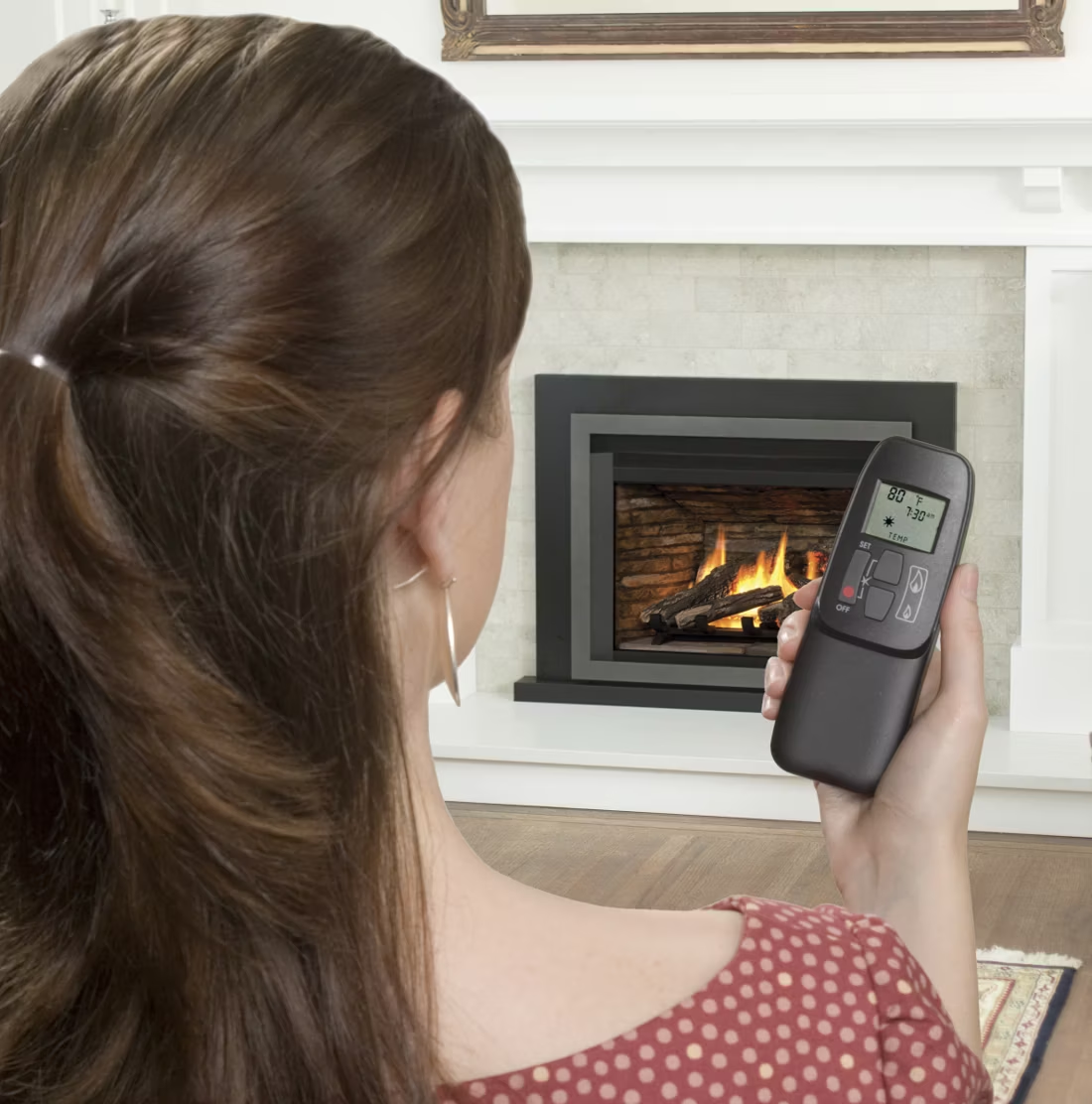
Most direct-vent gas fireplaces with intermittent pilot ignition (IPI) include a battery backup that keeps the unit running during an outage—which mattered a great deal to North Texas homeowners after Winter Storm Uri knocked out power to hundreds of thousands of ERCOT customers during a hard freeze in February 2021. Valor fireplaces take a different approach: the pilot assembly generates its own electricity through a thermocouple, so the fireplace never depends on batteries or grid power at all. If grid reliability is a priority for your household, ask your local dealer about the ignition system on any model you're considering.
Do I need a permit for a gas fireplace in Midlothian?
Yes. Inside city limits, the City of Midlothian Building Inspections Department requires a permit for new gas line work and for installing or replacing a gas fireplace or insert. For homes in unincorporated Ellis County, permitting instead runs through the Ellis County Building Inspections office. Either way, the gas line connection has to be run by a licensed gas-fitter, and most local hearth dealers coordinate that trade work along with the permit as part of the installation.
Should I choose a vented or vent-free gas fireplace?
Both are legal in Texas, which isn't the case everywhere—states like California and Colorado restrict or prohibit vent-free units outright. Vented, direct-vent units draw combustion air from outside and exhaust it back out through a sealed pipe; they're the safer, more widely recommended choice and put out more usable heat. Vent-free units burn without external venting and come with strict room-size and ventilation requirements. For most Midlothian homes—especially conversions of an existing masonry firebox that already has chimney access—a direct-vent unit is the better fit.
What size gas fireplace do I need for my Midlothian home?
Because Midlothian's heating season is short—around 2,431 heating degree days a year, a fraction of what colder regions of the country log—most homeowners here are sizing for ambiance and occasional supplemental warmth rather than round-the-clock heating. A mid-size direct-vent fireplace in the 25,000 to 35,000 BTU range is usually plenty, even for the open-concept great rooms common in newer Midlothian subdivisions. A local dealer will still want your room's square footage and ceiling height before recommending a specific model, since an oversized unit will push you out of the room with heat rather than serve as the cozy focal point most homeowners actually want.
How often does a gas fireplace need to be serviced?
Plan on an annual inspection, ideally in early fall before the first cold snap arrives. A certified technician checks the burner, pilot assembly, gas connections, and venting, and cleans the glass and interior—typically $150 to $250 for a standard visit. Because Midlothian's mild climate means most gas fireplaces run for shorter stretches during a handful of cold weeks rather than a full winter season, one inspection before burning season starts is enough for most households, without the mid-season service that heavier-use wood setups in colder climates sometimes need.
Should I consider a wood stove or electric fireplace instead of gas?
Wood-burning stoves are uncommon in Midlothian. With average winter lows near 34°F and a short heating season, there's little practical need for a stove built for round-the-clock heat, even though oak, pecan, and mesquite are all plentiful locally—most homes that still have wood-burning fireboxes rarely use them. Electric fireplaces are a fair alternative worth considering: they need no gas line or venting, install in an afternoon for a few hundred to around a thousand dollars, and run on the same Oncor or electric-cooperative service every home already has. Where gas pulls ahead is realistic flame appearance and genuine heat output during an actual cold snap or grid outage—a trade-off your local dealer can walk through based on how you'll use the fireplace.
What's the difference between an insert and a zero-clearance fireplace?
An insert is a fireplace that slides into a pre-existing wood-burning fireplace—if you don't have one, there's nothing to insert it into. A zero-clearance fireplace is built into a framed wall, which makes it the answer for remodels and new construction. Simple test: existing masonry fireplace means insert; blank or framed wall means zero-clearance.
Is my gas fireplace wasting gas?
If it was installed more than 15 years ago, probably. Older gas fireplaces keep a standing pilot light burning all the time, and that little flame can cost a couple hundred dollars a year. Newer models use pilot-on-demand ignition—the pilot lights only when you use the fireplace and goes out when you turn it off.
Can I install a fireplace myself?
If you're putting a fire in your house on purpose, it's best to work with an expert. Unless you're genuinely experienced in framing, gas line, vent pipe, and the national code on clearances to combustibles, have a professional do it—and ideally the same company that sells you the fireplace, so warranty, service, and liability all live under one roof.
Can a fireplace actually lower my heating bill?
Yes—by creating a comfort zone. A furnace heats every square foot of the house just to warm the one room you're in; a gas fireplace on low burns roughly a sixth of the gas a typical furnace does. Set the furnace around 55–60 degrees as a baseline, then heat the rooms your family actually uses. Families who heat this way commonly save $20–$60 a month.
Find your gas fireplace in Midlothian.
Tell us a bit about your home and we'll match you with a trusted local Midlothian dealer and send over a free Project Guide & Parts List—the exact parts, vent kit, and dealer recommendation for your gas fireplace project.
Find Your Fireplace →