
Warmth for the rare cold snap, backup for the next storm.
Matagorda County winters average 43°F with one of the lightest winter heating loads in the country. Gas fireplaces here earn their keep less for survival heat and more for ambiance, the occasional hard freeze, and reliable warmth when Gulf hurricanes knock out power. Find the right unit and connect with a trusted local dealer.
Every Project Starts From One of These Five Situations
Mild winters, but gas still earns its place.
Matagorda County sits on the Texas Gulf Coast, stretching from Bay City inland to Palacios, Sargent, and the town of Matagorda at the mouth of the Colorado River. Climate zone 2A means hot, humid summers and short, mild winters—the average winter low sits at 43°F and the county has one of the lightest winter heating loads around, a fraction of what a Gulf-adjacent county even one state over might see. Wood heat is essentially absent here; oak, pecan, and mesquite are abundant locally, but they're prized for the smoker, not the hearth. Gas fireplaces fill a different role: ambiance most of the year, real warmth during the rare cold snap, and dependable heat when a winter freeze like February 2021 pushes temperatures into the teens along the coast.
Natural gas service reaches Bay City and much of the incorporated area through providers like CenterPoint Energy, while propane remains the standard fuel in Palacios, Sargent, Matagorda, and other unincorporated pockets of the county. Either way, a direct-vent gas fireplace with battery-backup ignition keeps working when hurricane season takes the grid down—a real consideration for a county that sits directly in the Gulf's path. Many newer Matagorda County homes are built without a masonry fireplace at all, so a built-in direct-vent unit or freestanding gas stove is often the practical starting point rather than a conversion.
Three steps. No salesperson until you're ready.
Tell us about your project
Your zip code, your situation, and the fuel you're leaning toward—or let the answers point you to one.
See what's actually available
The brands dealers within 100 miles genuinely carry—real options, never a catalog mirage.
Get your dealer & Project Guide
A trusted local dealer, plus the free Project Guide & Parts List that names every component of the job.
Frequently Asked Questions
How much does a gas fireplace installation cost in Matagorda County?
Most gas fireplace installations in Matagorda County run in the $4,000 to $9,000 range, with the spread driven mainly by whether you're running new gas line, adding a propane tank, or working with an existing supply. A direct-vent gas fireplace added to a home already plumbed for natural gas in Bay City sits toward the lower end. New construction or a home in Palacios, Sargent, or Matagorda that needs a fresh propane tank and line run will land higher. Because so many homes here don't have an existing chimney to work with, budget for framing and venting work rather than a simple insert swap—a local dealer can give you a firm number after seeing the space.
Do I need an existing fireplace to install a gas unit?
No, and in Matagorda County that's actually the more common situation. Wood-burning fireplaces are rare here, so many homes—especially newer construction in Bay City subdivisions or coastal properties near Matagorda and Sargent—don't have a masonry chimney to convert. In that case, a built-in direct-vent gas fireplace or a freestanding gas stove is installed from scratch, with venting run through an exterior wall rather than up an existing flue. If your home does have an older masonry fireplace, a gas insert with a stainless liner running through the existing chimney is usually the simpler and less expensive path.
Should I use natural gas or propane for my fireplace?
It depends on where in the county you're located. Natural gas service through providers like CenterPoint Energy covers Bay City and much of the surrounding incorporated area, so if your home already has a gas water heater or range, adding a fireplace on that line is straightforward. Outside city limits—Palacios, Sargent, Matagorda, and other unincorporated areas—propane is the standard, typically supplied from a home tank by a regional propane company. Most gas fireplace models can be configured for either fuel; your installer sets the correct orifice and regulator for whichever supply you have.
Will my gas fireplace still work if the power goes out during a hurricane?
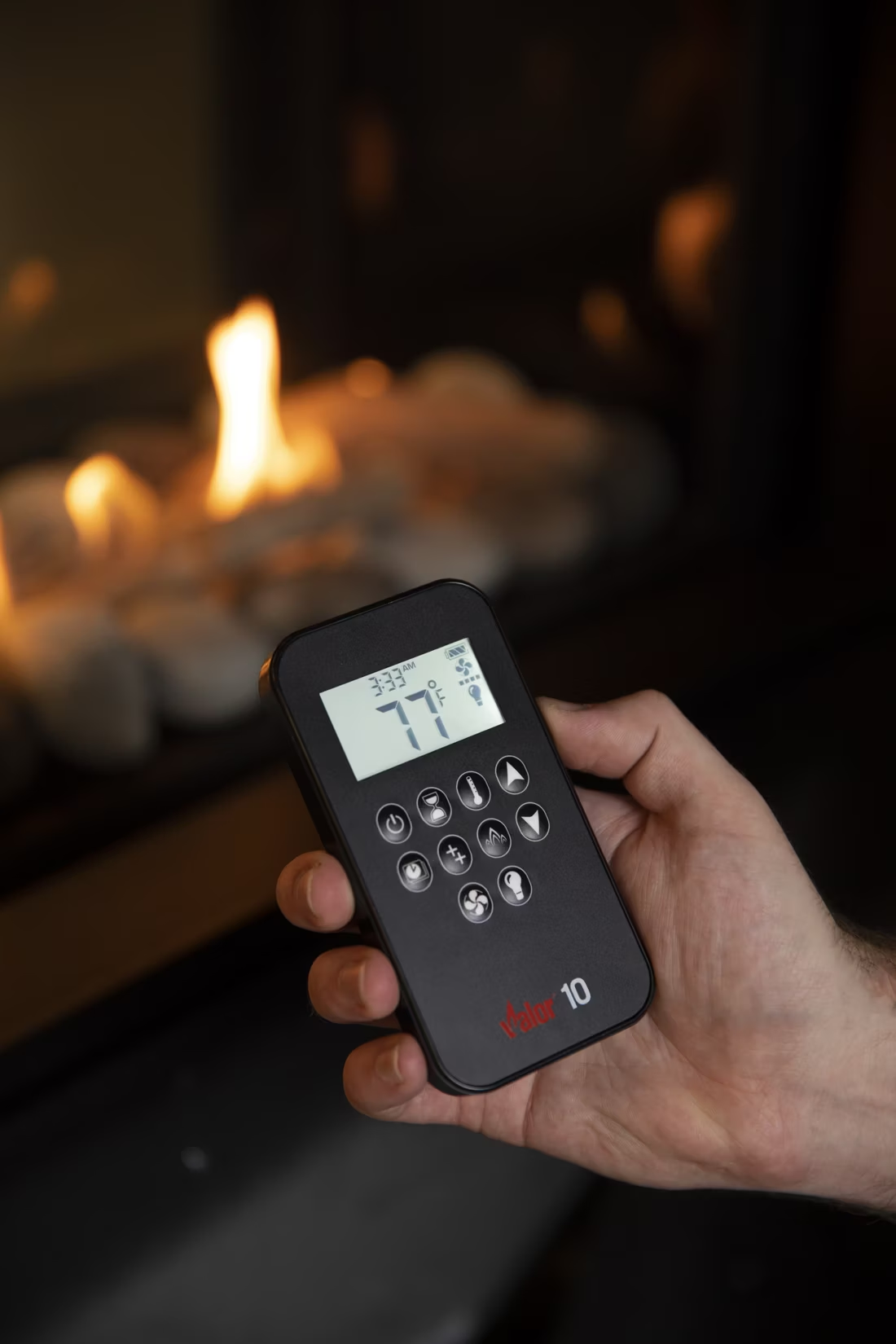
Yes, with the right ignition system. Standard IPI (intermittent pilot ignition) units run on a small battery backup—usually AA batteries built into the unit—that kicks in automatically when grid power drops, so the fireplace still lights on demand. That matters in a Gulf Coast county where hurricane season regularly means multi-day outages. Valor fireplaces take it a step further: their pilot generates its own electricity through a thermocouple, so there's no battery to remember to replace before storm season. Ask your local dealer about the ignition system on any unit you're considering, and keep spare batteries on hand regardless.
What's the difference between a gas fireplace, gas insert, and gas stove?
A gas fireplace is a fully built-in unit framed into a wall—the typical choice for new construction, which describes a lot of Matagorda County housing stock. A gas insert is designed to drop into an existing masonry fireplace and use that chimney as the vent path, which works well for the county's older homes in Bay City that do have a traditional hearth. A gas stove is a freestanding unit that sits on the floor and vents through an exterior wall or roof, a flexible option for homes without any existing fireplace opening. Given how few homes here have an existing chimney, built-in fireplaces and freestanding stoves are the more common installs.
Do I need a permit to install a gas fireplace in Matagorda County?
Yes—a building permit and a separate gas line permit are typically required for a new gas fireplace installation, whether you're in Bay City or unincorporated Matagorda County. The gas line portion has to be done by a licensed gas-fitter, which is one reason working with an established hearth dealer helps: they coordinate the gas work, venting, and inspection sign-off as one job instead of leaving you to manage separate trades. Most local installers fold the permitting into the installation price.
Should I get a vented or vent-free gas fireplace given the Gulf Coast humidity?
Vented, direct-vent gas fireplaces draw combustion air from outside and exhaust it back outside through a sealed system—they're the standard recommendation almost everywhere, and especially so in a hot, humid coastal climate like Matagorda County's. Vent-free units burn directly into the room and release water vapor as a combustion byproduct; in a zone 2A climate that's already humid most of the year, adding more moisture indoors is a real downside, on top of the usual air-quality tradeoffs. Vent-free models are legal in Texas but come with strict room-sizing and ventilation rules. For this county's climate, a direct-vent unit is the practical choice.
How often does a gas fireplace need servicing near the coast?
Plan on an annual inspection, same as anywhere—but salt air is a real factor for homes near Sargent, Matagorda, and the Palacios waterfront. A technician should check the burner, pilot assembly, venting, and any exposed metal components for corrosion, not just soot buildup. Coastal homes sometimes need vent terminations and exterior components inspected more closely than an inland Bay City installation would. Expect to pay roughly $150 to $250 for a standard annual service call from a local gas appliance technician.
Why don't more homes in Matagorda County have wood-burning fireplaces?
With such a light winter heating load and winter lows averaging 43°F, there's simply little practical need for wood as a heat source here—it's one of the mildest heating climates in Texas. Local oak, pecan, and mesquite are put to use, but almost exclusively for smoking and grilling rather than home heating. A handful of rural or older properties do have a wood-burning fireplace for occasional use on the rare cold night, but it's the exception rather than the rule. Gas and electric fireplaces cover the ambiance-and-backup-heat role that wood fills in colder parts of the country.
Is my gas fireplace wasting gas?
If it was installed more than 15 years ago, probably. Older gas fireplaces keep a standing pilot light burning all the time, and that little flame can cost a couple hundred dollars a year. Newer models use pilot-on-demand ignition—the pilot lights only when you use the fireplace and goes out when you turn it off.
What's the difference between an insert and a zero-clearance fireplace?
An insert is a fireplace that slides into a pre-existing wood-burning fireplace—if you don't have one, there's nothing to insert it into. A zero-clearance fireplace is built into a framed wall, which makes it the answer for remodels and new construction. Simple test: existing masonry fireplace means insert; blank or framed wall means zero-clearance.
Can a fireplace actually lower my heating bill?
Yes—by creating a comfort zone. A furnace heats every square foot of the house just to warm the one room you're in; a gas fireplace on low burns roughly a sixth of the gas a typical furnace does. Set the furnace around 55–60 degrees as a baseline, then heat the rooms your family actually uses. Families who heat this way commonly save $20–$60 a month.
Does a fireplace add value to my home?
On average, a fireplace adds back to the home about the same amount you spent installing it. Add the monthly savings from heating the rooms you actually use instead of the whole house—often hundreds of dollars a year—and the value case is strong before you even count what a fire does for how your family uses the room.
Stove and Fireplace Dealers in Matagorda County
Listings include WhyFire partner dealers, dealers we have verified as authorized for the brands we recommend, and established local businesses that carry hearth products. Every listing shows which one it is. The ones marked Preferred run on WhyFire's software, so they can show you real pricing and book your appointment right here. No manufacturer pays for placement. How we verify dealers →
Fireplaces By Roye
Victoria Builder Supply Co Inc.
The Design Haus Of Victoria
Kitchen & Bath Showplace
Find your gas fireplace in Matagorda County.
Tell us a bit about your home and we'll match you with the right gas fireplace, insert, or stove—plus a free Project Guide & Parts List with the exact parts, including the vent kit, and our recommended local dealer in Matagorda County.
Find Your Fireplace →