
Fireplace Heat for a Gulf Coast Climate That Rarely Needs It.
Fireplace resources for Bay City, Palacios, Sargent, and every community along Matagorda Bay—built for ambiance, cold fronts off the Gulf, and backup warmth when winter storms knock out the grid.
Every Project Starts From One of These Five Situations
Mild winters, coastal humidity, and heat that's more about ambiance than survival.
Matagorda County sits on the Texas Gulf Coast in climate zone 2A, with an average winter low around 43°F and a very light overall winter heating need—a fraction of what a place like Duluth, MN sees in a single hard month. Freezing nights are the exception, not the rule, though the county isn't immune to real cold: Winter Storm Uri in February 2021 knocked out power across the region and left plenty of homeowners here wishing they had a non-electric backup heat source. Oak, pecan, and mesquite grow throughout the county, but locally that wood is cut for smoking brisket and grilling, not for stove fuel—the heating math for a wood or pellet appliance just doesn't pencil out when you rarely see a freeze warning.
What you'll find on this hub: gas and electric hearth retailers, service technicians, and fuel suppliers serving Bay City, Palacios, Sargent, Blessing, Markham, Van Vleck, and Pledger. Wood-burning fireplaces still show up occasionally—mostly for ambiance or as freeze-event backup—and pellet stoves are essentially absent, even though Forest Energy and Lignetics pellets are sold locally for smokers and grills. Pick your fuel below for local dealers, installation costs, and the resources that match a Gulf Coast build.
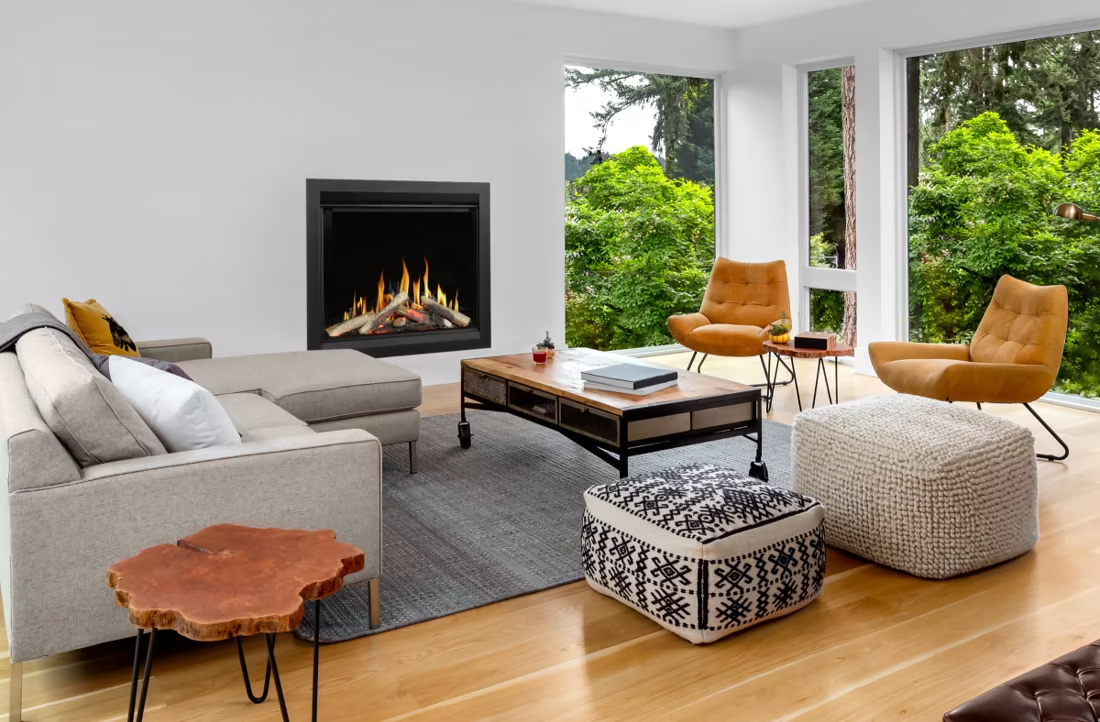
Four fuels. One honest answer for Matagorda County.
Three steps. No salesperson until you're ready.
Tell us about your project
Your zip code, your situation, and the fuel you're leaning toward—or let the answers point you to one.
See what's actually available
The brands dealers within 100 miles genuinely carry—real options, never a catalog mirage.
Get your dealer & Project Guide
A trusted local dealer, plus the free Project Guide & Parts List that names every component of the job.
Frequently Asked Questions
Which fireplace fuel actually makes sense in Matagorda County?
For most homes here, it's gas or electric. With such a light overall winter heating need and winter lows averaging 43°F, this isn't a wood-heat climate—nobody's running a catalytic stove through a Gulf Coast winter the way a homeowner near Bozeman, MT might. Gas fireplaces, usually propane where natural gas mains don't reach, give you real backup heat during the occasional hard freeze or grid outage. Electric fireplaces are the low-hassle choice for ambiance in a living room or bedroom, with no venting or gas line to worry about in a humid coastal environment. Wood and pellet units exist here, but they're the exception, not the norm.
Do I need a permit for a gas or electric fireplace install in Matagorda County?
Usually, yes, for gas. A new propane or natural gas fireplace install typically requires a building permit plus a separate gas line permit and licensed gas-fitter for the connection work, whether you're inside Bay City limits or in unincorporated parts of the county. Electric fireplaces are simpler—plug-in units generally don't need a permit, but a built-in electric fireplace with new wiring or a dedicated circuit usually does require an electrical permit. Most local retailers who sell gas units handle the permitting as part of the installation.
Are wood-burning fireplaces ever installed in Matagorda County?
Occasionally, but it's uncommon. A small number of homeowners install a wood-burning fireplace for ambiance or as non-electric backup heat—Winter Storm Uri in February 2021 pushed some coastal Texas homeowners in that direction after multi-day power outages. Oak, pecan, and mesquite are all plentiful locally, but almost all of it gets cut and split for smoking meat, not for heating a house through winter. If you do go this route, expect it to be a secondary appliance, not the home's primary heat source.
Why don't more people in Matagorda County use pellet stoves?
The heating demand just isn't there. Pellet stoves are designed for climates that need sustained heat output over a long winter, and Matagorda County's very light overall winter heating need doesn't come close to that. Forest Energy and Lignetics pellets are sold in the area, but they're almost entirely bought for pellet grills and smokers, not home heating appliances. It's not that pellet stoves don't work here—it's that the payback and daily use case rarely justify the install.
How does hurricane and storm risk affect fireplace choices on the Gulf Coast?
It shapes things more than most people expect. Electric fireplaces are easy to disconnect and protect ahead of a storm, and they carry no fuel line risk if a home takes on wind or water damage. Propane fireplaces, on the other hand, can provide backup heat when the grid goes down after a hurricane or winter freeze—but that only works if the tank and line are installed above flood elevation and properly secured. A local installer familiar with Matagorda Bay flood zones and wind-load requirements will size and place venting accordingly, which is one more reason to go through a trusted local dealer rather than a big-box install.
What's the typical cost range for a gas or electric fireplace install in Matagorda County?
Gas fireplace, insert, or stove: roughly $4,000–$10,000, with the range driven mostly by whether a new propane line or venting run is needed versus converting an existing setup. Electric fireplace: $200–$3,000 for the unit itself, plus $400–$1,200 in labor for anything beyond a plug-and-play install, which covers most wall-mount and built-in units. Wood or pellet installs are rare enough here that pricing isn't standardized county-wide—if you're considering one, a local retailer can walk you through what's realistic for your specific home.
Does a fireplace add value to my home?
On average, a fireplace adds back to the home about the same amount you spent installing it. Add the monthly savings from heating the rooms you actually use instead of the whole house—often hundreds of dollars a year—and the value case is strong before you even count what a fire does for how your family uses the room.
I know I want a fireplace—where do I actually start?
Do two things today: snap a photo of the wall or fireplace you want to transform, and take a tape measure to the space—width, height, depth. Those two artifacts answer most of a hearth professional's first questions. Then settle fuel (wood, gas, pellet, or electric) and set a realistic budget: $3,900–$5,500 covers fireplace, vent, and basic install for most homes.
What is an in-home preview and do I need one?
It's a visit where a hearth professional measures your space, confirms the model you picked actually works in your home, and walks the specs—framing, gas line, venting, finish work—before anything is ordered. Some details you just can't know until you see the house. Never make a down payment without one; it's the single most-skipped step that burns buyers.
Wood, gas, pellet, or electric—how do I choose?
Match the fuel to your life, not the other way around. Wood: lowest fuel cost and total power-outage independence, but you're hauling and stacking. Gas: press a button, set a thermostat, no maintenance to speak of. Pellet: wood economics with automatic feeding, in exchange for weekly cleaning and a need for electricity. Electric: plugs in anywhere with honest supplemental heat. Nobody regrets the fuel that fits how they actually live.
Stove and Fireplace Dealers in Matagorda County
Listings include WhyFire partner dealers, dealers we have verified as authorized for the brands we recommend, and established local businesses that carry hearth products. Every listing shows which one it is. The ones marked Preferred run on WhyFire's software, so they can show you real pricing and book your appointment right here. No manufacturer pays for placement. How we verify dealers →
Fireplaces By Roye
Victoria Builder Supply Co Inc.
The Design Haus Of Victoria
Kitchen & Bath Showplace
Find your fireplace match in Matagorda County.
Tell us about your home and we'll match you with a trusted local dealer and send a free Project Guide & Parts List—the exact parts, including the vent kit, and the dealer we recommend for your project in Matagorda County.
Find Your Fireplace →