
Pellet Heat Isn't Common Here—But It Still Has a Place.
Little Elm's mild winters mean pellet stoves are a niche choice, not the default. If one still makes sense for your home, we'll connect you with a dealer who can actually source and install one in this region.
Every Project Starts From One of These Five Situations
Mild winters mean most homes don't need supplemental heat.
Little Elm sits in climate zone 3A with a light, short heating season and an average winter low around 34°F. That's a fraction of the heating load seen in pellet-stove strongholds like Duluth, MN or Fargo, ND, where homeowners routinely face a long, brutal winter heating season and rely on a stove to get through months of hard cold. Here, most homes heat with central HVAC or heat pumps and treat a handful of genuinely cold nights each winter as the exception, not the rule. A dedicated wood-pellet appliance simply isn't something the local hearth market is built around, and you won't find a pellet aisle in every hardware store the way you would farther north.
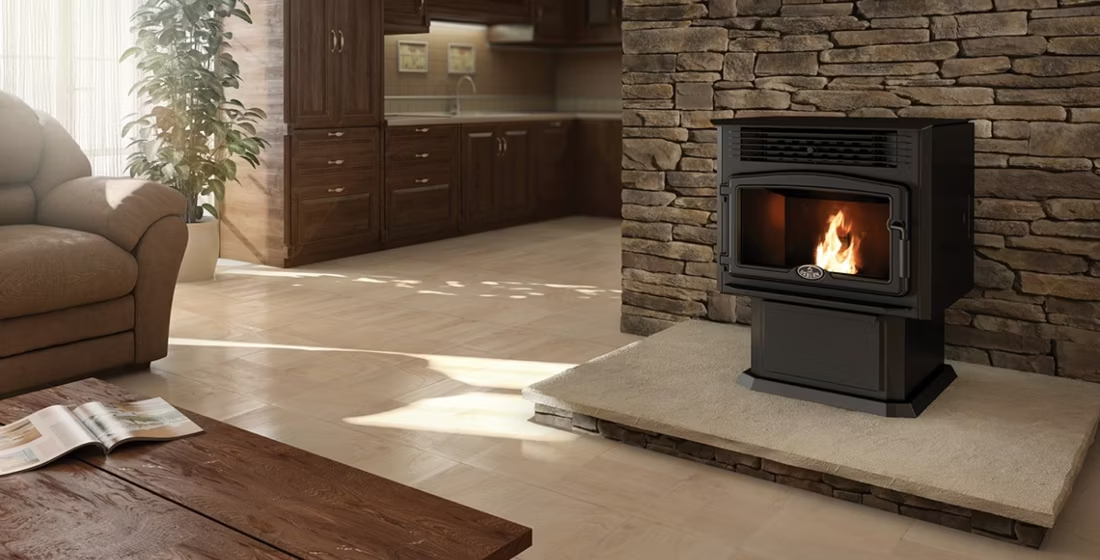
That doesn't mean pellet stoves have zero place in Little Elm. A small number of homeowners install them for the ambiance of a clean-burning, real flame without wood storage or ash mess, for supplemental heat in a detached workshop or bonus room that isn't on the main HVAC zone, or simply because they moved from a colder state and prefer the appliance they already know. Regional pellet brands like Forest Energy and Lignetics are available through dealers serving the greater Dallas-Fort Worth area, though you'll want to plan ahead on fuel rather than expect it on every shelf. Local firewood species like oak, pecan, and mesquite are far more commonly seen at backyard smokers than in heating appliances—wood heat, like pellet heat, is a specialty choice here, not the default.
Three steps. No salesperson until you're ready.
Tell us about your project
Your zip code, your situation, and the fuel you're leaning toward—or let the answers point you to one.
See what's actually available
The brands dealers within 100 miles genuinely carry—real options, never a catalog mirage.
Get your dealer & Project Guide
A trusted local dealer, plus the free Project Guide & Parts List that names every component of the job.
Frequently Asked Questions
Do pellet stoves actually make sense in Little Elm's climate?
For most homes, not as a primary heat source. With a light, short heating season and winter lows averaging 34°F, Little Elm's heating load is light enough that central HVAC or a heat pump handles the season without much strain. Pellet stoves earn their keep in places with long, hard winters where 20-hour burn times and steady radiant heat matter night after night. Here, the appliance tends to show up for different reasons—supplemental heat in an uninsulated room or workshop, the look and feel of a live flame, or a homeowner's prior experience with pellet heat from a colder state. If that's your situation, it can still be a good fit; it's just not a mainstream install in this market.
What does a pellet stove installation cost in Little Elm?
Because pellet stoves are uncommon locally, pricing isn't as standardized here as it is for gas fireplaces, which dominate the North Texas hearth market. Nationally, a freestanding pellet stove with venting typically installs in the $3,000 to $6,000 range depending on the unit, hearth pad requirements, and whether venting runs through an exterior wall or an existing masonry chimney. Given how infrequently local installers take on this type of job, it's worth getting quotes from more than one dealer serving the DFW area rather than assuming a single company's price reflects the market.
Why would someone install a pellet stove in a place with mild winters?
The most common reasons in Little Elm are ambiance and targeted supplemental heat rather than whole-home warmth. Pellet stoves burn cleaner than wood, don't require chimney maintenance the way a masonry fireplace does, and can zone-heat a den, sunroom, or converted garage that doesn't get enough attention from central HVAC. A few homeowners also install them in detached workshops or she-sheds where running new ductwork isn't practical but an electrical outlet for the auger and blower already exists. For a primary heat source in this climate, though, most local homeowners are better served by the HVAC system already in the house.
Will a pellet stove keep my house warm during a power outage?
No—and this is worth understanding before you buy one. Pellet stoves rely on electricity to run the auger that feeds fuel into the firebox and the blower that pushes heat into the room. Without power, they don't operate at all, which matters in a region that saw multi-day outages across Oncor's and Denton County Electric Cooperative's service territories during February 2021's Winter Storm Uri. If outage resilience is your main reason for considering a hearth appliance, a wood stove or a battery-backed gas unit with a standing pilot will serve that purpose better than pellet in this climate.
Can I actually buy wood pellets locally in Little Elm?
Not from every hardware store, but yes—regional brands like Forest Energy and Lignetics are carried by hearth retailers and some farm-and-ranch suppliers serving the greater Dallas-Fort Worth area. Because demand here is a fraction of what it is in colder states, don't expect a wall of pellet bags at the local big-box store, especially not during a sudden cold snap when everyone else is buying propane and firewood. The practical approach is to buy a season's supply—often just 1 to 3 tons for a supplemental-use stove—in the fall before demand or weather makes it inconvenient.
Do I need a permit to install a pellet stove in Little Elm?
Yes. Homes within Little Elm town limits go through the Town of Little Elm Building Inspections Department for the mechanical and building permit; homes in the unincorporated parts of Denton County near the 76227 zip code fall under the Denton County Building Department instead. Either way, the process is straightforward compared to what homeowners in wildfire- or inversion-prone Western states deal with—Little Elm has no wood-smoke air quality restrictions or seasonal burn curtailment, so there's no additional emissions paperwork layered on top of the standard permit.
What size pellet stove do I actually need?
Given the area's light heating load, most Little Elm installations are sized for a single room, workshop, or supplemental zone rather than whole-home heating. Small to mid-size units rated for 1,000 to 1,500 square feet cover the large majority of realistic local use cases—oversizing is more likely to be a problem here than undersizing, since the appliance will rarely be asked to run at full output for long stretches the way it would in a genuinely cold climate. A local dealer can size the unit correctly based on the specific room's volume and insulation rather than the whole house.
Should I get a pellet stove, a gas fireplace, or nothing at all?
For most Little Elm homes, gas is the more natural fit—natural gas and propane fireplaces are widely installed locally, offer instant on/off heat without fuel storage, and don't depend on you keeping a pellet supply on hand for a handful of cold nights a year. Wood is technically an option too (oak, pecan, and mesquite are all available regionally, mostly through smoking-wood suppliers), but like pellet it's a specialty choice here rather than a mainstream one. Pellet makes the most sense if you specifically want the pellet-stove experience—the hopper-and-thermostat convenience, the look of a real flame, cleaner burning than cordwood—for a room or space that gas doesn't reach. If you're simply solving for heat in a mild climate, it's worth comparing all three with a local dealer before committing.
How much maintenance does a pellet stove need in a climate like this?
Less than a wood stove, but it's not zero-maintenance. Expect to empty the ash pan every few days of use, vacuum the burn pot and hopper periodically, and have the unit professionally serviced once a year—typically before the handful of cold weeks each winter when it'll actually run. Because usage in Little Elm tends to be light and seasonal rather than constant, wear on components like the auger motor and igniter is generally slower than in a cold-climate home running the stove daily for months. Venting is usually a simple PL-rated pipe run through an exterior wall, which a local hearth dealer can install alongside the unit.
Why is a fireplace insert so efficient?
An insert does two things: it seals the chimney completely, so you stop losing air you already paid to heat, and it radiates warmth into the room through the firebox and glass. Most add a heat-exchange fan that pulls cool room air underneath, wraps it around the hot firebox, and pushes it back out warm. Your home is more efficient before you've even lit the first fire.
How often does a pellet stove need cleaning?
A clean pellet stove is a happy pellet stove. Plan on cleaning the burn pot about once a week when you're burning regularly—ash and clinkers gum up the air holes just like a pellet barbecue. Most pellet stove problems trace back to skipped cleaning that nobody explained up front. Some designs make it easy with a trapdoor burn pot: pull a lever and the gunk drops into the ash pan.
Does a fireplace add value to my home?
On average, a fireplace adds back to the home about the same amount you spent installing it. Add the monthly savings from heating the rooms you actually use instead of the whole house—often hundreds of dollars a year—and the value case is strong before you even count what a fire does for how your family uses the room.
How much should I budget for a fireplace?
For an average home—covering the fireplace, the vent pipe, and basic installation—a budget between $3,900 and $5,500 gives you a lot of options across wood, gas, and pellet. By the time you add finish work, gas line, and electrical, the average complete installation lands between $5,000 and $12,000 all-in. In a remodel or new build, a good rule is to put about 2.5% of the total project cost toward the fireplace.
Nearby Dealers
Hearth shops serving Little Elm and the surrounding area.
Pellet Brands Stocked Around Little Elm
Manufacturers will point you to the nearest stocking dealer.
Find your pellet stove in Little Elm.
Tell us about your home and how you plan to use the stove, and we'll match you with a local dealer who actually installs pellet appliances in this region—plus a free Project Guide & Parts List with the exact vent kit and parts your project needs.
Find Your Fireplace →