
Electric heat that fits Leon County's short, mild winters.
No gas line, no chimney, no venting—just plug-in warmth and ambiance for Centerville, Buffalo, Jewett, Oakwood, and every ranch and homestead in between. Find the right unit and connect with a trusted local dealer.
Every Project Starts From One of These Five Situations
A heating season that rarely asks much of your system.
Leon County sits in the transition zone between the Piney Woods and the Blackland Prairie, with a population of just over 6,100 spread across Centerville, Buffalo, Jewett, Oakwood, Marquez, and Normangee. Climate zone 2A means hot, humid summers and a heating season that's more of a suggestion than a demand—about 2,179 heating degree days a year and an average winter low around 35°F. Compare that to a place like Duluth, MN, which racks up roughly 9,000 heating degree days annually, and it's clear why Leon County homes don't need a furnace-grade fireplace. Most nights that call for supplemental heat are cool, not brutal, and that's exactly the gap electric fireplaces are built to fill.
Most of the county gets electric service through Navasota Valley Electric Cooperative, with some northern parts of the county falling under Trinity Valley Electric Cooperative territory—either way, reliable rural co-op power that makes plug-in and hardwired electric units a practical fit. There's no natural gas infrastructure to speak of out here, and while wood heat has deep roots in a county full of oak, pecan, and mesquite, electric fireplaces have become a popular clean, no-fuss option for living rooms, sunrooms, and secondary spaces where a real fire isn't practical. No emissions, no smoke, no wood to split—just heat and ambiance on demand, which matters in a county with no air quality restrictions but plenty of homeowners who'd rather not deal with a chimney.
Three steps. No salesperson until you're ready.
Tell us about your project
Your zip code, your situation, and the fuel you're leaning toward—or let the answers point you to one.
See what's actually available
The brands dealers within 100 miles genuinely carry—real options, never a catalog mirage.
Get your dealer & Project Guide
A trusted local dealer, plus the free Project Guide & Parts List that names every component of the job.
Frequently Asked Questions
How much does an electric fireplace installation cost in Leon County?
Plug-in electric fireplaces and inserts that use a standard 120V outlet typically run $300 to $1,200 installed, since there's no venting or gas line to run—the unit itself is the main cost. Built-in wall units or larger inserts that need a dedicated 240V circuit run higher, generally $1,000 to $3,000, once you factor in an electrician to run new wiring, which is common in older Leon County homes around Centerville and Buffalo that weren't built with a spare circuit for this kind of load. Local dealers can tell you quickly which category your home falls into during a walkthrough.
Is electric heat enough for Leon County winters, or do I need something stronger?
For most homes here, yes. With an average winter low around 35°F and just under 2,200 heating degree days a year, Leon County's heating season is short and mild compared to almost anywhere outside the Gulf Coast region—nothing like a Fargo, ND or Bismarck, ND winter where a stove has to carry a house for months. Electric fireplaces are typically installed as supplemental or zone heat here—warming a living room or den on the handful of genuinely cold nights each winter—while central HVAC handles the rest. If you're heating a detached space like a shop or a guest cabin without ductwork, a larger electric insert can carry more of the load, but whole-home primary heat isn't the typical use case in this climate.
Do I need a permit to install an electric fireplace in Leon County?
Plug-in units that use an existing outlet generally don't require a permit—there's no gas line, no chimney, and no structural change involved. If your installation requires new electrical work, like running a dedicated circuit for a built-in unit or a larger wall-mount fireplace, that electrical work typically needs to be pulled and inspected through the county, and any licensed electrician working in Leon County will know the process. It's a much lighter lift than a wood or gas installation—most electric projects are done in a day.
What's the difference between an electric insert, a wall-mount unit, and a freestanding electric stove?
An electric insert is built to slide into an existing masonry fireplace opening, which is a common retrofit for older farmhouses around Oakwood and Marquez that have an unused wood fireplace they'd rather not maintain. A wall-mount unit hangs flush or recessed into a wall like a piece of art and works well in newer construction or remodels where there's no existing fireplace. A freestanding electric stove sits on the floor and can go almost anywhere with an outlet nearby—no fireplace opening required, which makes it a flexible option for a den, sunroom, or converted garage space.
Will my electric fireplace work during a power outage?
No—and this is worth knowing before you buy, especially in a county served by rural electric cooperatives where storm-related outages can run longer than in a city grid. Electric fireplaces are entirely dependent on power, so if the co-op line goes down, the fireplace goes down with it. If backup heat during outages matters to you—which is a real consideration in Leon County during ice events or severe thunderstorms—a wood stove or a propane unit with battery-backup ignition is worth discussing alongside your electric plans. Many local homes keep an electric fireplace for daily convenience and a wood or propane appliance as the outage backup.
How big of an electric fireplace do I need for my home?
Because heating load is light in Leon County's climate, sizing is driven more by the room and the look you want than by BTU output. A small insert or wall-mount unit comfortably handles a bedroom or den, while larger units with higher wattage heaters can take the edge off a great room or open living area. Unlike colder climates where undersizing means a cold house, undersizing here mostly just means the ambiance outpaces the heat—not a major problem given how mild the season is. A local dealer can match wattage to your square footage during a quick in-home look.
Where can I find electric fireplace dealers near me in Leon County?
Hearth and appliance dealers serving Leon County typically cover the corridor along Highway 79 and I-45, reaching Centerville, Buffalo, Jewett, and Normangee from nearby larger markets. Because electric installs are simpler than wood or gas work, some dealers who primarily sell other fuel types still carry a line of electric inserts and stoves as a secondary product—worth asking about even if their main business is wood or propane. Look for a dealer who will size the unit to your room and coordinate any electrical work rather than just shipping you a box.
Electric vs. wood-burning—which makes more sense in Leon County?
Wood has deep roots here—oak, pecan, and mesquite are all common locally and burn well, and plenty of Leon County homes keep a wood stove or fireplace going through the cooler months, partly out of tradition and partly because it works during power outages. Electric fireplaces trade that authenticity for convenience: no wood to split or store, no chimney to maintain, no smoke, and heat at the flip of a switch. Given how mild and short the heating season actually is here, a lot of homeowners choose electric specifically because they don't want to manage a wood-burning setup for the relatively few nights a year it would really earn its keep. Some households split the difference—wood for character and backup, electric for the den or a bedroom where daily convenience matters more.
Are pellet stoves a better fit than electric for Leon County?
Pellet stoves—with brands like Forest Energy and Lignetics available regionally—offer a cleaner-burning, more automated alternative to cordwood, but they still require a hopper to load, a vent to the outside, and electricity to run the auger and blower, which means they lose their backup-heat advantage during an outage just like electric units do. For Leon County's mild winters, most homeowners find that the simplicity of an electric fireplace—no pellets to buy or store—outweighs pellet's slight edge in raw heat output, unless you're heating a larger, harder-to-condition space where pellet's higher BTU output is worth the added venting and electrical requirements.
Can I put a TV above my fireplace?
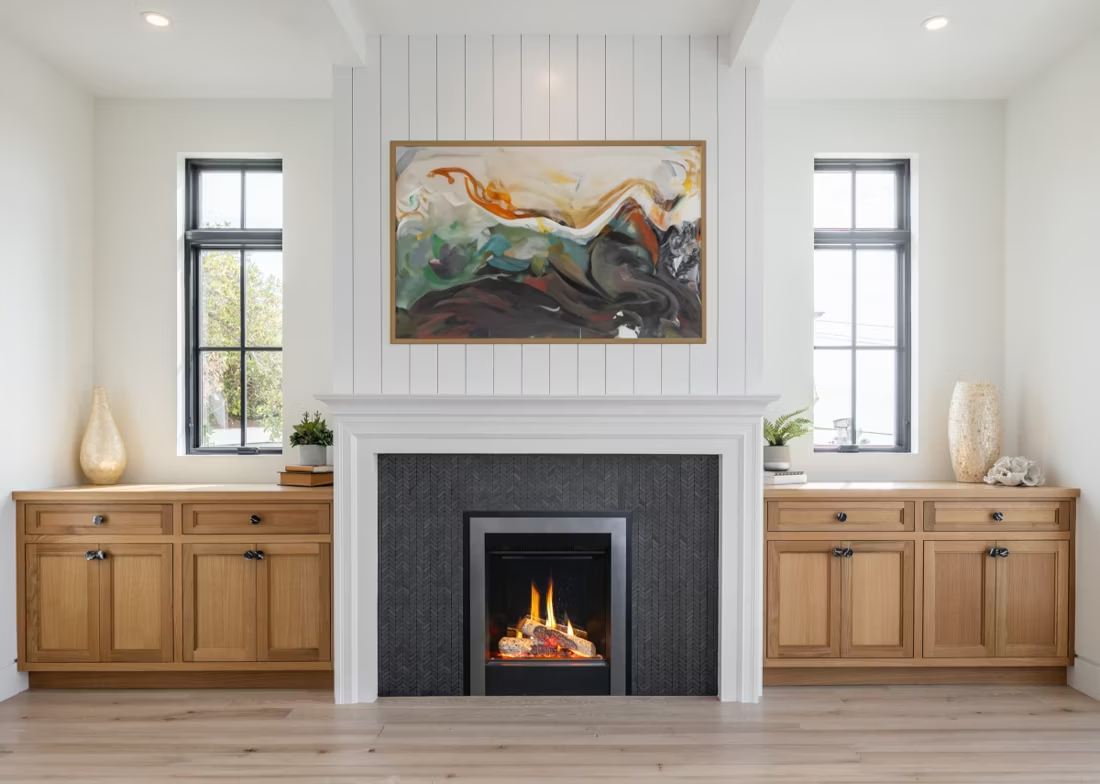
Yes—with an asterisk. Fireplaces are hot and TVs don't like heat. Either put a mantel between them to deflect rising warmth, or choose a fireplace with heat-management technology that creates a cool zone on the wall above—the wall stays around 125 degrees, barely warm, while the room still gets full heat. If you like clean lines and don't want a mantel, heat management is the answer.
Does an electric fireplace need a vent or chimney?
No—that's its superpower. An electric fireplace needs a wall and an outlet, period. No vent pipe, no gas line, no clearances to design around, which is why it works in bedrooms, offices, apartments, and walls where venting a gas or wood unit would be impractical or impossible. Installation is typically the simplest and least expensive of any fireplace type.
Can I install a fireplace myself?
If you're putting a fire in your house on purpose, it's best to work with an expert. Unless you're genuinely experienced in framing, gas line, vent pipe, and the national code on clearances to combustibles, have a professional do it—and ideally the same company that sells you the fireplace, so warranty, service, and liability all live under one roof.
Can a fireplace actually lower my heating bill?
Yes—by creating a comfort zone. A furnace heats every square foot of the house just to warm the one room you're in; a gas fireplace on low burns roughly a sixth of the gas a typical furnace does. Set the furnace around 55–60 degrees as a baseline, then heat the rooms your family actually uses. Families who heat this way commonly save $20–$60 a month.
Stove and Fireplace Dealers in Leon County
Listings include WhyFire partner dealers, dealers we have verified as authorized for the brands we recommend, and established local businesses that carry hearth products. Every listing shows which one it is. The ones marked Preferred run on WhyFire's software, so they can show you real pricing and book your appointment right here. No manufacturer pays for placement. How we verify dealers →
Fieldstone & Fireplaces
Aaa Overhead Door Company
The Chimney Guy -Seven Points
Find your electric fireplace in Leon County.
Tell us a bit about your home and we'll put together a free Project Guide & Parts List for your electric fireplace project—sized right for Leon County's mild winters—and match you with a trusted local dealer.
Find Your Fireplace →