
Find the right fireplace for Leon County's mild Texas winters.
Wood, gas, pellet, and electric fireplace resources for every town along the I-45 corridor and across Leon County's ranch country—from Centerville to Buffalo to Jewett. Find the right unit and connect with a trusted local hearth retailer.
Every Project Starts From One of These Five Situations
Ranch country heat, mild winters, real fireplace needs in Leon County, Texas.
Leon County sits in the Post Oak Savannah of East-Central Texas, straddling I-45 roughly halfway between Dallas and Houston. Winters here are mild by national standards—average lows around 35°F and just 2,179 heating degree days a year, a fraction of what a place like Fargo, ND logs in a single season. Even so, cold fronts push through most winters, and wood heat remains part of the ranching and hunting culture here—oak, pecan, and mesquite are the common backyard and cordwood species, and plenty of homes keep a wood stove or fireplace running through deer season and the occasional hard freeze.
What you'll find on this hub: hearth retailers, service technicians, and fuel suppliers who cover the whole county—from the county seat in Centerville to Buffalo along I-45, Jewett, Oakwood, Leona, and Marquez. Pick your fuel below to see local dealers, typical installation costs, and the units that make sense for a Leon County home, whether that's a ranch house running a wood stove through winter or a lake house near Lake Limestone with an electric fireplace for ambiance.
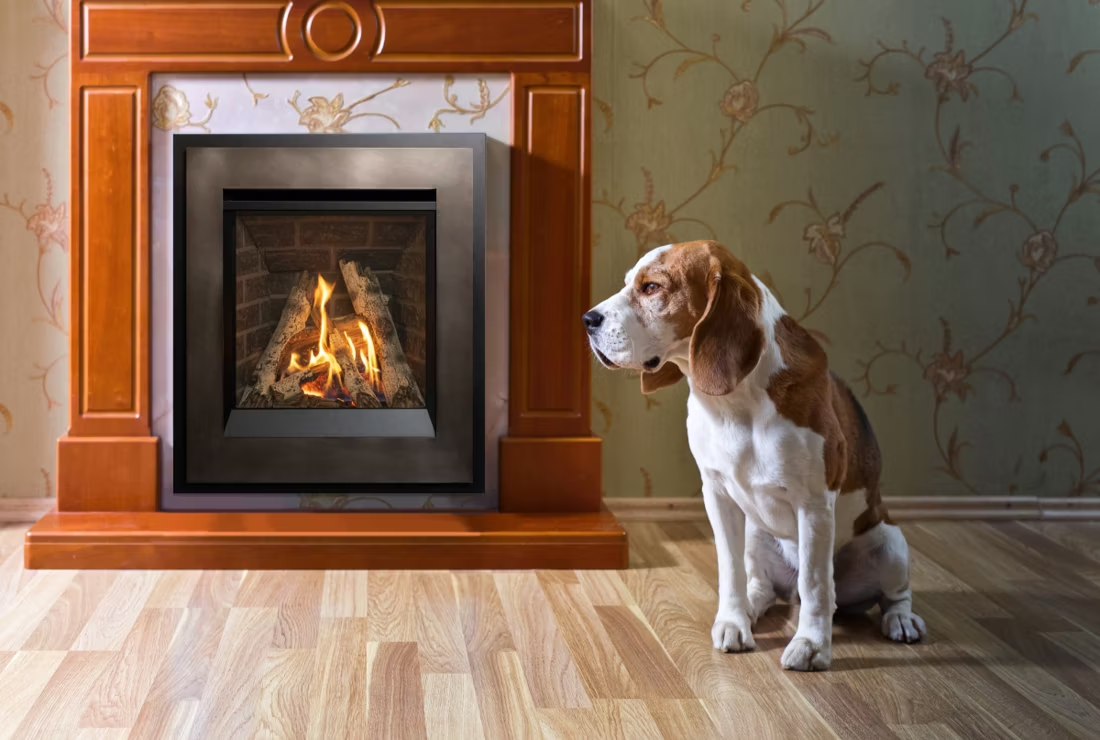
Four fuels. One honest answer for Leon County.
Three steps. No salesperson until you're ready.
Tell us about your project
Your zip code, your situation, and the fuel you're leaning toward—or let the answers point you to one.
See what's actually available
The brands dealers within 100 miles genuinely carry—real options, never a catalog mirage.
Get your dealer & Project Guide
A trusted local dealer, plus the free Project Guide & Parts List that names every component of the job.
Frequently Asked Questions
Which fuel works best for a Leon County home?
It depends on the property. Wood is deeply tied to local ranch and hunting culture—oak, pecan, and mesquite are the common cordwood species, fuel is often self-cut or sourced from a neighbor's land, and a wood stove earns its keep during deer season camp-outs and the occasional hard freeze. Gas here almost always means propane, since piped natural gas is limited outside the small city limits—propane fireplaces and inserts give instant heat without splitting wood, at the cost of a tank and delivery contract. Pellet is a solid middle ground, and Forest Energy and Lignetics bags are available through area retailers, though buyers should confirm supply before committing since it's not stocked on every corner out here. Electric fireplaces do real work in Leon County precisely because the climate is mild—with only 2,179 heating degree days a year, a lot of homes don't need a heavy primary heat source, and an electric unit covers ambiance plus supplemental warmth on the coldest nights just fine.
Do I need a permit to install a fireplace in Leon County?
It depends on where you are. Leon County doesn't run a unified countywide residential building code the way larger Texas counties do—within city limits (Centerville, Buffalo, Jewett, and the other incorporated towns), you'll typically need to check with city hall or the town's contracted building inspector before installing a wood stove, gas insert, or pellet appliance. In unincorporated parts of the county, Texas gives counties more limited authority over residential construction, so permitting requirements are lighter and vary property to property. Propane installations still require work from a licensed gas installer regardless of jurisdiction, and any tank placement has its own setback rules from the propane supplier. When in doubt, a local hearth retailer who's installed in your specific town before can tell you exactly what's required.
Are there any wood-burning or air quality restrictions in Leon County?
No—Leon County isn't in an ozone non-attainment area and has no formal wood-smoke curtailment program, unlike counties in basin geographies that trap winter inversions. The one restriction to know about is unrelated to fireplaces specifically: during drought conditions, the county judge can and does issue outdoor burn bans covering brush piles, agricultural burning, and open fires. Those bans generally don't apply to fireplaces and stoves used inside a home with a proper chimney or vent, but they're worth checking if you're also planning to burn brush while you're cutting and stacking firewood.
Is there a hearth retailer based right in Leon County, or do dealers travel in?
Most dealers serving Leon County are based outside it. Because the county's population is under 6,200 and spread thin across ranch land, you won't find a hearth showroom in every town—retailers typically operate out of Corsicana, Waco, Huntsville, or the Bryan-College Station area and drive the I-45 corridor or Highway 79 to reach Leon County customers. Buffalo, sitting right on I-45, tends to be an easy stop for these dealers; more remote spots like Marquez or Oakwood may involve a bit more lead time for a home visit. None of that changes installation quality—it just means scheduling a consultation a little further ahead of your target date.
How does installation and service work for the rural parts of the county?
Expect a travel component built into most quotes. Technicians and retailers covering Leon County's rural stretches—out toward Marquez, Leona, or the ranch roads off Highway 7—usually build a trip charge into service calls, often in the $50–$100 range depending on distance from their home base. For propane installs, you'll also need to coordinate between your hearth installer and your propane supplier on tank placement and line sizing, which can add a step compared to a natural-gas hookup in a bigger city. Scheduling ahead of the first hard freeze—rather than waiting for a mid-winter breakdown—tends to get you a faster appointment and fewer emergency-call fees.
What's the typical cost range across fuel types for a Leon County installation?
Wood stove or insert: roughly $4,000–$8,500 for a typical install with chimney or class-A pipe work, depending on whether you're retrofitting an existing masonry chimney or building new. Propane fireplace, insert, or stove: $4,000–$10,000, with the higher end reflecting new gas line runs and tank setup since most of the county isn't on piped natural gas. Pellet stove or insert: $4,000–$7,000 for a standard install. Electric fireplace: $200–$2,800 for the unit itself, plus $300–$1,000 in labor for anything beyond a simple plug-in, which covers most wall-mount and insert jobs. Exact numbers depend on your specific property and which local dealer you work with—the county + fuel pages above break down costs by fuel type in more detail.
Can I install a fireplace myself?
If you're putting a fire in your house on purpose, it's best to work with an expert. Unless you're genuinely experienced in framing, gas line, vent pipe, and the national code on clearances to combustibles, have a professional do it—and ideally the same company that sells you the fireplace, so warranty, service, and liability all live under one roof.
Wood, gas, pellet, or electric—how do I choose?
Match the fuel to your life, not the other way around. Wood: lowest fuel cost and total power-outage independence, but you're hauling and stacking. Gas: press a button, set a thermostat, no maintenance to speak of. Pellet: wood economics with automatic feeding, in exchange for weekly cleaning and a need for electricity. Electric: plugs in anywhere with honest supplemental heat. Nobody regrets the fuel that fits how they actually live.
What is an in-home preview and do I need one?
It's a visit where a hearth professional measures your space, confirms the model you picked actually works in your home, and walks the specs—framing, gas line, venting, finish work—before anything is ordered. Some details you just can't know until you see the house. Never make a down payment without one; it's the single most-skipped step that burns buyers.
How much should I budget for a fireplace?
For an average home—covering the fireplace, the vent pipe, and basic installation—a budget between $3,900 and $5,500 gives you a lot of options across wood, gas, and pellet. By the time you add finish work, gas line, and electrical, the average complete installation lands between $5,000 and $12,000 all-in. In a remodel or new build, a good rule is to put about 2.5% of the total project cost toward the fireplace.
Stove and Fireplace Dealers in Leon County
Listings include WhyFire partner dealers, dealers we have verified as authorized for the brands we recommend, and established local businesses that carry hearth products. Every listing shows which one it is. The ones marked Preferred run on WhyFire's software, so they can show you real pricing and book your appointment right here. No manufacturer pays for placement. How we verify dealers →
Fieldstone & Fireplaces
Aaa Overhead Door Company
The Chimney Guy -Seven Points
Find your fireplace project in Leon County.
Pick your fuel below and we'll match you with a trusted local dealer and send a free Project Guide & Parts List—the exact parts, vent kit included, and the dealer we'd recommend for your project.
Find Your Fireplace →