
Steady heat for Hill Country's occasional hard freeze.
Lakehills sees mild winters most years—average lows near 37°F and just 1,916 heating degree days—but Medina Lake cold snaps still happen. I'll match you with a trusted local dealer who can size and install a pellet stove that's ready when they do.
Every Project Starts From One of These Five Situations
A short heating season doesn't mean a soft one.
Lakehills sits in the Hill Country west of San Antonio, tucked along the shores of Medina Lake in Bandera County. At just over 1,300 feet elevation and Climate Zone 2B, winters here are mild by almost any national measure—average lows sit around 37°F and the area logs only about 1,916 heating degree days a year, a fraction of what a place like Fargo, ND racks up in a single hard winter. But mild doesn't mean absent: Hill Country cold snaps still roll through, and Bandera County wasn't spared during Winter Storm Uri in February 2021, when homeowners across the county learned the hard way that a fast, reliable heat source matters even here.
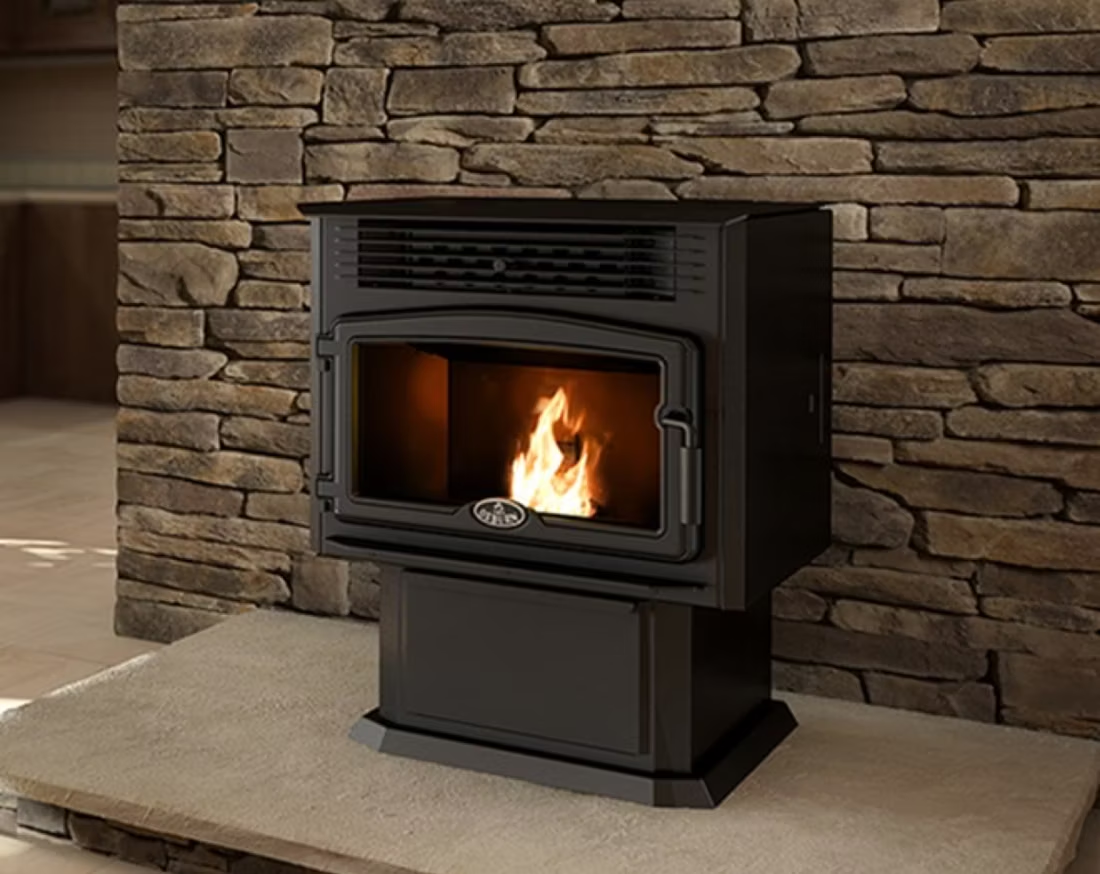
That's largely why pellet stoves have real traction in Lakehills despite the short heating season. There's no natural gas utility serving the area, so most homes run on propane or are all-electric through Bandera Electric Coop, and a pellet stove offers thermostat-controlled heat without adding a propane tank or committing to splitting the oak, pecan, and mesquite that grow thick around the lake—wood plenty of neighbors still burn in a traditional stove or open fireplace. There's no non-attainment designation or burn-curtailment program here the way there is in parts of the Pacific Northwest, so the draw isn't emissions rules—it's convenience: load a hopper with pellets from a regional brand like Forest Energy or Lignetics, set a thermostat, and let it run itself through the handful of genuinely cold nights the year brings.
Three steps. No salesperson until you're ready.
Tell us about your project
Your zip code, your situation, and the fuel you're leaning toward—or let the answers point you to one.
See what's actually available
The brands dealers within 100 miles genuinely carry—real options, never a catalog mirage.
Get your dealer & Project Guide
A trusted local dealer, plus the free Project Guide & Parts List that names every component of the job.
Frequently Asked Questions
How much does a pellet stove installation cost in Lakehills?
A straightforward freestanding pellet stove install—hearth pad, direct vent through an exterior wall, and a dedicated electrical outlet for the auger and blower—typically lands in the $3,500 to $6,500 range nationally, and Lakehills homes generally fall on the simpler end since most are single-story with easy exterior wall access rather than multi-story chimney chases. Converting an existing wood-burning fireplace to a pellet insert can add cost if the masonry opening needs modification. Your installer will pull the required Bandera County building permit as part of the job, and a matched local dealer can give you an exact number once they've seen your floor plan.
What size pellet stove do I need for a home in Lakehills?
With only about 1,916 heating degree days a year, Lakehills doesn't demand the oversized, all-night-burn capacity that a place like Fargo, ND or Bismarck, ND would call for. Most homes here do fine with a small to mid-size pellet stove rated for 1,000 to 1,800 square feet, especially since it's typically running as a supplemental heat source through winter's coldest stretches rather than carrying the whole house day and night. If you're heating an open floor plan or a lake house that stays chilly overnight near Medina Lake, sizing toward the upper end of that range gives you more margin without much added cost.
Do I need a permit to install a pellet stove in Lakehills?
Yes, a building permit through Bandera County is standard for a new pellet stove or insert install, and most hearth dealers who work in Lakehills handle that paperwork as part of the job. Because pellet stoves vent through a small-diameter pipe out a wall rather than requiring a full masonry chimney, the permitting and inspection process is usually quicker and less involved than a wood stove install that needs new Class A chimney construction—one more reason pellet has become a popular retrofit choice for older lake homes without an existing flue.
What's the difference between a pellet stove and a wood stove for my house?
A wood stove burns split logs—oak, pecan, and mesquite are the local staples around Lakehills and Medina Lake—and needs a full chimney or Class A pipe system along with regular cutting, stacking, and hauling. A pellet stove burns compressed hardwood pellets from a hopper, feeds itself automatically, vents through a simple wall pipe, and holds a steady temperature you set on a thermostat. The tradeoff is that a pellet stove needs continuous electricity to run the auger and blower, while a wood stove works through a power outage. Given the area's mild, short heating season, many homeowners here choose pellet for the lower-labor, more hands-off experience.
Where can I buy pellets near Lakehills, and which brands are available?
Forest Energy and Lignetics are the regional brands most commonly stocked by hearth dealers and farm and feed stores serving the Hill Country, including outlets in Bandera and the greater Boerne and Kerrville area. Because Lakehills is rural, it's worth buying a season's supply—roughly a ton for typical supplemental use given the area's mild 1,916 heating degree days—in fall before cold snaps hit, rather than counting on same-week delivery. Store bags off the ground in a dry garage or shed; Hill Country humidity swings can cause bagged pellets to absorb moisture and break down if left exposed.
Will my pellet stove work if the power goes out?
No, not without a backup power source—the auger that feeds pellets and the blower that pushes heat into the room both require continuous electricity. That's a real consideration in Bandera County, where rural Bandera Electric Coop lines can go down during ice or high wind, and where Winter Storm Uri in February 2021 knocked out power across much of Texas for days at the coldest possible time. Homeowners who want heat during an outage typically pair a pellet stove with a small battery backup or generator, or keep a wood-burning option in reserve since it needs no electricity at all.
How often does a pellet stove need maintenance in Lakehills?
Plan on emptying the ash pan weekly during regular use and wiping the glass as needed—pellet stoves burn cleaner than wood, so buildup is lighter. A professional service visit once a year, ideally in October or November before the season's first real cold snap, should cover the auger, hopper, exhaust blower, and venting. Because Lakehills' mild 1,916-heating-degree-day climate means most stoves here run as supplemental heat rather than around the clock all winter, wear tends to be lighter than in colder regions, but skipping the annual check is still the most common reason a stove fails right when a cold front finally arrives.
Are there rebates for installing a pellet stove in Lakehills?
Texas doesn't currently run a state-level rebate program for pellet stoves, and Bandera County doesn't offer a local incentive either. The federal Energy Efficient Home Improvement Credit can still apply, though—biomass stoves rated at 75% efficiency or higher may qualify for a 30% federal tax credit up to $2,000 when you file. Save your receipts and the manufacturer's efficiency documentation, and ask your matched local dealer which models on their floor currently meet the federal threshold before you buy.
Pellet vs. wood—which makes more sense in Lakehills?
Wood has deep roots here—oak, pecan, and mesquite grow all around Medina Lake, and burning your own or a neighbor's cut wood costs little beyond the labor of splitting and stacking it, and it keeps working straight through a Bandera Electric Coop outage. Pellet stoves trade that fuel independence for convenience: load a hopper with Forest Energy or Lignetics pellets, set a thermostat, and skip the cutting and creosote maintenance entirely. Given Lakehills' short, mild heating season of around 1,916 degree days, a lot of homeowners—especially retirees and Medina Lake vacation properties used only part of the year—lean toward pellet for exactly that low-effort tradeoff.
How often does a pellet stove need cleaning?
A clean pellet stove is a happy pellet stove. Plan on cleaning the burn pot about once a week when you're burning regularly—ash and clinkers gum up the air holes just like a pellet barbecue. Most pellet stove problems trace back to skipped cleaning that nobody explained up front. Some designs make it easy with a trapdoor burn pot: pull a lever and the gunk drops into the ash pan.
What's the difference between an insert and a zero-clearance fireplace?
An insert is a fireplace that slides into a pre-existing wood-burning fireplace—if you don't have one, there's nothing to insert it into. A zero-clearance fireplace is built into a framed wall, which makes it the answer for remodels and new construction. Simple test: existing masonry fireplace means insert; blank or framed wall means zero-clearance.
How much should I budget for a fireplace?
For an average home—covering the fireplace, the vent pipe, and basic installation—a budget between $3,900 and $5,500 gives you a lot of options across wood, gas, and pellet. By the time you add finish work, gas line, and electrical, the average complete installation lands between $5,000 and $12,000 all-in. In a remodel or new build, a good rule is to put about 2.5% of the total project cost toward the fireplace.
What is an in-home preview and do I need one?
It's a visit where a hearth professional measures your space, confirms the model you picked actually works in your home, and walks the specs—framing, gas line, venting, finish work—before anything is ordered. Some details you just can't know until you see the house. Never make a down payment without one; it's the single most-skipped step that burns buyers.
Nearby Dealers
Hearth shops serving Lakehills and the surrounding area. Every listing shows whether it is a WhyFire partner, a dealer we have verified as authorized for the brands we recommend, or a local business carrying hearth products. No manufacturer pays for placement. How we verify dealers →
Hill Country Fireplaces
Bbq Outfitters
Installed Building Products, LLC
Pico Propane Operating
Orange County Bldg Materl
Schilling Fireplace & Wood Stoves
Parrish & Company Inc - San Antonio
Home & Patio
Area – San Antonio, Tx
Pellet Brands Stocked Around Lakehills
Manufacturers will point you to the nearest stocking dealer.
Get your free Project Guide & Parts List for a Lakehills pellet stove.
Tell me about your home and how you currently heat it, and I'll match you with a trusted local dealer and send a free Project Guide & Parts List—sized for the Hill Country's mild but occasionally sharp winters, with the vent kit and parts specified.
Find Your Fireplace →