
Instant Comfort for Lake Worth's Mild Winter Nights.
Real flame and real heat for the cold snaps that do roll through Tarrant County—without tending a wood fire. Find the right gas unit and connect with a trusted local dealer.
Every Project Starts From One of These Five Situations
Zone heat that fits Lake Worth's short heating season.
Lake Worth sits along the shores of its namesake reservoir in Tarrant County, part of the greater Fort Worth metro, at just 709 feet of elevation. Winters here are short and mild—average lows hover around 37°F and the city has a winter heating load only a fraction of what a place like Fargo, ND racks up each winter. That climate is exactly why wood-burning fireplaces never really took hold locally the way they have in colder regions; most homes were built with heating as an afterthought, not a survival need.
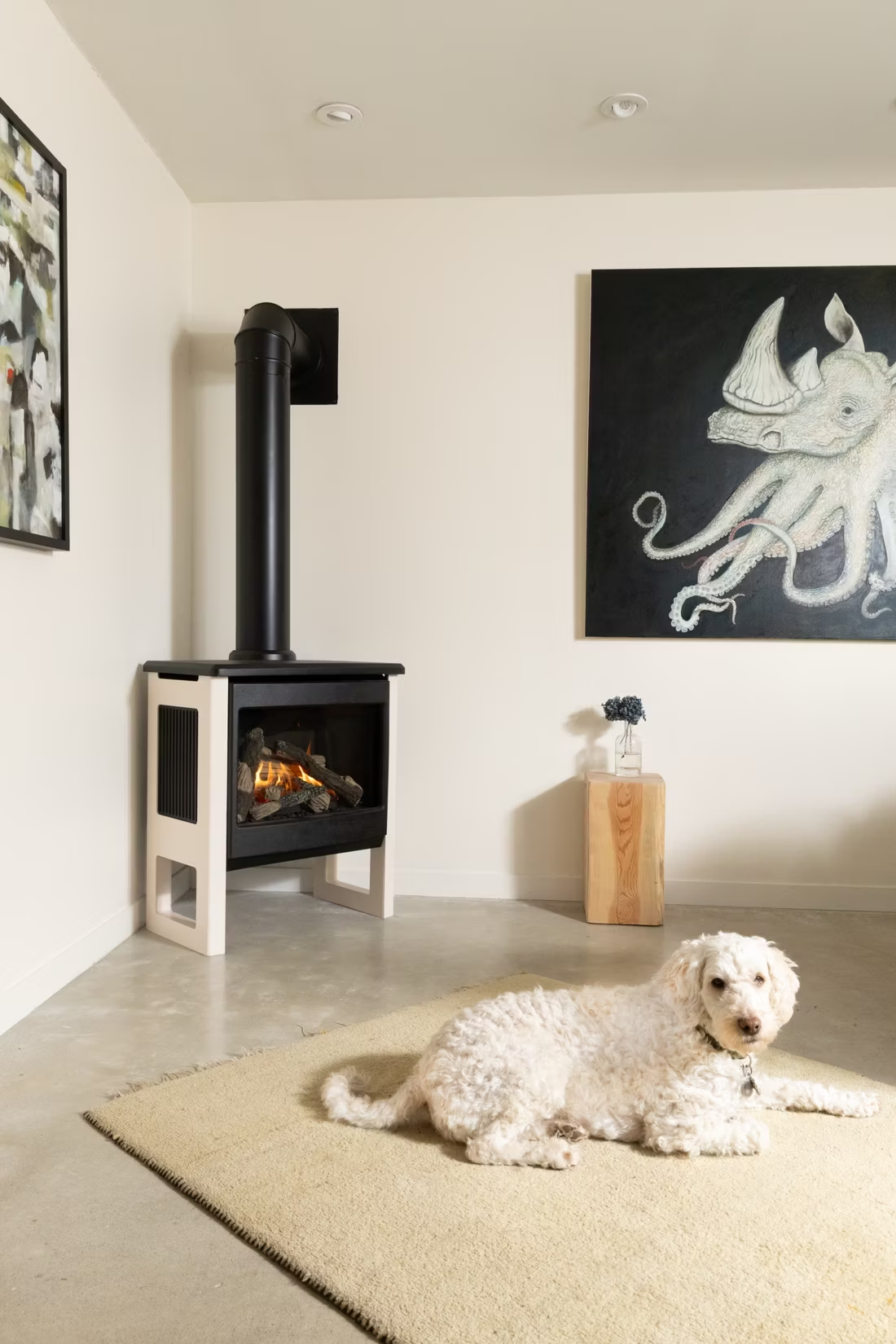
Gas fills that gap well. Much of the city is served by natural gas through Atmos Energy's Tarrant County footprint, and homes that already have a gas water heater or range are usually a simple branch-line away from adding a fireplace. Homes outside the natural gas service area typically run on propane instead. Either way, a gas fireplace or insert gives you real flame and real heat on demand—useful during the occasional ice storm or cold snap—without the wood supply, ash cleanup, or chimney maintenance that never made much sense to build a household routine around here in the first place.
Three steps. No salesperson until you're ready.
Tell us about your project
Your zip code, your situation, and the fuel you're leaning toward—or let the answers point you to one.
See what's actually available
The brands dealers within 100 miles genuinely carry—real options, never a catalog mirage.
Get your dealer & Project Guide
A trusted local dealer, plus the free Project Guide & Parts List that names every component of the job.
Frequently Asked Questions
How much does a gas fireplace installation cost in Lake Worth?
Most gas fireplace installations in Lake Worth run $3,500 to $8,500, depending on whether you're adding a direct-vent insert into an existing masonry fireplace or installing a new built-in unit that requires framing and a fresh gas line. Homes already plumbed for natural gas—common here, since Atmos Energy serves much of Tarrant County—sit on the lower end of that range. Projects that need a new gas line run from the meter, or a propane tank set for homes outside the natural gas footprint, land closer to the top. A local hearth dealer will give you a firm number after walking your home.
Can I convert an existing wood-burning fireplace to gas?
Yes, and it's a common request here. Lake Worth's mild winters—average lows around 37°F and a winter heating load well under half of what colder regions see—mean wood heat never really took hold the way it has in colder parts of the country, so most older homes have a masonry firebox that was built for wood but rarely gets used for real heat. Installing a direct-vent gas insert or a set of vented gas logs into that existing opening is usually straightforward, running a liner through the current chimney as the vent path. Expect $2,500 to $6,000 for the conversion depending on the insert and whether new gas line work is needed.
Is natural gas available in Lake Worth, or do I need propane?
Most of the city falls within Atmos Energy's natural gas service area, which covers much of Fort Worth and Tarrant County—if your home already has a gas water heater, range, or furnace, adding a fireplace usually just means running a new branch line off the existing service. For homes on the edges of town or in unincorporated parts of the county outside that footprint, propane is the standard fallback, typically with a small tank set on the property. Nearly every gas fireplace on the market can be configured for either fuel—your installer sets the correct orifice and regulator for whichever you have.
Will a gas fireplace still work if the power goes out?
It depends on the ignition system, but most will. Units with intermittent pilot ignition (IPI) run on a small battery backup that kicks in the moment power drops, so the fireplace lights and operates normally off batteries. Standing-pilot models work through outages by design, since the pilot stays lit continuously. Valor's gas fireplaces take a different approach: the pilot's thermocouple generates its own electricity, so there's no battery to remember and no dependence on Oncor or whichever cooperative serves your part of Lake Worth staying up. Given how often North Texas ice storms knock out power for a day or two, that's worth asking about when comparing units.
What's the difference between a gas fireplace, gas insert, and gas stove?
A gas fireplace is a fully built-in unit framed into a wall—the right call for new construction or a remodel with no existing masonry opening. A gas insert is sized to slide into an existing wood-burning fireplace, sealing it up and using the chimney as the vent path. A gas stove is a freestanding cabinet unit that sits on the floor, similar in footprint to a wood stove but running on gas or propane. Most Lake Worth homes with an older masonry fireplace that never gets used go the insert route, since it's the least invasive and lowest-cost path to real heat.
Do I need a permit to install a gas fireplace in Lake Worth?
Yes. A building permit and a separate gas line permit are typically required, whether through the City of Lake Worth's building department or Tarrant County if your property falls outside city limits. The gas line portion has to be handled by a licensed gas-fitter, which is one reason it's worth using a hearth dealer who coordinates the gas work, venting, and inspection as a single job instead of juggling separate trades yourself.
Should I get a vented or vent-free gas fireplace?
Vented, direct-vent units draw combustion air from outside and exhaust it back outside through sealed pipe—they're the cleaner, more universally recommended option and what most local dealers install by default. Vent-free gas fireplaces burn directly into the room and are legal in Texas, with room-size and ventilation rules a dealer will walk you through. Since Lake Worth has no air quality non-attainment issues or wood-smoke restrictions to navigate, either option is realistically on the table—the choice usually comes down to whether you have an existing chimney to vent through and how much heat output you want.
How often does a gas fireplace need to be serviced?
Plan on an annual inspection, ideally in early fall before you start using it regularly. A technician checks the burner, pilot assembly, gas connections, and any glass or venting components, and clears out dust and spider webs that build up in the burner tray over a Texas summer—spiders nesting near the pilot is a surprisingly common service call here. Annual inspections typically run $125 to $200 through a local gas appliance service provider.
Gas vs. electric fireplace—which makes more sense in Lake Worth?
Wood heat isn't really part of the equation here—with lows averaging only around 37°F and a winter heating load well under half of what colder regions see, Lake Worth's climate doesn't demand it the way a place like Fargo, ND does, and most local homes skip wood-burning appliances entirely. That leaves the real choice as gas versus electric. Gas delivers a bigger, more authentic flame and real heat output, which matters more during the occasional cold snap or power outage. Electric fireplaces install almost anywhere with no venting or gas line at all, run on standard household current from Oncor, United Electric Cooperative, or Denton County Electric Cooperative depending on your address, and cost only pennies an hour at the area's roughly 13-to-14-cent per kWh residential rate. For a primary living space where you want real ambiance and heat, gas usually wins; for a bedroom, sunroom, or rental property, electric is often the simpler call.
Is my gas fireplace wasting gas?
If it was installed more than 15 years ago, probably. Older gas fireplaces keep a standing pilot light burning all the time, and that little flame can cost a couple hundred dollars a year. Newer models use pilot-on-demand ignition—the pilot lights only when you use the fireplace and goes out when you turn it off.
What's the difference between an insert and a zero-clearance fireplace?
An insert is a fireplace that slides into a pre-existing wood-burning fireplace—if you don't have one, there's nothing to insert it into. A zero-clearance fireplace is built into a framed wall, which makes it the answer for remodels and new construction. Simple test: existing masonry fireplace means insert; blank or framed wall means zero-clearance.
How much should I budget for a fireplace?
For an average home—covering the fireplace, the vent pipe, and basic installation—a budget between $3,900 and $5,500 gives you a lot of options across wood, gas, and pellet. By the time you add finish work, gas line, and electrical, the average complete installation lands between $5,000 and $12,000 all-in. In a remodel or new build, a good rule is to put about 2.5% of the total project cost toward the fireplace.
What is an in-home preview and do I need one?
It's a visit where a hearth professional measures your space, confirms the model you picked actually works in your home, and walks the specs—framing, gas line, venting, finish work—before anything is ordered. Some details you just can't know until you see the house. Never make a down payment without one; it's the single most-skipped step that burns buyers.
Nearby Dealers
Hearth shops serving Lake Worth and the surrounding area. Every listing shows whether it is a WhyFire partner, a dealer we have verified as authorized for the brands we recommend, or a local business carrying hearth products. No manufacturer pays for placement. How we verify dealers →
Rodak's Coffee And Bbq Grills
Texas Building Supply
Alliance Materials, Inc.
Brothers Supply Co.
David's Stove Shop Inc
Fireside Innovations
Acme Brick Tile & Stone
Bbq Outfitters
Find your gas fireplace in Lake Worth.
Tell us a bit about your home and we'll match you with a trusted local dealer and put together your free Project Guide & Parts List—the exact parts, including the vent kit, for your Lake Worth gas fireplace project.
Find Your Fireplace →