
Instant warmth for Hill Country evenings in Kimble County.
From Junction to the ranches along the South Llano River, gas fireplaces give Kimble County homes and hunting camps clean, flip-switch heat without hauling wood. Get matched with a trusted local dealer who knows what actually works out here.
Every Project Starts From One of These Five Situations
Mild winters, but real demand for quick, clean heat.
Kimble County sits on the Edwards Plateau in the Texas Hill Country, with Junction as the county seat and a population of just under 2,500 spread across ranch land and river frontage along the South Llano. Climate zone 3B and a short, mild winter heating season mean this is a mild-winter county—winter lows average around 34°F, nowhere near the sustained cold of a place like Fargo or Duluth. Most homes here don't need a furnace running around the clock; what they need is fast, reliable heat for the cold mornings and the occasional hard freeze, plus something that looks good in a living room or a hunting lodge that only fills up on weekends.
That pattern of use—houses and deer camps that sit empty much of the week, then need heat fast when people arrive—is exactly where gas fireplaces earn their keep in Kimble County. Natural gas service is limited mostly to parts of Junction proper; across the rest of the county, propane is the standard fuel, delivered and stored in tanks on ranch and rural properties. A direct-vent gas fireplace or insert lights instantly, doesn't need a fire built and tended before anyone's warm, and—with the right ignition system—keeps working even if the power drops during a Hill Country ice event.
Three steps. No salesperson until you're ready.
Tell us about your project
Your zip code, your situation, and the fuel you're leaning toward—or let the answers point you to one.
See what's actually available
The brands dealers within 100 miles genuinely carry—real options, never a catalog mirage.
Get your dealer & Project Guide
A trusted local dealer, plus the free Project Guide & Parts List that names every component of the job.
Frequently Asked Questions
How much does a gas fireplace installation cost in Kimble County?
Most gas fireplace and insert installations in and around Junction run roughly $3,800 to $8,500, depending on the unit, whether you're on propane or natural gas, and how much venting or gas line work is involved. A propane insert going into an existing masonry fireplace on a ranch property that already has a tank on site tends to land on the lower end. New construction or a build-out that needs a fresh gas line run from a propane tank, plus framing and venting, runs higher. Because Kimble County is rural, expect a travel charge on top of the install if your dealer is coming from Kerrville, San Angelo, or Fredericksburg—worth asking about up front.
Can I convert my existing wood fireplace to gas?
Yes, and it's a common project for older ranch houses in Kimble County that were built with a wood-burning masonry fireplace and rarely get used because nobody wants to load and tend a fire for a weekend visit. A gas log insert or sealed gas insert can go into that existing opening, usually with a stainless liner run up the chimney for venting. Since natural gas isn't available on most rural properties, this typically means running a line from a propane tank rather than tapping city gas—your local dealer will scope that as part of the estimate.
Do I need natural gas, or does propane work fine?
Propane is the standard choice for the vast majority of Kimble County, since natural gas mains reach only limited areas of Junction. This isn't a downside—nearly every gas fireplace and insert sold today can be configured for propane with the correct orifice and regulator, and propane suppliers throughout the Hill Country are used to setting up tanks for ranch houses, guest cabins, and hunting camps. If you're inside Junction city limits and already have natural gas appliances, that's an option too—just confirm service to your specific address before you commit to a unit.
Will my gas fireplace still work if the power goes out?
Most direct-vent gas fireplaces with intermittent pilot ignition include a battery backup that keeps the unit running when the power drops—which matters on ranch properties in Kimble County where outages during winter ice events can stretch longer than in town. Valor units take a different approach: the pilot's thermocouple generates the small amount of electricity the fireplace needs, so there's no battery to remember or replace. For a weekend house or hunting camp that sits empty half the time, that kind of set-it-and-forget-it reliability is worth asking your dealer about directly.
What's the difference between a gas fireplace, gas insert, and gas stove?
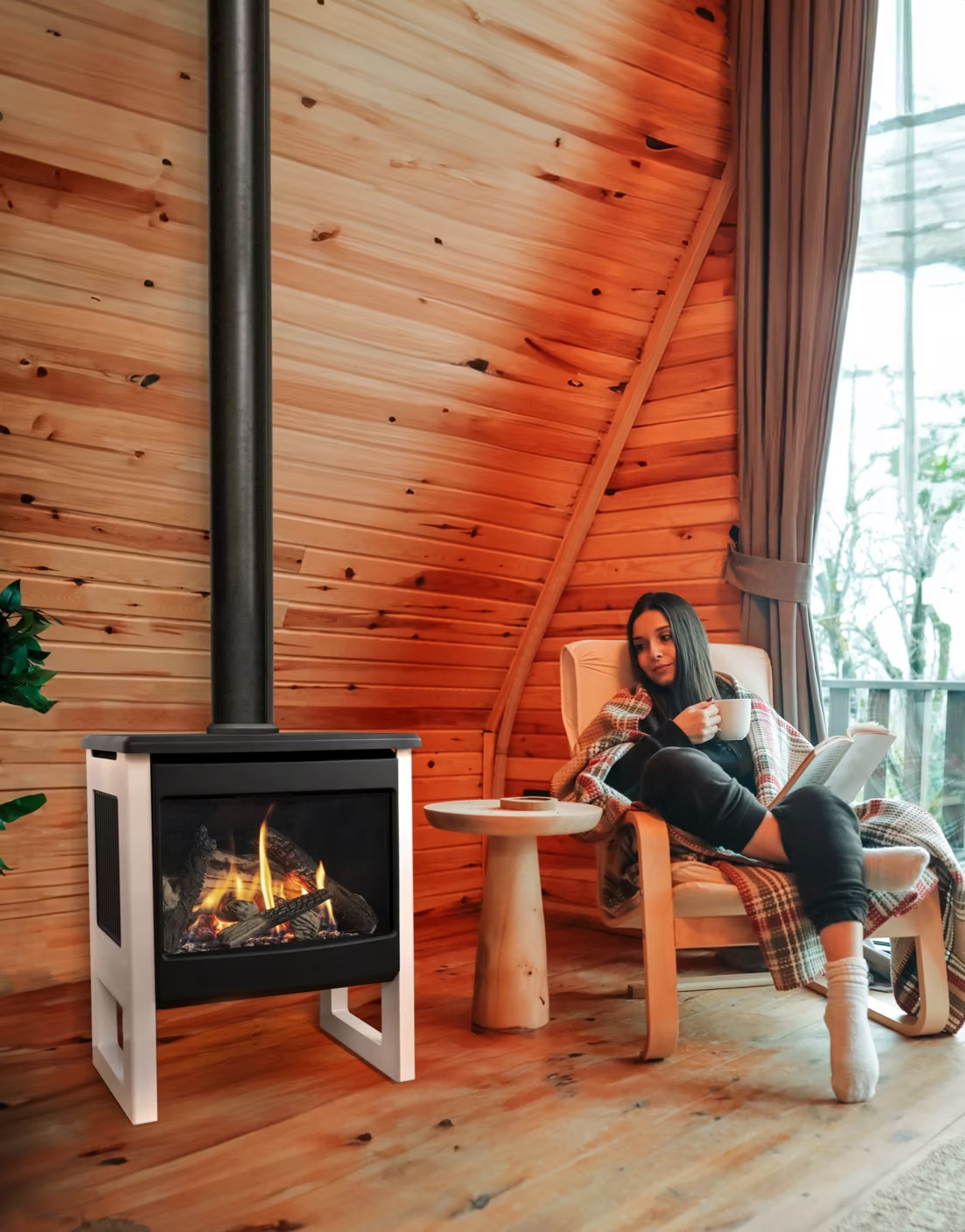
A gas fireplace is a fully built-in unit framed into a wall—the right call for new construction or a remodel without an existing hearth. A gas insert slides into an existing masonry fireplace opening and uses the chimney as its vent path, which fits a lot of the older stone and brick fireplaces found in Kimble County ranch homes. A gas stove is a freestanding, cast-iron-style unit that sits out in the room on its own hearth pad—a good option for a cabin or camp that has no chimney at all. For most homeowners here upgrading an existing fireplace, an insert is the simplest, most cost-effective path.
Do I need a permit to install a gas fireplace in Kimble County?
Generally yes—a building permit and, where applicable, a permit covering the gas line work, both typically handled through the county's permitting office in Junction. Most established hearth dealers fold this into the installation and pull the permit on your behalf, so you're not coordinating it yourself. Because a lot of installations in this county involve running or extending a line from a propane tank rather than tapping an existing utility connection, make sure whoever does the gas work is a licensed gas-fitter—that's one of the real advantages of using a dealer who handles the whole job rather than piecing it together with separate trades.
Should I get a vented or vent-free gas fireplace?
Vented (direct-vent) gas fireplaces draw combustion air from outside and exhaust it back outside through sealed venting—they're the cleaner, safer, code-compliant choice almost everywhere, including Texas. Vent-free units burn without any external venting and release some byproducts into the room, so they come with strict rules on room size and ventilation. Given how many Kimble County installs are in weekend homes, guest cabins, or camps that sit closed up for stretches at a time, a sealed direct-vent unit is usually the more sensible choice—no one's there daily to monitor air quality inside a vent-free room. Ask your local dealer to walk through both if you want to weigh it yourself.
How often does a gas fireplace need to be serviced?
Plan on an annual inspection—a technician checks the burner, pilot assembly, gas connections, and venting, and cleans the glass and interior. That holds true whether the unit runs daily in a Junction living room or sits mostly idle in a hunting camp that only gets used a few weekends a season; gas lines and pilot components still need a yearly look regardless of how much the fireplace actually burns. Because Kimble County is rural, many homeowners schedule this alongside a propane tank inspection or delivery visit to save a second trip charge.
Gas vs. wood—which makes more sense here?
With winter lows averaging around 34°F and only a short, mild winter heating season, Kimble County doesn't demand serious heating output most of the winter—which is part of why gas does well here: instant on-off convenience without babysitting a fire. That said, wood heat has deep roots in this part of the Hill Country, with oak, pecan, and mesquite all common and often self-sourced from ranch land. Wood tends to win for full-time residents who like the ritual and the backup-heat security during outages; gas tends to win for weekend places, hunting camps, and anyone who wants reliable warmth the moment they walk in the door without stacking or hauling firewood.
Why is my open fireplace making my house colder?
Open fireplaces suck—literally. As the fire burns, it consumes air your furnace already paid to heat and pulls it out through the chimney, so the house is actually colder after the fire goes out than before you lit it. An insert fixes this: it seals the chimney, puts fixed glass across the front, and turns that hole in your house into a real heat source.
Can I put a TV above my fireplace?
Yes—with an asterisk. Fireplaces are hot and TVs don't like heat. Either put a mantel between them to deflect rising warmth, or choose a fireplace with heat-management technology that creates a cool zone on the wall above—the wall stays around 125 degrees, barely warm, while the room still gets full heat. If you like clean lines and don't want a mantel, heat management is the answer.
Does a fireplace add value to my home?
On average, a fireplace adds back to the home about the same amount you spent installing it. Add the monthly savings from heating the rooms you actually use instead of the whole house—often hundreds of dollars a year—and the value case is strong before you even count what a fire does for how your family uses the room.
Can I install a fireplace myself?
If you're putting a fire in your house on purpose, it's best to work with an expert. Unless you're genuinely experienced in framing, gas line, vent pipe, and the national code on clearances to combustibles, have a professional do it—and ideally the same company that sells you the fireplace, so warranty, service, and liability all live under one roof.
Stove and Fireplace Dealers in Kimble County
Listings include WhyFire partner dealers, dealers we have verified as authorized for the brands we recommend, and established local businesses that carry hearth products. Every listing shows which one it is. The ones marked Preferred run on WhyFire's software, so they can show you real pricing and book your appointment right here. No manufacturer pays for placement. How we verify dealers →
Schilling Fireplace & Wood Stoves
Fredericksburg Overhead Door
Find your gas fireplace in Kimble County.
Tell us about your home or camp and we'll match you with a trusted local dealer and a free Project Guide & Parts List—the right unit, the vent kit, and a plan sized for your property.
Find Your Fireplace →