
Keep Your Family Warm and Safe—No Matter What
With winters this mild, wood isn't how most Kilgore homes stay warm—but for rural acreage, ice-storm backup, or the ambiance of a real fire, the right stove or insert still makes sense.
Every Project Starts From One of These Five Situations
East Texas winters rarely call for a wood stove.
Kilgore sits in the East Texas piney woods at just 350 feet elevation, with a humid subtropical climate that logs a short, mild heating season each year—a fraction of what a place like Duluth, Minnesota or Bozeman, Montana sees in a single winter. Average winter lows hover around 37°F, and central heat pumps and gas furnaces handle the vast majority of Gregg County's heating needs without much trouble. Wood-burning appliances simply aren't the standard here, and that's not a knock on wood heat—it's just a function of a climate that rarely demands it.
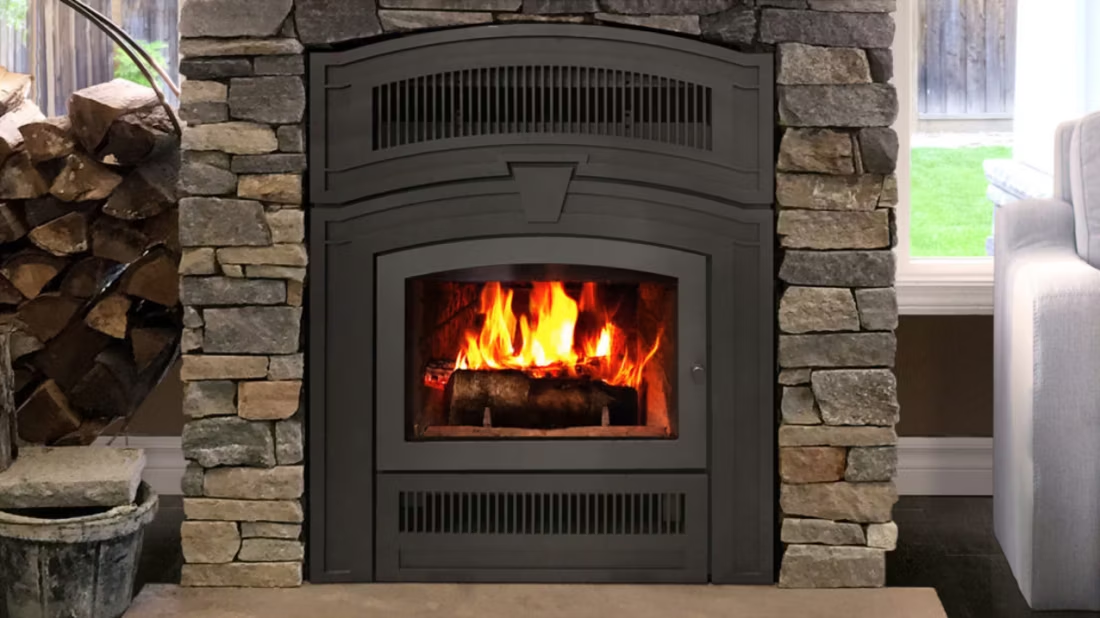
Where wood stoves do show up in Kilgore, they tend to serve a specific purpose: rural property owners with standing oak, pecan, or mesquite timber who want to put it to use, hunting camps and weekend places outside city limits, homeowners chasing the ambiance of a real fire in a living room, and a smaller group who remember the 2021 ice storm and grid failures that left much of Gregg County—served by Southwestern Electric Power Co, Rusk County Electric Cooperative, and Upshur Rural Electric Cooperative—without power for days. A wood stove is one of the few heat sources that doesn't care whether the grid is up.
Three steps. No salesperson until you're ready.
Tell us about your project
Your zip code, your situation, and the fuel you're leaning toward—or let the answers point you to one.
See what's actually available
The brands dealers within 100 miles genuinely carry—real options, never a catalog mirage.
Get your dealer & Project Guide
A trusted local dealer, plus the free Project Guide & Parts List that names every component of the job.
Frequently Asked Questions
Does it even make sense to install a wood stove in Kilgore?
For most Kilgore homes, no—with only a short, mild heating season each year and winter lows averaging in the upper 30s, a gas or electric system will heat the house more efficiently and with far less daily effort. That said, a wood stove still makes sense in specific situations: rural properties with acreage and existing timber, homes that want backup heat that doesn't depend on the grid, or living rooms where the owner simply wants a real fire. If your motivation is primary heat for a typical Kilgore house, gas is almost always the better answer. If it's backup heat, ambiance, or using wood you already have, a stove can still be the right call.
What does a wood stove installation cost in Kilgore?
Because wood stoves are a niche request in Gregg County, you won't find the volume of dedicated wood-hearth installers you'd see in a colder market, and pricing reflects a wider range as a result—plan on roughly $3,500 to $8,000 for a freestanding stove with a new factory-built chimney system, since most Kilgore homes don't already have a masonry chimney to work with. An insert into an existing masonry fireplace, where one exists, tends to run less. Get quotes from installers who regularly work in Longview or Tyler as well as Kilgore itself—the East Texas installer base is regional, not hyper-local.
Do I need a permit to install a wood stove in Kilgore?
Yes, a standard building permit through the City of Kilgore (or Gregg County if you're outside city limits) covers the structural and clearance requirements for a new wood-burning appliance. Unlike Western states with national forest land nearby, there's no cutting-permit system here—Kilgore isn't near public timberland, so firewood is sourced from private property, local tree services, or firewood dealers rather than a Forest Service permit.
What kind of firewood is available locally?
East Texas is oak, pecan, and mesquite country, and all three burn well in a stove. Oak is the workhorse—dense, long-burning, and widely available from tree services and firewood dealers across Gregg County. Pecan burns hot and is popular locally because it doubles as a smoking wood, so it's not hard to find through the same suppliers who sell to backyard barbecue cooks. Mesquite burns very hot and fast, which makes it better mixed with oak than burned alone in a stove meant to hold heat overnight.
Is a wood stove a good backup heat source during outages?
It's one of the best options, in fact. Gregg County is served by Southwestern Electric Power Co, Rusk County Electric Cooperative, and Upshur Rural Electric Cooperative, and East Texas ice storms have knocked out power to parts of the region for days at a time, most memorably in February 2021. A properly installed wood stove keeps producing heat with zero electrical input, which is the main reason some Kilgore homeowners install one even though their primary heat is gas or an electric heat pump.
Are there any air quality restrictions on wood burning in Kilgore?
No—Gregg County has no non-attainment status or winter burn-ban program, unlike parts of the West Coast where inversions trap wood smoke. That means no seasonal curtailment periods or mandatory air-quality checks tied to local rules. You'll still want a stove that meets current EPA New Source Performance Standards, both for efficiency and resale, but you won't run into the kind of burn restrictions that complicate wood heat in places like the Klamath Basin.
My house doesn't have a chimney—is that a dealbreaker?
Not at all, though it does change the installation. Most Kilgore homes were built for central gas or electric heat and never had a masonry chimney, so a wood stove install typically means running a factory-built, double-wall Class A chimney system up through the roof rather than using existing masonry. This adds cost compared to slipping an insert into an existing fireplace, but it's a standard, well-understood installation for any qualified hearth contractor.
Why is gas or electric usually recommended over wood here?
With only a short, mild heating season each year, Kilgore just doesn't need much heating capacity, and gas and electric systems both deliver it with a thermostat instead of daily fire-tending. Electric rates from Southwestern Electric Power Co and the local cooperatives run roughly 12 to 13.5 cents per kWh, which keeps electric heat reasonably affordable in a mild climate like this one. Wood remains a legitimate choice for the reasons above—backup power, ambiance, using land you already own—but as a primary heat source for a typical Kilgore home, it's more effort than the climate calls for.
Should I get a wood stove or just add a gas log set for ambiance?
If you want the look and feel of a fire without it functioning as a real heat source or backup during outages, a vented gas log set is usually simpler and cheaper to install in a Kilgore home. If you want genuine heat output—enough to warm a room during a February cold snap or keep part of the house warm if the power's out—a real wood stove is worth the extra installation cost. A local dealer can walk you through both options once they see your fireplace or room setup.
Why is a fireplace insert so efficient?
An insert does two things: it seals the chimney completely, so you stop losing air you already paid to heat, and it radiates warmth into the room through the firebox and glass. Most add a heat-exchange fan that pulls cool room air underneath, wraps it around the hot firebox, and pushes it back out warm. Your home is more efficient before you've even lit the first fire.
Why won't my new wood stove get going like my old one?
New wood stoves are 70%+ efficient, so far less heat goes up the flue—which also means less draft to get a fire established. The rule: build a genuinely hot fire for about 45 minutes before you choke it down. Skip that and you get smoke in the room, creosote in the chimney, and a fire that never takes off. Most performance complaints trace straight back to this.
What is an in-home preview and do I need one?
It's a visit where a hearth professional measures your space, confirms the model you picked actually works in your home, and walks the specs—framing, gas line, venting, finish work—before anything is ordered. Some details you just can't know until you see the house. Never make a down payment without one; it's the single most-skipped step that burns buyers.
How much should I budget for a fireplace?
For an average home—covering the fireplace, the vent pipe, and basic installation—a budget between $3,900 and $5,500 gives you a lot of options across wood, gas, and pellet. By the time you add finish work, gas line, and electrical, the average complete installation lands between $5,000 and $12,000 all-in. In a remodel or new build, a good rule is to put about 2.5% of the total project cost toward the fireplace.
Nearby Dealers
Hearth shops serving Kilgore and the surrounding area. Every listing shows whether it is a WhyFire partner, a dealer we have verified as authorized for the brands we recommend, or a local business carrying hearth products. No manufacturer pays for placement. How we verify dealers →
Tdi Air Conditioning
East Texas Brick Co.
Find your wood stove in Kilgore.
Tell us about your home and how you'd use it—backup heat, ambiance, or a rural property with wood to burn—and we'll match you with a local dealer who can build a Project Guide & Parts List for your specific installation.
Find Your Fireplace →