
A Pellet Stove Is Optional Heat in Kenedy—Not Essential Heat.
With just 1,295 heating degree days and winter lows that average 43°F, most Kenedy homes get through the season on a heat pump alone. A pellet stove can still make sense for backup warmth or ambiance—here's how to think about it.
Every Project Starts From One of These Five Situations
Kenedy winters rarely call for a dedicated heating appliance.
Kenedy sits at 278 feet in Karnes County, deep in the Eagle Ford Shale country of South Texas, about an hour southeast of San Antonio. The climate here (zone 2A) is built around cooling, not heating—winter lows average 43°F and the entire heating season adds up to roughly 1,295 heating degree days. Compare that to a place like Fargo, ND, which racks up over 9,000 HDD in a single winter, and it's clear why pellet stoves never became part of the local building culture the way they did in colder states.
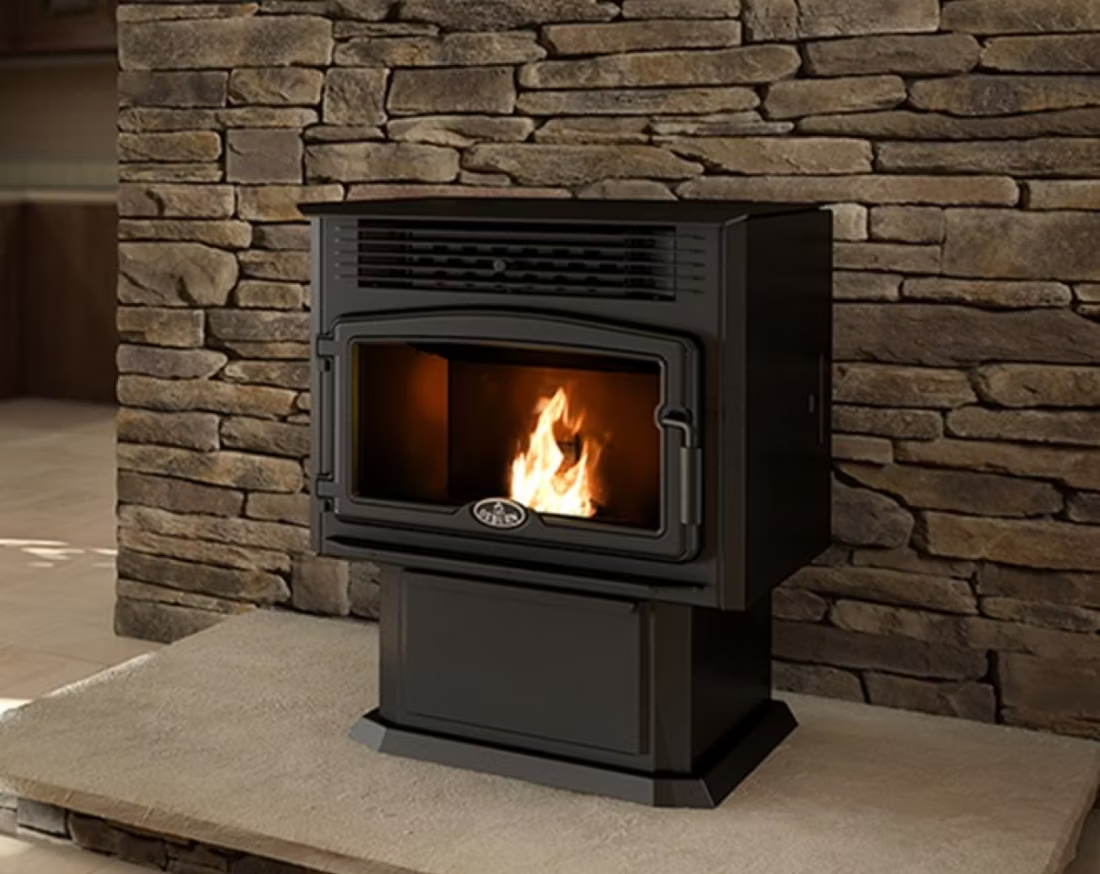
That doesn't mean nobody in Kenedy wants one. A handful of homeowners install a freestanding pellet stove or insert for the ambiance of a real flame, for a hunting camp or weekend property, or as backup warmth during the rare hard freeze—Karnes County saw days below freezing during Winter Storm Uri in February 2021 when the ERCOT grid buckled statewide. Worth knowing going in: a pellet stove's auger and combustion blower run on household current, so without a battery backup or generator, it won't function during the exact kind of outage that made Uri so miserable. For most Kenedy homes, gas and electric heat remain the default, and pellet stays a niche, deliberate choice rather than a necessity.
Three steps. No salesperson until you're ready.
Tell us about your project
Your zip code, your situation, and the fuel you're leaning toward—or let the answers point you to one.
See what's actually available
The brands dealers within 100 miles genuinely carry—real options, never a catalog mirage.
Get your dealer & Project Guide
A trusted local dealer, plus the free Project Guide & Parts List that names every component of the job.
Frequently Asked Questions
Are pellet stoves actually common in Kenedy?
Not really, and it's worth being upfront about that. With only about 1,295 heating degree days a year and winter lows averaging 43°F, most homes in Karnes County get by on a central heat pump or electric resistance heat for the handful of genuinely cold nights each winter. Pellet stoves are standard equipment in places like Bozeman, MT or Burlington, VT, where multi-month heating seasons make the fuel cost savings and burn time worth the investment. In Kenedy, a pellet stove is closer to a lifestyle choice—chosen for the look of a real fire, a hunting cabin, or a specific backup-heat scenario—than a household necessity.
What does a pellet stove installation cost in Kenedy?
Because so few Karnes County homes install pellet appliances, there isn't a deep local pricing history to point to the way there is for gas conversions. Nationally, a freestanding pellet stove or insert with proper venting typically runs $3,000 to $6,000 installed, depending on the unit and whether you need a new wall-thimble vent versus running through an existing masonry chimney. Homeowners in Kenedy should expect to get a custom quote from a dealer, likely based out of the San Antonio metro, since that's where most of the region's hearth retailers and certified installers are concentrated.
Will a pellet stove keep my house warm if the power goes out, like during Winter Storm Uri?
Not on its own. Pellet stoves rely on an electric auger to feed fuel and a blower to distribute heat and exhaust—cut the power and the stove stops working within minutes, even with a full hopper. That's an important distinction from a wood stove, which burns without any electricity at all. If backup heat during a grid failure like the February 2021 freeze is your main motivation, you'd need to pair the stove with a battery backup or small generator, or consider a wood-burning unit instead. A local dealer can walk you through both options.
What size pellet stove makes sense for a Kenedy home?
Given how mild the heating season is here, most Kenedy homeowners who do install a pellet stove are looking for supplemental warmth in a single room, sunroom, or converted garage rather than whole-house heat. A small to mid-size unit with a 40-pound hopper, rated for 1,000 to 1,500 square feet, is more than enough to take the chill off during a cold snap. Whole-house sizing calculations that matter in places with 6,000+ heating degree days simply don't apply to a 1,295-HDD climate like Karnes County's.
Where can I buy pellets locally in Karnes County?
Supply is thinner here than in colder states, simply because demand is low. Regional brands like Forest Energy and Lignetics do show up at farm-and-ranch and home-improvement stores in the San Antonio and Corpus Christi markets, but you shouldn't count on a Kenedy hardware store keeping pellets in stock year-round. Homeowners who go the pellet route typically buy a season's supply—often a full pallet, around 50 forty-pound bags—in early fall before demand and any storm-related supply disruptions hit.
Should I choose pellet or gas for supplemental heat in Kenedy?
For most homes here, gas wins on convenience and cost. Natural gas and propane service is well established across Karnes County, installation is generally simpler since there's no fuel to store or haul, and a gas unit lights instantly with no ash to clean out. Pellet stoves make sense mainly for homeowners who specifically want the visual and radiant feel of a real, moving flame, or who like the idea of a self-contained heat source that doesn't depend on a utility gas line. If that's not a priority for you, gas is the more practical fit for Kenedy's mild winters.
Do I need a permit to install a pellet stove in Kenedy?
Any new venting penetration through an exterior wall or roof typically requires a building permit through Karnes County, and your installer should pull that as part of the job. Kenedy doesn't have the wildfire-smoke or winter-inversion air quality rules that drive stricter appliance certification requirements in some Western states—Karnes County's air quality concerns are listed as none—so the permitting process here is mostly about structural and fire-clearance safety rather than emissions compliance.
Does local firewood—oak, pecan, mesquite—have anything to do with pellet stoves?
Not directly. Oak, pecan, and mesquite are the backbone of local wood use in Karnes County, but almost entirely for smoking and grilling rather than home heating, given how short the cold season is. Pellet stoves burn manufactured wood pellets, not cordwood, and the pellets available regionally—brands like Forest Energy and Lignetics—are typically milled from softwood sawmill byproduct in other parts of the country rather than local hardwood. So while mesquite smoke might define a Kenedy backyard barbecue, it has no bearing on what goes in a pellet hopper.
Pellet stove or just running electric heat—which makes more sense here?
For the vast majority of Kenedy homes, existing electric heat already does the job. Local rates from AEP Texas Central, Karnes Electric Cooperative, and Guadalupe Valley Electric Cooperative run roughly 9.9 to 12.5 cents per kWh, and with only about 1,295 heating degree days to cover, even resistance heat or a heat pump keeps costs manageable. A pellet stove adds real installation cost, ongoing fuel to store and haul, and ash to manage—reasonable trade-offs if you want the ambiance or a specific backup scenario, but not a fuel-cost necessity the way it would be in a colder climate.
What's the difference between an insert and a zero-clearance fireplace?
An insert is a fireplace that slides into a pre-existing wood-burning fireplace—if you don't have one, there's nothing to insert it into. A zero-clearance fireplace is built into a framed wall, which makes it the answer for remodels and new construction. Simple test: existing masonry fireplace means insert; blank or framed wall means zero-clearance.
Why is my open fireplace making my house colder?
Open fireplaces suck—literally. As the fire burns, it consumes air your furnace already paid to heat and pulls it out through the chimney, so the house is actually colder after the fire goes out than before you lit it. An insert fixes this: it seals the chimney, puts fixed glass across the front, and turns that hole in your house into a real heat source.
Can a fireplace actually lower my heating bill?
Yes—by creating a comfort zone. A furnace heats every square foot of the house just to warm the one room you're in; a gas fireplace on low burns roughly a sixth of the gas a typical furnace does. Set the furnace around 55–60 degrees as a baseline, then heat the rooms your family actually uses. Families who heat this way commonly save $20–$60 a month.
Does a fireplace add value to my home?
On average, a fireplace adds back to the home about the same amount you spent installing it. Add the monthly savings from heating the rooms you actually use instead of the whole house—often hundreds of dollars a year—and the value case is strong before you even count what a fire does for how your family uses the room.
Nearby Dealers
Hearth shops serving Kenedy and the surrounding area. Every listing shows whether it is a WhyFire partner, a dealer we have verified as authorized for the brands we recommend, or a local business carrying hearth products. No manufacturer pays for placement. How we verify dealers →
Kitchen & Bath Showplace
The Design Haus Of Victoria
Victoria Builder Supply Co Inc.
Area – San Antonio, Tx
Pellet Brands Stocked Around Kenedy
Manufacturers will point you to the nearest stocking dealer.
See if a pellet stove actually fits your Kenedy home.
Tell us about your space and what you're trying to solve—ambiance, backup warmth, or a hunting cabin setup—and we'll match you with a trusted local dealer and put together a free Project Guide & Parts List with the exact venting and parts your project needs.
Find Your Fireplace →