
Instant Heat for Hutchinson County's Coldest Nights.
From Borger to Fritch to Stinnett, an electric fireplace gives you zone heat on demand—no gas line, no venting, no wood to split—even when a blue norther drops the wind chill well below the 26°F average low.
Every Project Starts From One of These Five Situations
Electric heat fits the Panhandle's plains and power grid.
Hutchinson County sits on the flat, wind-scoured shortgrass prairie of the Texas Panhandle, with Stinnett as county seat and Borger—built around the oil and gas industry—as the largest city, alongside Fritch near Lake Meredith and the smaller communities of Sanford and Plemons. At roughly 16,411 residents, this is a county where native timber is thin outside the Canadian River breaks; the oak, pecan, and mesquite that do grow here are mostly confined to river-bottom draws, not the kind of standing forest that supports a wood-heat culture. That scarcity is part of why wood stoves are essentially absent here—firewood has to be hauled in, and it competes with a fuel this region has in near-limitless supply underfoot.
Hutchinson County sits atop the Panhandle natural gas field, so gas heat is standard and cheap across the county—but electric fireplaces have carved out a real niche of their own. Southwestern Public Service (an Xcel Energy company) serves electric accounts throughout Borger, Fritch, and the surrounding county, and its grid handles the swings from triple-digit August afternoons to single-digit wind-chill nights without much drama. For homes without a nearby gas line, manufactured and modular housing common in Fritch and Sanford, rental units in Borger, or anyone who wants supplemental zone heat in a bedroom or den without touching the furnace, an electric fireplace insert or wall unit installs in an afternoon with no chimney, no combustion byproducts, and no permit hassle for most plug-in models.
Three steps. No salesperson until you're ready.
Tell us about your project
Your zip code, your situation, and the fuel you're leaning toward—or let the answers point you to one.
See what's actually available
The brands dealers within 100 miles genuinely carry—real options, never a catalog mirage.
Get your dealer & Project Guide
A trusted local dealer, plus the free Project Guide & Parts List that names every component of the job.
Frequently Asked Questions
How much does an electric fireplace installation cost in Hutchinson County?
Plug-in electric fireplace inserts and mantel packages typically run $300 to $900 installed, since they just need a standard outlet and a bit of carpentry to set the surround. Built-in linear wall units or recessed models wired to a dedicated 240V circuit run higher—usually $1,200 to $3,500—because an electrician needs to run new circuitry, especially in older Borger homes or manufactured housing around Fritch and Sanford where panel capacity can be tight. A local dealer will confirm your panel's headroom before recommending a hardwired unit.
Can an electric fireplace actually heat a room in Hutchinson County's winters?
Most electric fireplaces top out around 5,000-6,000 BTU, which comfortably supplements a bedroom, den, or open living area of 400-1,000 square feet—enough to take the edge off on the county's typical winter nights, which average around 26°F. They're not designed to replace a central furnace or heat pump during an Arctic blue norther, when Panhandle wind chill can push well below zero for a day or two. Think of an electric unit as zone heat that lets you turn down the thermostat in the rest of the house, not a whole-home heating system.
Where can I find someone to install an electric fireplace near me?
Plug-in units don't require a licensed installer at all—most homeowners in Borger, Fritch, or Stinnett can set one into an existing mantel or wall opening themselves. For built-in or hardwired models, you'll want a licensed electrician familiar with dedicated-circuit work, and a hearth dealer who can size the unit correctly for your room and handle the surround or mantel framing. Local hearth dealers serving Hutchinson County typically coordinate both pieces so you're not managing two separate trades.
What's the difference between an electric fireplace, insert, and stove?
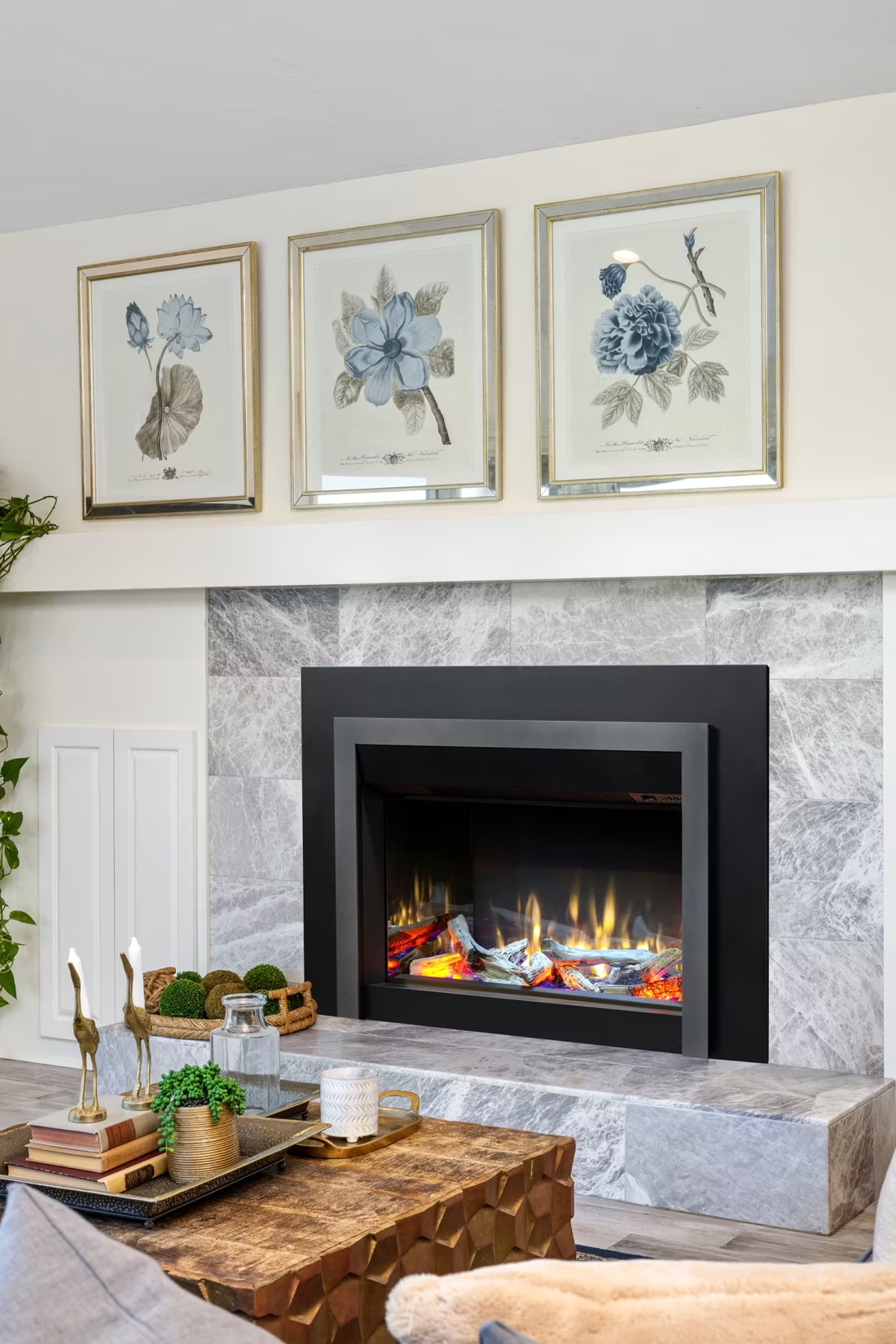
An electric fireplace is usually a built-in or wall-mounted unit designed to look like a traditional firebox, often used in new construction or remodels in Borger and Fritch homes. An electric insert is sized to slide into an existing masonry or zero-clearance fireplace opening, which is common in older homes around Stinnett that already have a firebox but no interest in burning wood. An electric stove is a freestanding cabinet-style unit that sits on the floor and can go almost anywhere there's an outlet—a good fit for a garage, sunroom, or a manufactured home where venting a real chimney isn't an option.
Do I need a permit to install an electric fireplace in Hutchinson County?
Standard plug-in electric fireplaces generally don't require a permit since there's no venting, gas line, or structural chimney work involved. If you're adding a dedicated 240V circuit for a built-in unit, that electrical work typically does require a permit—in Borger city limits that goes through the City of Borger's building inspections, while unincorporated parts of the county fall under Hutchinson County. Most electricians pull this permit as a routine part of the job.
What's the best electric fireplace for a Texas Panhandle home?
Look for a unit with a true heater rating (most quality models list BTU output separately from the flame effect), and consider a model with a thermostat rather than a simple on/off switch—that matters in Hutchinson County where a January afternoon can swing 40 degrees by evening. Linear wall-mounted units work well in newer Borger construction with open floor plans, while a traditional insert style suits older homes around Stinnett with an existing fireplace opening. For manufactured or modular homes common in Fritch and Sanford, confirm the unit's amperage draw against your panel before buying.
How much maintenance does an electric fireplace need?
Very little compared to wood or gas. There's no chimney to sweep, no venting to inspect, and no combustion byproducts to worry about. Occasional dusting of the heating element and vent grilles, and periodically checking that the fan isn't clogged with dust, is about all it takes. Most units are rated for 20,000+ hours of use on the heating element and considerably longer on the LED flame display, so a well-chosen unit should outlast a decade of Panhandle winters without a service call.
How much does it cost to run an electric fireplace in Hutchinson County?
A typical 1,500-watt electric fireplace running on high draws about 1.5 kWh per hour. Running it for six hours an evening through a cold stretch adds roughly $1 to $1.50 per day at current Southwestern Public Service residential rates—considerably less than heating an entire home with electric resistance heat, and a reasonable trade-off for the convenience of zone heat in one room. Most owners run the flame effect alone (a few watts) far more often than the heater, which costs next to nothing.
Electric vs. gas fireplace—which makes more sense in Hutchinson County?
Gas has a strong case here: Hutchinson County sits on the Panhandle natural gas field, so gas service is widely available and inexpensive, and a gas fireplace or insert puts out real heat that can run during a power outage if the model has a battery-backup ignition. Electric wins on installation simplicity and flexibility—no gas line required, no venting, works in a manufactured home or rental where gas isn't an option, and there's zero combustion byproduct to manage. Many homeowners in Borger and Fritch end up with gas as the primary heat source and an electric unit in a secondary room like a bedroom or home office where running a gas line isn't worth the cost.
Do electric fireplaces actually produce heat?
Yes—most put out around 4,800–5,000 BTUs from a standard outlet, which comfortably warms a bedroom, office, or den as a comfort-zone heater. What they won't do is carry a whole house the way wood, gas, or pellet can. Think of electric as ambiance-first with honest supplemental heat: flames on with no heat in July, flames plus warmth in January.
Can I put a TV above my fireplace?
Yes—with an asterisk. Fireplaces are hot and TVs don't like heat. Either put a mantel between them to deflect rising warmth, or choose a fireplace with heat-management technology that creates a cool zone on the wall above—the wall stays around 125 degrees, barely warm, while the room still gets full heat. If you like clean lines and don't want a mantel, heat management is the answer.
Can a fireplace actually lower my heating bill?
Yes—by creating a comfort zone. A furnace heats every square foot of the house just to warm the one room you're in; a gas fireplace on low burns roughly a sixth of the gas a typical furnace does. Set the furnace around 55–60 degrees as a baseline, then heat the rooms your family actually uses. Families who heat this way commonly save $20–$60 a month.
What is an in-home preview and do I need one?
It's a visit where a hearth professional measures your space, confirms the model you picked actually works in your home, and walks the specs—framing, gas line, venting, finish work—before anything is ordered. Some details you just can't know until you see the house. Never make a down payment without one; it's the single most-skipped step that burns buyers.
Stove and Fireplace Dealers in Hutchinson County
Listings include WhyFire partner dealers, dealers we have verified as authorized for the brands we recommend, and established local businesses that carry hearth products. Every listing shows which one it is. The ones marked Preferred run on WhyFire's software, so they can show you real pricing and book your appointment right here. No manufacturer pays for placement. How we verify dealers →
Reid's Appliance Services
Panhandle Outdoor Living & Fireplaces
West Texas Brick
Find your electric fireplace in Hutchinson County.
Tell us a bit about your home and we'll match you with the right electric fireplace, insert, or stove—plus a free Project Guide & Parts List and a trusted local dealer to install it.
Find Your Fireplace →