
Find your fireplace in Hutchinson County, Texas.
Fireplace resources for Borger, Stinnett, Panhandle, and the rest of Hutchinson County. Units are rare in this part of the Panhandle—here's what actually gets installed, and who installs it.
Every Project Starts From One of These Five Situations
Natural gas country in the Texas Panhandle.
Hutchinson County sits in the heart of the Texas Panhandle's oil and gas fields, and that geology shapes how homes here are heated. With around 3,445 heating degree days and an average winter low near 26°F, winters are cool but nowhere near the severity of places like Fargo, ND or International Falls, MN—this is a mild-to-moderate heating climate, Zone 4B. Oak, pecan, and mesquite grow locally and get plenty of use in backyard smokers and grills, but wood-burning fireplaces and stoves are genuinely uncommon as primary heat sources here. When natural gas is this cheap and this available, homeowners overwhelmingly choose gas.
That's why this hub is built around two fuels: gas, which dominates the county, and electric, which fills in as a supplemental or secondary-room option. We still list pellet suppliers (Forest Energy, Lignetics) for the small number of households running pellet stoves, and wood retailers for anyone restoring an older masonry fireplace or building a cabin-style property outside Borger or Stinnett—but don't expect a wide selection of either. Pick your fuel below to see local dealers, typical installation costs, and the resources that actually apply to a Hutchinson County home.
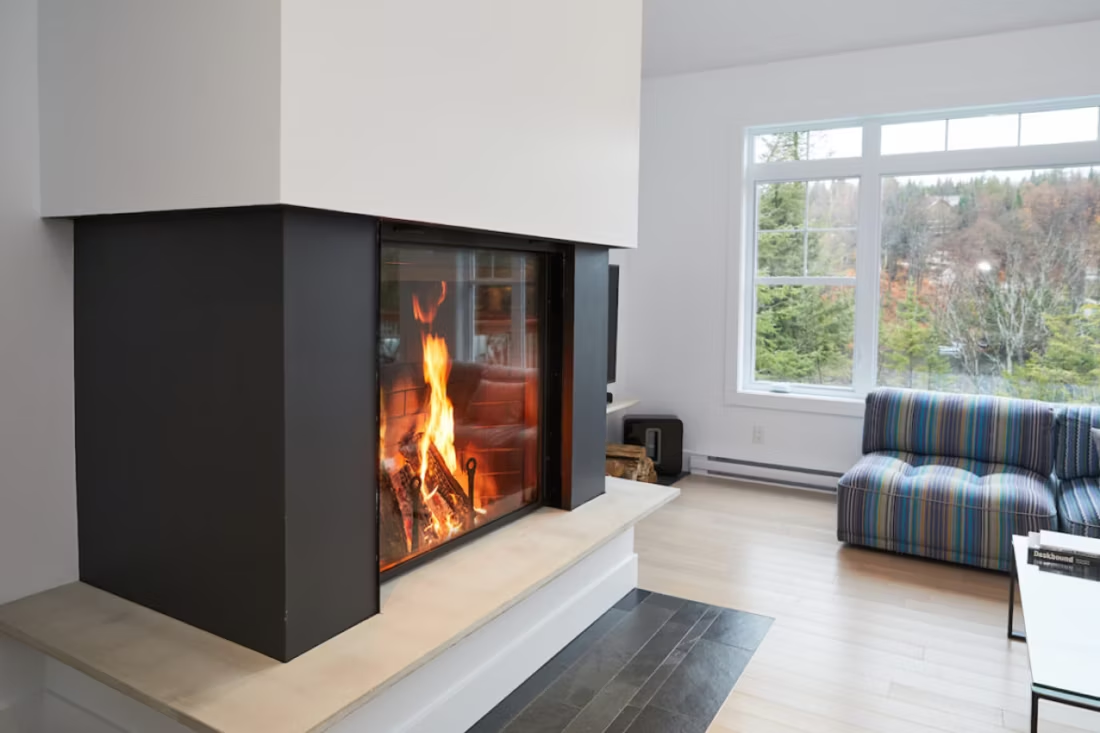
Four fuels. One honest answer for Hutchinson County.
Wood
46 models available near Hutchinson County.
Find your wood stove →Gas
104 models available near Hutchinson County.
Find your gas fireplace →Pellet
See what's available near Hutchinson County.
Find your pellet stove →Electric
See what's available near Hutchinson County.
Find your electric fireplace →Three steps. No salesperson until you're ready.
Tell us about your project
Your zip code, your situation, and the fuel you're leaning toward—or let the answers point you to one.
See what's actually available
The brands dealers within 100 miles genuinely carry—real options, never a catalog mirage.
Get your dealer & Project Guide
A trusted local dealer, plus the free Project Guide & Parts List that names every component of the job.
Frequently Asked Questions
Which fuel works best in Hutchinson County?
For most homes here, it's gas. Hutchinson County sits in the middle of a major natural gas production region, and that supply keeps gas heating cheap and widely available—gas fireplaces, inserts, and stoves are the default choice in Borger, Stinnett, and Panhandle. Electric fireplaces are the common secondary option, used in bedrooms, additions, and homes where running a new gas line isn't practical. Wood is genuinely rare as a primary heat source—with a 26°F average winter low and roughly 3,445 heating degree days, the county just doesn't have the sustained cold that makes wood heat worth the labor, especially with gas this accessible. Pellet stoves are similarly uncommon; the two regional brands that do stock here (Forest Energy, Lignetics) serve a small niche of households, not the mainstream market.
Do I need a permit to install a fireplace in Hutchinson County?
Generally yes for gas installations. New gas fireplaces, gas inserts, and gas stoves typically require a building permit plus a separate gas line permit completed by a licensed gas fitter—whether you're inside Borger or Stinnett city limits or in unincorporated parts of the county, the local permitting office will want to sign off on the gas connection before it's buried or run through a wall. Electric fireplace installs are usually permit-free unless you're hardwiring a built-in unit with a new dedicated circuit, in which case an electrical permit applies. Because wood and pellet installs are so rare here, most local retailers are set up to walk you through the gas or electric permitting process directly rather than leaving it to you.
Are there air quality restrictions on burning in Hutchinson County?
No—Hutchinson County has no wood-burning air quality advisories, inversion restrictions, or curtailment periods on the books. That's consistent with how little wood heat is actually used here; there simply isn't the density of wood-burning households that triggers the kind of winter air quality programs you'd see in places like Klamath Falls or the Wasatch Front. If you do install a wood-burning appliance—say, in a masonry fireplace restoration—there's no local burn-ban infrastructure to navigate, though normal fire-safety codes still apply.
Can one local dealer handle both gas and electric fireplaces?
Yes, and it's the norm rather than the exception here. Because gas and electric are the two fuels that actually move in Hutchinson County, most hearth retailers serving Borger and the surrounding towns stock and install both—a single dealer can usually show you a working gas insert alongside an electric wall-mount unit and help you compare running costs and installation complexity. If you're specifically after a wood or pellet installation, expect a narrower set of options; you may need to work with a retailer that special-orders those units rather than keeping them in a showroom.
How does service work in the rural parts of Hutchinson County?
Most gas fireplace technicians and electricians serving Hutchinson County are based in or near Borger, with some crews traveling in from the Amarillo market about 40 miles south for larger jobs or specialty work. Rural properties around Panhandle, Fritch (the county's northeastern reach near Lake Meredith), and outlying ranch homes should expect a modest trip fee for service calls. Because the fuel mix here is simple—mostly gas and electric—annual maintenance is generally straightforward: gas units need a yearly inspection of the burner and venting, and electric units need almost no service beyond the occasional bulb or heater-element replacement. Scheduling ahead of the first cold snap in November avoids the backlog that hits every technician in the region at once.
What's the typical cost range for fireplace installation across fuel types in Hutchinson County?
Gas fireplace, insert, or stove: roughly $4,000–$9,500 depending on how much new gas line and venting work is required—lower on the range if you're converting an existing gas hookup. Electric fireplace: $200–$2,500 for the unit itself, with $300–$1,000 in labor for anything beyond a simple plug-and-play wall unit. Wood stove or insert: figure $5,000–$10,000 if you go this route, since installers serving this market less frequently means less price competition and often more custom chimney work. Pellet stove or insert: similarly $5,000–$8,000, reflecting the same limited local supply. For fuel-specific detail tied to actual local pricing, see the county + fuel pages above.
How much should I budget for a fireplace?
For an average home—covering the fireplace, the vent pipe, and basic installation—a budget between $3,900 and $5,500 gives you a lot of options across wood, gas, and pellet. By the time you add finish work, gas line, and electrical, the average complete installation lands between $5,000 and $12,000 all-in. In a remodel or new build, a good rule is to put about 2.5% of the total project cost toward the fireplace.
What is an in-home preview and do I need one?
It's a visit where a hearth professional measures your space, confirms the model you picked actually works in your home, and walks the specs—framing, gas line, venting, finish work—before anything is ordered. Some details you just can't know until you see the house. Never make a down payment without one; it's the single most-skipped step that burns buyers.
Can I install a fireplace myself?
If you're putting a fire in your house on purpose, it's best to work with an expert. Unless you're genuinely experienced in framing, gas line, vent pipe, and the national code on clearances to combustibles, have a professional do it—and ideally the same company that sells you the fireplace, so warranty, service, and liability all live under one roof.
Wood, gas, pellet, or electric—how do I choose?
Match the fuel to your life, not the other way around. Wood: lowest fuel cost and total power-outage independence, but you're hauling and stacking. Gas: press a button, set a thermostat, no maintenance to speak of. Pellet: wood economics with automatic feeding, in exchange for weekly cleaning and a need for electricity. Electric: plugs in anywhere with honest supplemental heat. Nobody regrets the fuel that fits how they actually live.
Stove and Fireplace Dealers in Hutchinson County
Listings include WhyFire partner dealers, dealers we have verified as authorized for the brands we recommend, and established local businesses that carry hearth products. Every listing shows which one it is. The ones marked Preferred run on WhyFire's software, so they can show you real pricing and book your appointment right here. No manufacturer pays for placement. How we verify dealers →
Reid's Appliance Services
Panhandle Outdoor Living & Fireplaces
West Texas Brick
Find your fireplace in Hutchinson County.
Tell us about your home and we'll match you with a trusted local dealer and send a free Project Guide & Parts List—the exact parts, vent kit, and recommended installer for a gas or electric fireplace project in Hutchinson County.
Find Your Fireplace →