
Keep Your Family Warm and Safe—No Matter What
A real wood fire for the handful of genuinely cold Houston nights each winter—and for the days the grid doesn't cooperate. Find the right fireplace or insert and connect with a trusted local dealer.
Every Project Starts From One of These Five Situations
A fire that's about ambiance first, backup heat second.
Hunters Creek Village sits inside Harris County's Memorial Villages, just west of downtown Houston, at only 66 feet of elevation and squarely in climate zone 2A—one of the mildest, most humid zones in the country. With an average winter low of 44°F and just 1,222 heating degree days a year, this is not wood-stove country the way Duluth, MN or Burlington, VT is. Most winters bring a handful of nights cold enough to want a fire, not months of it.
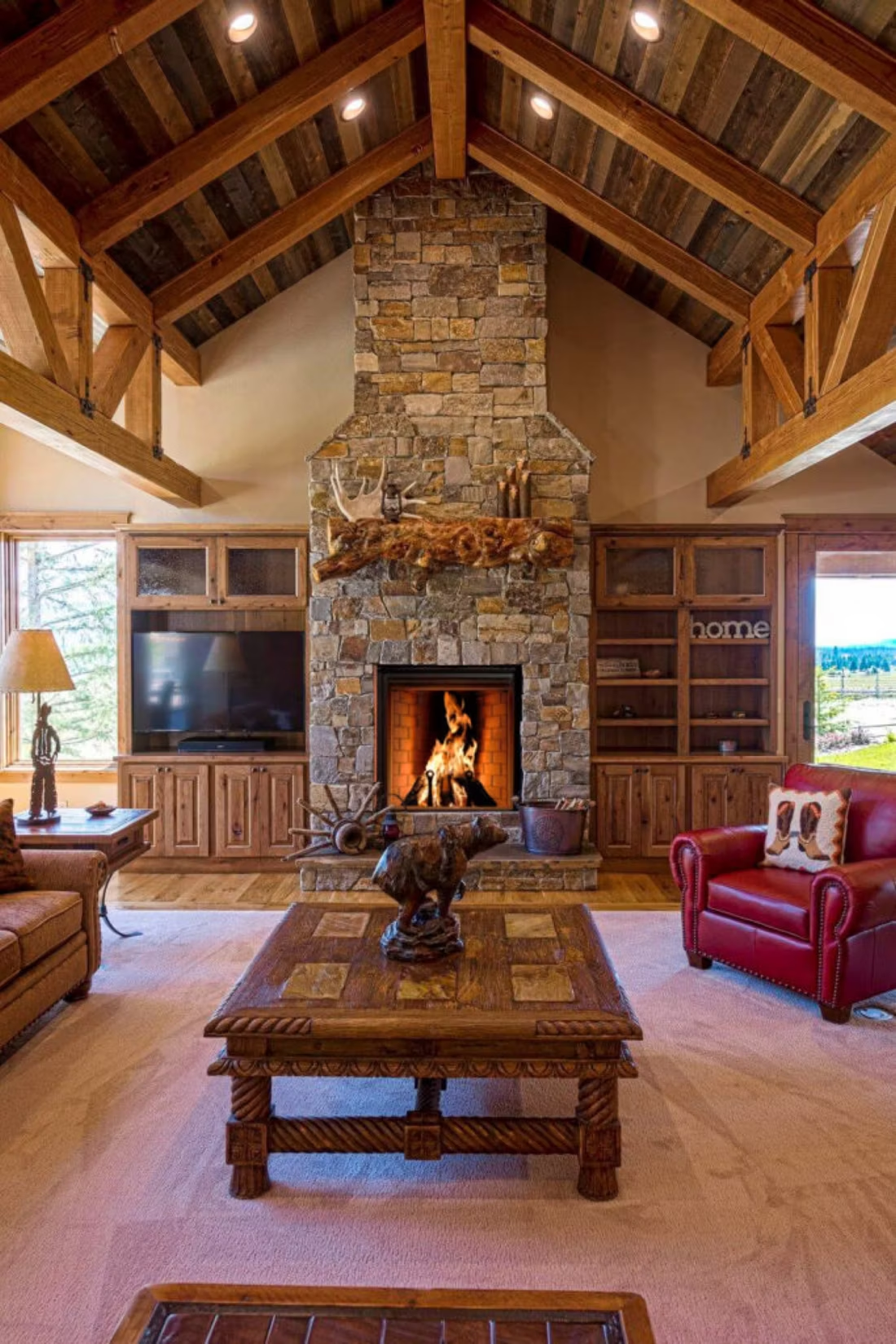
That doesn't mean wood doesn't belong here. Many of the large, custom homes in the 77024 zip code were built with wood-burning masonry fireplaces as architectural centerpieces, and homeowners increasingly pair them with a proper insert for real heat output on the rare 30-degree night. There's also a practical case: Texas's grid has shown its limits, from Winter Storm Uri in 2021 to the extended outages after Hurricane Beryl in 2024. CenterPoint Energy and Entergy Texas both serve this area, and a wood-burning fireplace or insert is one of the few heat sources in a Hunters Creek Village home that keeps working when the grid doesn't.
Three steps. No salesperson until you're ready.
Tell us about your project
Your zip code, your situation, and the fuel you're leaning toward—or let the answers point you to one.
See what's actually available
The brands dealers within 100 miles genuinely carry—real options, never a catalog mirage.
Get your dealer & Project Guide
A trusted local dealer, plus the free Project Guide & Parts List that names every component of the job.
Frequently Asked Questions
How much does a wood fireplace or insert installation cost in Hunters Creek Village?
Because most homes here already have a masonry wood-burning fireplace built into the architecture, the typical project is an insert retrofit rather than new construction—running roughly $5,500 to $12,000 depending on the insert (cast iron vs. steel), chimney liner work, and the custom masonry or mantel finishes common in this zip code's larger homes. A fully new wood-burning fireplace with chimney chase, built from scratch during a remodel, runs higher, often $12,000-$18,000, given Houston-area labor rates. Local hearth dealers will quote a firm number after seeing your existing chimney and hearth.
Do I actually need a wood stove or fireplace given how mild winters are here?
Not for daily heat—with an average winter low of 44°F and only about 1,222 heating degree days a year, Hunters Creek Village winters look nothing like a place such as Bismarck, ND or Minneapolis, MN, where wood heat carries a home through months of hard cold. Here, a wood-burning fireplace or insert is mostly used for ambiance, entertaining, and the handful of nights each winter when temperatures drop into the 20s and 30s. It's a real, useful heat source on those nights and a strong backup during grid outages—it's just not something you'll run all winter.
Do I need a permit to install a wood-burning fireplace or insert in Hunters Creek Village?
Yes. As a standalone municipality within Harris County, Hunters Creek Village requires a building permit through the City of Hunters Creek Village Building Department for new fireplace construction or insert installations that involve chimney liner work or structural changes to an existing masonry fireplace. Most established hearth dealers serving this area pull the permit as part of the installation, so it's rarely something the homeowner has to manage directly.
What wood species work best for a fireplace here?
Oak, pecan, and mesquite are the three most common firewoods in the Houston area, and all three work well in a wood-burning fireplace or insert. Oak burns longest and steadiest, pecan is a good middle-ground option with a pleasant smell, and mesquite burns hot and fast—it's more often reached for by backyard smokers than fireplace users, but it works fine in smaller quantities. Whatever you choose, make sure it's seasoned at least 6-12 months; unseasoned wood is the main cause of poor draft and heavy creosote in this humid climate.
Where do I get firewood in Hunters Creek Village, since there's no national forest nearby?
Unlike wood-heat regions built around public forestland, there's no Forest Service cutting permit system near Houston—the closest national forest, Sam Houston National Forest, is roughly 50 miles north and isn't a practical source for regular firewood runs. Nearly all firewood used in Hunters Creek Village comes from local delivery services and firewood yards around Harris County, typically selling oak or pecan by the rick or half-cord, with prices generally running $300-$450 per full cord delivered and stacked, more for kiln-dried wood that burns cleaner.
Is a wood fireplace a good backup heat source during power outages?
It's one of the best options available to Hunters Creek Village homeowners. Winter Storm Uri in February 2021 left much of the Houston area, including customers of CenterPoint Energy and Entergy Texas, without power for days during freezing temperatures, and outages after Hurricane Beryl in 2024 stretched into the following week for some neighborhoods. A wood-burning fireplace or insert doesn't depend on the grid or a gas line, which makes it a genuinely useful backup heat source in a region where electric reliability has been tested more than once in recent years.
Should I install a wood insert or keep my existing open fireplace?
If your home already has a masonry wood-burning fireplace—common in Hunters Creek Village's larger, older-construction homes—an insert is almost always worth considering. An open masonry fireplace loses most of its heat up the chimney and is inefficient by design; a cast-iron or steel insert fitted into that same opening, with a stainless steel liner running the full height of the chimney, can turn that fireplace into a real heat source for the handful of cold nights each winter, while keeping the existing brick surround and mantel intact.
How often should my chimney be inspected given how little we use it?
Even with light seasonal use, an annual inspection is still recommended—the CSIA standard doesn't change based on climate. In the Houston area's humid, subtropical conditions, chimneys that sit unused most of the year are actually prone to their own issues: bird and squirrel nesting, moisture intrusion, and mortar deterioration from humidity can all happen even without a single fire being lit. A late-summer inspection before the first cool front of the season, typically arriving in November, is a good rhythm for most homes here.
Wood fireplace vs. gas—which makes more sense in Hunters Creek Village?
Given how few genuinely cold nights this area sees, many homeowners here lean toward gas logs or a gas insert for convenience—instant on, no ash, and it uses the same CenterPoint Energy or Entergy Texas gas service already running to most homes in the 77024 zip code. Wood still has a real edge in two situations: as backup heat that doesn't rely on gas or electric service during outages, and for homeowners who want the authentic look, smell, and sound of a real wood fire for entertaining. Several homes in the area keep the original masonry fireplace wood-burning while adding gas elsewhere in the house.
What's the difference between an insert and a zero-clearance fireplace?
An insert is a fireplace that slides into a pre-existing wood-burning fireplace—if you don't have one, there's nothing to insert it into. A zero-clearance fireplace is built into a framed wall, which makes it the answer for remodels and new construction. Simple test: existing masonry fireplace means insert; blank or framed wall means zero-clearance.
Why is my open fireplace making my house colder?
Open fireplaces suck—literally. As the fire burns, it consumes air your furnace already paid to heat and pulls it out through the chimney, so the house is actually colder after the fire goes out than before you lit it. An insert fixes this: it seals the chimney, puts fixed glass across the front, and turns that hole in your house into a real heat source.
Can I install a fireplace myself?
If you're putting a fire in your house on purpose, it's best to work with an expert. Unless you're genuinely experienced in framing, gas line, vent pipe, and the national code on clearances to combustibles, have a professional do it—and ideally the same company that sells you the fireplace, so warranty, service, and liability all live under one roof.
What is an in-home preview and do I need one?
It's a visit where a hearth professional measures your space, confirms the model you picked actually works in your home, and walks the specs—framing, gas line, venting, finish work—before anything is ordered. Some details you just can't know until you see the house. Never make a down payment without one; it's the single most-skipped step that burns buyers.
Nearby Dealers
Hearth shops serving Hunters Creek Village and the surrounding area. Every listing shows whether it is a WhyFire partner, a dealer we have verified as authorized for the brands we recommend, or a local business carrying hearth products. No manufacturer pays for placement. How we verify dealers →
Patio 1
EarthCore Industries
USA Supreme Services, LLC
Tru Lite Gas Products
All Thingz U Need Inc
South Texas Brick
Patio 1
The Fire Box Inc.
Cunningham Gas Products
Creekstone Custom
Creekstone Outdoors
Find your wood fireplace in Hunters Creek Village.
Tell us about your home and existing fireplace, and we'll match you with a trusted local hearth dealer plus a free Project Guide & Parts List—the exact parts, including the vent kit, for your wood fireplace or insert project in Hunters Creek Village.
Find Your Fireplace →