
Keep Your Family Warm and Safe—No Matter What
Oak, pecan, and mesquite firewood are close at hand in Angelina County. Find the right stove or insert for a Hudson home, and connect with a trusted local dealer.
Every Project Starts From One of These Five Situations
A supplemental heat source, deeply rooted in East Texas tradition.
Hudson sits in the Piney Woods of Angelina County, where climate zone 2A means hot, humid summers and genuinely mild winters—average lows hover around 38°F and the area has a light overall heating need for the year, a fraction of what a place like Bismarck, ND sees in a single hard winter. Most years, a wood stove in Hudson isn't fighting off frostbite; it's providing ambiance, supplemental warmth on the handful of nights that dip into the 20s, and backup heat when ice knocks out power, as it did across the region in February 2021.
What Hudson does have in abundance is good hardwood. Oak, pecan, and mesquite are the dominant species in this part of Angelina County, all dense, high-BTU woods that burn long and clean once seasoned. Some homeowners self-cut on private land or pick up permits through the Angelina National Forest just outside the city; others buy split and delivered by the rick or cord from local sellers around Lufkin. With no regional air quality non-attainment designation to worry about, wood burning here is largely a matter of preference and preparedness rather than restriction—a stove or insert adds real backup heat for ice-storm outages and a warmer, more radiant living space than central HVAC alone.
Three steps. No salesperson until you're ready.
Tell us about your project
Your zip code, your situation, and the fuel you're leaning toward—or let the answers point you to one.
See what's actually available
The brands dealers within 100 miles genuinely carry—real options, never a catalog mirage.
Get your dealer & Project Guide
A trusted local dealer, plus the free Project Guide & Parts List that names every component of the job.
Frequently Asked Questions
How much does a wood stove installation cost in Hudson?
Most wood stove and insert installations in Hudson run $3,000 to $7,500, on the lower end of national ranges, since the mild climate and single-story ranch and pier-and-beam homes common in Angelina County typically don't require the extensive chimney chase work seen in colder regions. Converting an existing masonry fireplace to an insert with a stainless liner tends to land near the bottom of that range; a freestanding stove in a home with no existing chimney—requiring new Class A pipe and roof penetration—runs closer to the top. Local installers will give a firm number after seeing the home.
What size wood stove do I need for a Hudson home?
Because winters here are mild—average lows around 38°F and a light overall heating need for the year—most Hudson homeowners are sizing for supplemental heat and outage backup rather than whole-house primary heat. A small to medium stove (rated for 1,000 to 1,800 square feet) is usually plenty for a main living area, den, or open-concept great room. Oversizing is a common mistake in mild climates like this one: a stove built for northern winters will run too hot and force you to choke the air down constantly, which shortens its life and increases creosote. A local dealer can size the unit to the actual room, not just the square footage of the house.
Where can I find certified wood stove installers near Hudson?
Look for NFI (National Fireplace Institute) certified installers or CSIA (Chimney Safety Institute of America) credentialed technicians—both are trained specifically in wood-burning appliance clearances and venting. Hudson is a small city, so most homeowners work with hearth retailers based in nearby Lufkin who install throughout Angelina County. Avoid general handyman installs for wood-burning units; improper clearance-to-combustibles work is the single biggest cause of house fires tied to wood stoves, and it can also void your homeowner's insurance if something goes wrong.
Wood stove or wood insert—which fits my Hudson home?
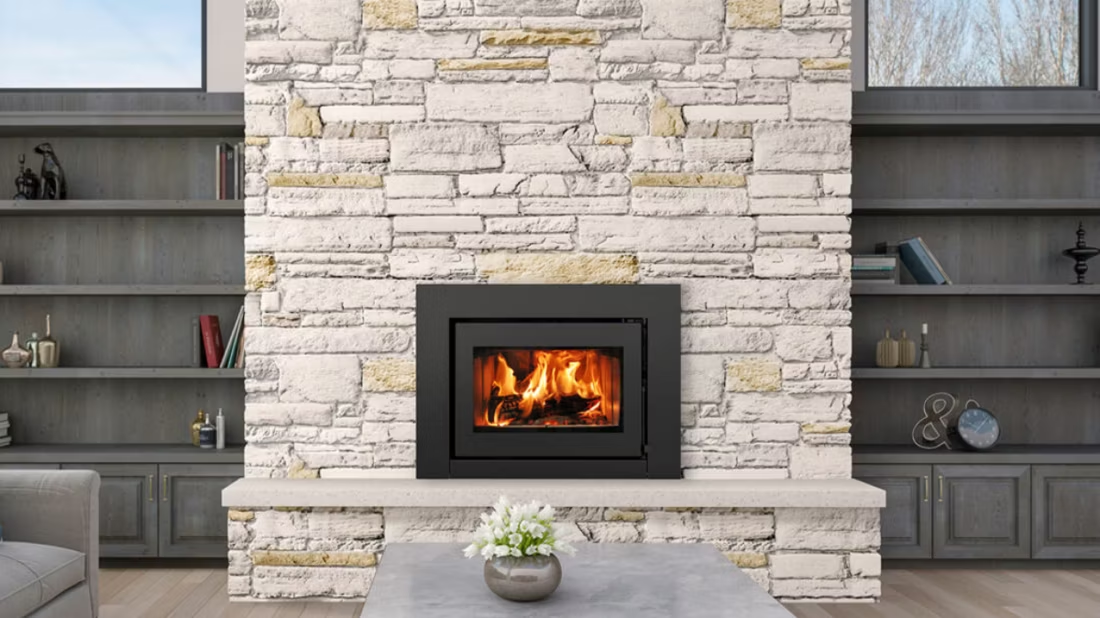
Many homes in and around Hudson were built with an open masonry fireplace meant more for looks than heat output, which makes a wood insert the natural upgrade—it slides into the existing firebox, uses the chimney you already have with a new liner, and turns a decorative feature into a genuine heat source. A freestanding wood stove makes more sense in a newer home, a workshop, or an addition with no existing chimney, since it can be placed almost anywhere clearances allow. For most existing East Texas homes with a masonry fireplace already in place, the insert route is usually simpler and less expensive.
Do I need a permit to install a wood stove in Hudson?
New wood-burning appliance installations typically require a building permit through Angelina County or the City of Hudson, depending on where the property sits, and the unit itself needs to meet current EPA emissions standards. Most local hearth retailers handle this paperwork as part of the installation. Unlike parts of Texas near DFW or Houston, Angelina County isn't in an ozone non-attainment area, so there are no seasonal burn curtailment periods here—burning is a matter of everyday judgment and dry-weather burn bans during drought, not air quality regulation.
What's the best wood stove for Hudson's climate?
Given how mild Hudson winters run, a large 24-hour catalytic stove built for sub-zero northern nights is usually overkill and hard to operate cleanly at low burn rates. Mid-size non-catalytic stoves from brands like Pacific Energy, Regency, or Lopi tend to be a better match—they're easier to run at the lower, shorter burns typical of supplemental East Texas heating and still perform well during the occasional hard freeze or multi-day ice event. A local dealer can talk through specific models based on the room you're heating.
How often should my chimney be inspected in Hudson?
The CSIA recommends an annual inspection for any wood-burning appliance, even one used only occasionally. In Hudson's climate, many stoves get lighter, more intermittent use than in colder states, but that doesn't reduce the need for a yearly check—infrequent burning can actually let creosote and moisture sit longer between cleanings. Plan on a sweep and inspection in early fall, before the first cold front rolls through, so the stove is ready if an ice storm knocks out power.
Where can I get firewood in or near Hudson?
Oak, pecan, and mesquite are the go-to species locally, and all three are widely available from sellers around Lufkin and Angelina County who deliver by the rick or cord. Seasoned oak and pecan typically run comparably to national averages for the region, with mesquite sometimes priced higher for its use in smoking as well as heating. For self-cutting, the Angelina National Forest lies just outside Hudson and issues personal-use firewood permits—check with the district office for current season dates and per-cord rates before heading out.
Wood stove vs. pellet stove—which makes more sense in Hudson?
Wood stoves burn local oak, pecan, or mesquite, need no electricity to operate, and keep working straight through the kind of multi-day ice storm outages Angelina County has seen in recent winters—a real advantage when you're served by Oncor, Sam Houston Electric Cooperative, or Jasper-Newton Electric Cooperative and a line comes down. Pellet stoves are more convenient day to day—load the hopper, set the thermostat—and burn cleaner, but the auger and blower both run on electricity (at local residential rates around 12.6–13 cents per kWh), so they shut down in an outage unless paired with a battery backup. For a Hudson home where storm-driven power loss is the main concern, wood usually wins; for households that just want easy, hands-off supplemental heat, pellet is worth a look.
Why won't my new wood stove get going like my old one?
New wood stoves are 70%+ efficient, so far less heat goes up the flue—which also means less draft to get a fire established. The rule: build a genuinely hot fire for about 45 minutes before you choke it down. Skip that and you get smoke in the room, creosote in the chimney, and a fire that never takes off. Most performance complaints trace straight back to this.
What's the difference between an insert and a zero-clearance fireplace?
An insert is a fireplace that slides into a pre-existing wood-burning fireplace—if you don't have one, there's nothing to insert it into. A zero-clearance fireplace is built into a framed wall, which makes it the answer for remodels and new construction. Simple test: existing masonry fireplace means insert; blank or framed wall means zero-clearance.
What is an in-home preview and do I need one?
It's a visit where a hearth professional measures your space, confirms the model you picked actually works in your home, and walks the specs—framing, gas line, venting, finish work—before anything is ordered. Some details you just can't know until you see the house. Never make a down payment without one; it's the single most-skipped step that burns buyers.
Can a fireplace actually lower my heating bill?
Yes—by creating a comfort zone. A furnace heats every square foot of the house just to warm the one room you're in; a gas fireplace on low burns roughly a sixth of the gas a typical furnace does. Set the furnace around 55–60 degrees as a baseline, then heat the rooms your family actually uses. Families who heat this way commonly save $20–$60 a month.
Nearby Dealers
Hearth shops serving Hudson and the surrounding area. Every listing shows whether it is a WhyFire partner, a dealer we have verified as authorized for the brands we recommend, or a local business carrying hearth products. No manufacturer pays for placement. How we verify dealers →
East Texas Brick Co.
Tdi Air Conditioning
O'Neal Gas Inc.
Fireplace & Patio Shop
Tri-Supply - Conroe
Fieldstone & Fireplaces
All Fired Up Fireplace & Outdoor
Find your wood fireplace in Hudson.
Tell us a bit about your home and we'll put together a free Project Guide & Parts List for your wood stove or insert project, matched with a trusted local Hudson-area dealer.
Find Your Fireplace →