
Warm up Hale County without cutting a hole in the wall.
With winter lows averaging 26°F across the South Plains, an electric fireplace gives Plainview, Hale Center, Abernathy, and Petersburg homes instant zone heat and real flame-look ambiance—no flue, no gas line, no permit hassle for most installs. Find the right unit and connect with a trusted local dealer.
Every Project Starts From One of These Five Situations
Mild winters meet modern convenience.
Hale County sits on the flat, wind-exposed Llano Estacado at roughly 3,300 feet, in climate zone 4B with about 3,640 heating degree days a year—a fraction of what harder-freezing places like Bismarck, ND or Fargo, ND rack up. Winter lows average around 26°F, and cold snaps are typically short. That combination means most homes here don't need a heavy-duty primary heat source in the living room—they need clean, controllable supplemental warmth and a good-looking focal point, which is exactly what an electric fireplace, insert, or wall-mounted unit delivers.
It also matters that Hale County isn't wood country. The oak, pecan, and mesquite you see around Plainview and the surrounding farmsteads are mostly windbreak plantings and scrub, not managed woodlots, so cordwood has to be trucked in rather than cut locally—one reason wood-burning appliances are rare here. Electricity, by contrast, is already run to every home through Xcel Energy's Southwestern Public Service territory, which makes an electric fireplace one of the simplest heating upgrades available: plug-in inserts need nothing more than an outlet, and built-in wall units just need a dedicated circuit from a licensed electrician—no chimney, no combustion air, no venting through the roof.
Three steps. No salesperson until you're ready.
Tell us about your project
Your zip code, your situation, and the fuel you're leaning toward—or let the answers point you to one.
See what's actually available
The brands dealers within 100 miles genuinely carry—real options, never a catalog mirage.
Get your dealer & Project Guide
A trusted local dealer, plus the free Project Guide & Parts List that names every component of the job.
Frequently Asked Questions
How much does an electric fireplace installation cost in Hale County?
A plug-in electric insert or freestanding unit typically runs $150 to $600 installed, since most just need an existing 120-volt outlet—no permit, no electrician required in most cases. A built-in wall-mounted or mantel-package unit that requires a dedicated circuit runs higher, generally $1,000 to $3,500, with electrician labor to run a new 120V or 240V line adding $200 to $400 of that. Custom surrounds or recessed installations in new construction sit at the top of that range. Local dealers serving Plainview and the rest of Hale County will quote a firm number after seeing your wall and electrical panel.
Do I need a permit for an electric fireplace in Hale County?
Usually no—a plug-in electric insert or freestanding unit doesn't require a permit anywhere in Hale County, since there's no venting, gas line, or structural work involved. If you're installing a built-in wall unit that requires a new dedicated circuit, an electrical permit is typically needed. Inside city limits that goes through the City of Plainview Building Inspection Department; in unincorporated parts of the county—around Hale Center, Petersburg, or Abernathy—it runs through Hale County. Most licensed electricians pull this permit as part of the job.
Can an electric fireplace actually heat my home during Hale County winters?
It can handle the room it's in, but it's not designed to replace your central system. With Hale County averaging around 3,640 heating degree days and winter lows near 26°F, most cold spells are short and moderate rather than sustained sub-zero events—so a 1,500-watt electric unit does a solid job supplementing a single living room, bedroom, or den on chilly mornings and evenings. For whole-home heat, you'll still want your furnace or heat pump running; the electric fireplace is there for zone comfort, ambiance, and the nights you don't want to fire up the whole system for one warm room.
What's the difference between an electric insert, a wall-mounted unit, and a mantel package?
An electric insert slides into an existing fireplace opening—often used to convert an old, unused masonry fireplace into working heat without touching the chimney. A wall-mounted unit hangs directly on a wall like a flat-screen TV and is popular in newer Plainview homes and remodels where there's no existing fireplace box. A mantel package pairs a smaller electric firebox with a surrounding mantel and shelf, giving you a traditional fireplace look in a room that never had one. For manufactured and mobile homes, which make up a meaningful share of housing in Hale County's rural communities, a plug-in freestanding or insert-style unit is usually the easiest fit since it avoids any wall modification.
Will an electric fireplace raise my electric bill?
A typical electric fireplace draws about 1,500 watts on its heat setting, which costs roughly 15 to 25 cents an hour to run at current Xcel Energy (Southwestern Public Service) residential rates—call it $2 to $4 for a full evening's use. Running the flame effect alone without heat uses only a few watts, so you can enjoy the look year-round for pennies. Compared to running a whole-house furnace to warm just one room, an electric fireplace is often the cheaper way to take the chill off a den or bedroom on a mild Hale County winter night.
Electric vs. gas fireplace—which is right for my Hale County home?
Gas fireplaces are a standard option here too, running on natural gas where available or propane elsewhere in the county, and they put out more heat per unit—useful if you want a fireplace that can genuinely warm a larger room during a cold front. Electric units cost less to install, need no gas line or venting at all, and are the simpler choice for renters, manufactured homes, or anyone who just wants ambiance and light supplemental heat without touching the home's fuel infrastructure. For most Hale County living rooms where a fireplace is more about mood and mild-winter comfort than serious BTU output, electric is the lower-cost, lower-hassle route.
Can I install an electric fireplace in a mobile or manufactured home?
Yes, and it's one of the most common electric fireplace installs across Hale County's rural communities, where manufactured and mobile homes are common. A plug-in insert or freestanding electric fireplace needs nothing more than a standard outlet and doesn't touch the home's structure, so it sidesteps the stricter venting and clearance rules that apply to wood or gas units in manufactured housing. Built-in wall units are possible too, but check with the home's electrical capacity first—older mobile home panels sometimes need an upgrade before adding a dedicated circuit.
How long do electric fireplaces last, and what maintenance do they need?
Most electric fireplaces last 10 to 15 years with basic care—no chimney sweep, no annual inspection, and no combustion byproducts to worry about. Maintenance is mostly dusting the vents and occasionally replacing the LED light strip or heating element, which most manufacturers sell as a straightforward replacement part. Because Hale County has no air quality restrictions or burn-ban concerns to navigate, electric units run on their own schedule with none of the seasonal curtailment issues that can affect wood or pellet appliances in other parts of Texas.
Why don't more Hale County homes use wood-burning fireplaces?
Wood heat is genuinely uncommon out here. Hale County sits on the treeless Llano Estacado, and the oak, pecan, and mesquite you'll see are mostly windbreak rows planted around farmsteads rather than harvestable timber—there's no local Forest Service cutting permit system or firewood supply chain like you'd find in a forested county. Anyone burning wood locally is generally buying trucked-in cordwood at a premium. That scarcity is a big part of why electric (and gas, where lines run) has become the practical default for both heat and fireplace ambiance in Plainview and the surrounding towns.
Can I put a TV above my fireplace?
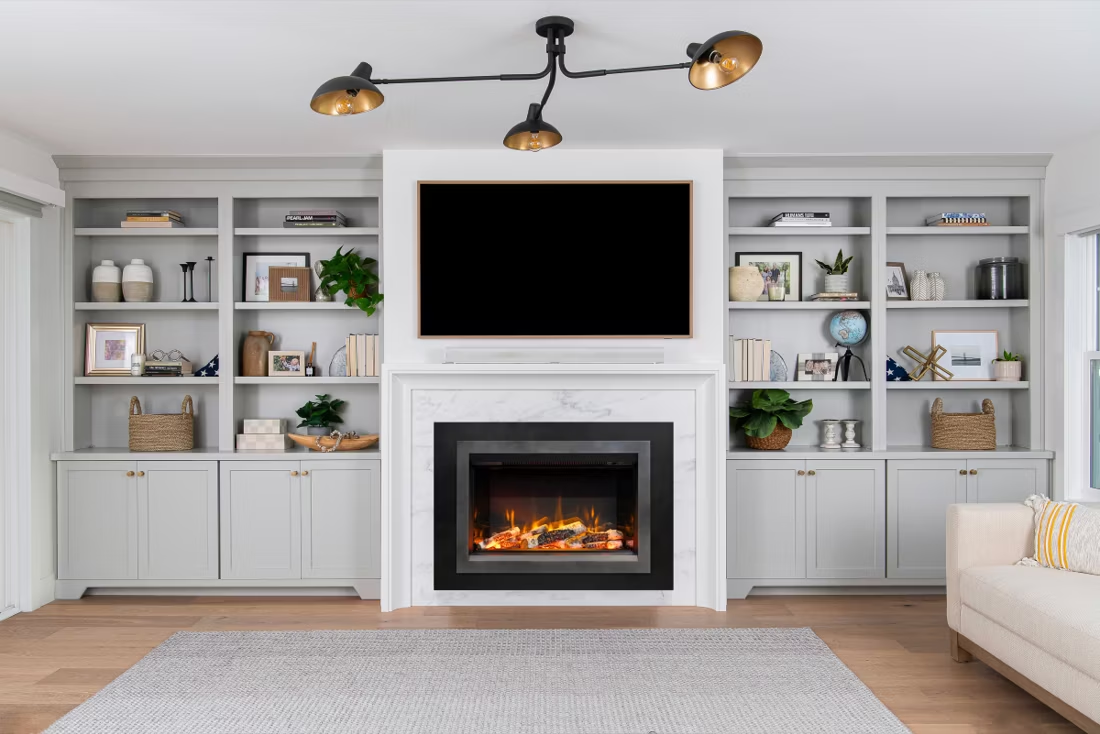
Yes—with an asterisk. Fireplaces are hot and TVs don't like heat. Either put a mantel between them to deflect rising warmth, or choose a fireplace with heat-management technology that creates a cool zone on the wall above—the wall stays around 125 degrees, barely warm, while the room still gets full heat. If you like clean lines and don't want a mantel, heat management is the answer.
Do electric fireplaces actually produce heat?
Yes—most put out around 4,800–5,000 BTUs from a standard outlet, which comfortably warms a bedroom, office, or den as a comfort-zone heater. What they won't do is carry a whole house the way wood, gas, or pellet can. Think of electric as ambiance-first with honest supplemental heat: flames on with no heat in July, flames plus warmth in January.
Can a fireplace actually lower my heating bill?
Yes—by creating a comfort zone. A furnace heats every square foot of the house just to warm the one room you're in; a gas fireplace on low burns roughly a sixth of the gas a typical furnace does. Set the furnace around 55–60 degrees as a baseline, then heat the rooms your family actually uses. Families who heat this way commonly save $20–$60 a month.
How much should I budget for a fireplace?
For an average home—covering the fireplace, the vent pipe, and basic installation—a budget between $3,900 and $5,500 gives you a lot of options across wood, gas, and pellet. By the time you add finish work, gas line, and electrical, the average complete installation lands between $5,000 and $12,000 all-in. In a remodel or new build, a good rule is to put about 2.5% of the total project cost toward the fireplace.
Stove and Fireplace Dealers in Hale County
Listings include WhyFire partner dealers, dealers we have verified as authorized for the brands we recommend, and established local businesses that carry hearth products. Every listing shows which one it is. The ones marked Preferred run on WhyFire's software, so they can show you real pricing and book your appointment right here. No manufacturer pays for placement. How we verify dealers →
Caprock Brick
Find your electric fireplace in Hale County.
Tell us a bit about your home and we'll match you with the right electric fireplace, insert, or wall unit—plus a free Project Guide & Parts List with the exact components, any electrical work needed, and your recommended local Hale County dealer.
Find Your Fireplace →