
Find your fireplace across Hale County.
From Plainview out to Petersburg, Abernathy, and Hale Center, get matched with a trusted local dealer who knows what actually fits a South Plains home. Pick a fuel below and we'll point you to who really installs it out here.
Every Project Starts From One of These Five Situations
Mild South Plains winters, 3,640 heating degree days, and a county built on natural gas.
Hale County sits on the flat tableland of the Llano Estacado, roughly 3,370 feet up around Plainview, with winter lows averaging 26°F and 3,640 heating degree days—a moderate heating load, well under half of what a harder northern winter like Fargo or Bismarck sees. Natural gas infrastructure runs deep here, a legacy of the same oil-and-gas economy that shaped the South Plains, and Atmos Energy service reaches most of the county's towns. That's why gas fireplaces, inserts, and log sets are the default hearth choice for homeowners in Plainview, Abernathy, and Hale Center, with electric units picking up the rest as supplemental heat in bedrooms, sunrooms, and additions.
Wood and pellet fireplaces are a different story in Hale County, and it's worth saying plainly: this is cotton and grain country, not timber country. Oak, pecan, and mesquite grow along creek bottoms, shelterbelts, and old farmsteads, and mesquite in particular gets prized locally for smoking meat, but the county never developed the dense woodlots or cut-your-own firewood culture that makes wood heat practical in forested regions. A handful of homeowners still install wood stoves for ambiance or as backup heat during ice storms, usually burning mesquite or oak hauled in from a supplier rather than harvested on-site. Pellet stoves are rarer still—Forest Energy and Lignetics both distribute pellets into Texas retail channels, but local stove inventory and vent-kit stock are thin, so a pellet install here typically means special-ordering both the unit and the fuel. There are no air quality restrictions or burn bans in Hale County, which keeps permitting straightforward for whichever fuel you choose. This hub rolls up hearth retailers, service techs, and fuel suppliers across the whole county—pick your fuel below for local dealers and real install costs.
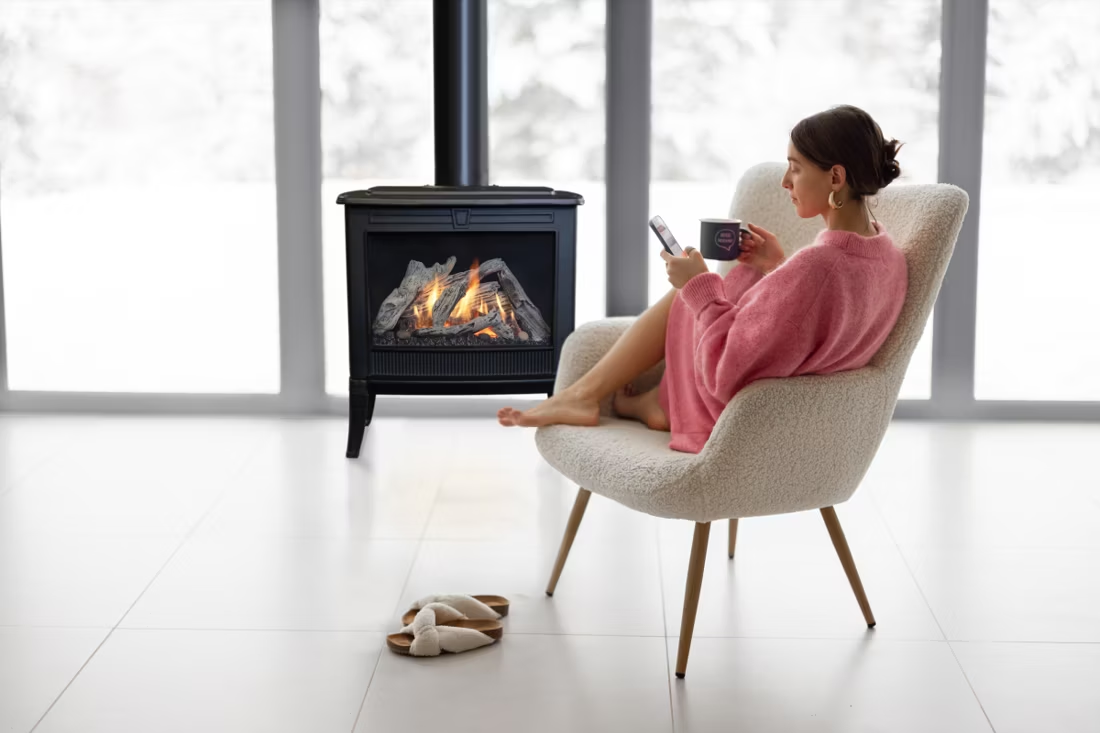
Four fuels. One honest answer for Hale County.
Three steps. No salesperson until you're ready.
Tell us about your project
Your zip code, your situation, and the fuel you're leaning toward—or let the answers point you to one.
See what's actually available
The brands dealers within 100 miles genuinely carry—real options, never a catalog mirage.
Get your dealer & Project Guide
A trusted local dealer, plus the free Project Guide & Parts List that names every component of the job.
Frequently Asked Questions
Which fireplace fuel actually makes sense in Hale County?
For most Hale County homes, gas is the practical choice. Atmos Energy service reaches Plainview and the surrounding towns, winter lows in the mid-20s don't demand a wood-burning primary heat source, and a gas insert or log set gives you instant, thermostat-controlled warmth without any fuel storage. Electric fireplaces are common as a supplemental unit—a bedroom, a converted garage, a sunroom—since they don't need venting and install in an afternoon. Wood and pellet fireplaces are genuinely uncommon out here; this is flat cotton and grain country without the dense woodlots that support a wood-heat culture, so the households that install one are usually doing it for ambiance, a backup heat source during an ice storm, or because they specifically want to burn local mesquite. If that's you, it's still doable, just expect a longer lead time on the unit and vent kit than you'd get for gas or electric.
Do I need a permit to install a gas fireplace in Hale County?
Yes. Inside city limits—Plainview, Abernathy, Petersburg, or Hale Center—you'll pull a permit through that city's building department, and the gas-line connection has to be done by a licensed gas fitter regardless of who does the surrounding carpentry. In unincorporated parts of the county, permitting runs through Hale County's general building rules. Because there are no air-quality non-attainment issues or burn restrictions here, the process is usually straightforward compared to counties with wood-smoke curtailment programs—it's mainly about making sure the gas line, venting, and clearances meet code. Most local retailers we match homeowners with pull the permit as part of the install rather than leaving it to you.
Is a wood-burning fireplace even practical on the South Plains?
It's possible, but it's not the local default, and it's worth going in with clear eyes. Hale County doesn't have the forested acreage that makes wood heat cheap and self-sufficient the way it is in, say, the Ozarks or the Rockies—there's no Forest Service cutting permit system here, and firewood has to be bought and hauled in rather than cut on your own land. The oak, pecan, and mesquite that do grow along creek bottoms and windbreaks burn well, and mesquite especially is popular for its dense, long-burning coals, but sourcing enough of it for a full heating season means working with an outside firewood dealer. Most Hale County households that install a wood stove or fireplace do it for occasional use, ambiance, or ice-storm backup rather than as their main heat source, and that's a completely reasonable way to use one.
Can I still get a pellet stove in Hale County even though it's uncommon?
Yes, though you should expect a special-order process rather than off-the-shelf availability. Pellet stoves haven't caught on here the way they have in wetter, more forested parts of the country, so local retailers typically don't keep units or vent kits in stock. Regional pellet brands like Forest Energy and Lignetics do distribute bagged fuel into Texas retail channels, so once a stove is installed, keeping it fed with pellets isn't hard—it's the initial equipment and venting that take more lead time. If you want a pellet stove specifically, plan for a longer timeline between ordering and install than you'd see with a gas unit.
What does a fireplace installation typically cost in Hale County?
Gas fireplaces, inserts, and log sets typically run $4,000–$9,000 installed, depending on whether the gas line already reaches the room or needs to be extended. Electric fireplaces are the most affordable option—$200–$2,500 for the unit, plus $300–$1,000 in labor if it's a built-in rather than a plug-and-play placement. Wood or pellet installs cost more here than in wood-heavy regions, not because the units themselves are pricier, but because there's less local competition and the vent kit or hearth pad may need to be special-ordered alongside the stove—budget $5,500–$10,000 for a wood install and expect to ask your dealer directly about pellet stove pricing given how infrequently they're requested.
How does service and installation scheduling work in a rural county like this?
Most gas techs, electricians, and hearth retailers are based in Plainview and travel out to Abernathy, Petersburg, Hale Center, Cotton Center, and Edmonson on a regular circuit, but distances between towns mean you should expect a modest trip charge for the farthest addresses. Fall is the best time to book an annual gas appliance inspection or line check, both because that's when most Hale County households actually think about their fireplace and because scheduling tightens up once the first cold front rolls through in late November. If you're on propane rather than the Atmos Energy main, it's worth confirming your tank level before the holidays—rural propane demand across West Texas spikes hard during the coldest stretches of the season.
What is an in-home preview and do I need one?
It's a visit where a hearth professional measures your space, confirms the model you picked actually works in your home, and walks the specs—framing, gas line, venting, finish work—before anything is ordered. Some details you just can't know until you see the house. Never make a down payment without one; it's the single most-skipped step that burns buyers.
How much should I budget for a fireplace?
For an average home—covering the fireplace, the vent pipe, and basic installation—a budget between $3,900 and $5,500 gives you a lot of options across wood, gas, and pellet. By the time you add finish work, gas line, and electrical, the average complete installation lands between $5,000 and $12,000 all-in. In a remodel or new build, a good rule is to put about 2.5% of the total project cost toward the fireplace.
Wood, gas, pellet, or electric—how do I choose?
Match the fuel to your life, not the other way around. Wood: lowest fuel cost and total power-outage independence, but you're hauling and stacking. Gas: press a button, set a thermostat, no maintenance to speak of. Pellet: wood economics with automatic feeding, in exchange for weekly cleaning and a need for electricity. Electric: plugs in anywhere with honest supplemental heat. Nobody regrets the fuel that fits how they actually live.
Does a fireplace add value to my home?
On average, a fireplace adds back to the home about the same amount you spent installing it. Add the monthly savings from heating the rooms you actually use instead of the whole house—often hundreds of dollars a year—and the value case is strong before you even count what a fire does for how your family uses the room.
Stove and Fireplace Dealers in Hale County
Listings include WhyFire partner dealers, dealers we have verified as authorized for the brands we recommend, and established local businesses that carry hearth products. Every listing shows which one it is. The ones marked Preferred run on WhyFire's software, so they can show you real pricing and book your appointment right here. No manufacturer pays for placement. How we verify dealers →
Caprock Brick
Get matched with a local Hale County dealer.
Pick your fuel below and we'll put together a free Project Guide & Parts List—the right unit for your Hale County home, the vent kit or gas line work it needs, and the local dealer we recommend for your project.
Find Your Fireplace →