
Instant Warmth for Grimes County's Cool Nights.
From Navasota to Anderson to Bedias, Grimes County winters are short and mild—but when a cold front or ice storm rolls through the Brazos Valley, a gas fireplace gives you real heat at the flip of a switch. Find the right unit and connect with a trusted local dealer.
Every Project Starts From One of These Five Situations
Reliable heat for a climate that rarely demands it.
Grimes County sits in the Brazos Valley between Houston and College Station, squarely in climate zone 2A—hot, humid, and mild by national standards. With only around 1,750 heating degree days a year and an average winter low near 38°F, most homes here don't need a furnace running hard all winter. But the occasional Gulf cold front or February ice event (Grimes County still remembers the 2021 grid failures) can drop temperatures into the teens overnight, and that's exactly when a gas fireplace earns its keep—instant heat with no chimney to load, no wood to split, and no waiting for a wood-burning unit to get going.
Natural gas service reaches Navasota and the pockets of the county along the Highway 6 corridor through Atmos Energy; outside town limits, in Anderson, Bedias, Iola, and the rural stretches that make up most of the county's land area, propane from a local tank supplier is the standard fuel. Either way, a gas fireplace or insert gives Grimes County homeowners a low-maintenance heat source for the handful of genuinely cold nights each winter, plus the kind of steady, no-mess ambiance that a lot of local buyers want in a living room or a converted farmhouse hearth—without dealing with humidity, pests, or mold in stored firewood, which is a real concern in this climate.
Three steps. No salesperson until you're ready.
Tell us about your project
Your zip code, your situation, and the fuel you're leaning toward—or let the answers point you to one.
See what's actually available
The brands dealers within 100 miles genuinely carry—real options, never a catalog mirage.
Get your dealer & Project Guide
A trusted local dealer, plus the free Project Guide & Parts List that names every component of the job.
Frequently Asked Questions
How much does a gas fireplace installation cost in Grimes County?
Most gas fireplace installations in Grimes County run roughly $3,500 to $9,000, depending on the unit, whether you're converting an existing masonry fireplace or building new, and whether a gas line needs to be run or extended. A direct-vent insert dropped into an existing fireplace with gas already nearby sits at the lower end. New construction or a remodel that requires framing, venting through an exterior wall, and a fresh gas line—common for newer homes outside Navasota's older neighborhoods—runs higher. Homes on propane sometimes see added cost if a new tank or line run is needed. A local retailer will give you a firm number after seeing the space in person.
Can I convert my existing wood fireplace to gas?
Yes, and it's a common project in Grimes County's older homes, especially in Navasota's historic district and the farmhouses around Anderson and Iola that were built with a traditional masonry hearth. A gas insert or log set is installed into the existing firebox, often using the current chimney (lined with stainless steel) as the vent path. Given the region's mild winters, many homeowners choose this route mainly for convenience and appearance rather than heavy-duty heating—no more hauling oak or pecan firewood in from the woodpile, and no ash to clean up after a fire on a cool December evening.
Do I need natural gas, or is propane the better option in Grimes County?
It depends on where you live. Inside and near Navasota, Atmos Energy provides natural gas service, so if your home already has a gas water heater or range, adding a fireplace is straightforward. Outside those areas—which covers most of Grimes County, including Anderson, Bedias, Iola, and Plantersville—propane from a local tank supplier is the standard fuel for a gas fireplace. Nearly every gas fireplace model on the market can be set up for either fuel; your installer just configures the correct orifice and regulator for whichever you have.
Will my gas fireplace still work if the power goes out?
In most cases, yes—and that's a genuine consideration in this part of Texas after the grid failures during Winter Storm Uri. Gas fireplaces with IPI (intermittent pilot ignition) run on a small battery backup that kicks in automatically when power drops, so the unit still lights on demand. Valor fireplaces take a different approach: the pilot's thermocouple generates its own electricity, so there's no battery to maintain at all. For a Grimes County home that might lose power during an ice event or a summer storm, a gas fireplace with reliable battery or thermocouple backup is a real hedge against a cold house—something a portable space heater and an unreliable outlet can't match.
What's the difference between a gas fireplace, gas insert, and gas stove?
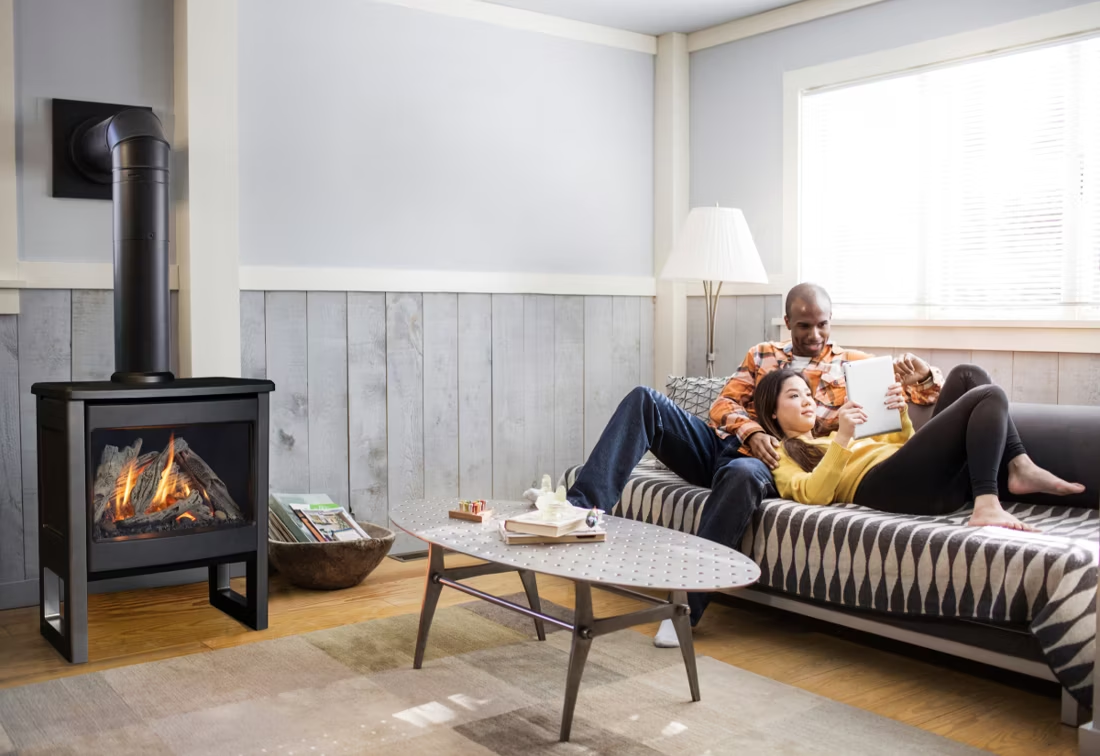
A gas fireplace is a fully built-in unit framed into a wall, typically chosen for new construction or a remodel. A gas insert slides into an existing masonry firebox—the more common choice for Grimes County's older homes with a traditional hearth already in place. A gas stove is a freestanding cabinet-style unit that sits on the floor, useful when there's no existing fireplace and you don't want to frame one in. For most homeowners here converting an old wood-burning fireplace, an insert is the simplest and most cost-effective path.
Do I need a permit to install a gas fireplace in Grimes County?
Yes—new gas fireplace installations require a building permit, and any new or modified gas line requires a permit and a licensed gas-fitter, whether you're inside Navasota city limits or in unincorporated Grimes County. Most local hearth retailers coordinate this as part of the installation, handling the gas line work, venting, and inspection sign-off together rather than leaving you to manage separate trades.
Are vent-free gas fireplaces a good fit for Grimes County homes?
Vent-free gas fireplaces are legal in Texas, but they release combustion byproducts—including water vapor—directly into the room instead of venting outside. In a hot-humid climate zone 2A county like Grimes, where indoor humidity and moisture control are already a year-round concern, adding a vent-free unit's moisture load to a living space is worth thinking through carefully. Direct-vent (sealed, vented-outside) units are the more common and more broadly recommended choice locally—they deliver real heat without adding humidity or drawing combustion air from inside the house. Ask a local retailer to walk you through both options for your specific room.
How often should my gas fireplace be serviced?
An annual inspection is recommended for any gas fireplace or insert, even with Grimes County's light burn season. A technician checks the burner, pilot assembly, venting, and gas connections, and cleans the glass and interior—usually $125 to $200 locally. Because gas units here often see lighter, more occasional use than in colder climates, it's easy to let service slide, but an annual check still matters for safety, especially on units that sit unused for long stretches during hot Texas summers.
Gas vs. wood—which makes more sense for a Grimes County home?
Wood is deeply rooted here—oak, pecan, and mesquite are all common locally, and plenty of Grimes County households already have a supply on hand for cooking or backyard fires. But with only about 1,750 heating degree days a year, most homes don't lean on wood heat to get through winter the way colder-climate homes do, and storing firewood in this humidity brings its own headaches with moisture and pests. Gas offers instant, mess-free heat for the handful of genuinely cold nights, no ash or smoke, and—with the right ignition system—heat during a power outage. For most Grimes County homeowners looking for comfort and convenience in the living room, gas is the more practical daily choice, with wood staying in the picture for cookouts and the occasional bonfire.
Is my gas fireplace wasting gas?
If it was installed more than 15 years ago, probably. Older gas fireplaces keep a standing pilot light burning all the time, and that little flame can cost a couple hundred dollars a year. Newer models use pilot-on-demand ignition—the pilot lights only when you use the fireplace and goes out when you turn it off.
Why is my open fireplace making my house colder?
Open fireplaces suck—literally. As the fire burns, it consumes air your furnace already paid to heat and pulls it out through the chimney, so the house is actually colder after the fire goes out than before you lit it. An insert fixes this: it seals the chimney, puts fixed glass across the front, and turns that hole in your house into a real heat source.
How much should I budget for a fireplace?
For an average home—covering the fireplace, the vent pipe, and basic installation—a budget between $3,900 and $5,500 gives you a lot of options across wood, gas, and pellet. By the time you add finish work, gas line, and electrical, the average complete installation lands between $5,000 and $12,000 all-in. In a remodel or new build, a good rule is to put about 2.5% of the total project cost toward the fireplace.
Does a fireplace add value to my home?
On average, a fireplace adds back to the home about the same amount you spent installing it. Add the monthly savings from heating the rooms you actually use instead of the whole house—often hundreds of dollars a year—and the value case is strong before you even count what a fire does for how your family uses the room.
Stove and Fireplace Dealers in Grimes County
Listings include WhyFire partner dealers, dealers we have verified as authorized for the brands we recommend, and established local businesses that carry hearth products. Every listing shows which one it is. The ones marked Preferred run on WhyFire's software, so they can show you real pricing and book your appointment right here. No manufacturer pays for placement. How we verify dealers →
Lyne Home Products
Aaa Overhead Door Company
All Fired Up Fireplace & Outdoor
Tri-Supply - Conroe
Fireplace & Patio Shop
Find your gas fireplace in Grimes County.
Tell us a bit about your home and we'll match you with the right gas fireplace, insert, or stove, plus a free Project Guide & Parts List—the exact parts, including the vent kit, and a trusted local dealer to install it.
Find Your Fireplace →