
The easiest fireplace upgrade in Grimes County.
With winters this mild—average lows around 38°F and a winter heating load that's light by national standards—most Grimes County homes need a fireplace for atmosphere far more than for survival heat. Electric delivers both, with no flue, no gas line, and no woodpile. Find the right unit and connect with a trusted local dealer.
Every Project Starts From One of These Five Situations
Ambiance first, heat second—that's the Grimes County reality.
Grimes County sits in Climate Zone 2A, the hot-humid belt of the Brazos Valley between Bryan-College Station and the Houston metro. Winters are short and mild—the average overnight low hovers around 38°F, and the county's overall winter heating load is light, a fraction of what a place like Fargo, ND or Duluth, MN sees in a single hard month. Cold fronts do roll through, and Navasota, Anderson, and the rural stretches around Iola and Plantersville see the occasional freeze, but sustained heating demand just isn't the driver here.
That's exactly why electric fireplaces have found a real foothold in the county. A plug-in insert or wall-mount unit adds instant flame and glow to a living room or primary bedroom without a masonry chimney, a gas line, or a building addition—a fit for the mix of older farmhouses, newer builds around Navasota, and manufactured homes common throughout rural Grimes County. There's no combustion, no smoke, and nothing to vent, which also means no interaction with air quality rules (Grimes County has no non-attainment designations to worry about either way). Mid-South Synergy, the electric cooperative headquartered right in Navasota, serves most of the county, and a hardwired built-in draws modestly enough that it's rarely a concern for a standard residential service.
Three steps. No salesperson until you're ready.
Tell us about your project
Your zip code, your situation, and the fuel you're leaning toward—or let the answers point you to one.
See what's actually available
The brands dealers within 100 miles genuinely carry—real options, never a catalog mirage.
Get your dealer & Project Guide
A trusted local dealer, plus the free Project Guide & Parts List that names every component of the job.
Frequently Asked Questions
How much does an electric fireplace installation cost in Grimes County?
Plug-in electric inserts and freestanding units are the cheapest path—often $400 to $900 including a basic wall-mount bracket, since they run off a standard 120V outlet with no electrician needed. A hardwired built-in electric fireplace, framed into a wall or existing masonry opening with a dedicated circuit run, typically lands between $1,200 and $2,500 in Grimes County once an electrician's time is factored in. Costs run a bit higher for homes outside Navasota and Anderson where a contractor's travel time to reach rural properties near Iola or Plantersville gets added to the bill.
Do I need an electrician to install an electric fireplace?
It depends on the unit. A plug-in electric insert or stove that comes with a standard cord is designed for homeowner installation—plug it in, mount it, done. A built-in electric fireplace wired directly into a wall, or any unit installed as part of a remodel with a new dedicated circuit, needs a licensed electrician to run the line and tie into your panel safely. Given how many Grimes County homes are on rural electric service through Mid-South Synergy, it's worth confirming your panel has capacity before committing to a hardwired unit—most local dealers will flag this during a quick home visit.
What size electric fireplace do I need for my home?
Because Grimes County's mild climate means the unit is doing ambiance duty most of the year and supplemental heat duty on maybe a dozen cold nights, sizing is less about BTU output and more about matching the fireplace to the wall and room. A 30–40 inch insert suits a bedroom or den; a 50–60+ inch linear unit works better as a focal point in an open living area common in newer Navasota-area homes. Most electric units top out around 4,700–5,200 BTU regardless of size, which is enough supplemental warmth for a single room during a January cold front but won't carry a whole house—nor is it meant to.
What's the difference between an electric insert, a wall-mount, and a freestanding electric stove?
An electric insert is built to drop into an existing fireplace opening, including old masonry hearths found in some of the county's older farmhouses—it covers the firebox and reuses the surround. A wall-mount unit hangs on any interior wall like a flat-screen TV, which is popular in newer construction around Navasota where there's no existing chimney to work with. A freestanding electric stove sits on the floor and mimics a wood stove's look, a good option for a room addition or a manufactured home where wall-mounting isn't practical. All three plug in or hardwire the same way—the choice mostly comes down to the room and what's already there.
Do I need a permit to install an electric fireplace in Grimes County?
A plug-in electric fireplace generally doesn't require a permit anywhere in Grimes County since there's no venting, gas line, or new wiring involved. A hardwired built-in unit that requires a new dedicated circuit typically needs an electrical permit—through the county for unincorporated areas, or through the city building department if you're inside Navasota or Anderson city limits. Since there's no combustion and no chimney, electric is the simplest fuel type in the county from a permitting standpoint, which is part of why it's a common choice for additions and quick upgrades.
What's the best electric fireplace for Grimes County's climate?
Since actual heating load is light here—a mild-winter number by any national comparison—prioritize flame realism and quiet operation over raw heat output. Look for units with LED flame technology that looks convincing with the heater switched off, since you'll likely run the flame effect year-round in the Brazos Valley's long warm season and only use the heat function occasionally. A model with a separate heat and flame control lets you get the glow going on a mild December evening without running a space heater you don't need.
How much maintenance does an electric fireplace need?
Very little compared to wood or gas. There's no chimney to sweep, no gas line to inspect, and no ash to clean out. Occasional dusting of the vents and glass, and eventually replacing the LED light strip or heater fan after years of use, covers most of it. For Grimes County homeowners weighing electric against a wood stove burning local oak, pecan, or mesquite, the maintenance difference is one of the biggest practical draws—there's simply less to maintain.
Will my electric fireplace work during a power outage?
No—and this is worth being direct about. Electric fireplaces need grid power to run the heater, fan, and flame effect, so during storm-related outages through Mid-South Synergy's rural lines, an electric unit goes dark along with everything else. If backup heat during outages matters to you—a real consideration in a county with long rural line runs—a wood stove or a battery-backed gas insert is a better primary choice, with electric reserved for the rooms where ambiance is the main goal.
Electric vs. wood or gas—which is right for my Grimes County home?
Wood stoves burning local oak, pecan, or mesquite make sense for homeowners who want real heat output during the county's occasional hard freezes and who don't mind tending a fire and stacking cordwood. Gas offers instant heat and works during outages if the unit has battery-backup ignition, but requires either a natural gas line or a propane tank. Electric wins on simplicity and safety—no combustion, no venting, no permit hassle in most cases—and given how mild Grimes County winters run, it covers the ambiance-and-occasional-warmth use case that describes most local fireplace use. Homes that already have a working furnace or heat pump often add electric purely for the room-by-room glow and treat wood or gas as the option for the coldest nights.
Can I put a TV above my fireplace?
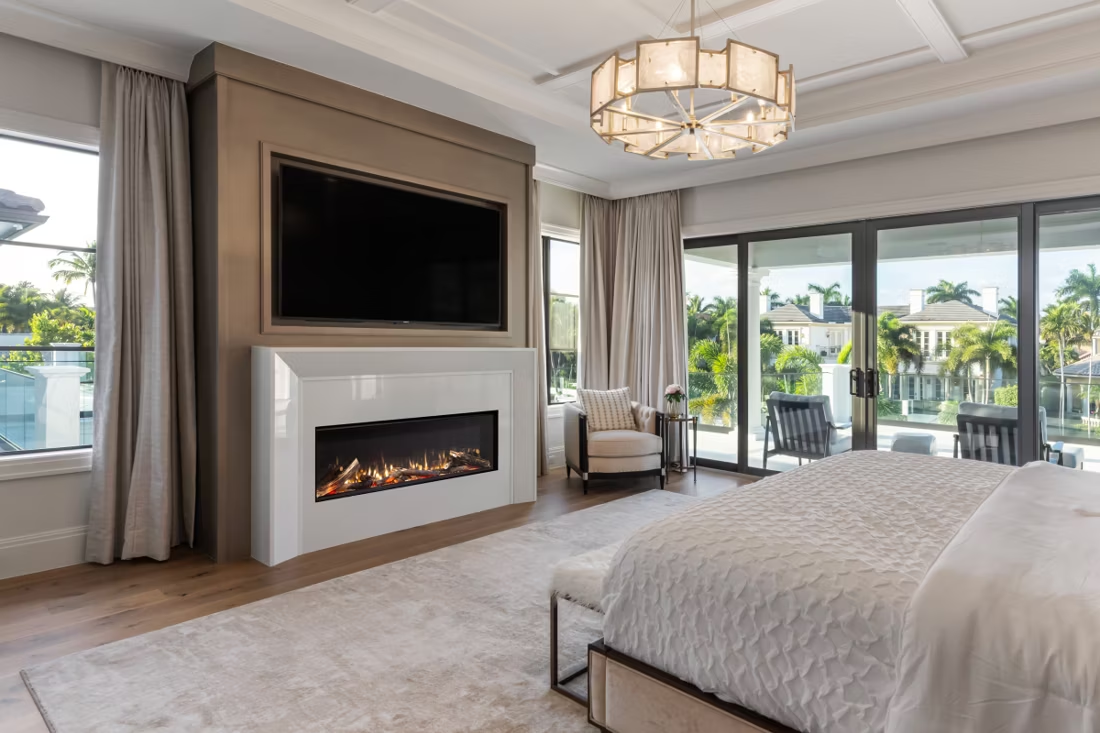
Yes—with an asterisk. Fireplaces are hot and TVs don't like heat. Either put a mantel between them to deflect rising warmth, or choose a fireplace with heat-management technology that creates a cool zone on the wall above—the wall stays around 125 degrees, barely warm, while the room still gets full heat. If you like clean lines and don't want a mantel, heat management is the answer.
Do electric fireplaces actually produce heat?
Yes—most put out around 4,800–5,000 BTUs from a standard outlet, which comfortably warms a bedroom, office, or den as a comfort-zone heater. What they won't do is carry a whole house the way wood, gas, or pellet can. Think of electric as ambiance-first with honest supplemental heat: flames on with no heat in July, flames plus warmth in January.
What is an in-home preview and do I need one?
It's a visit where a hearth professional measures your space, confirms the model you picked actually works in your home, and walks the specs—framing, gas line, venting, finish work—before anything is ordered. Some details you just can't know until you see the house. Never make a down payment without one; it's the single most-skipped step that burns buyers.
How much should I budget for a fireplace?
For an average home—covering the fireplace, the vent pipe, and basic installation—a budget between $3,900 and $5,500 gives you a lot of options across wood, gas, and pellet. By the time you add finish work, gas line, and electrical, the average complete installation lands between $5,000 and $12,000 all-in. In a remodel or new build, a good rule is to put about 2.5% of the total project cost toward the fireplace.
Stove and Fireplace Dealers in Grimes County
Listings include WhyFire partner dealers, dealers we have verified as authorized for the brands we recommend, and established local businesses that carry hearth products. Every listing shows which one it is. The ones marked Preferred run on WhyFire's software, so they can show you real pricing and book your appointment right here. No manufacturer pays for placement. How we verify dealers →
Lyne Home Products
Aaa Overhead Door Company
All Fired Up Fireplace & Outdoor
Tri-Supply - Conroe
Fireplace & Patio Shop
Find your electric fireplace in Grimes County.
Tell us about your home and we'll match you with a trusted local dealer and send over a free Project Guide & Parts List—a plan for your electric fireplace project in Grimes County, with the exact parts and your recommended local installer.
Find Your Fireplace →