
Instant Gas Warmth, Built for Grand Prairie's Mild Winters.
A clean, on-demand flame for Metroplex homes—great for ambiance and resale value, and ready when a real cold snap rolls through. Find the right unit and get matched with a trusted local dealer.
Every Project Starts From One of These Five Situations
A fireplace for comfort, not survival.
Grand Prairie sits in climate zone 3A at 528 feet elevation, roughly midway between Dallas and Fort Worth, where winter lows average a mild 33°F and the whole heating season logs just 2,342 heating degree days. Compare that to a place like Fargo, ND, which can rack up that many degree-days in a single January, and it's clear that a fireplace in Grand Prairie isn't primary survival heat—it's a comfort feature homeowners choose for ambiance, evening use, and the handful of nights each winter when temperatures actually drop into the 20s.
Most of Grand Prairie is served by Atmos Energy, the natural gas provider across the Dallas-Fort Worth Metroplex, which makes a direct-vent gas fireplace or insert a straightforward add-on for homes that already have gas service to the water heater or range. For electric backup during outages, Oncor Electric Delivery serves the bulk of the city, with Texas-New Mexico Power and Hilco Electric Cooperative covering pockets nearby. After the February 2021 grid failure, plenty of local homeowners now ask specifically about gas fireplaces that can run without pulling power from the wall—a reasonable thing to plan for in North Texas.
Three steps. No salesperson until you're ready.
Tell us about your project
Your zip code, your situation, and the fuel you're leaning toward—or let the answers point you to one.
See what's actually available
The brands dealers within 100 miles genuinely carry—real options, never a catalog mirage.
Get your dealer & Project Guide
A trusted local dealer, plus the free Project Guide & Parts List that names every component of the job.
Frequently Asked Questions
How much does a gas fireplace installation cost in Grand Prairie?
Most gas fireplace and insert installations in the Grand Prairie area run between roughly $3,000 and $8,500, depending on the unit, the venting path, and whether new gas line work is needed. A gas insert dropped into an existing masonry firebox with gas already run to the chimney chase sits toward the lower end. A new direct-vent fireplace for a remodel—with framing, venting through an exterior wall, and a fresh gas line—lands in the middle to upper range. Homes needing a longer gas line run from the meter, or a full masonry-to-drywall conversion, can push past that. A local dealer will confirm the number after seeing your fireplace or framed opening in person.
Can I convert my existing wood-burning fireplace to gas?
Yes, and it's a common project here. Many Grand Prairie homes, especially those built from the 1970s through 1990s, have a masonry wood-burning fireplace that rarely gets used given our mild winters and 2,342 heating degree days—burning oak or mesquite for heat just isn't the local habit the way it is farther north. A gas insert or a gas log set with a standing pilot converts that unused firebox into an on-demand feature. Insert conversions typically run $3,500 to $7,500 depending on whether you go with a sealed direct-vent insert (more efficient, glass front) or a vented gas log set (lower cost, open-front look).
Do I need natural gas, or should I plan for propane?
Most of Grand Prairie, including the 75050-75054 zip codes, has natural gas service through Atmos Energy, so if your home already runs gas to the water heater or range, adding a fireplace is a straightforward tie-in. Propane is really only a consideration for a handful of homes on the outer edges of the service area or in unincorporated pockets without a gas main nearby. Nearly every gas fireplace model sold by local dealers can be set up for either fuel—it's a matter of the correct orifice and regulator at install.
Will my gas fireplace still work if the power goes out?
Most modern gas fireplaces will, which matters more in North Texas than it used to. Units with IPI (intermittent pilot ignition) run on a small battery backup that kicks in automatically when Oncor's grid drops, so the fireplace still lights and runs on demand. Valor fireplaces go a step further—their pilot assembly generates its own electricity through the thermocouple, so there's no battery to remember at all. After the February 2021 winter storm knocked out power across the Metroplex for days, this is one of the first questions Grand Prairie homeowners ask, and it's worth confirming the ignition type on any unit before you buy.
What's the difference between a gas fireplace, gas insert, and gas stove?
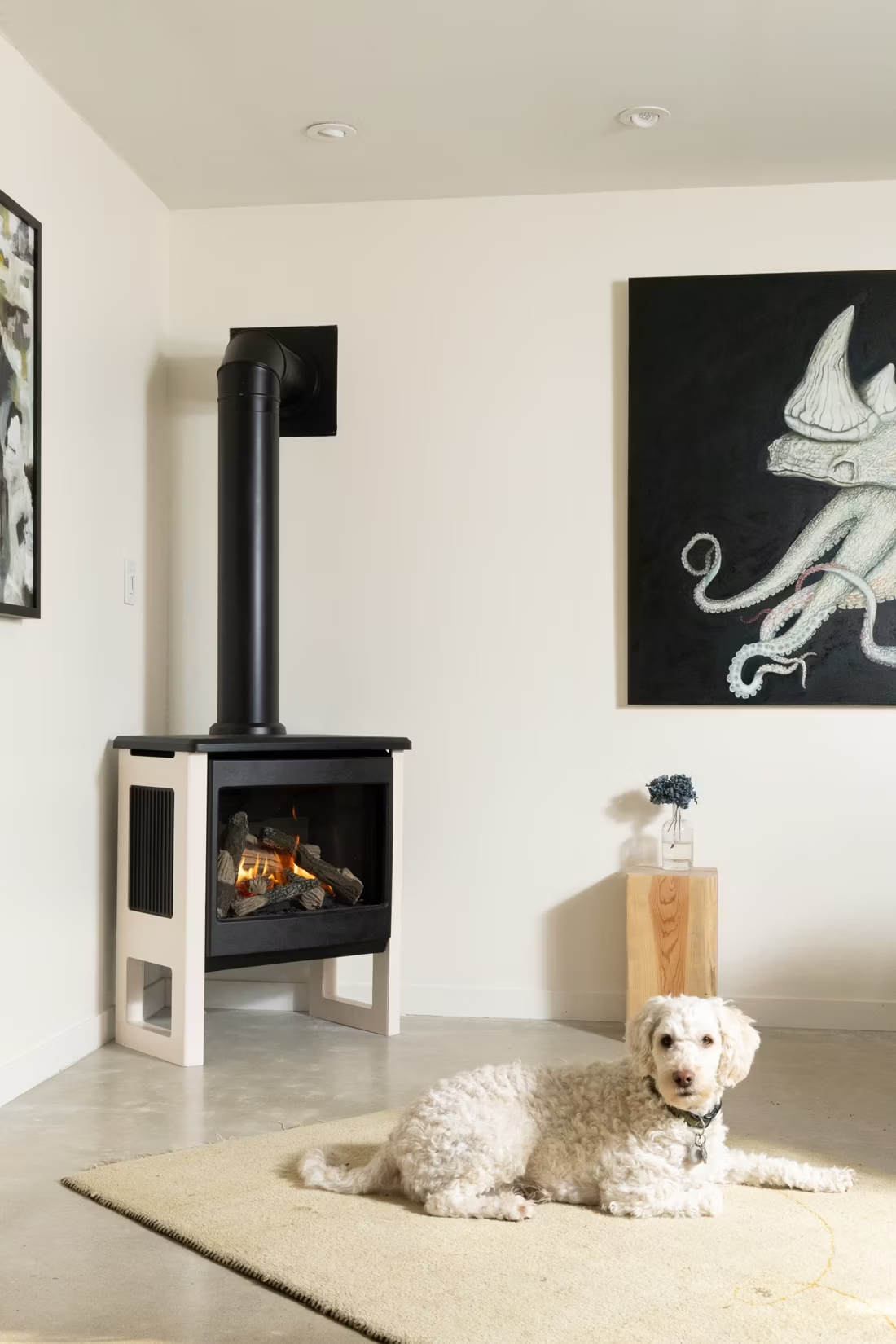
A gas fireplace is a fully built-in unit framed into a wall—the standard choice for new construction or a remodel where there's no existing firebox. A gas insert is sized to slide into an existing masonry fireplace opening, sealing it up and using the chimney as the vent path, which is the common route for Grand Prairie's older homes with an unused wood-burning fireplace. A gas stove is a freestanding cabinet-style unit that sits on the floor, useful when there's no fireplace opening at all and you want a standalone focal point in a den or sunroom.
Do I need a permit to install a gas fireplace in Grand Prairie?
Yes—the City of Grand Prairie requires a building permit and, separately, a licensed gas-fitter to handle any new or modified gas line, whether you're inside city limits or in an adjacent unincorporated area of Dallas County. Reputable local hearth dealers pull these permits as part of the install and coordinate the gas line work and final inspection so you're not managing two separate contractors. Skipping the permit step is the most common reason resale inspections flag a fireplace installation later.
Should I get a vented or vent-free gas fireplace?
Vented (direct-vent) gas fireplaces pull combustion air from outside and exhaust it back outside through a sealed pipe—they run cleaner and put out more usable heat. Vent-free units burn directly into the room without any outside venting; they're legal in Texas but come with strict room-size and ventilation requirements, and they release some water vapor and combustion byproducts into your living space. For most Grand Prairie homes, direct-vent is the more common and more broadly recommended choice, especially in bedrooms or smaller rooms where vent-free sizing rules get restrictive. A local dealer can walk you through both if you're weighing the tradeoff.
How often should a gas fireplace be serviced?
Plan on an annual inspection, ideally in early fall before the first cold nights hit. A technician checks the burner, pilot assembly, venting, and gas connections, and cleans the glass and interior—a much smaller job than chimney sweeping for a wood unit, but still important for safety and to keep the warranty intact. Local gas appliance service providers typically charge $125 to $200 for this visit, and it's worth doing even on units that only get occasional ambiance use, since dust and spider webs in the burner orifice are a common cause of ignition trouble in units that sit idle for months at a time between our short cold spells.
Should I go with gas or a wood-burning fireplace in Grand Prairie?
For nearly all Grand Prairie homeowners, gas is the practical answer. Wood heat makes sense in places logging 6,000+ heating degree days a winter; Grand Prairie logs about 2,342 for the whole season, so a wood stove or insert sees little real use as a heat source here. Local oak, pecan, and mesquite are prized for the smoker and the grill far more than for a fireplace. Gas gives you instant on-off operation, no ash or creosote to manage, and—with the right ignition system—a fireplace that still works if the Texas grid has a bad week. The main scenario where wood still wins is a homeowner who specifically wants the crackle and smell of a real wood fire for occasional ambiance; even then, most choose a gas log set as a lower-maintenance middle ground.
Is my gas fireplace wasting gas?
If it was installed more than 15 years ago, probably. Older gas fireplaces keep a standing pilot light burning all the time, and that little flame can cost a couple hundred dollars a year. Newer models use pilot-on-demand ignition—the pilot lights only when you use the fireplace and goes out when you turn it off.
Why is my open fireplace making my house colder?
Open fireplaces suck—literally. As the fire burns, it consumes air your furnace already paid to heat and pulls it out through the chimney, so the house is actually colder after the fire goes out than before you lit it. An insert fixes this: it seals the chimney, puts fixed glass across the front, and turns that hole in your house into a real heat source.
Can I install a fireplace myself?
If you're putting a fire in your house on purpose, it's best to work with an expert. Unless you're genuinely experienced in framing, gas line, vent pipe, and the national code on clearances to combustibles, have a professional do it—and ideally the same company that sells you the fireplace, so warranty, service, and liability all live under one roof.
What is an in-home preview and do I need one?
It's a visit where a hearth professional measures your space, confirms the model you picked actually works in your home, and walks the specs—framing, gas line, venting, finish work—before anything is ordered. Some details you just can't know until you see the house. Never make a down payment without one; it's the single most-skipped step that burns buyers.
Nearby Dealers
Hearth shops serving Grand Prairie and the surrounding area. Every listing shows whether it is a WhyFire partner, a dealer we have verified as authorized for the brands we recommend, or a local business carrying hearth products. No manufacturer pays for placement. How we verify dealers →
Fireside Innovations
Acme Brick Tile & Stone
Fuego Fireplaces
Brothers Supply Co.
Jacksons Home & Garden
EarthCore Industries
Cosentino – Dallas
Texas Building Supply
Bbq Outfitters
Rodak's Coffee And Bbq Grills
Overhead Door Co. Of Dallas
Pittman Supply Company
Distrinctive Outdoor Environments, LLC
Alliance Materials, Inc.
Golden Blount
Find your gas fireplace in Grand Prairie.
Tell us a bit about your home and we'll put together a free Project Guide & Parts List—the right gas fireplace or insert, the exact vent kit for your setup, and a trusted local Grand Prairie dealer to install it.
Find Your Fireplace →