
Find the right gas fireplace for your Glasscock County ranch home.
Clean, instant heat for the wide-open ranches and few hundred households scattered across Glasscock County—from Garden City out along the county roads. Find the right unit and connect with a trusted local dealer.
Every Project Starts From One of These Five Situations
Instant heat for a wide-open ranching county.
Glasscock County is one of the least populated counties in Texas—about 214 residents spread across flat Permian Basin high plains, with Garden City as the county seat and the only real town. Climate zone 3B means winters here are short and mild by national standards, with only a handful of nights dropping into the 20s, but the wind across the open plains makes a well-sealed gas fireplace far more comfortable than an open hearth on a January evening.
Despite sitting in the middle of oil and gas country, most of unincorporated Glasscock County isn't served by a municipal natural gas utility—ranch homes typically run on propane, delivered and stored in a tank on the property, the same way many rural West Texas counties operate. A direct-vent propane fireplace or insert gives you real, immediate heat without running a wood supply chain in a county where oak, pecan, and mesquite groves are more likely to end up in a smoker than a firebox. Because Glasscock County is so sparsely populated, the nearest certified hearth dealers typically operate out of San Angelo or Midland, serving Garden City and the surrounding ranches on a call-out basis.
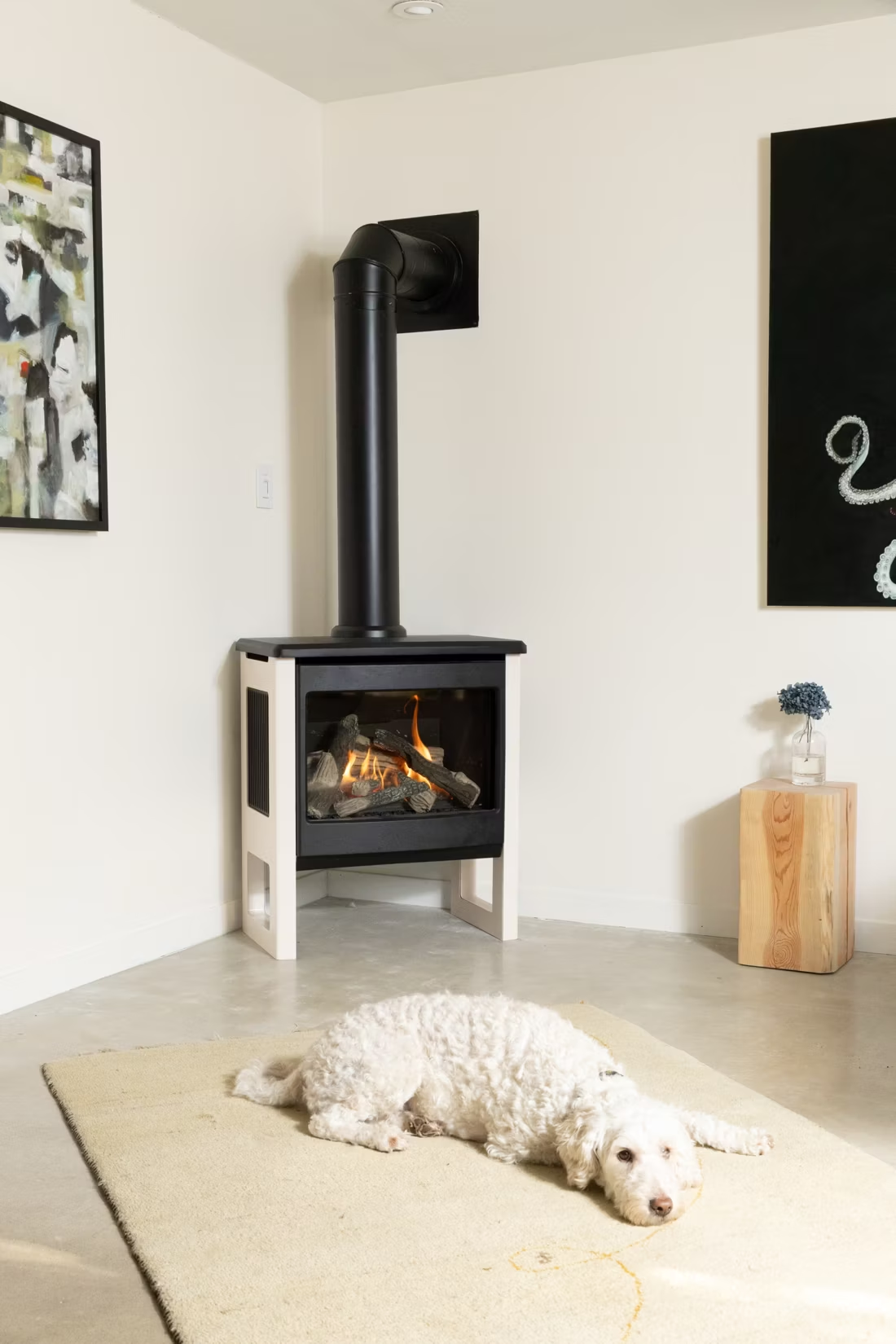
Three steps. No salesperson until you're ready.
Tell us about your project
Your zip code, your situation, and the fuel you're leaning toward—or let the answers point you to one.
See what's actually available
The brands dealers within 100 miles genuinely carry—real options, never a catalog mirage.
Get your dealer & Project Guide
A trusted local dealer, plus the free Project Guide & Parts List that names every component of the job.
Frequently Asked Questions
How much does a gas fireplace installation cost in Glasscock County?
Because Glasscock County has no dedicated hearth retailer of its own, most installations are handled by dealers traveling out from San Angelo or Midland, and pricing reflects that travel. A straightforward direct-vent propane insert into an existing fireplace typically runs in the $4,000 to $8,000 range; a new built-in gas fireplace with fresh gas line and venting in new construction can run higher, especially if a propane tank installation is also needed. Get a firm, in-home quote before committing—ranch-property distances can add a trip charge that a phone estimate won't capture.
Can I convert my existing wood-burning fireplace to gas?
Yes, and it's a common upgrade for the older ranch homes around Garden City that were built with a traditional masonry fireplace. A propane gas insert can usually be fitted into the existing firebox using a stainless liner run up the same chimney, which keeps the look of the fireplace while adding real, thermostatically controlled heat. Since natural gas lines are scarce outside Garden City proper, expect the installer to spec the insert for propane and coordinate a tank if you don't already have one on the property.
Should I use natural gas or propane for my fireplace?
For nearly everyone in Glasscock County, the answer is propane. Municipal natural gas service is limited even in Garden City, and it's essentially nonexistent on the ranches and county roads outside town—despite the irony of living in one of the most productive gas-producing basins in the country. Propane, delivered by tank and refilled on a schedule, is the standard fuel for gas fireplaces, ranges, and water heaters throughout the county. Any dealer serving the area will default to a propane configuration unless you tell them otherwise.
Will my gas fireplace still work if the power goes out?
Most direct-vent gas fireplaces with intermittent pilot ignition (IPI) run on a small battery backup, so they'll still light and operate during a power outage—worth having in a county where a single downed line on an exposed rural feeder can mean a longer wait for repair than in town. Valor fireplaces go a step further: their pilot assembly generates its own electricity through the thermocouple, so the unit never depends on batteries at all. Ask your dealer which ignition system a given model uses if outage backup matters to you.
What's the difference between a gas fireplace, insert, and stove?
A gas fireplace is a fully built-in unit, framed into a wall—the right choice for new ranch-house construction where there's no existing firebox. A gas insert drops into an existing masonry fireplace opening and uses the chimney as its vent path, which suits older homes around Garden City that already have a traditional hearth. A gas stove is a freestanding cabinet-style unit that can sit almost anywhere with the right clearances and venting, useful in a shop, barn office, or a room without an existing chimney. Most Glasscock County installs are either new-construction fireplaces or inserts into an older home's existing firebox.
Do I need a permit to install a gas fireplace in Glasscock County?
Yes—new gas fireplace installations require a building permit, and any propane line work needs to be handled by a licensed gas-fitter. Permits for unincorporated Glasscock County are processed through the county courthouse in Garden City; if you're inside the Garden City city limits, check with the city first. Reputable dealers coordinate the permit and inspection as part of the install, which is worth confirming before you sign a contract given how few local installers regularly work this specific county.
Are vent-free gas fireplaces legal in Glasscock County?
Texas allows vent-free (ventless) gas fireplaces, subject to room-sizing rules and oxygen-depletion sensor requirements, and they're a legal option here. That said, most local dealers still recommend a direct-vent unit for West Texas ranch homes—the dry climate and blowing dust common on the high plains make good sealed combustion and exterior venting a better long-term bet for indoor air quality than an open vent-free unit. Ask your installer to walk through both options for your specific room.
How often should a gas fireplace be serviced?
An annual inspection is the standard recommendation for any gas-burning appliance, covering the burner, pilot assembly, gas connections, and venting. Because Glasscock County doesn't have its own service technician, most homeowners schedule this alongside routine visits from a San Angelo or Midland-based company, or bundle it with propane tank service calls. Expect to pay in the $150 to $250 range for a standard annual visit, plus travel if the technician is coming from out of county.
Why isn't wood or pellet heat more common in Glasscock County?
Wood stoves and pellet stoves are essentially absent here, and it comes down to climate and supply chain rather than tradition—Glasscock County's climate zone 3B winters are mild enough that a primary wood-heating setup rarely makes sense, and there's no local pellet or hearth retailer to stock fuel or service equipment. The oak, pecan, and mesquite that grow in the county's creek bottoms are far more likely to fuel a backyard smoker than a firebox. For the occasional cool front and the wind that comes with living on the open plains, a propane gas fireplace or insert gives Glasscock County homeowners real heat on demand without needing to manage a cordwood or pellet supply in a county this remote from retail infrastructure.
What's the difference between an insert and a zero-clearance fireplace?
An insert is a fireplace that slides into a pre-existing wood-burning fireplace—if you don't have one, there's nothing to insert it into. A zero-clearance fireplace is built into a framed wall, which makes it the answer for remodels and new construction. Simple test: existing masonry fireplace means insert; blank or framed wall means zero-clearance.
What do I measure to size a fireplace insert?
Four numbers tell you what fits: the front width, the front height, the back width, and the overall depth of your existing fireplace opening. Grab a tape measure, jot those down, and snap a photo of the wall—those two things do more to move your project forward than anything else you can do today.
How much should I budget for a fireplace?
For an average home—covering the fireplace, the vent pipe, and basic installation—a budget between $3,900 and $5,500 gives you a lot of options across wood, gas, and pellet. By the time you add finish work, gas line, and electrical, the average complete installation lands between $5,000 and $12,000 all-in. In a remodel or new build, a good rule is to put about 2.5% of the total project cost toward the fireplace.
Does a fireplace add value to my home?
On average, a fireplace adds back to the home about the same amount you spent installing it. Add the monthly savings from heating the rooms you actually use instead of the whole house—often hundreds of dollars a year—and the value case is strong before you even count what a fire does for how your family uses the room.
Stove and Fireplace Dealers in Glasscock County
Listings include WhyFire partner dealers, dealers we have verified as authorized for the brands we recommend, and established local businesses that carry hearth products. Every listing shows which one it is. The ones marked Preferred run on WhyFire's software, so they can show you real pricing and book your appointment right here. No manufacturer pays for placement. How we verify dealers →
Bill Placer's Chimney Sweep
Seal’s Energy Depot
Area – San Angelo, Tx
Unlimited Air
Find your gas fireplace in Glasscock County.
Tell us a bit about your ranch or home and we'll match you with the right gas fireplace or insert, plus a free Project Guide & Parts List—the exact parts, including the vent kit, and a recommended local dealer serving Glasscock County.
Find Your Fireplace →