
Find your fireplace in Glasscock County.
Fireplace resources for every corner of Glasscock County—from Garden City out into the ranch and oil-lease country beyond. Get matched with a dealer who understands what actually makes sense to install in a mild West Texas county this small.
Every Project Starts From One of These Five Situations
Mild winters, a ranching economy, and two fuels that actually work here.
Glasscock County is one of the least populated counties in Texas—roughly 214 residents spread across cotton fields, cattle ranches, and Permian Basin oil leases, with Garden City as the only real town. Climate zone 3B here means winters are short and mild by any northern standard; a homeowner in Bismarck, North Dakota works through a heating season that runs six or seven months, while Glasscock County typically sees a handful of genuinely cold weeks bracketed by plenty of 60-degree afternoons. Oak, pecan, and mesquite trees dot the ranch land and dry creek bottoms, but around here they're far more likely to end up in a smoker for brisket than stacked as cordwood for a fireplace.
That combination of mild winters and a tiny population means wood stoves and pellet stoves have essentially no foothold in Glasscock County—there's no local cordwood trade, no pellet retailer inside the county line, and not enough heating-season demand to support one. What does work here is gas and electric. Central gas or propane carries most homes through the cooler months, and a gas fireplace or insert is a realistic upgrade whether or not piped natural gas actually reaches your address. Electric fireplaces show up as supplemental heat and ambiance in newer site-built homes on ranch and lease properties. This hub rolls up every fuel dealers actually install here, with an honest read on which ones make sense for a county this size and this climate.
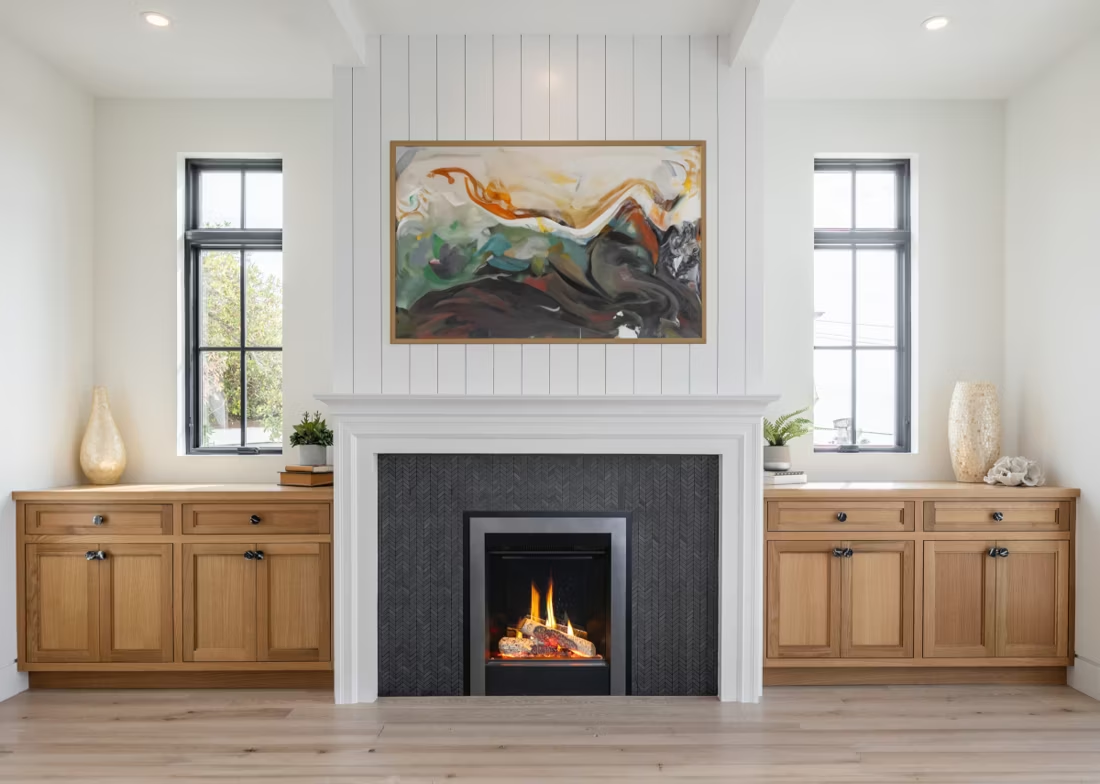
Four fuels. One honest answer for Glasscock County.
Three steps. No salesperson until you're ready.
Tell us about your project
Your zip code, your situation, and the fuel you're leaning toward—or let the answers point you to one.
See what's actually available
The brands dealers within 100 miles genuinely carry—real options, never a catalog mirage.
Get your dealer & Project Guide
A trusted local dealer, plus the free Project Guide & Parts List that names every component of the job.
Frequently Asked Questions
Which fireplace fuel actually makes sense in Glasscock County?
Gas and electric are the two fuels that genuinely fit here. Most homes run on propane or, where available, piped natural gas for central heat, and a gas fireplace or insert is a straightforward add-on to that existing setup. Electric fireplaces work well as supplemental heat or ambiance in newer ranch homes and Garden City properties. Wood and pellet heat aren't realistic primary options—the climate is too mild to justify the equipment, and with only about 214 residents in the whole county, there's no local cordwood trade or pellet retailer to support them. Homeowners who want the look of a wood fire almost always end up with a gas log set instead.
Can I still install a wood-burning fireplace even though wood heat isn't common here?
You can, but go in knowing it will be for ambiance rather than a serious heating strategy. Oak, pecan, and mesquite grow locally, but there's no cordwood dealer in Glasscock County—most people who want seasoned firewood are hauling it in from Midland or San Angeles, or cutting their own from ranch land. The dry climate here means less moisture-driven creosote buildup than you'd see in a humid region, but a wood-burning unit still needs an annual chimney inspection, and finding a sweep who covers this part of the Permian Basin takes a little more planning than in a bigger county.
Why don't pellet stoves show up much in Glasscock County?
Regional brands like Forest Energy and Lignetics distribute pellets across West Texas, but there's no pellet stove dealer or fuel retailer set up inside the county—the heating-season demand simply isn't there in a climate zone 3B county with 214 residents. Homeowners who still want one typically buy the stove and bags of pellets from a Midland or Odessa big-box store and run it as occasional backup heat rather than a primary system, which is a different math than in a place with a real winter.
Glasscock County sits right in the middle of the Permian Basin—why do so many homes still run on propane instead of natural gas?
It's a common surprise. Even though the county produces raw natural gas, the pipeline infrastructure that carries it to individual homes doesn't reach most ranch properties outside Garden City's town limits. That's why propane tanks refilled by delivery truck are the norm on lease roads and outlying ranches, while homes inside Garden City are more likely to have access to piped gas service. Either fuel source works fine for a gas fireplace or insert—it just changes which type of line hookup your installer plans for.
How does installation and service work when there's no hearth dealer actually based in the county?
Installers and service techs travel in from Midland, Odessa, Big Spring, or San Angelo, since Glasscock County's population doesn't support a hearth business of its own. Expect a trip fee built into your quote for the drive, and expect scheduling to tighten up in the weeks around the first real cold snap when everyone in the region is booking at once. Getting your gas fireplace inspection or electric install scheduled in early fall, before demand picks up, is the easiest way to avoid a long wait.
What does a gas or electric fireplace installation cost in Glasscock County?
Gas fireplace, insert, or stove installs generally run $4,500–$10,000, with the top of that range reflecting a new gas line extension on a property without existing service—common on ranch land outside Garden City. Electric fireplaces are far less expensive: $200–$3,000 for the unit itself, plus $400–$1,200 in labor for anything beyond a simple plug-and-play placement. Because most installers are traveling in from Midland, Big Spring, or San Angelo, ask upfront whether a trip fee is included in the estimate.
What is an in-home preview and do I need one?
It's a visit where a hearth professional measures your space, confirms the model you picked actually works in your home, and walks the specs—framing, gas line, venting, finish work—before anything is ordered. Some details you just can't know until you see the house. Never make a down payment without one; it's the single most-skipped step that burns buyers.
How much should I budget for a fireplace?
For an average home—covering the fireplace, the vent pipe, and basic installation—a budget between $3,900 and $5,500 gives you a lot of options across wood, gas, and pellet. By the time you add finish work, gas line, and electrical, the average complete installation lands between $5,000 and $12,000 all-in. In a remodel or new build, a good rule is to put about 2.5% of the total project cost toward the fireplace.
Does a fireplace add value to my home?
On average, a fireplace adds back to the home about the same amount you spent installing it. Add the monthly savings from heating the rooms you actually use instead of the whole house—often hundreds of dollars a year—and the value case is strong before you even count what a fire does for how your family uses the room.
Wood, gas, pellet, or electric—how do I choose?
Match the fuel to your life, not the other way around. Wood: lowest fuel cost and total power-outage independence, but you're hauling and stacking. Gas: press a button, set a thermostat, no maintenance to speak of. Pellet: wood economics with automatic feeding, in exchange for weekly cleaning and a need for electricity. Electric: plugs in anywhere with honest supplemental heat. Nobody regrets the fuel that fits how they actually live.
Stove and Fireplace Dealers in Glasscock County
Listings include WhyFire partner dealers, dealers we have verified as authorized for the brands we recommend, and established local businesses that carry hearth products. Every listing shows which one it is. The ones marked Preferred run on WhyFire's software, so they can show you real pricing and book your appointment right here. No manufacturer pays for placement. How we verify dealers →
Bill Placer's Chimney Sweep
Seal’s Energy Depot
Area – San Angelo, Tx
Unlimited Air
Get matched with a local dealer serving Glasscock County.
Pick your fuel below and we'll put together a free Project Guide & Parts List—the right unit, the vent kit it needs, and the local dealer we recommend for your project, even in a county as small as Glasscock County.
Find Your Fireplace →