
Keep Your Family Warm and Safe—No Matter What
With only 1,208 heating degree days a year and winter lows averaging 43°F, Fulshear isn't a wood-heat climate the way Fargo or Duluth is. But a real number of homeowners here still want one—for the look, for a hearth that works when the power doesn't. I'll match you with a trusted local dealer who knows how to do it right in a market built around gas and electric.
Every Project Starts From One of These Five Situations
A real fireplace, in a climate that rarely needs one.
Fulshear sits at 136 feet in climate zone 2A, and the numbers explain why builders here default to gas and electric: 1,208 heating degree days a year and a winter low averaging 43°F. Compare that to Fargo, North Dakota, which racks up over 9,000 HDD most winters, and it's clear Fulshear homes are almost never in a position where a wood stove's actual BTU output matters for survival heat. Most winters bring a handful of nights that dip into the 20s or 30s, not the sustained single-digit cold that makes a Blaze King or a Pacific Energy stove a necessity elsewhere.
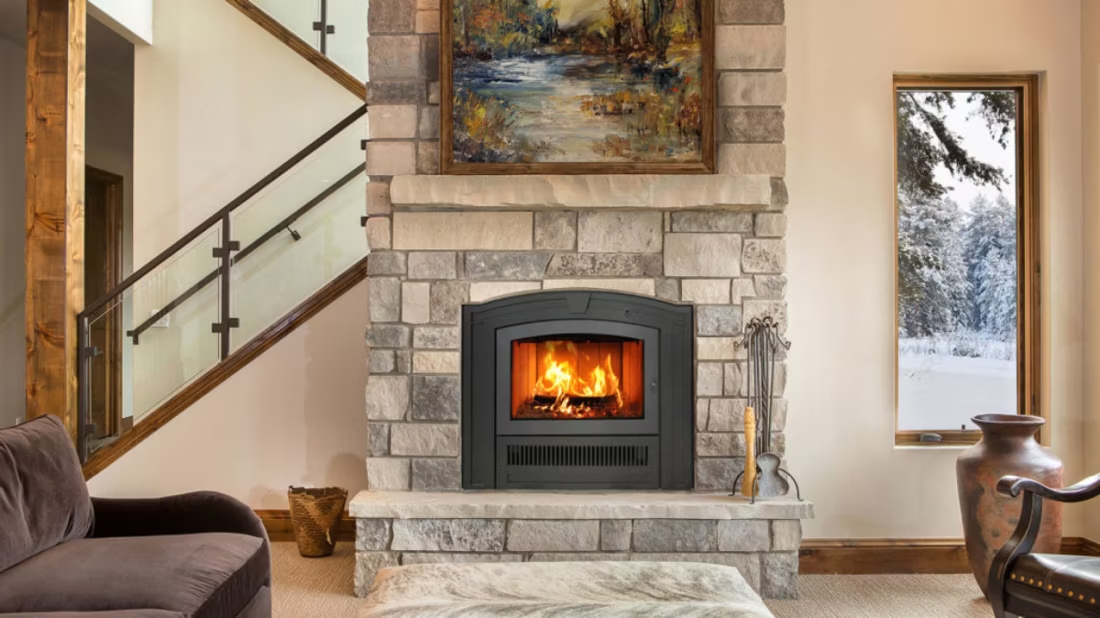
That said, wood isn't absent here—it's just chosen for different reasons. Fulshear's rapid growth, from Cross Creek Ranch to Jordan Ranch to Weston Lakes, has cleared a lot of oak, pecan, and mesquite off former ranchland and pecan orchards, and that wood ends up in local firewood stacks and smokers as much as fireplaces. With no air quality nonattainment issues on record for the area, there's no winter-inversion burning restriction working against you the way there is in parts of the West. The bigger local driver is ERCOT: after Winter Storm Uri knocked out heat and power across Fort Bend County in February 2021, a meaningful number of homeowners started asking for a wood-burning option specifically as a fuel source that doesn't depend on the grid or a gas line, even in a climate that otherwise runs on CenterPoint Energy electricity and standard gas fireplaces.
Three steps. No salesperson until you're ready.
Tell us about your project
Your zip code, your situation, and the fuel you're leaning toward—or let the answers point you to one.
See what's actually available
The brands dealers within 100 miles genuinely carry—real options, never a catalog mirage.
Get your dealer & Project Guide
A trusted local dealer, plus the free Project Guide & Parts List that names every component of the job.
Frequently Asked Questions
Does a wood-burning fireplace actually make sense in Fulshear's climate?
For pure heating performance, not really—at 1,208 heating degree days and a 43°F average winter low, you'll rarely ask a wood stove to carry the load the way a home in Bozeman or Minneapolis would. Where it does make sense is ambiance in a custom or semi-custom build, and as a backup heat source that doesn't care whether CenterPoint's grid or a gas utility is working. If neither of those reasons applies to you, a gas or electric fireplace will almost always be the simpler, cheaper answer here.
How much does it cost to add a wood fireplace to a Fulshear home?
Expect this to run higher than in a market where wood is the default. Most new Fulshear construction is framed for gas or has no fireplace chase at all, so adding real wood-burning capability usually means building a Class A chimney system from the exterior wall up—commonly $8,000 to $15,000 depending on chimney height and roofline. If you're working with a builder during framing and can plan the chase in from the start, costs land closer to $5,000 to $9,000. Because so few local installers field this request regularly, get more than one quote before committing.
Do I need a permit for a wood-burning fireplace in Fulshear?
Yes—a building permit through the City of Fulshear or Fort Bend County, depending on which side of your address falls in city limits, covers the structural chimney work and hearth clearances. Separately, Fort Bend County does issue outdoor burn bans during drought conditions, which show up most summers, but those target debris and yard burning outdoors—they don't apply to a properly installed, code-compliant indoor wood stove or fireplace.
What firewood is actually available near Fulshear?
Oak, pecan, and mesquite are the three you'll find most easily, and it's not a coincidence—Fort Bend County's mix of former pecan orchards and ranchland means all three come down regularly as new subdivisions clear land. Mesquite in particular burns hot and is popular locally for smoking as much as heating, so tree services and firewood sellers who serve Houston-area pitmasters are often a reliable, and cheap, local source.
Why do most of my neighbors have gas or electric fireplaces instead of wood?
Because it's what the climate and the builders both point toward. With winter heating demand this low, most Fulshear production and semi-custom homes ship with a direct-vent gas fireplace or skip venting altogether with an electric unit, since CenterPoint Energy service (running about 17.4 cents per kWh) makes a plug-in electric insert an easy $400-$1,200 add. Wood requires a masonry or Class A chimney that most floor plans here were never designed around, which is the real reason it's the outlier rather than the norm.
Would a wood stove actually help during a Texas grid outage like Winter Storm Uri?
Yes, and this is the strongest practical argument for wood in a place like Fulshear. Gas fireplaces with standing pilots can fail without electricity for the blower or ignition, and electric units obviously stop working the moment CenterPoint's lines go down. A wood stove or fireplace needs neither—during the February 2021 freeze, that independence was the difference between a warm room and none for households that had one. It's a low-probability, high-consequence scenario given how mild most winters here are, which is exactly why some homeowners install wood specifically as insurance rather than daily heat.
Can I convert my existing gas log fireplace to burn real wood?
Usually not without significant work. Most gas fireboxes in Fulshear homes are factory-built, sealed-combustion units rated only for gas—they're not lined or rated for the temperatures and creosote of a wood fire, and converting one typically means removing it and building a masonry or Class A wood-rated system from scratch, similar in cost to a new install. Have a local hearth dealer inspect your existing firebox before assuming a simple swap is possible.
How often does a wood fireplace need to be swept if I'm barely using it?
Even light use warrants an annual inspection—the Chimney Safety Institute of America recommends it regardless of burn frequency, since creosote can form from just a handful of fires, especially if the wood wasn't fully seasoned. In Fulshear's case, most owners are burning a dozen or two fires a season rather than the 100-plus nights a Fargo or Buffalo household might see, so a sweep every year or two, timed before the first cold snap in November or December, is usually enough. If you're keeping the stove strictly for grid-outage backup, check it before hurricane season and again before winter regardless of how much it's been used.
Wood, gas, or electric—what's the right fireplace for a Fulshear home?
For most Fulshear households, gas or electric wins on cost and convenience: gas gives instant heat off CenterPoint's or a propane line, and electric units install for as little as $400-$1,200 with no venting at all, both suited to a climate that rarely demands real heating output. Wood is the right call specifically if you want a fireplace that works independent of both the gas line and the electric grid, and you're willing to pay more upfront—often $8,000-$15,000—to build the chimney most homes here don't already have. There's no wrong answer, just a tradeoff between everyday convenience and outage independence.
Why is my open fireplace making my house colder?
Open fireplaces suck—literally. As the fire burns, it consumes air your furnace already paid to heat and pulls it out through the chimney, so the house is actually colder after the fire goes out than before you lit it. An insert fixes this: it seals the chimney, puts fixed glass across the front, and turns that hole in your house into a real heat source.
What's the difference between an insert and a zero-clearance fireplace?
An insert is a fireplace that slides into a pre-existing wood-burning fireplace—if you don't have one, there's nothing to insert it into. A zero-clearance fireplace is built into a framed wall, which makes it the answer for remodels and new construction. Simple test: existing masonry fireplace means insert; blank or framed wall means zero-clearance.
Does a fireplace add value to my home?
On average, a fireplace adds back to the home about the same amount you spent installing it. Add the monthly savings from heating the rooms you actually use instead of the whole house—often hundreds of dollars a year—and the value case is strong before you even count what a fire does for how your family uses the room.
Can I install a fireplace myself?
If you're putting a fire in your house on purpose, it's best to work with an expert. Unless you're genuinely experienced in framing, gas line, vent pipe, and the national code on clearances to combustibles, have a professional do it—and ideally the same company that sells you the fireplace, so warranty, service, and liability all live under one roof.
Nearby Dealers
Hearth shops serving Fulshear and the surrounding area. Every listing shows whether it is a WhyFire partner, a dealer we have verified as authorized for the brands we recommend, or a local business carrying hearth products. No manufacturer pays for placement. How we verify dealers →
Patio 1
All Thingz U Need Inc
Patio 1
EarthCore Industries
Get your free Project Guide & Parts List for a Fulshear wood fireplace.
Wood isn't the default here, so it helps to work with a dealer who's actually built chimney systems in a gas-and-electric market like Fort Bend County. Tell me about your home and why you want wood—ambiance, backup heat, or both—and I'll match you with a trusted local installer and send a free Project Guide & Parts List covering the vent kit and chimney components your project needs.
Find Your Fireplace →