
Clean gas heat built for Fisher County's wide-open ranch country.
From Roby to Rotan, Fisher County's cotton and cattle country gets cold enough on a West Texas blue norther to want real heat on demand. Find the right gas fireplace or insert and get matched with a trusted local dealer who actually services this part of the county.
Every Project Starts From One of These Five Situations
Instant heat, minus the wood pile.
Fisher County sits in the Texas Rolling Plains, a sparsely populated stretch of ranch and cotton country with roughly 2,000 residents spread across the county seat of Roby, the larger town of Rotan, and unincorporated communities like Sylvester and McCaulley. Climate zone 3B means long, hot summers and generally mild winters—nothing close to the sustained deep freezes of a place like Fargo, ND—but West Texas blue northers still push overnight lows into the teens and bring ice several times most winters, enough to make a fireplace more than decoration.
Because Fisher County's population is so small and spread out, most homes here run on propane rather than piped natural gas, which tends to stop at the edges of Roby and Rotan city limits if it reaches them at all. Regional propane suppliers deliver to ranch properties throughout the county, and that same propane infrastructure supports gas fireplaces and inserts as easily as it supports a range or water heater. Fisher County doesn't have its own hearth retailer inside its borders, so I match homeowners here with a trusted dealer out of Abilene or Sweetwater who covers this stretch of the Rolling Plains, pulls the right permits, and sizes the gas line and venting correctly—no guesswork shipped in from a big-box store.
Three steps. No salesperson until you're ready.
Tell us about your project
Your zip code, your situation, and the fuel you're leaning toward—or let the answers point you to one.
See what's actually available
The brands dealers within 100 miles genuinely carry—real options, never a catalog mirage.
Get your dealer & Project Guide
A trusted local dealer, plus the free Project Guide & Parts List that names every component of the job.
Frequently Asked Questions
How much does a gas fireplace installation cost in Fisher County?
For rural West Texas counties like Fisher, a direct-vent gas fireplace or insert installation typically lands somewhere between $3,500 and $9,000, with the spread driven mostly by whether you're converting an existing masonry fireplace, running new gas line, or setting up a propane tank and regulator for a home that doesn't already have one. Homes in Roby or Rotan with an existing gas appliance and line in place tend to land on the lower end. Ranch properties needing a new propane tank and longer line runs sit higher. A local dealer will confirm firm pricing after seeing your home.
Can I convert my existing wood fireplace to gas?
Yes, and it's a common project for the older ranch homes scattered across Fisher County that were built around a masonry fireplace originally meant for oak, pecan, or mesquite. A gas insert typically slides into that existing firebox and vents through the same chimney with a stainless liner, so you keep the look of the fireplace while losing the ash, smoke, and wood-hauling. Since piped natural gas is limited outside Roby and Rotan, most conversions here run on propane, which any qualified insert can be configured for during installation.
Do I need natural gas, or is propane fine for a gas fireplace in Fisher County?
Propane is the practical standard for most of Fisher County. Piped natural gas service is limited to parts of Roby and Rotan at best, and most homes outside town—which is most of the county given the population spread—already run on propane for cooking, water heating, or both. Gas fireplace units can be configured for either fuel; your installer sets the correct orifice and regulator for propane rather than natural gas. If you're on a ranch property without an existing propane tank, your dealer can coordinate a new tank installation with a regional propane supplier as part of the project.
Will my gas fireplace work during a power outage?
Most modern gas fireplaces will, which matters in Fisher County where ice storms and high West Texas winds can knock out rural power lines for hours at a stretch. Units with intermittent pilot ignition (IPI) run on a small battery backup that keeps the fireplace lighting on demand even with the grid down. Valor fireplaces skip the battery question entirely—their pilot generates its own electricity through the thermocouple, so there's nothing to remember to replace. For a ranch home at the end of a long rural line, that kind of self-powered ignition is worth asking about.
What's the difference between a gas fireplace, gas insert, and gas stove?
A gas fireplace is a built-in unit framed into a wall, typically used in new construction or a full remodel. A gas insert slides into an existing masonry firebox—the fit for most of Fisher County's older homes that already have a wood-burning fireplace they'd rather not tend. A gas stove is a freestanding cabinet unit that sits on the floor, often chosen for smaller rooms or homes without an existing chimney opening. For most Roby and Rotan homeowners with an existing fireplace, an insert is the straightforward upgrade.
Do I need a permit to install a gas fireplace in Fisher County?
Inside the city limits of Roby or Rotan, a building permit and gas line inspection are typically required and handled through the respective city office. In the unincorporated parts of Fisher County—which covers most of the ranch land—building code enforcement is minimal, as is common across small rural Texas counties, though any propane tank placement still needs to follow NFPA 58 clearance rules from your propane supplier. A qualified installer will know which rules apply to your specific property and handle the paperwork rather than leaving you to sort out city versus county requirements.
What's the difference between vented and vent-free gas fireplaces?
Vented (direct-vent) gas fireplaces draw combustion air from outside and exhaust it back outside through a sealed pipe, which keeps combustion byproducts out of the house entirely. Vent-free units burn without any outside venting and release some water vapor and trace combustion gases into the room, so they carry room-sizing and ventilation requirements. Texas permits vent-free units, and they show up in smaller rooms or additions where running venting isn't practical. For most Fisher County homes, though, a direct-vent unit is the more common recommendation—it delivers real heat output without any indoor air quality tradeoff.
How often should my gas fireplace be serviced?
Plan on an annual inspection, ideally before the first cold front of the season rolls through. A technician checks the burner, pilot assembly, gas connections, and venting, and cleans the glass and interior. It's a shorter visit than a wood chimney sweep, but skipping it is how minor issues—a dirty pilot, a failing thermocouple—turn into no-heat calls on the coldest night of the year, which in Fisher County tends to arrive with very little warning.
Gas vs. wood—which makes more sense for a Fisher County home?
Wood has deep roots here—oak, pecan, and mesquite are all common on local ranch land, and a lot of longtime Fisher County homes still burn wood in an original masonry fireplace, especially since there are no local air quality restrictions on burning. Gas trades that ritual for instant, no-maintenance heat: flip a switch, no hauling wood, no ash. Given how mild most Fisher County winters run compared to points north, many homeowners here choose gas for everyday convenience and keep wood-burning capability, or a wood stove elsewhere on the property, as a backup for the occasional hard freeze or outage.
Can I put a TV above my fireplace?
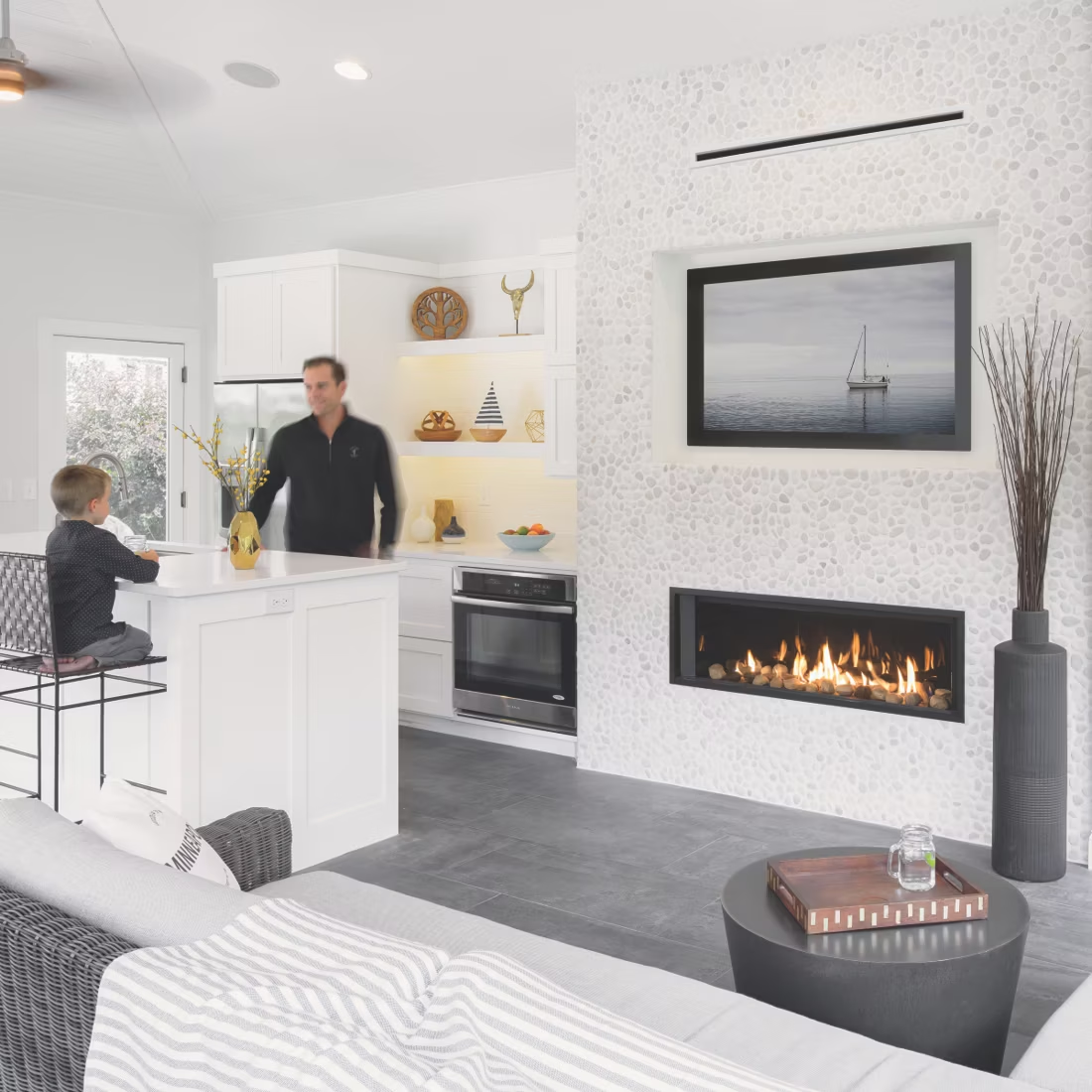
Yes—with an asterisk. Fireplaces are hot and TVs don't like heat. Either put a mantel between them to deflect rising warmth, or choose a fireplace with heat-management technology that creates a cool zone on the wall above—the wall stays around 125 degrees, barely warm, while the room still gets full heat. If you like clean lines and don't want a mantel, heat management is the answer.
Is my gas fireplace wasting gas?
If it was installed more than 15 years ago, probably. Older gas fireplaces keep a standing pilot light burning all the time, and that little flame can cost a couple hundred dollars a year. Newer models use pilot-on-demand ignition—the pilot lights only when you use the fireplace and goes out when you turn it off.
Can a fireplace actually lower my heating bill?
Yes—by creating a comfort zone. A furnace heats every square foot of the house just to warm the one room you're in; a gas fireplace on low burns roughly a sixth of the gas a typical furnace does. Set the furnace around 55–60 degrees as a baseline, then heat the rooms your family actually uses. Families who heat this way commonly save $20–$60 a month.
What is an in-home preview and do I need one?
It's a visit where a hearth professional measures your space, confirms the model you picked actually works in your home, and walks the specs—framing, gas line, venting, finish work—before anything is ordered. Some details you just can't know until you see the house. Never make a down payment without one; it's the single most-skipped step that burns buyers.
Stove and Fireplace Dealers in Fisher County
Listings include WhyFire partner dealers, dealers we have verified as authorized for the brands we recommend, and established local businesses that carry hearth products. Every listing shows which one it is. The ones marked Preferred run on WhyFire's software, so they can show you real pricing and book your appointment right here. No manufacturer pays for placement. How we verify dealers →
Coastal Insulation
A & A Chimeny Sweep w/Texas Fp
Area – San Angelo, Tx
Find your gas fireplace in Fisher County.
Tell me about your home and I'll put together a free Project Guide & Parts List—the exact parts, including the vent kit, and a trusted local dealer who covers Fisher County and can get it installed right.
Find Your Fireplace →