
Real heat for Fisher County's mild winters and windy nights.
Wood, gas, pellet, and electric fireplace resources for Roby, Rotan, and every ranch and homestead in between. Find the right fuel for your home and get matched with a trusted local dealer.
Every Project Starts From One of These Five Situations
Short, mild winters on the rolling plains of West Texas.
Fisher County sits in Climate Zone 3B, a warm-winter zone where heating season is short and the load is light compared to places like Bismarck ND or Duluth MN. Overnight lows dip into the 20s and 30s a handful of nights each winter, and the wind off the plains makes a masonry fireplace or a wood stove feel less like a luxury and more like a practical answer on the coldest evenings. With no air quality non-attainment issues on record, wood burning here isn't restricted the way it is in western basins with winter inversions—it's simply a matter of what fits your home and your budget.
Fisher County is rural—about 2,000 residents spread across Roby, Rotan, and the ranch land between them—so hearth retailers and service technicians here typically cover a wide radius rather than clustering in one town. This hub rounds up retailers, service techs, and fuel suppliers across the whole county, plus a directory of Fisher County towns. Pick your fuel below for local dealers, install costs, and unit recommendations specific to your project.
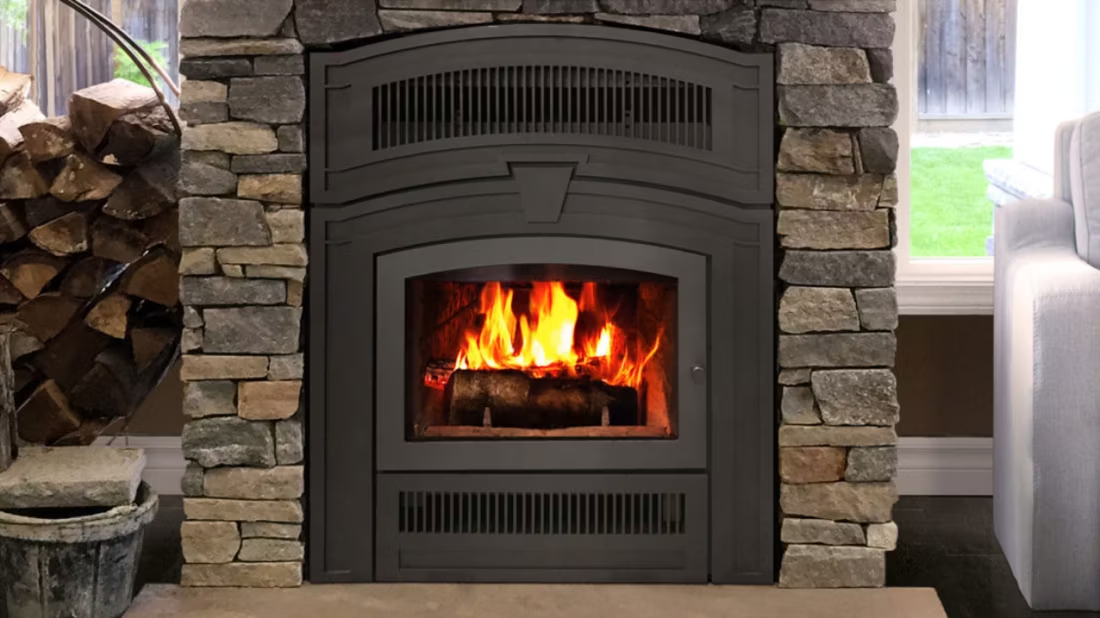
Four fuels. One honest answer for Fisher County.
Three steps. No salesperson until you're ready.
Tell us about your project
Your zip code, your situation, and the fuel you're leaning toward—or let the answers point you to one.
See what's actually available
The brands dealers within 100 miles genuinely carry—real options, never a catalog mirage.
Get your dealer & Project Guide
A trusted local dealer, plus the free Project Guide & Parts List that names every component of the job.
Frequently Asked Questions
Which fuel makes the most sense in Fisher County's mild climate?
With a short heating season, the calculation here is different than in a place like Fargo ND where a stove runs nonstop for months. Wood is a strong fit if you already have access to oak, pecan, or mesquite—mesquite in particular burns hot and clean once seasoned, and a lot of Fisher County households already have a source through ranch clearing or local firewood sellers. Gas is the low-maintenance choice, especially propane-fed units on rural properties without natural gas lines—good for the handful of genuinely cold nights without any fuel-handling. Pellet stoves work well too, though pellets (Forest Energy, Lignetics) are usually special-ordered rather than stocked locally, so planning ahead for a winter's supply matters. Electric is a reasonable supplemental option for a bedroom or a den, given how mild most winters run, but it's rarely anyone's only heat source out here.
Do I need a permit to install a fireplace in Fisher County?
Most new wood stoves, inserts, gas fireplaces, gas inserts, and pellet stoves require a building permit, and gas work requires a separate licensed gas-fitter for the line connection. In unincorporated Fisher County, permitting runs through the county; inside Roby or Rotan city limits, check with the city office first since requirements can differ slightly from the county's. Plug-in electric fireplaces generally don't need a permit; built-in electric units with new wiring usually do. Most local retailers who install in this area will pull the permit as part of the job, so it's worth asking upfront rather than handling it yourself.
Are there any wood-burning restrictions in Fisher County?
No—Fisher County has no recorded air quality non-attainment issues, so there's no equivalent of the yellow/red burn advisories you'd see in a smoke-prone basin. That doesn't mean burning is unregulated everywhere: check with Roby or Rotan city offices if you're inside town limits, since local burn bans tied to drought conditions do get issued in West Texas from time to time, separate from any air-quality rule. New EPA-certified stoves are still the standard for new installs regardless of local air quality status.
Will one dealer carry all four fuel types out here?
In a county this size, it's less likely that a single retailer stocks working displays of wood, gas, pellet, and electric units the way a dealer in a larger market might. More commonly, a retailer specializes in one or two fuels—often wood and gas, since those are the two most established options in rural West Texas—and either special-orders pellet stoves or refers electric-only requests elsewhere. If you're comparing fuels, it's worth asking a retailer directly what they carry in-stock versus what they'd need to order, since lead times matter more in a rural market like this.
How does installation and service work for rural Fisher County properties?
Because Roby and Rotan are small and much of the county is ranch land, expect any retailer or technician to factor in drive time—a rural service call or install might run further out than in a denser market, and travel fees in the $50-$100 range aren't unusual. Scheduling early, especially before the first real cold front hits in November, gets you ahead of the rush other rural homeowners create when they wait until the first cold snap. If you're heating with wood, having a backup plan—a spare cord of seasoned mesquite or oak on hand—is smart given how spread out service coverage is across the county.
What does fireplace installation typically cost across fuel types in Fisher County?
Costs run in line with rural West Texas norms rather than big-city pricing. Wood stove or insert: roughly $4,000-$8,500 depending on chimney condition and whether new masonry work is needed. Gas fireplace, insert, or stove: $4,000-$9,500, with propane tank setup and line runs adding cost on rural properties without existing gas service. Pellet stove or insert: $4,000-$7,000 for a typical install. Electric fireplace: $200-$2,500 for the unit itself, plus $300-$1,000 in labor for anything beyond a simple plug-in placement. See the county + fuel pages above for cost detail tied to specific local retailers.
Can I install a fireplace myself?
If you're putting a fire in your house on purpose, it's best to work with an expert. Unless you're genuinely experienced in framing, gas line, vent pipe, and the national code on clearances to combustibles, have a professional do it—and ideally the same company that sells you the fireplace, so warranty, service, and liability all live under one roof.
Does a fireplace add value to my home?
On average, a fireplace adds back to the home about the same amount you spent installing it. Add the monthly savings from heating the rooms you actually use instead of the whole house—often hundreds of dollars a year—and the value case is strong before you even count what a fire does for how your family uses the room.
What is an in-home preview and do I need one?
It's a visit where a hearth professional measures your space, confirms the model you picked actually works in your home, and walks the specs—framing, gas line, venting, finish work—before anything is ordered. Some details you just can't know until you see the house. Never make a down payment without one; it's the single most-skipped step that burns buyers.
What are the biggest mistakes people make buying a fireplace?
Five come up constantly: budgeting for the unit but not the full job (vent, gas line, electrical, finish work); drowning in options instead of starting from style and fuel; buying without an in-home preview; handing installation to a handyman instead of a pro; and giving up out of sheer indecision. Every one is avoidable with a clear plan—step one, step two, step three.
Stove and Fireplace Dealers in Fisher County
Listings include WhyFire partner dealers, dealers we have verified as authorized for the brands we recommend, and established local businesses that carry hearth products. Every listing shows which one it is. The ones marked Preferred run on WhyFire's software, so they can show you real pricing and book your appointment right here. No manufacturer pays for placement. How we verify dealers →
Coastal Insulation
A & A Chimeny Sweep w/Texas Fp
Area – San Angelo, Tx
Find your fireplace fit in Fisher County.
Tell us your fuel and your project, and we'll match you with a trusted local dealer and send a free Project Guide & Parts List—the exact parts, including the vent kit, and the dealer we recommend for your home.
Find Your Fireplace →