
Fireplace ambiance for Fayette County—no chimney, no gas line.
With winter lows averaging 40°F and just 1,620 heating degree days a year, Fayette County homes rarely need a furnace-grade fireplace—they need warmth and glow on the handful of genuinely cold nights. Electric delivers that, from historic La Grange storefronts to Round Top weekend houses, without touching your roofline.
Every Project Starts From One of These Five Situations
Mild winters, maximum ambiance.
Fayette County sits in the rolling farmland between Austin and Houston—German and Czech dance halls, county-seat La Grange, and small towns like Schulenburg, Flatonia, Fayetteville, and Round Top that swell with visitors during antique week. The climate here (zone 2A, hot and humid) means real heating demand is limited to a stretch of December through February, and even then winter lows average around 40°F. Compare that to a place like Fargo, ND, which racks up more than 9,000 heating degree days—Fayette County's 1,620 HDD is a fraction of that. Homeowners here aren't fighting single-digit nights; they're looking for a fireplace that looks good year-round and earns its keep on the occasional cold front.
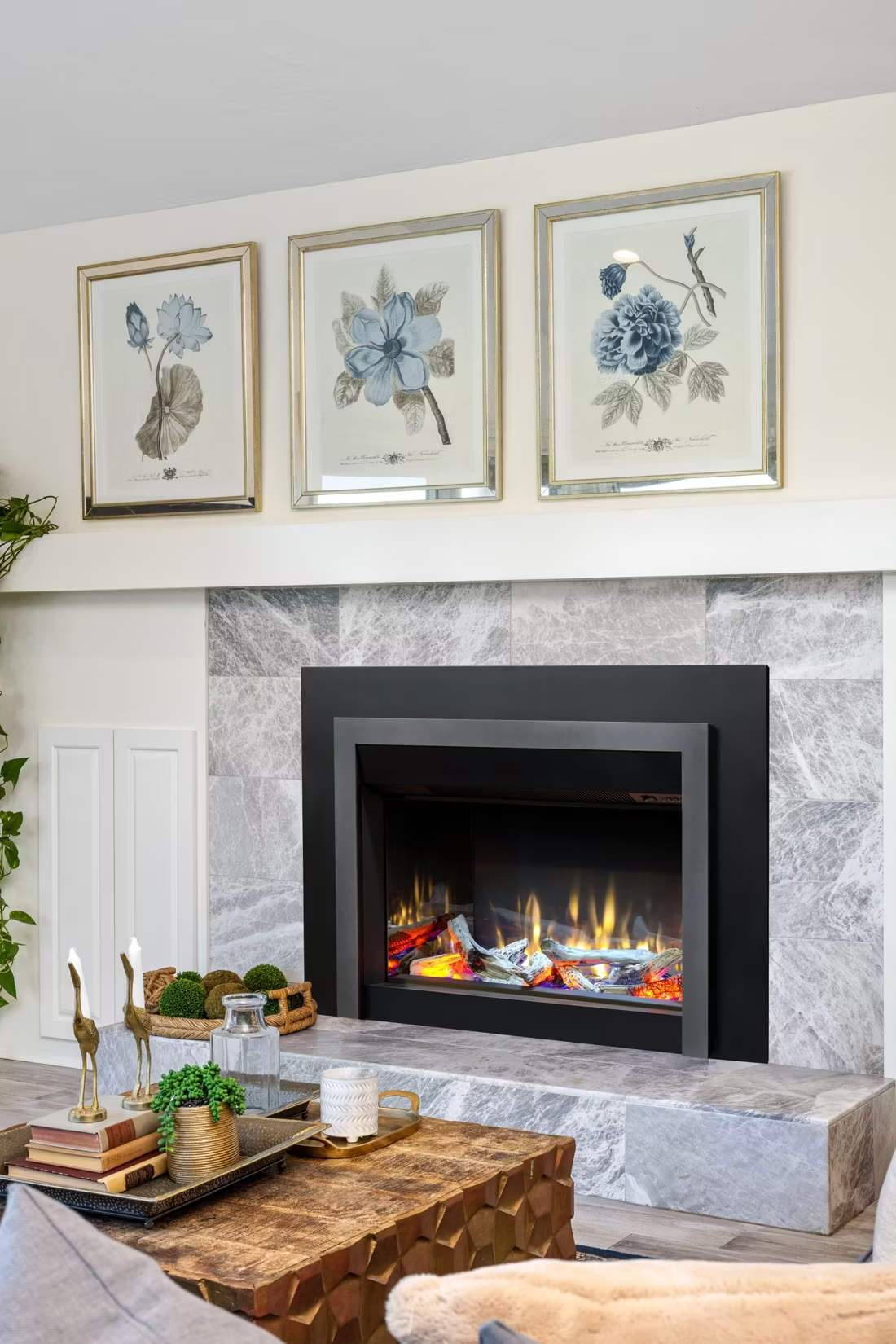
That's exactly the situation electric fireplaces are built for. There's no flue to run, no gas line to plumb, and no wood to split or stack—a plug-in insert or a hardwired wall unit gives you real flame-effect ambiance and supplemental heat with a fraction of the construction involved in a wood or gas install. It's a natural fit for the historic homes lining downtown La Grange, weekend and vacation properties around Round Top, and newer builds in Schulenburg and Flatonia where owners want the look of a fireplace without adding venting to a home that doesn't need it for warmth.
Three steps. No salesperson until you're ready.
Tell us about your project
Your zip code, your situation, and the fuel you're leaning toward—or let the answers point you to one.
See what's actually available
The brands dealers within 100 miles genuinely carry—real options, never a catalog mirage.
Get your dealer & Project Guide
A trusted local dealer, plus the free Project Guide & Parts List that names every component of the job.
Frequently Asked Questions
How much does an electric fireplace installation cost in Fayette County?
Electric is the least expensive fireplace fuel to install because there's no chimney, gas line, or exterior venting involved. A plug-in insert or freestanding unit that runs off a standard outlet typically lands in the $400 to $1,200 range, including any electrician time for a dedicated circuit. A built-in electric fireplace set into a wall or custom mantel—a popular choice in newer Schulenburg and Flatonia construction—costs more once framing, trim, and finish work are added. Because Fayette County's mild winters mean the unit is rarely asked to carry the whole heating load, most homeowners size and budget for ambiance first and supplemental warmth second.
Do I need a permit to install an electric fireplace in Fayette County?
Most plug-in electric fireplaces need no permit at all—they run off an existing household outlet like any other appliance. If you're adding a dedicated circuit or hardwiring a built-in unit into a wall, that electrical work generally requires a permit through your local jurisdiction—La Grange, Schulenburg, Flatonia, or unincorporated Fayette County—and should be pulled by a licensed electrician. There's no flue, no combustion air intake, and no gas line to inspect, which is a big part of why electric installs move faster and simpler than wood or gas projects in this county.
What kind of Fayette County home is the best fit for electric?
Electric fireplaces do well in exactly the kind of housing stock common here: historic homes in downtown La Grange where adding a masonry chimney isn't practical, weekend and vacation properties around Round Top and Warrenton that sit empty much of the year, rental properties in Flatonia and Fayetteville where landlords want a low-maintenance amenity, and newer builds where a fireplace is more about the focal point in a living room than about heating the house. Anywhere the goal is visual warmth without a construction project, electric is worth a look.
Electric vs. wood—which makes more sense for Fayette County?
Fayette County has real wood-burning tradition—oak, pecan, and mesquite are all locally abundant and commonly used, not just for heat but for the smokehouses this part of Texas is known for. A wood stove or fireplace gives you an authentic fire and works without electricity, which matters if you lose power during a storm. But with only about 1,620 heating degree days a year and winter lows averaging 40°F, most Fayette County homes don't need wood as a primary heat source the way a home in Duluth, MN or Bozeman, MT would. Electric wins on convenience, cleanliness, and simplicity for homeowners who want fireplace ambiance without hauling and stacking cordwood; wood still makes sense for those who value the ritual, the outage backup, or already have a supply on hand.
Electric vs. gas—which is the better choice here?
Gas fireplaces are a solid option in Fayette County too, particularly in homes already set up with propane, which is the common fuel in most of the county outside La Grange. Gas gives you higher heat output and a more traditional flame at the flip of a switch, but it requires a gas line, venting, and a larger installation footprint. Electric skips all of that—no fuel tank, no venting, no combustion byproducts—at the cost of a less intense flame and heat output. For a primary living space where you want real warmth on cold fronts, gas often makes more sense; for secondary rooms, bedrooms, or homes prioritizing simplicity, electric is usually the easier call.
What size electric fireplace or insert do I need?
Sizing an electric unit in Fayette County is more about room dimensions than raw heating capacity, since the mild climate means you're rarely leaning on it to heat a whole house. Most electric inserts and wall units in the 1,500 to 4,800 BTU range comfortably warm a single living room or bedroom on the occasional cold night, while larger great rooms in newer Flatonia or Schulenburg construction may call for a wider built-in unit or a supplemental space heater on the coldest evenings. A local dealer can walk your room and recommend a specific model and placement.
What does an electric fireplace cost to run in Fayette County?
Electric fireplaces are inexpensive to operate, especially compared to running central heat for the same effect. Most units draw around 1,500 watts on the heat setting, which at typical rates from providers like Fayette Electric Cooperative or your local municipal utility works out to a few cents to run for an evening's use. Because the fuel is electricity rather than propane or cordwood, there's no separate fuel supplier to manage—you're simply adding a modest amount to your existing electric bill during the weeks you actually run it.
Who installs electric fireplaces in Fayette County?
A local hearth dealer, working alongside a licensed electrician when a dedicated circuit or hardwired built-in is involved, is the right call—even though electric installs are simpler than wood or gas. A dealer will make sure the unit is sized correctly for the room, the wiring meets code, and the surround or mantel is finished properly. Big-box units purchased and self-installed skip that guidance, which is where most sizing and clearance mistakes happen.
Electric vs. pellet—which fits Fayette County better?
Pellet stoves are available in this part of Texas through regional brands like Forest Energy and Lignetics, and they burn cleaner than cordwood with less ash. But pellet stoves still need electricity to run the auger and combustion blower, so in a power outage they're no more independent than an electric fireplace—you lose both at the same time. Given that neither option provides outage backup on its own, and Fayette County's heating season is short, most homeowners choose based on look and maintenance preference: electric for zero fuel handling and instant on-off operation, pellet for those who want a real flame and don't mind loading a hopper and managing a fuel supply of bagged pellets.
Can I put a TV above my fireplace?
Yes—with an asterisk. Fireplaces are hot and TVs don't like heat. Either put a mantel between them to deflect rising warmth, or choose a fireplace with heat-management technology that creates a cool zone on the wall above—the wall stays around 125 degrees, barely warm, while the room still gets full heat. If you like clean lines and don't want a mantel, heat management is the answer.
Do electric fireplaces actually produce heat?
Yes—most put out around 4,800–5,000 BTUs from a standard outlet, which comfortably warms a bedroom, office, or den as a comfort-zone heater. What they won't do is carry a whole house the way wood, gas, or pellet can. Think of electric as ambiance-first with honest supplemental heat: flames on with no heat in July, flames plus warmth in January.
Can a fireplace actually lower my heating bill?
Yes—by creating a comfort zone. A furnace heats every square foot of the house just to warm the one room you're in; a gas fireplace on low burns roughly a sixth of the gas a typical furnace does. Set the furnace around 55–60 degrees as a baseline, then heat the rooms your family actually uses. Families who heat this way commonly save $20–$60 a month.
How much should I budget for a fireplace?
For an average home—covering the fireplace, the vent pipe, and basic installation—a budget between $3,900 and $5,500 gives you a lot of options across wood, gas, and pellet. By the time you add finish work, gas line, and electrical, the average complete installation lands between $5,000 and $12,000 all-in. In a remodel or new build, a good rule is to put about 2.5% of the total project cost toward the fireplace.
Stove and Fireplace Dealers in Fayette County
Listings include WhyFire partner dealers, dealers we have verified as authorized for the brands we recommend, and established local businesses that carry hearth products. Every listing shows which one it is. The ones marked Preferred run on WhyFire's software, so they can show you real pricing and book your appointment right here. No manufacturer pays for placement. How we verify dealers →
Tri-Supply - Austin
EarthCore Industries
Crafted Flames
Find your electric fireplace in Fayette County.
Tell us a bit about your home and we'll put together a free Project Guide & Parts List for your electric fireplace or insert—sized right for your room, matched to your home, and paired with a trusted local dealer serving Fayette County.
Find Your Fireplace →