
Fireplace Help for Every Corner of Fayette County, Texas.
Wood, gas, pellet, and electric fireplace resources for La Grange, Flatonia, Schulenburg, Fayetteville, Round Top, and the ranch country between them. Find the right fit for a Central Texas winter and connect with a trusted local hearth retailer.
Every Project Starts From One of These Five Situations
Short winters, long wood-burning tradition in Fayette County, Texas.
Fayette County sits in the rolling post oak savannah between Austin and Houston, home to La Grange, Flatonia, Schulenburg, Fayetteville, and the antiques-market town of Round Top. This is Climate Zone 2A—mild by national standards, with a winter low average around 40°F and only about 1,620 heating degree days a year. Compare that to a place like Duluth, Minnesota, which racks up more than 8,000 HDD, and it's clear why fireplaces here work differently: the heating season runs roughly December through February, with cold snaps rather than sustained deep freezes. Post oak is the backbone firewood of the county, supplemented by pecan from the bottomland groves along the Colorado River and mesquite from the ranch land to the south.
What you'll find on this hub: hearth retailers, service technicians, and fuel suppliers covering every community in the county—from the county seat of La Grange out to Flatonia, Schulenburg, Fayetteville, Round Top, and Warrenton. Fayette County isn't a designated air-quality nonattainment area, so wood-burning fireplaces here aren't subject to the inversion-day curtailment rules you'll find in Western mountain basins. Natural gas service is concentrated in and around La Grange and Schulenburg; many rural homes run propane instead. Pick your fuel below to see local dealers, typical installation costs, and the resources that match your project—whether that's a wood stove for a farmhouse outside Fayetteville or a propane fireplace insert for a Round Top weekend cottage.
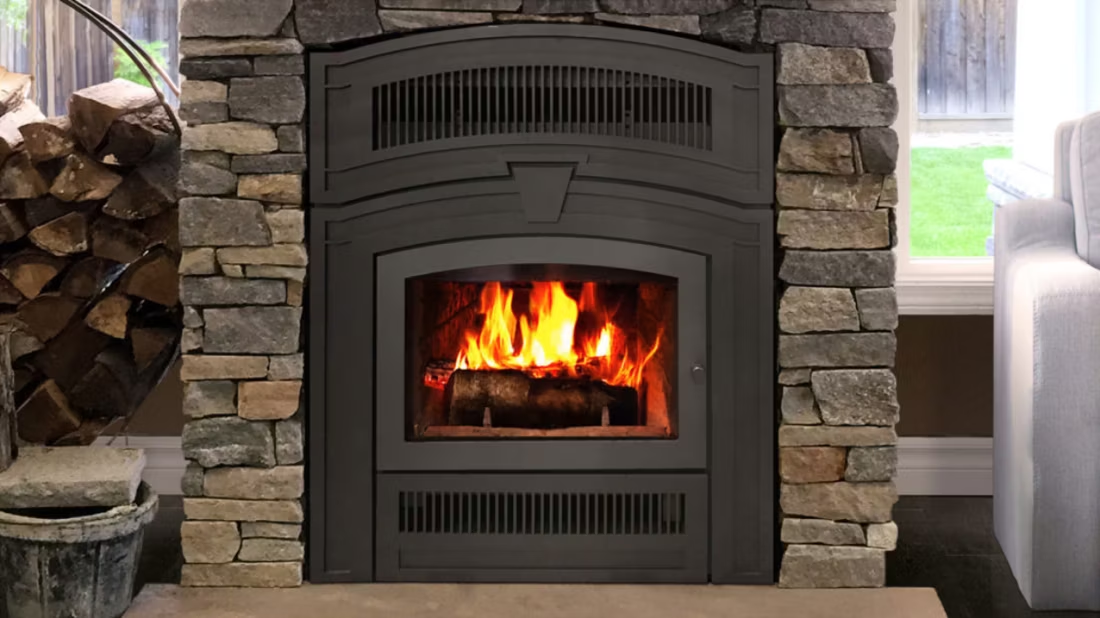
Four fuels. One honest answer for Fayette County.
Three steps. No salesperson until you're ready.
Tell us about your project
Your zip code, your situation, and the fuel you're leaning toward—or let the answers point you to one.
See what's actually available
The brands dealers within 100 miles genuinely carry—real options, never a catalog mirage.
Get your dealer & Project Guide
A trusted local dealer, plus the free Project Guide & Parts List that names every component of the job.
Frequently Asked Questions
Which fuel works best for a Fayette County home?
It depends on how you plan to use it. Fayette County's mild climate—average winter lows near 40°F and only about 1,620 heating degree days—means most fireplaces here supplement rather than replace a home's main heat source. Wood is still the sentimental favorite: post oak, pecan, and mesquite are all locally abundant, and a wood stove or insert handles the occasional hard freeze while giving you the ambiance people move to the Hill Country for. Gas is the convenience choice, especially where propane delivery is easy—instant heat with no wood to split or stack. Pellet stoves are a solid middle ground; Forest Energy and Lignetics bags are both distributed regionally, so fuel isn't hard to find. Electric fireplaces do particularly well here because the climate is mild—they're popular in guest cottages and short-term rentals around Round Top and Warrenton where owners want the look of a fire without venting or a chimney. Most full-time residents end up choosing based on how often they'll actually use it rather than raw heating need.
Do I need a permit to install a fireplace in Fayette County?
Generally, yes, for anything beyond a plug-in electric unit. New wood stoves, wood inserts, gas fireplaces, gas inserts, gas stoves, and pellet stoves typically require a building permit—through your city's building department if you're inside La Grange, Flatonia, Schulenburg, or Fayetteville, or through the county's permitting process if you're in one of the unincorporated communities like Round Top, Warrenton, or Ellinger. Gas installations also need a separate gas line permit, and if you're on propane rather than a municipal gas line, your propane supplier usually handles the tank setup and connection. Electric fireplaces are typically permit-free unless you're doing a built-in installation with new wiring. Most local hearth retailers pull the permit as part of the installation quote, so you're rarely dealing with the paperwork directly.
Are there any wood-burning restrictions in Fayette County?
Not from an air-quality standpoint. Fayette County isn't a designated nonattainment area and doesn't see the winter temperature inversions that trigger burn curtailment days in places like the Klamath Basin or the Salt Lake valley. Any burn restrictions you'll run into locally are usually county or municipal burn bans tied to drought and outdoor fire risk—brush piles, agricultural burning—not indoor fireplace use. That said, new wood stove installations should still meet current EPA emissions standards, and it's worth asking your installer whether a certified stove qualifies for any efficiency-related incentives.
Can one local dealer handle all four fuel types in Fayette County?
Fayette County's population is small enough that most hearth retailers are generalists rather than fuel specialists. A dealer based near La Grange will typically carry wood stoves and inserts, propane or natural gas fireplaces, and at least one pellet line—often stocking Forest Energy or Lignetics fuel—plus electric units on the showroom floor. That's different from bigger metro markets where dealers tend to specialize by fuel. If you're weighing options for a Fayette County property, ask any local retailer to walk you through more than one fuel type in the same visit; chances are good they can.
How does hearth service work for rural properties in Fayette County?
Most chimney sweeps and gas or pellet technicians serving Fayette County are based out of La Grange or Schulenburg and drive out to Flatonia, Fayetteville, Round Top, Warrenton, and the ranch roads in between. Expect a modest trip charge for properties well outside town. One local quirk worth planning around: Round Top and Warrenton host major antiques shows each spring and fall that fill up local lodging and clog the back roads for a week at a time—if you're near there, it's easier to schedule chimney or stove service outside those windows. Otherwise, fall (September through November) is the best time to book before the first real cold front of the season.
What does fireplace installation typically cost across fuel types in Fayette County?
Costs generally run lower here than in colder climates, partly because Fayette County homes don't need oversized units to handle sustained sub-zero cold. Wood stove or insert installation typically runs $3,500–$7,500, depending on chimney work. Gas fireplaces, inserts, or stoves usually land between $4,000 and $8,500—rural homes without an existing propane tank or line will be on the higher end. Pellet stove or insert installs run roughly $3,500–$6,000. Electric fireplaces are the low-cost entry point: $200–$2,500 for the unit itself, plus $300–$1,000 in labor unless it's simple plug-and-play. See the county + fuel pages above for retailer-specific pricing.
How much should I budget for a fireplace?
For an average home—covering the fireplace, the vent pipe, and basic installation—a budget between $3,900 and $5,500 gives you a lot of options across wood, gas, and pellet. By the time you add finish work, gas line, and electrical, the average complete installation lands between $5,000 and $12,000 all-in. In a remodel or new build, a good rule is to put about 2.5% of the total project cost toward the fireplace.
Can I install a fireplace myself?
If you're putting a fire in your house on purpose, it's best to work with an expert. Unless you're genuinely experienced in framing, gas line, vent pipe, and the national code on clearances to combustibles, have a professional do it—and ideally the same company that sells you the fireplace, so warranty, service, and liability all live under one roof.
Wood, gas, pellet, or electric—how do I choose?
Match the fuel to your life, not the other way around. Wood: lowest fuel cost and total power-outage independence, but you're hauling and stacking. Gas: press a button, set a thermostat, no maintenance to speak of. Pellet: wood economics with automatic feeding, in exchange for weekly cleaning and a need for electricity. Electric: plugs in anywhere with honest supplemental heat. Nobody regrets the fuel that fits how they actually live.
What is an in-home preview and do I need one?
It's a visit where a hearth professional measures your space, confirms the model you picked actually works in your home, and walks the specs—framing, gas line, venting, finish work—before anything is ordered. Some details you just can't know until you see the house. Never make a down payment without one; it's the single most-skipped step that burns buyers.
Stove and Fireplace Dealers in Fayette County
Listings include WhyFire partner dealers, dealers we have verified as authorized for the brands we recommend, and established local businesses that carry hearth products. Every listing shows which one it is. The ones marked Preferred run on WhyFire's software, so they can show you real pricing and book your appointment right here. No manufacturer pays for placement. How we verify dealers →
Tri-Supply - Austin
EarthCore Industries
Crafted Flames
Get matched with a hearth dealer in Fayette County.
Pick your fuel below, and we'll match you with a trusted local dealer and send over a free Project Guide & Parts List—the exact parts, including the vent kit, and the installer we recommend for your Fayette County project.
Find Your Fireplace →