
Keep Your Family Warm and Safe—No Matter What
With winter lows averaging 34°F and a short, mild winter heating season, most Fate homes never need wood heat to get through winter. For the households that still want one - for ambiance, acreage independence, or outage backup - I'll match you with a vetted local dealer who does this right.
Every Project Starts From One of These Five Situations
A humid subtropical climate that rarely asks for wood heat.
Fate sits in climate zone 3A - hot and humid, with winters defined by short cold snaps rather than sustained cold. The city's winter low averages a comparatively mild 34°F, and Rockwall County has a short, mild winter heating season, roughly a third of the heating load of a true wood-stove climate like Duluth or International Falls. For nearly all of the heating season, central gas furnaces and heat pumps served by Oncor Electric Delivery or Farmers Electric Cooperative carry the load without any help from a firebox.
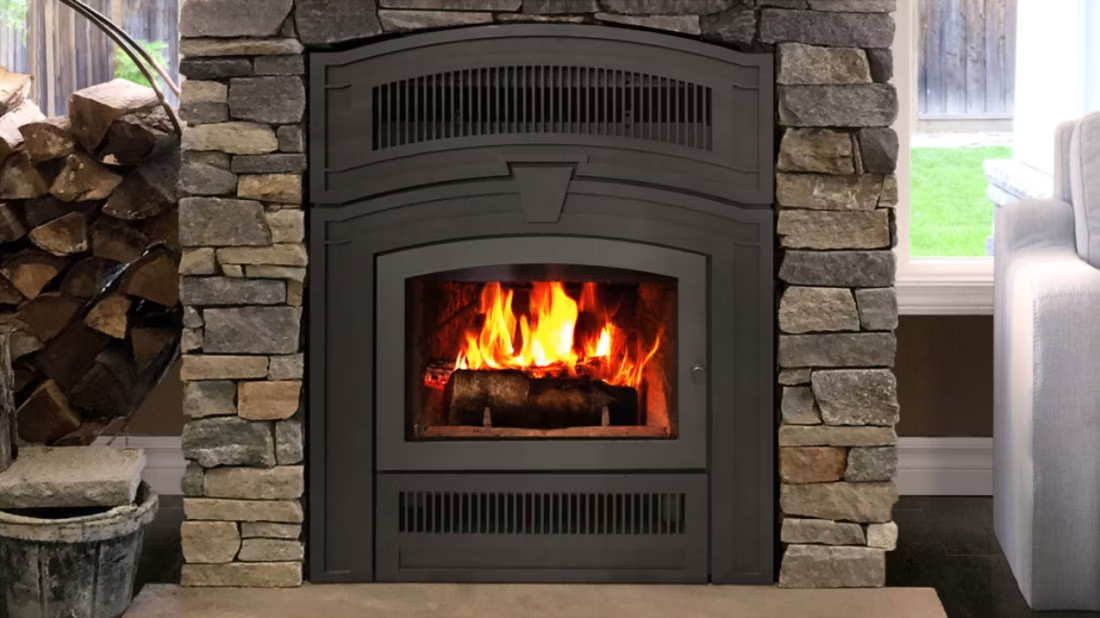
That's why wood is rated not-applicable here rather than merely rare - it isn't that nobody burns it, it's that almost nobody needs it for warmth. Oak, pecan, and mesquite are all plentiful in North Texas, but locally they're prized more for smoking brisket than heating a house. The homeowners who do install a true wood-burning fireplace or stove tend to fall into a few groups: acreage owners on the unincorporated edges of Rockwall County who like the self-sufficiency, people who remember the multi-day outages Oncor and Farmers Electric Coop customers endured during Winter Storm Uri in February 2021, and anyone who simply wants a real fire instead of a gas log set. It's a legitimate reason to install one - just not a climate-driven one.
Three steps. No salesperson until you're ready.
Tell us about your project
Your zip code, your situation, and the fuel you're leaning toward—or let the answers point you to one.
See what's actually available
The brands dealers within 100 miles genuinely carry—real options, never a catalog mirage.
Get your dealer & Project Guide
A trusted local dealer, plus the free Project Guide & Parts List that names every component of the job.
Frequently Asked Questions
How much does a wood-burning fireplace or stove cost to install in Fate?
Because true wood-burning installs are uncommon in Fate's mild climate, there isn't deep local pricing history the way there is for gas inserts. In practice, a freestanding wood stove with new Class A chimney pipe typically runs somewhere in the $4,000-$8,000 range in North Texas, while retrofitting a wood-burning insert into an existing masonry firebox tends to land lower, closer to $3,000-$5,500, since the chimney structure is already there. A local hearth dealer who's actually done a handful of these in Rockwall County will give you a tighter number than any national average can.
Does a wood stove make sense for a Fate winter?
For most homes, no - not as a primary or even meaningful secondary heat source. With an average winter low of 34°F and a short, mild winter heating season, Fate's heating season is short and mild compared to a true wood-stove climate like Bozeman or Fargo. Where it does make sense is as backup and ambiance: a stove sized for a small room can genuinely take the edge off during the handful of nights each winter that dip into the 20s, and it keeps working when the grid doesn't - which matters more to some Rockwall County homeowners than the daily heating math suggests.
Do I need a permit to install a wood stove in Fate?
Yes. Homes inside city limits go through the City of Fate's building permit process, and properties in unincorporated Rockwall County go through the county instead. Because wood-burning installs are infrequent here compared to gas fireplace and HVAC permits, it's worth confirming upfront that your installer has pulled a wood-stove-specific permit locally before - the inspection focuses on hearth clearances and chimney penetration through the roof, details a crew used to installing gas log sets may not deal with as often.
What kind of firewood is available locally in Fate?
Oak, pecan, and mesquite are the three species most North Texas households burn, and all three are common byproducts of local land-clearing and tree-service work rather than anything harvested under a public-land cutting permit - Rockwall County has essentially no national forest acreage nearby. Mesquite burns hot and fast and is popular for quick fires, oak is the steadier, longer-burning choice, and pecan splits easily and smells good, which is part of why it's also the go-to wood for backyard smokers here. Most buyers source seasoned wood from local firewood dealers rather than cutting their own.
Is a wood stove a good backup heat source in Fate?
It can be, and it's one of the more common reasons homeowners here actually go through with an install. Rockwall County customers of both Oncor Electric Delivery and Farmers Electric Cooperative saw multi-day outages during Winter Storm Uri in February 2021, and a wood stove is one of the few heat sources that keeps working when the grid is down and gas-fired equipment with electronic ignition or blowers won't run. If backup resilience is your main driver rather than daily heating, size the stove for a single room you'd actually live in during an outage rather than the whole house.
Should I get a wood fireplace or a gas fireplace in Fate?
For the vast majority of Fate homeowners, gas is the more practical choice - it's rated standard here for a reason, giving instant, thermostat-friendly heat without a woodpile or chimney maintenance, and most newer subdivisions are already plumbed for it. Wood makes sense in narrower cases: acreage properties, homes without easy gas access, or households that specifically want an outage-proof backup heat source. If you're weighing both, a local dealer can walk you through what actually fits your lot and lifestyle rather than defaulting to whichever is more common.
Will my HOA allow a wood-burning fireplace in Fate?
Check your deed restrictions before you budget for one. Many of Fate's newer subdivisions were built with prefab gas fireplace units already in place, and some HOAs restrict exterior modifications like adding a new chimney chase or exposed Class A pipe. It's not a citywide rule, but it varies enough between Rockwall County's planned communities that it's worth a five-minute call to your HOA before a dealer shows up to quote the job.
How often does a wood stove need a chimney sweep if I only use it occasionally?
At least once a year, and don't assume light use means less risk. A stove that only gets fired up a handful of nights each winter in Fate's mild climate often burns cooler and smolders more than one run daily through a long, sustained heating season further north, and cooler fires actually build creosote faster relative to hours burned. An annual inspection before the first cold snap - typically November here - catches that buildup before it becomes a problem, even on a stove that barely gets used.
Can I convert my builder-grade gas fireplace to a real wood-burning one?
Usually not without significant work. Most fireplaces built into newer Fate homes are factory-built, direct-vent gas units with venting sized only for gas combustion - they can't simply be swapped for a wood-burning insert. Converting to true wood burning typically means removing the existing unit and installing a full Class A chimney system from the firebox through the roof, which pushes the project closer to the cost of a full new wood stove installation than a simple insert swap. A local hearth dealer can tell you quickly whether your specific fireplace chase has room for that kind of retrofit.
Why is my open fireplace making my house colder?
Open fireplaces suck—literally. As the fire burns, it consumes air your furnace already paid to heat and pulls it out through the chimney, so the house is actually colder after the fire goes out than before you lit it. An insert fixes this: it seals the chimney, puts fixed glass across the front, and turns that hole in your house into a real heat source.
Why is a fireplace insert so efficient?
An insert does two things: it seals the chimney completely, so you stop losing air you already paid to heat, and it radiates warmth into the room through the firebox and glass. Most add a heat-exchange fan that pulls cool room air underneath, wraps it around the hot firebox, and pushes it back out warm. Your home is more efficient before you've even lit the first fire.
Does a fireplace add value to my home?
On average, a fireplace adds back to the home about the same amount you spent installing it. Add the monthly savings from heating the rooms you actually use instead of the whole house—often hundreds of dollars a year—and the value case is strong before you even count what a fire does for how your family uses the room.
Can I install a fireplace myself?
If you're putting a fire in your house on purpose, it's best to work with an expert. Unless you're genuinely experienced in framing, gas line, vent pipe, and the national code on clearances to combustibles, have a professional do it—and ideally the same company that sells you the fireplace, so warranty, service, and liability all live under one roof.
Nearby Dealers
Hearth shops serving Fate and the surrounding area. Every listing shows whether it is a WhyFire partner, a dealer we have verified as authorized for the brands we recommend, or a local business carrying hearth products. No manufacturer pays for placement. How we verify dealers →
Yard Art Patio & Fireplace - Allen
Elegant Fireside & Patio, LLC
Get your free Project Guide & Parts List for a wood fireplace in Fate.
Tell us about your Fate property and what's driving the interest - a rustic feel, acreage independence, or backup heat for the next ice storm - and we'll match you with a trusted local dealer and send a free Project Guide & Parts List with the right parts, including the vent kit, for your project.
Find Your Fireplace →