
Add fireplace ambiance to any room in Erath County—no chimney required.
Ambiance and supplemental warmth for Stephenville, Dublin, Bluff Dale, and every corner of Erath County—no chimney, no gas line, no venting to worry about. I'll match you with a trusted local dealer who can size the right unit for your home.
Every Project Starts From One of These Five Situations
A mild climate built for electric heat.
Erath County sits in the rolling blackland and cross-timbers country of north-central Texas, anchored by Stephenville—the self-proclaimed 'Cowboy Capital of the World' and home to Tarleton State University—along with Dublin, Bluff Dale, and the dairy operations that make this one of the state's top milk-producing counties. Winters here are mild by any national standard: climate zone 3A, an average winter low of 31°F, and roughly 2,484 heating degree days a year—a fraction of what a homeowner in Duluth, MN or Fargo, ND contends with, where HDD counts often run past 8,000. Erath County almost never sees the kind of sustained deep-freeze that makes a home heating system work overtime.
That mild profile is exactly why electric fireplaces are a standard, practical choice across the county rather than a novelty. Most Erath County homes don't need a whole-house wood or gas retrofit to stay comfortable—they need supplemental warmth and ambiance for a living room, a converted barn, or a guest space near campus. Electric units plug into existing power, require no chimney or gas line, and install as cleanly into a new subdivision around Stephenville as into a decades-old farmhouse. Wood is still part of the local culture—oak, pecan, and mesquite grow throughout the county's ranch land—but for homeowners who want fireplace character without the smoke, ash, or venting work, electric is the low-friction answer.
Three steps. No salesperson until you're ready.
Tell us about your project
Your zip code, your situation, and the fuel you're leaning toward—or let the answers point you to one.
See what's actually available
The brands dealers within 100 miles genuinely carry—real options, never a catalog mirage.
Get your dealer & Project Guide
A trusted local dealer, plus the free Project Guide & Parts List that names every component of the job.
Frequently Asked Questions
How much does an electric fireplace installation cost in Erath County?
Plug-in freestanding electric fireplaces typically run $300 to $800 for the unit itself. Wall-mounted or built-in models wired to a dedicated circuit usually land between $800 and $2,500 once basic electrical work is included, and a custom mantel or surround build can push toward $3,000 to $4,000. Because Erath County's mild climate—an average winter low of 31°F—rarely demands a whole-home heating retrofit, most homeowners here are budgeting for ambiance and supplemental heat rather than a full HVAC overhaul, which keeps electric among the most affordable hearth options compared to a wood or gas install that requires venting and masonry work.
Do I need a permit for an electric fireplace in Erath County?
Freestanding, plug-in electric fireplaces generally don't require a permit since they run off a standard household outlet. Built-in or wall-mounted units wired to a dedicated 120V or 240V circuit typically need an electrical permit through your local building department—the City of Stephenville within city limits, or the Erath County building office for unincorporated areas. Because there's no venting, gas line, or chimney involved, permitting for electric is far simpler than for a wood or gas installation, and most licensed electricians who partner with hearth dealers handle the paperwork as part of the job.
Will an electric fireplace actually heat my room?
Most electric fireplace inserts and freestanding units put out 4,000 to 5,000 BTUs—enough to comfortably supplement heat in a single room, typically 400 to 1,000 square feet, on a cold Erath County evening. Given the county's mild winter profile—an average low of 31°F and only about 2,484 heating degree days a year, a fraction of what a place like Fargo, ND deals with—electric fireplaces here are rarely asked to be a home's primary heat source. They work well as zone heat for a living room or bedroom while central heat handles the rest of the house, or as the sole heat source in a converted barn, she-shed, or guest casita where running gas or wood isn't practical.
What happens to my electric fireplace during a power outage?
It won't run—that's the honest tradeoff. Electric fireplaces need grid power, and North Texas homeowners remember Winter Storm Uri in February 2021, when ERCOT-managed outages left much of the region, including Erath County, without power for days during a rare hard freeze. If backup heat during an extended outage matters to you, pair an electric fireplace for everyday ambiance and convenience with a wood-burning option using the oak, pecan, or mesquite that's plentiful on local ranch land, or look into a battery-backup model for smaller units. For most Erath County winters, though, outages are brief and electric heat is reliable enough for daily use.
Electric vs. gas fireplace—which is right for my Erath County home?
Gas fireplaces are common in Erath County, especially in newer construction and homes already plumbed with natural gas or propane. They put out considerably more heat—20,000 to 40,000 BTUs—and can serve as real supplemental heat on the county's occasional nights in the 20s. Electric fireplaces trade heat output for simplicity: no gas line, no venting, no annual inspection, and a fraction of the install cost and complexity. For a Stephenville rental, a dairy-country guest house, or any room where running gas isn't worth the expense, electric is usually the more practical choice. For a primary living space where real heat output matters, gas is worth the extra step.
Are electric fireplaces good for rental properties and manufactured homes near Tarleton State?
Yes—this is one of the most common uses for electric fireplaces in Erath County. With Tarleton State University drawing a steady base of student rentals and off-campus housing around Stephenville, landlords favor electric units because they add real value and ambiance without the liability, maintenance, or insurance concerns tied to a wood-burning or gas appliance. The same logic applies to the manufactured and modular homes common on rural properties throughout the county—a plug-in or surface-mounted electric unit adds fireplace character without cutting into the structure for venting.
What's the difference between an electric fireplace, insert, and stove?
An electric fireplace is typically a built-in or wall-mounted unit styled to look like a framed fireplace, often with a mantel. An electric insert is sized to slide into an existing masonry fireplace opening, turning an old wood-burning fireplace into a low-maintenance electric unit without touching the chimney. An electric stove is a freestanding unit styled after a traditional wood stove, useful when you want that look in a room without an existing fireplace opening. All three plug into standard household power or a dedicated circuit for larger built-ins, and none require venting.
Where can I find a local dealer to install an electric fireplace in Erath County?
I match homeowners with trusted local hearth dealers who know Erath County's electrical code requirements and can size the right BTU output for your room, whether you're in Stephenville, Dublin, Bluff Dale, or out on a county road. Big-box stores sell electric fireplaces off a shelf, but a local dealer can confirm the unit actually fits your wall cavity or mantel opening, wire it correctly if it needs a dedicated circuit, and stand behind the install in a way a shrink-wrapped box can't.
Electric vs. wood—which fits my Erath County property?
Wood remains part of the local landscape—oak, pecan, and mesquite are all common and locally available, and Erath County has no air quality restrictions on burning. Wood works without power, which matters during a rare grid event like Winter Storm Uri, and offers more genuine heat output for a drafty older farmhouse. Electric wins on convenience: no chimney, no ash, no smoke, no permitting hassle, and it can go into nearly any room, including interior walls, student rentals, and manufactured homes where wood simply isn't an option. Given the county's mild 2,484 heating degree days, most homeowners here choose electric for ambiance and zone heat, reserving wood for a working ranch house or a home that wants the self-sufficiency of a real fire.
Can I put a TV above my fireplace?
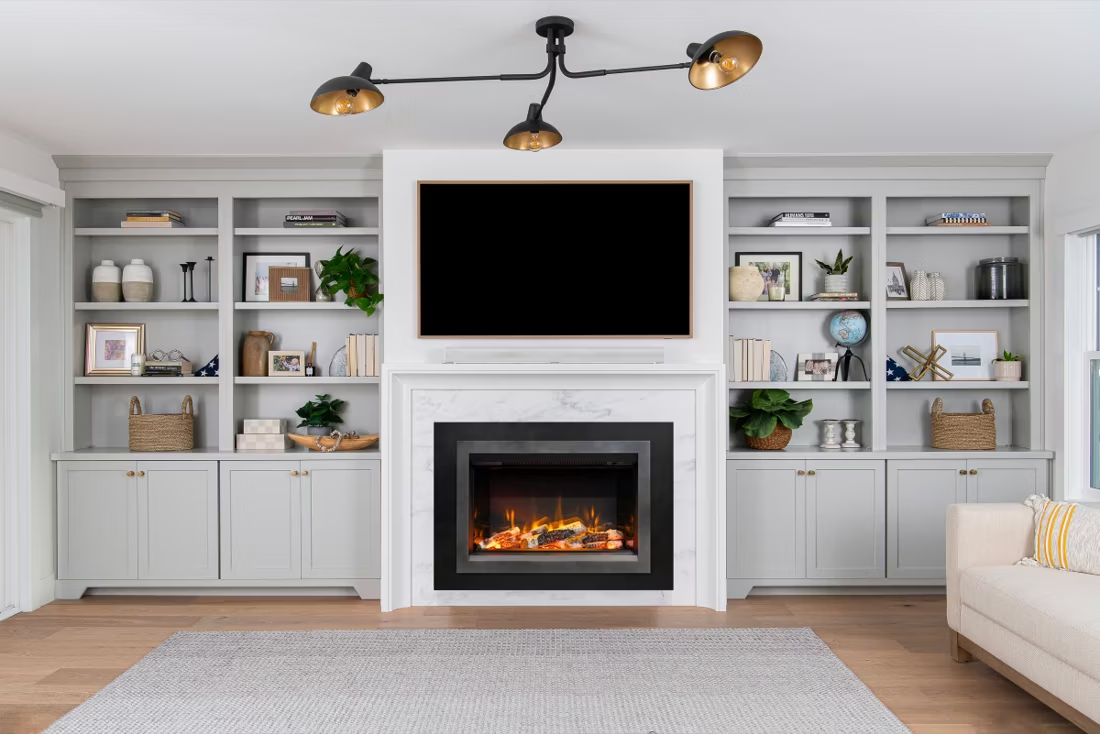
Yes—with an asterisk. Fireplaces are hot and TVs don't like heat. Either put a mantel between them to deflect rising warmth, or choose a fireplace with heat-management technology that creates a cool zone on the wall above—the wall stays around 125 degrees, barely warm, while the room still gets full heat. If you like clean lines and don't want a mantel, heat management is the answer.
Do electric fireplaces actually produce heat?
Yes—most put out around 4,800–5,000 BTUs from a standard outlet, which comfortably warms a bedroom, office, or den as a comfort-zone heater. What they won't do is carry a whole house the way wood, gas, or pellet can. Think of electric as ambiance-first with honest supplemental heat: flames on with no heat in July, flames plus warmth in January.
Can a fireplace actually lower my heating bill?
Yes—by creating a comfort zone. A furnace heats every square foot of the house just to warm the one room you're in; a gas fireplace on low burns roughly a sixth of the gas a typical furnace does. Set the furnace around 55–60 degrees as a baseline, then heat the rooms your family actually uses. Families who heat this way commonly save $20–$60 a month.
How much should I budget for a fireplace?
For an average home—covering the fireplace, the vent pipe, and basic installation—a budget between $3,900 and $5,500 gives you a lot of options across wood, gas, and pellet. By the time you add finish work, gas line, and electrical, the average complete installation lands between $5,000 and $12,000 all-in. In a remodel or new build, a good rule is to put about 2.5% of the total project cost toward the fireplace.
Stove and Fireplace Dealers in Erath County
Listings include WhyFire partner dealers, dealers we have verified as authorized for the brands we recommend, and established local businesses that carry hearth products. Every listing shows which one it is. The ones marked Preferred run on WhyFire's software, so they can show you real pricing and book your appointment right here. No manufacturer pays for placement. How we verify dealers →
David's Stove Shop Inc
Rodak's Coffee And Bbq Grills
Texas Building Supply
Brothers Supply Co.
Backyard And Patio Store - Waco
Darden Building Materials
Fireside Innovations
Alliance Materials, Inc.
C&G Products
Acme Brick Tile & Stone
Bbq Outfitters
Tri-Supply - Temple
Find your electric fireplace in Erath County.
Tell me about your space and I'll match you with a trusted local dealer and send over a free Project Guide & Parts List—the exact unit, mounting or insert parts, and electrical requirements for your Erath County home.
Find Your Fireplace →