
The easiest way to add warmth to a Hill Country home.
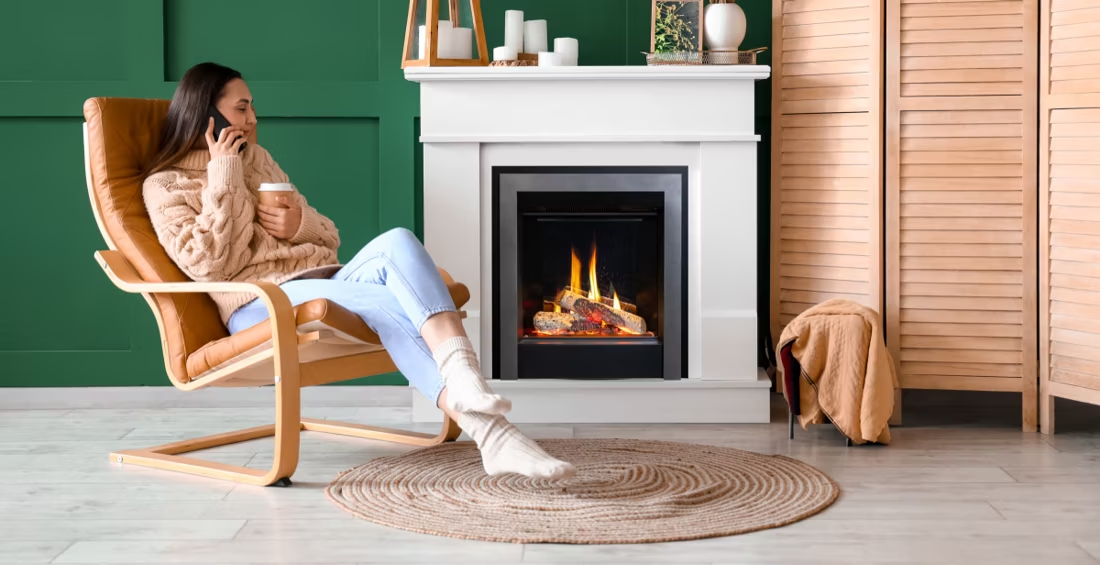
Edwards County winters are short and mild, but the occasional Hill Country cold snap still catches ranch houses and hunting cabins off guard. An electric fireplace adds instant, no-venting warmth to any room—find the right unit and connect with a trusted local dealer.
Every Project Starts From One of These Five Situations
A mild climate that still gets the occasional hard freeze.
Edwards County sits in climate zone 2B on the Edwards Plateau, with Rocksprings as the county seat and a population under 1,100 spread across nearly 2,100 square miles of ranchland. Winters here run mild compared to places like Bismarck ND—most nights stay well above freezing—but the county isn't immune to the sharp Texas cold snaps that occasionally push temperatures into the teens and, in years like the 2021 winter storm, well below. Oak, pecan, and mesquite grow across the county's ranches, but they're prized here for smoking meat and fence posts far more than for heating—wood-burning appliances are uncommon given how few days a year actually call for sustained heat, and the region's wildfire-prone brush makes many ranch owners cautious about open flame.
That combination—mild winters, occasional sharp cold, and a rural building stock scattered across hunting leases, ranch homes, and cabins—is exactly where electric fireplaces earn their place. A plug-in electric insert or built-in unit needs no chimney, no gas line, and no propane delivery out to a remote property; it just needs an outlet or a dedicated circuit, both of which Rio Grande Electric Cooperative service across the county can support. For most Edwards County homes, an electric fireplace serves as supplemental warmth and ambiance in a living room or bunkhouse rather than a whole-home heat source—which is exactly what the county's climate actually calls for.
Three steps. No salesperson until you're ready.
Tell us about your project
Your zip code, your situation, and the fuel you're leaning toward—or let the answers point you to one.
See what's actually available
The brands dealers within 100 miles genuinely carry—real options, never a catalog mirage.
Get your dealer & Project Guide
A trusted local dealer, plus the free Project Guide & Parts List that names every component of the job.
Frequently Asked Questions
How much does an electric fireplace installation cost in Edwards County?
Plug-in electric fireplace inserts that slide into an existing mantel or opening typically run $300 to $800 installed, since there's no venting or gas line to run. Built-in wall units or larger electric fireplace inserts that require a dedicated 120V or 240V circuit run higher, often $800 to $1,500, depending on whether an electrician needs to run new wiring to the room. Given the distances between properties in a county this size, expect any installer to factor in a trip charge for ranch homes well outside Rocksprings.
Will an electric fireplace actually keep my home warm enough?
For most of the year, yes—Edwards County's zone 2B climate means heating demand is low and short-lived compared to northern climates. An electric fireplace is best thought of as supplemental heat for a single room: a living room, a den, or a hunting cabin's main space. On the handful of nights each winter when temperatures drop into the teens or lower, it can take the edge off a cold room, but it isn't designed to replace a central heat pump or furnace on those coldest nights. Most homeowners here pair an electric fireplace with existing central heat and use it for everyday ambiance and spot warmth.
Do I need a permit to install an electric fireplace in Edwards County?
Edwards County doesn't maintain a general building permit office for single-family residential work, which is common for rural Texas counties this size. A simple plug-in electric fireplace generally requires no permit at all. If you're installing a built-in unit that needs a new dedicated circuit, that electrical work should still be done by a licensed electrician to code—even without a formal county permit process, proper breaker sizing and wiring matter for safety, especially on older ranch electrical systems.
What's the difference between a plug-in electric fireplace and a built-in electric insert?
A plug-in electric fireplace is a self-contained unit—freestanding, wall-mounted, or slid into an existing mantel opening—that runs off a standard household outlet and can be moved or unplugged. A built-in electric insert is installed into a wall or existing fireplace opening and typically wired to its own circuit for higher heat output. For rental cabins, hunting leases, or homes where flexibility matters, plug-in units are the simpler choice. For a primary living space where you want the fireplace to look and feel permanent, a built-in insert tends to look better and heat a slightly larger room.
Will my electric fireplace work during a power outage?
No—electric fireplaces require power to run the heater and flame effect, so they won't operate during an outage. That's worth planning around in Edwards County, where ERCOT grid strain during severe winter weather has caused multi-day outages in past years. If backup heat during outages is a priority, some homeowners here pair an electric fireplace for everyday use with a propane heater or generator as a cold-weather backup. Ask a local dealer about battery-backup portable units if outage resilience matters for your property.
Where can I find a dealer that installs electric fireplaces near Edwards County?
With a county population just over 1,000, Edwards County doesn't support a dedicated hearth retailer within its own borders. Most homeowners here work with dealers based in Uvalde, Kerrville, or Del Rio who regularly service Rocksprings and the surrounding ranch country. Find My Fireplace matches you with the nearest trusted dealer who actually covers your property, rather than leaving you to guess which retailer will even make the drive.
Electric vs. propane fireplace—which makes more sense out here?
Propane is the standard gas fuel across Edwards County since there's no natural gas pipeline infrastructure in the unincorporated county, and a propane fireplace or insert can put out significantly more heat than an electric unit—useful if you want a fireplace that can genuinely heat a room on the coldest nights. Electric wins on simplicity: no tank, no delivery, no gas line, and a much lower install cost. For a ranch home or cabin used mostly for ambiance with occasional cold-night backup, electric is often the lower-hassle choice. For a primary residence where real heat output matters, propane is worth the extra install cost.
Why don't more homes in Edwards County use wood stoves given all the oak and mesquite here?
Edwards County's ranches produce plenty of oak, pecan, and mesquite, but that wood is mostly headed for smokers and fence posts rather than stove fireboxes. With zone 2B's mild, short winters, sustained wood heat simply isn't needed the way it is in colder climates, and the county's brush country carries real wildfire risk that makes many landowners cautious about open-flame heating appliances. Wood-burning stoves and inserts are uncommon here as a result—it's not that the wood isn't available, it's that the climate and fire risk don't call for it.
What's the best type of electric fireplace for a hunting cabin or ranch guest house?
For hunting leases and guest cabins that sit empty part of the year, a plug-in electric fireplace insert or a wall-mounted electric unit is usually the practical choice—no gas line or chimney to maintain when the property's unoccupied, and no risk of pilot lights or open flame in an unattended structure. Look for a unit with an adjustable thermostat and a heater that can be run independently of the flame effect, so guests can use ambiance-only mode in warmer months and full heat on a cold weekend. A local dealer can help size the unit to your cabin's actual square footage.
Do electric fireplaces actually produce heat?
Yes—most put out around 4,800–5,000 BTUs from a standard outlet, which comfortably warms a bedroom, office, or den as a comfort-zone heater. What they won't do is carry a whole house the way wood, gas, or pellet can. Think of electric as ambiance-first with honest supplemental heat: flames on with no heat in July, flames plus warmth in January.
Can I put a TV above my fireplace?
Yes—with an asterisk. Fireplaces are hot and TVs don't like heat. Either put a mantel between them to deflect rising warmth, or choose a fireplace with heat-management technology that creates a cool zone on the wall above—the wall stays around 125 degrees, barely warm, while the room still gets full heat. If you like clean lines and don't want a mantel, heat management is the answer.
Does a fireplace add value to my home?
On average, a fireplace adds back to the home about the same amount you spent installing it. Add the monthly savings from heating the rooms you actually use instead of the whole house—often hundreds of dollars a year—and the value case is strong before you even count what a fire does for how your family uses the room.
How much should I budget for a fireplace?
For an average home—covering the fireplace, the vent pipe, and basic installation—a budget between $3,900 and $5,500 gives you a lot of options across wood, gas, and pellet. By the time you add finish work, gas line, and electrical, the average complete installation lands between $5,000 and $12,000 all-in. In a remodel or new build, a good rule is to put about 2.5% of the total project cost toward the fireplace.
Stove and Fireplace Dealers in Edwards County
Listings include WhyFire partner dealers, dealers we have verified as authorized for the brands we recommend, and established local businesses that carry hearth products. Every listing shows which one it is. The ones marked Preferred run on WhyFire's software, so they can show you real pricing and book your appointment right here. No manufacturer pays for placement. How we verify dealers →
Schilling Fireplace & Wood Stoves
Fredericksburg Overhead Door
Find your electric fireplace in Edwards County.
Tell us a bit about your home or cabin and we'll match you with the right electric fireplace or insert—plus a free Project Guide & Parts List with the exact parts and your recommended local dealer.
Find Your Fireplace →