
Find your fireplace in Edwards County.
From the county seat of Rocksprings out across the ranches of the Edwards Plateau, we match homeowners with a trusted local dealer who knows what actually installs well in this climate—and hands you a free plan built around your project.
Every Project Starts From One of These Five Situations
Short mild winters and a ranching economy shape how Edwards County heats its homes.
Edwards County sits on the Edwards Plateau in Texas Hill Country, at roughly 2,400 feet around the county seat of Rocksprings, the self-declared Angora Goat Capital of the World. Climate zone 2B means hot, dry summers and winters that rarely deliver more than a handful of nights near freezing—a heating season measured in weeks, not months, and nothing close to the sustained cold that drives serious wood-heat demand further north. Oak, pecan, and mesquite grow across the ranchland here, and Ashe juniper (locally called cedar) covers huge stretches of the plateau, but these are cooking-fire and clearing-brush species more than primary hearth fuel. That's the honest baseline for this page: heating load is light, and it shows in what actually gets installed.
With a population just over 1,000, Edwards County has almost no standalone hearth retail presence—most homeowners here end up working with dealers based out of Kerrville, Uvalde, or Del Rio who travel in for installs. There's no municipal natural gas utility in the county, so propane tanks are the standard setup for a gas fireplace or stove, and electric service runs through the local rural electric cooperative. Outside Rocksprings city limits, Edwards County doesn't enforce a formal residential building code the way urban counties do, which simplifies some projects but makes it more important to work with an installer who follows manufacturer venting specs and propane-line codes on their own. Gas and electric are the fuels that genuinely fit this climate and this county's infrastructure; the fuel pages below walk through what wood and pellet options actually look like here, and what gas and electric installs typically cost.
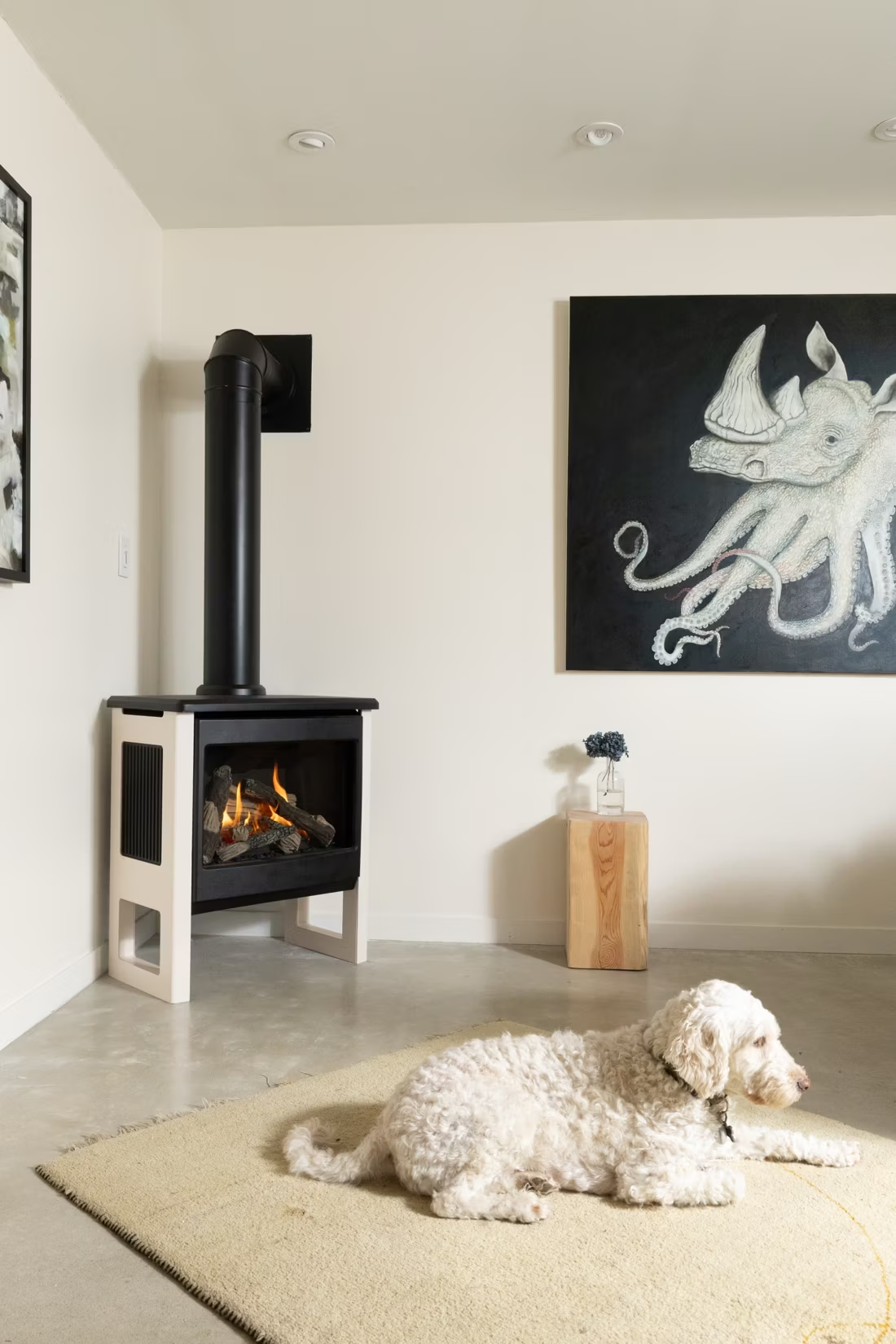
Four fuels. One honest answer for Edwards County.
Three steps. No salesperson until you're ready.
Tell us about your project
Your zip code, your situation, and the fuel you're leaning toward—or let the answers point you to one.
See what's actually available
The brands dealers within 100 miles genuinely carry—real options, never a catalog mirage.
Get your dealer & Project Guide
A trusted local dealer, plus the free Project Guide & Parts List that names every component of the job.
Frequently Asked Questions
Which fireplace fuel actually makes sense in Edwards County?
Gas and electric are the two fuels that fit this county's climate and infrastructure. Propane-fed gas fireplaces and inserts are common in ranch houses because there's no natural gas utility here—propane tanks are already part of most rural setups for cooking and water heating, so adding a fireplace line is a straightforward extension. Electric fireplaces are just as practical, especially in newer or renovated homes, since there's no venting to plan around and no fuel storage to manage. Wood and pellet units exist in the county, mostly in hunting lodges and older ranch houses, but with 2B's mild, short winters they're used for ambiance and occasional evenings rather than as anyone's primary heat source.
Do people still install wood-burning fireplaces out here?
Some do, but it's the exception rather than the rule. Oak, pecan, and mesquite are all plentiful on local ranches, and a wood fireplace or stove can be a nice fit for a hunting lodge or a ranch house used mostly in fall and winter. But Edwards County's winters are short and mild enough that a wood stove sized to actually carry a home through the cold season would be overbuilt for the climate—most of the wood-burning that happens here is a fire on a cool evening, not a heating strategy. If you're set on wood, talk to your installer about right-sizing the unit for occasional use rather than all-winter runtime.
What about pellet stoves—are they available here?
Pellet fuel is technically available through regional brands like Forest Energy and Lignetics, which distribute across the broader Hill Country and West Texas, but pellet stoves themselves have very little presence in Edwards County. They're built to deliver steady, automated heat over long cold stretches, which isn't really the problem this county has. If you want a pellet stove anyway—some homeowners like the look and the hopper convenience—expect to source both the unit and service through a dealer in Kerrville or Uvalde rather than locally.
Do I need a permit to install a gas or electric fireplace in Edwards County?
It depends on where you are. Inside Rocksprings city limits, check with the city before starting work, since municipal rules can apply even in a county this small. Out in unincorporated Edwards County—which is most of it—there's no formal residential building code enforcement, so a homeowner isn't typically pulling a county building permit for a fireplace install. That doesn't mean code doesn't matter: a licensed propane technician should still size and pressure-test the gas line to manufacturer and NFPA specs, and any electric fireplace on a new circuit should go through a licensed electrician. Most dealers we match homeowners with handle that work as a matter of course, permit or no permit.
What does a gas or electric fireplace installation typically cost in Edwards County?
Gas fireplaces, inserts, and stoves running on propane typically cost $4,000–$9,000 installed, with the range driven mainly by how much new propane line has to be run and whether you're tapping an existing tank or adding capacity. Electric fireplaces are the more budget-friendly option: $200–$2,500 for the unit itself, plus $300–$1,000 in labor if it needs a dedicated circuit rather than a standard outlet. Because most installers are traveling in from Kerrville, Uvalde, or Del Rio, factor in a trip charge—it's usually a flat fee rather than a per-mile rate, and worth asking about upfront.
How does scheduling and service work when the nearest dealer is an hour away?
Most retailers and technicians serving Edwards County are based well outside it, so booking ahead matters more here than in a town with a dealer down the street. Fall—before deer season and before the county's occasional hard freezes—is the best window to get a propane system checked or an electric unit installed, since that's when demand from ranch and hunting-lodge owners spikes and travel schedules fill up fast. For remote properties, it's worth asking your installer about propane tank capacity and backup plans, since a delayed refill or service visit matters more when the next technician is 60 miles away.
Can a fireplace actually lower my heating bill?
Yes—by creating a comfort zone. A furnace heats every square foot of the house just to warm the one room you're in; a gas fireplace on low burns roughly a sixth of the gas a typical furnace does. Set the furnace around 55–60 degrees as a baseline, then heat the rooms your family actually uses. Families who heat this way commonly save $20–$60 a month.
Can I install a fireplace myself?
If you're putting a fire in your house on purpose, it's best to work with an expert. Unless you're genuinely experienced in framing, gas line, vent pipe, and the national code on clearances to combustibles, have a professional do it—and ideally the same company that sells you the fireplace, so warranty, service, and liability all live under one roof.
Does a fireplace add value to my home?
On average, a fireplace adds back to the home about the same amount you spent installing it. Add the monthly savings from heating the rooms you actually use instead of the whole house—often hundreds of dollars a year—and the value case is strong before you even count what a fire does for how your family uses the room.
How much should I budget for a fireplace?
For an average home—covering the fireplace, the vent pipe, and basic installation—a budget between $3,900 and $5,500 gives you a lot of options across wood, gas, and pellet. By the time you add finish work, gas line, and electrical, the average complete installation lands between $5,000 and $12,000 all-in. In a remodel or new build, a good rule is to put about 2.5% of the total project cost toward the fireplace.
Stove and Fireplace Dealers in Edwards County
Listings include WhyFire partner dealers, dealers we have verified as authorized for the brands we recommend, and established local businesses that carry hearth products. Every listing shows which one it is. The ones marked Preferred run on WhyFire's software, so they can show you real pricing and book your appointment right here. No manufacturer pays for placement. How we verify dealers →
Schilling Fireplace & Wood Stoves
Fredericksburg Overhead Door
Get matched with a local Edwards County dealer.
Tell us about your project and we'll put together a free Project Guide & Parts List—the right unit for Edwards County's climate, the parts it needs, and the dealer we recommend to install it.
Find Your Fireplace →