
Keep Your Family Warm and Safe—No Matter What
Edinburg averages just 625 heating degree days a year, so full-time wood heat isn't the norm here. But for ambiance, backyard gatherings, or backup during the next hard freeze, we can match you with a local dealer who knows what's realistic to install.
Every Project Starts From One of These Five Situations
Mild winters, but the demand hasn't disappeared entirely.
Edinburg sits at just 95 feet of elevation in the Rio Grande Valley, where the average winter low hovers around 49°F and the entire heating season adds up to roughly 625 heating degree days. For comparison, a place like Duluth, Minnesota racks up close to 9,700 HDD in a typical year—Edinburg's heating load is a rounding error by comparison. Air conditioning, not a chimney, is the defining HVAC concern for most homes here, and that shapes what local dealers actually stock and install.
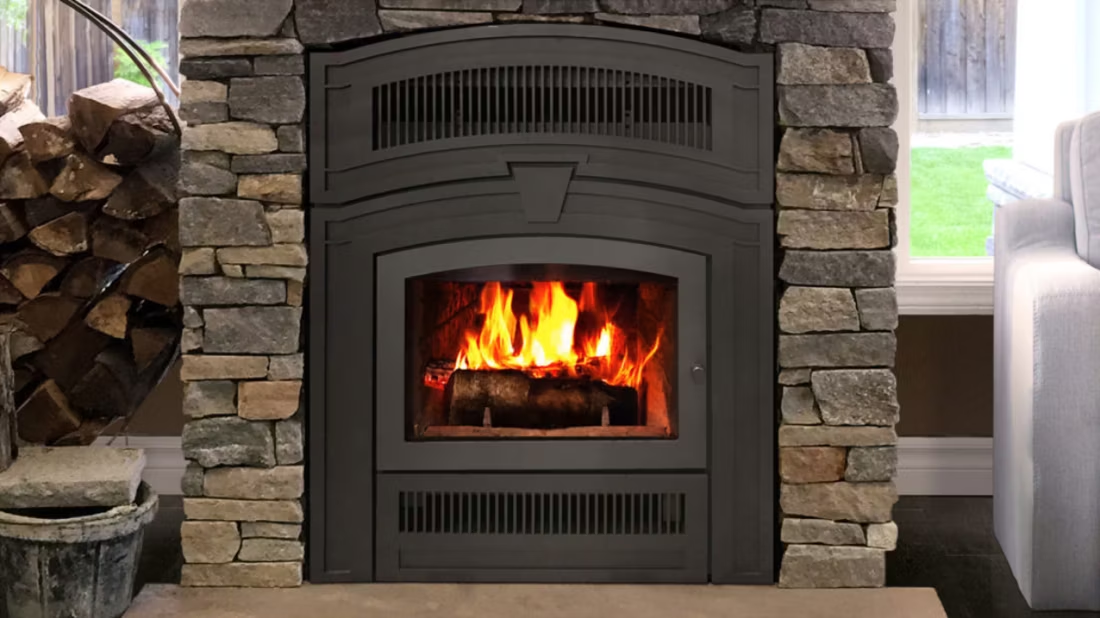
Still, wood hasn't vanished from the picture entirely. Oak, pecan, and mesquite are all plentiful in Hidalgo County and heavily used for South Texas barbecue and smoking, and a modest number of homeowners install a wood-burning fireplace or stove purely for atmosphere, holiday gatherings, or backyard entertaining. Winter Storm Uri in February 2021 also left an impression—when the grid failed across the Valley and pipes froze, some residents who'd never considered wood heat started asking about it as a non-electric backup. For most Edinburg homes, though, a wood-burning appliance is a lifestyle choice or an insurance policy, not a primary heat source.
Three steps. No salesperson until you're ready.
Tell us about your project
Your zip code, your situation, and the fuel you're leaning toward—or let the answers point you to one.
See what's actually available
The brands dealers within 100 miles genuinely carry—real options, never a catalog mirage.
Get your dealer & Project Guide
A trusted local dealer, plus the free Project Guide & Parts List that names every component of the job.
Frequently Asked Questions
How much does a wood fireplace installation cost in Edinburg?
Because wood-burning demand is low here, fewer local dealers stock and install wood units compared to gas, so pricing tends to vary more than in colder markets. A factory-built, zero-clearance wood fireplace with proper Class A chimney venting typically runs $3,500 to $8,000 nationally, and Edinburg installs generally fall in that range once you account for framing and roof penetration. Because so few installers here specialize in wood, it's worth getting more than one quote—a trusted local dealer will tell you honestly whether wood makes sense for your home or whether gas or electric is the more practical fit.
Does anyone actually install wood-burning fireplaces in Edinburg?
Some do, but it's a small slice of the market. With winter lows averaging 49°F and only about 625 heating degree days a year, a wood stove or fireplace in Edinburg is almost never doing real heating work—it's there for ambiance during the handful of genuinely chilly evenings each winter, for entertaining, or as a hedge against grid failures. If your goal is everyday warmth, a gas fireplace or an electric unit will get you there with far less hassle and no need to source or store firewood in a climate that rarely calls for it.
Should I install a wood stove as backup heat after Winter Storm Uri?
It's a reasonable question—Uri knocked out power across the Rio Grande Valley for days in February 2021 and left a lot of Edinburg homeowners thinking about non-electric backup. A wood stove is one of the few heat sources that keeps working with zero electricity, which is a real advantage over a gas fireplace with electronic ignition or any electric unit tied to AEP Texas Central, Oncor, or Magic Valley Electric Co-op service. That said, a wood stove is a bigger investment and a permanent fixture for an event that, historically, happens rarely in South Texas. Many homeowners here land on a smaller, less expensive contingency—like a battery-backed gas fireplace—instead. It depends on how much weight you put on that one-in-a-decade scenario.
Do I need a permit to install a wood-burning fireplace in Edinburg?
Yes. Any new wood-burning fireplace or stove installation requires a building permit through the City of Edinburg's building permit office (or Hidalgo County's building department if you're outside city limits), covering the appliance clearance, chimney or vent penetration, and hearth pad requirements under the adopted International Residential Code. Because wood installs are uncommon locally, plan for your dealer to walk the inspector through the specifics—it's not a routine permit for most Edinburg contractors the way a gas line permit is.
What firewood works best for an indoor fireplace in Edinburg?
Oak and pecan are the better choices for an indoor wood-burning fireplace or stove—both are dense hardwoods that burn long and relatively clean once seasoned. Mesquite is abundant and popular for South Texas barbecue smoking, but its high resin content makes it pop and throw sparks more than oak or pecan, so it's better suited to an outdoor fire pit or chiminea with a spark screen than an indoor hearth. Whatever species you burn, make sure it's seasoned at least six months to a year—green mesquite or oak burns dirty and builds creosote fast.
Would gas or electric make more sense than wood for my Edinburg home?
For most homes here, yes. Natural gas service is available through much of Edinburg, and a direct-vent gas fireplace gives you instant, controllable heat with none of the firewood storage or ash cleanup that wood requires—a better fit for a climate where you might use it a dozen nights a year. Electric fireplaces are another low-commitment option, running off AEP Texas Central, Oncor, or Magic Valley Electric Co-op service at roughly $0.102 per kWh residential—cheap to run occasionally, though they won't help during a grid outage the way wood or a battery-backed gas unit would. If ambiance and occasional backup heat are both on your list, it's worth having a local dealer walk you through all three before you commit to wood specifically.
What about an outdoor wood-burning fireplace or fire pit instead?
This is often the more practical wood option in Edinburg. Backyard fire pits, chimineas, and outdoor wood-burning fireplaces are common across South Texas and pair naturally with the region's outdoor entertaining culture and mesquite-heavy landscape. Outdoor installations typically face lighter permitting than an indoor unit tied to your home's structure, though setback distances from fences and structures still apply. If you mainly want the experience of a wood fire rather than a heat source for the house, an outdoor fireplace or fire pit gets you there for less money and less code complexity than a full indoor installation.
Are there any burn restrictions I should know about in Edinburg?
Hidalgo County doesn't carry the kind of chronic wood-smoke air quality concerns you'd see in a wintertime inversion-prone area—there's no non-attainment designation tied to residential wood burning here. That said, South Texas does see periodic burn bans during drought conditions, typically issued at the county level, which can temporarily restrict outdoor burning including fire pits. It's worth a quick check with Hidalgo County before an outdoor wood fire during dry summer stretches, even though it's rarely an issue for an indoor, code-compliant fireplace or stove.
What about a pellet stove instead of wood in Edinburg?
Pellet stoves make even less sense here than wood-burning units—they're built around steady heating demand that Edinburg's climate just doesn't generate, and pellet appliances are rarer still among local dealers. Brands like Forest Energy and Lignetics distribute pellets regionally, mostly for pellet grills and smokers rather than home heating. If you're drawn to a pellet stove for its low-maintenance burn, it's worth comparing that appeal against a gas fireplace, which delivers similarly hands-off heat without needing a fuel hopper or bags of pellets on hand in a climate that rarely asks for either.
Why is a fireplace insert so efficient?
An insert does two things: it seals the chimney completely, so you stop losing air you already paid to heat, and it radiates warmth into the room through the firebox and glass. Most add a heat-exchange fan that pulls cool room air underneath, wraps it around the hot firebox, and pushes it back out warm. Your home is more efficient before you've even lit the first fire.
What's the difference between an insert and a zero-clearance fireplace?
An insert is a fireplace that slides into a pre-existing wood-burning fireplace—if you don't have one, there's nothing to insert it into. A zero-clearance fireplace is built into a framed wall, which makes it the answer for remodels and new construction. Simple test: existing masonry fireplace means insert; blank or framed wall means zero-clearance.
Can I install a fireplace myself?
If you're putting a fire in your house on purpose, it's best to work with an expert. Unless you're genuinely experienced in framing, gas line, vent pipe, and the national code on clearances to combustibles, have a professional do it—and ideally the same company that sells you the fireplace, so warranty, service, and liability all live under one roof.
What is an in-home preview and do I need one?
It's a visit where a hearth professional measures your space, confirms the model you picked actually works in your home, and walks the specs—framing, gas line, venting, finish work—before anything is ordered. Some details you just can't know until you see the house. Never make a down payment without one; it's the single most-skipped step that burns buyers.
Nearby Dealers
Hearth shops serving Edinburg and the surrounding area.
Find your wood fireplace in Edinburg.
Tell us about your home and how you'd actually use a wood-burning fireplace—ambiance, backup heat, or both—and we'll send you a free Project Guide & Parts List with the right unit, venting, and a trusted local dealer who installs wood-burning appliances in Edinburg.
Find Your Fireplace →