
The easiest fireplace upgrade for Edgecliff Village homes.
No chimney, no gas line, no venting—just clean, controllable heat and ambiance for Tarrant County's mild winters. Find the right unit and connect with a trusted local dealer.
Every Project Starts From One of These Five Situations
Electric heat that fits Tarrant County's mild winters.
Edgecliff Village sits at 717 feet in Tarrant County, just south of Fort Worth, in climate zone 3A. Winters here are short and mild—the average winter low is 33°F and the city logs only about 2,278 heating degree days a year, a fraction of what a place like Duluth, MN racks up. That changes the fireplace math: most homes don't need a wood stove or a gas furnace's worth of BTUs from a hearth appliance. They need supplemental warmth on the handful of genuinely cold nights, plus something that looks good the other 350 days of the year.
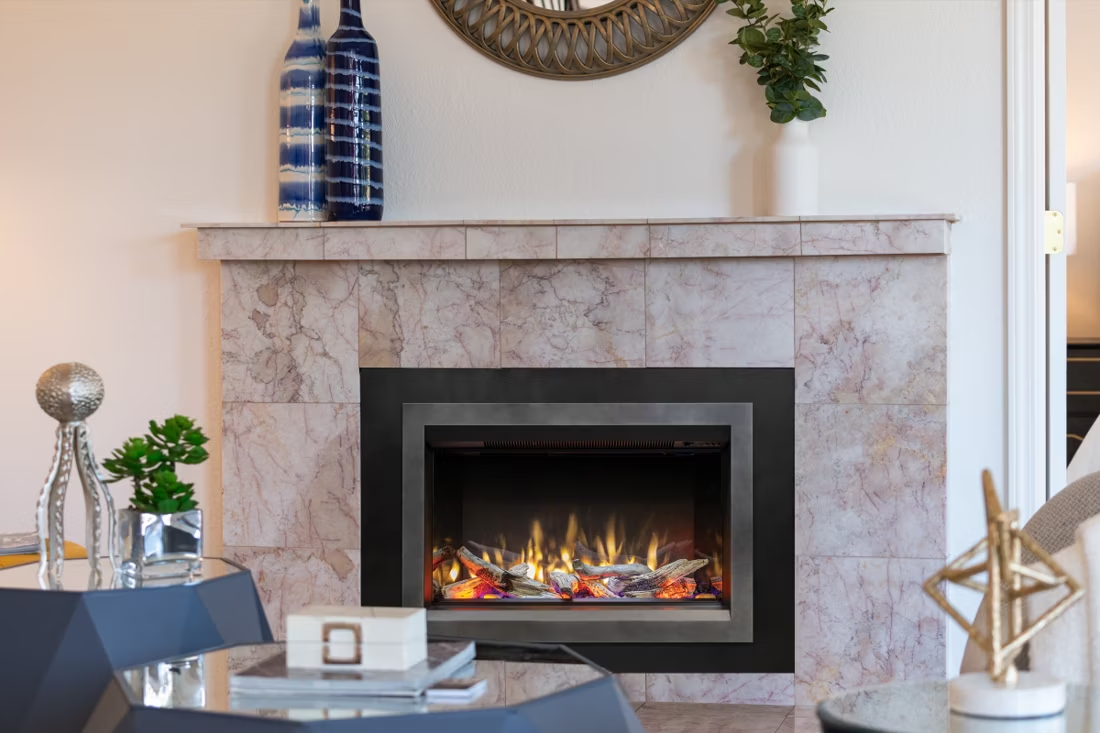
That's exactly where electric fireplaces earn their keep. With Oncor Electric Delivery serving most of the city (and United Electric Cooperative or Denton County Electric Cooperative covering some outlying addresses), residential rates run about 13.0 to 13.77 cents per kWh—inexpensive enough that running a 1,500-watt unit for zone heat costs pennies an hour. There's no chimney to build, no gas line to run, and no annual sweep. For the brick ranch and single-story homes common throughout Edgecliff Village, that means a real upgrade to a living room or primary bedroom without touching the roofline or the HVAC system.
Three steps. No salesperson until you're ready.
Tell us about your project
Your zip code, your situation, and the fuel you're leaning toward—or let the answers point you to one.
See what's actually available
The brands dealers within 100 miles genuinely carry—real options, never a catalog mirage.
Get your dealer & Project Guide
A trusted local dealer, plus the free Project Guide & Parts List that names every component of the job.
Frequently Asked Questions
How much does an electric fireplace installation cost in Edgecliff Village?
A plug-in electric insert or freestanding unit that drops into an existing fireplace opening or media console can run as little as $300 to $800 installed, since it just needs a standard outlet. A built-in linear electric fireplace set into a wall—with framing, a finished surround, and a dedicated 120V or 240V circuit run by a licensed electrician—typically lands between $1,500 and $3,500 depending on the wall type and whether drywall or brick veneer work is involved. Because there's no venting or gas line, electric is consistently the least expensive fireplace category to install in Tarrant County homes.
Do I need a permit to install an electric fireplace in Edgecliff Village?
In most cases, no—a plug-in electric fireplace or insert that uses an existing outlet doesn't trigger a permit. If your project involves adding a new dedicated circuit, moving an outlet, or altering a wall for a built-in unit, that electrical work typically requires a permit through the city's building department (or Tarrant County if the work falls under county jurisdiction for unincorporated areas nearby). A licensed electrician handling the circuit work will usually know exactly what's required and can pull the permit as part of the job.
Why choose electric over gas or wood in a climate like this?
With only about 2,278 heating degree days a year and a 33°F average winter low, Edgecliff Village simply doesn't have the sustained cold that makes a wood stove or a large gas insert worth the investment for most homes. Central HVAC already covers the handful of cold snaps each winter. Electric fireplaces fill the remaining need—ambiance and supplemental warmth in a specific room—without the ongoing cost of firewood, propane, or a natural gas hookup, and without smoke or combustion byproducts in the house.
What type of electric fireplace fits my home best?
For the single-story ranch and traditional brick homes common in Edgecliff Village, a built-in linear insert set into an existing fireplace opening or a new wall cavity gives the cleanest look and the most heat coverage for a living room. Smaller homes or bedrooms often do better with a freestanding electric stove or a mantel package, which needs no wall modification and can be relocated later. Wall-mounted units work well in newer construction where there's already a stud bay to open up. A local dealer can walk your space and tell you which format actually fits your wall and outlet situation.
How much does it cost to run an electric fireplace here?
At Oncor's typical residential rate of roughly 13 cents per kWh (United Electric Cooperative and Denton County Electric Cooperative customers run closer to 13.77 cents), a standard 1,500-watt electric fireplace on high heat costs about 17 to 20 cents an hour to run. Most owners use the heat setting only during genuinely cold evenings and run the flame effect alone—which draws only 30 to 100 watts—the rest of the time for ambiance. That combination keeps monthly cost well under what a comparable gas insert or space heater would run.
Which electric utility actually serves my address?
Most of Edgecliff Village is served by Oncor Electric Delivery, the transmission and distribution utility for this part of Tarrant County. A smaller number of addresses on the edges of town fall under United Electric Cooperative or Denton County Electric Cooperative territory instead. If you're planning a built-in installation that needs a new circuit, it's worth confirming which utility serves your specific meter before your electrician submits any permit paperwork, since the two co-ops and Oncor handle service upgrades differently.
Do electric fireplaces put out real heat, or are they just for looks?
Modern electric fireplaces put out genuine heat—most models are rated between 4,600 and 9,000 BTUs, comparable to a good space heater, which is plenty to warm a single room in a mild climate like this one. They won't replace central heat for the whole house, but for the occasional 30-degree night in Edgecliff Village, a electric insert or stove set in the main living area can carry the room comfortably while the rest of the house stays on the thermostat's normal setting.
What maintenance does an electric fireplace need?
Very little. There's no chimney to sweep, no gas line to inspect, and no ash to clean. Maintenance is mostly dusting the unit, occasionally cleaning the glass front, and replacing the LED light strip or heating element after years of heavy use—most manufacturers rate the LEDs for 20,000+ hours. This is one of the biggest practical advantages for a low-maintenance household compared with a wood or gas installation.
Electric vs. wood—which makes more sense in Edgecliff Village?
Wood-burning fireplaces are uncommon as a primary heat source here—with local hardwoods like oak, pecan, and mesquite plentiful in the region, some homeowners still enjoy an occasional wood fire for the smell and crackle, but the region's mild 2,278 HDD winter profile doesn't justify wood as day-to-day heat, and burning wood adds smoke, ash, and chimney maintenance most residents would rather skip. Electric fireplaces deliver the visual warmth of a fire, real supplemental heat on cold nights, and none of the upkeep—which is why they've become the practical default for most homes in this climate zone.
Do electric fireplaces actually produce heat?
Yes—most put out around 4,800–5,000 BTUs from a standard outlet, which comfortably warms a bedroom, office, or den as a comfort-zone heater. What they won't do is carry a whole house the way wood, gas, or pellet can. Think of electric as ambiance-first with honest supplemental heat: flames on with no heat in July, flames plus warmth in January.
Can I put a TV above my fireplace?
Yes—with an asterisk. Fireplaces are hot and TVs don't like heat. Either put a mantel between them to deflect rising warmth, or choose a fireplace with heat-management technology that creates a cool zone on the wall above—the wall stays around 125 degrees, barely warm, while the room still gets full heat. If you like clean lines and don't want a mantel, heat management is the answer.
Can a fireplace actually lower my heating bill?
Yes—by creating a comfort zone. A furnace heats every square foot of the house just to warm the one room you're in; a gas fireplace on low burns roughly a sixth of the gas a typical furnace does. Set the furnace around 55–60 degrees as a baseline, then heat the rooms your family actually uses. Families who heat this way commonly save $20–$60 a month.
How much should I budget for a fireplace?
For an average home—covering the fireplace, the vent pipe, and basic installation—a budget between $3,900 and $5,500 gives you a lot of options across wood, gas, and pellet. By the time you add finish work, gas line, and electrical, the average complete installation lands between $5,000 and $12,000 all-in. In a remodel or new build, a good rule is to put about 2.5% of the total project cost toward the fireplace.
Nearby Dealers
Hearth shops serving Edgecliff Village and the surrounding area. Every listing shows whether it is a WhyFire partner, a dealer we have verified as authorized for the brands we recommend, or a local business carrying hearth products. No manufacturer pays for placement. How we verify dealers →
Rodak's Coffee And Bbq Grills
Texas Building Supply
Brothers Supply Co.
Fireside Innovations
Acme Brick Tile & Stone
Alliance Materials, Inc.
David's Stove Shop Inc
Bbq Outfitters
Electric Service in Edgecliff Village
An electric fireplace's heater draws about 1,500 watts—pennies per hour at local rates.
Oncor Electric Delivery Company LLC
United Electric Coop Service Inc - (Tx)
Denton County Elec Coop, Inc
Find your electric fireplace in Edgecliff Village.
Tell us about your home and we'll match you with a trusted local dealer and put together a free Project Guide & Parts List—the exact unit, mounting or insert kit, and electrical work your Edgecliff Village project needs.
Find Your Fireplace →