
Effortless ambiance for Duval County's short heating season.
With winter lows averaging 47°F and just 769 heating degree days a year, Duval County homes don't need a furnace-grade fire—they need a clean, simple electric fireplace for cool nights in San Diego, Freer, and the ranch country between them. Find the right unit and connect with a trusted local dealer.
Every Project Starts From One of These Five Situations
A mild climate that barely asks for heat.
Duval County is South Texas brush country—roughly 7,991 residents spread across San Diego, Freer, and the ranchland between them, in a Climate Zone 2A hot-humid region where real cold is rare. At 769 heating degree days a year, Duval County's total annual heating demand is a small fraction of what a place like Fargo, ND or Duluth, MN racks up in a single hard month. Winter lows average 47°F, and freezes are the exception rather than the rule.
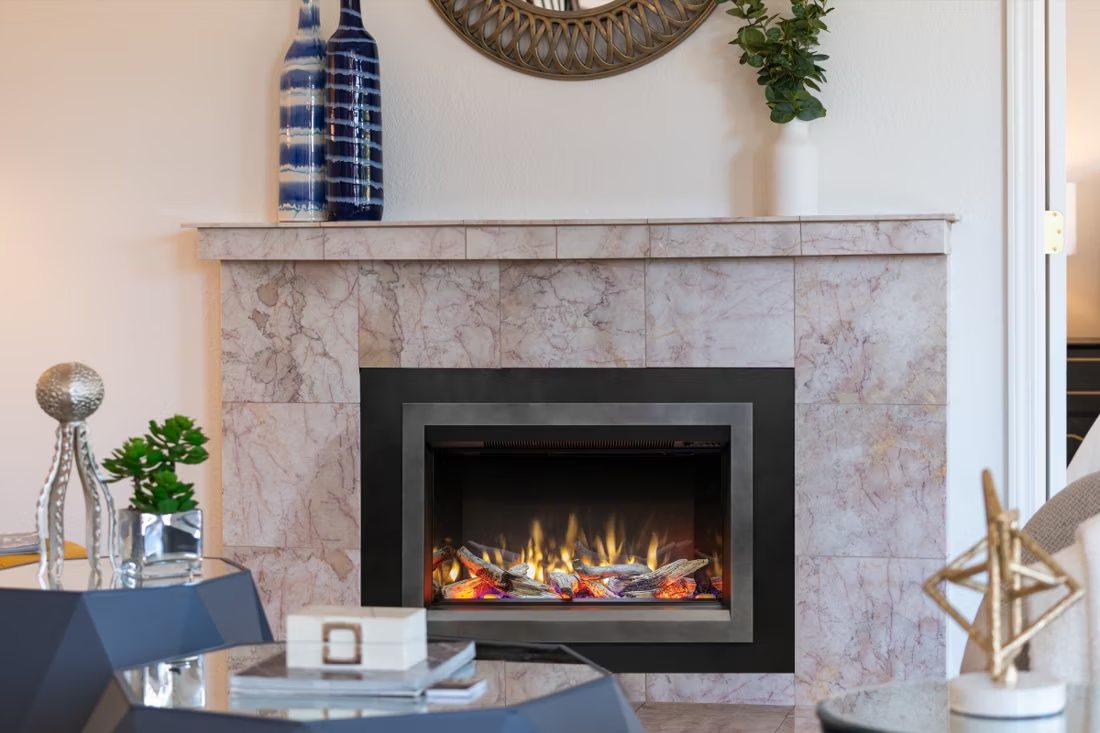
That makes electric fireplaces a natural fit—not as a primary furnace replacement, but as a source of instant ambiance and supplemental warmth on the handful of genuinely cold nights each winter. There's no chimney, no gas line, and often no venting to plan around, which matters in a county where many homes are manufactured or modest ranch-style construction rather than the kind of masonry-fireplace housing stock you'd find further north. A plug-in unit can go in the same afternoon it arrives; a built-in wall unit takes an electrician and a dedicated circuit, but still nothing close to the scope of a wood or gas retrofit.
Three steps. No salesperson until you're ready.
Tell us about your project
Your zip code, your situation, and the fuel you're leaning toward—or let the answers point you to one.
See what's actually available
The brands dealers within 100 miles genuinely carry—real options, never a catalog mirage.
Get your dealer & Project Guide
A trusted local dealer, plus the free Project Guide & Parts List that names every component of the job.
Frequently Asked Questions
How much does it cost to add an electric fireplace in Duval County?
Because Duval County's heating need is so light—769 heating degree days a year and winter lows that rarely dip below the mid-40s—most homeowners here choose a straightforward 120-volt plug-in unit rather than a whole-house heating appliance. Those typically run $200 to $1,500 for the unit itself, with no electrical or venting work required. A built-in wall-mounted electric fireplace, which looks more like a true fireplace and often needs a dedicated 20-amp circuit run by an electrician, generally lands higher once labor is added. A local dealer can walk your specific wall and framing to give you a firm number.
Is an electric fireplace actually enough heat for Duval County winters?
For most of the county, yes. With an average winter low of 47°F and only 769 heating degree days annually, Duval County simply doesn't demand the kind of sustained BTU output that wood stoves or gas inserts are built for in colder climates. Central air conditioning and heat pump systems already handle the occasional freeze; an electric fireplace is there for the in-between evenings—the 50s and low 60s that feel chilly in a ranch house or manufactured home—and for the ambiance of a real-looking flame without any combustion at all.
Do I need a permit to install an electric fireplace in Duval County?
A standard plug-in electric fireplace requires no permit—it's an appliance, not a fixed installation. A built-in wall unit that needs a new dedicated circuit typically does require an electrical permit, pulled through Duval County's building permit process out of San Diego. Most licensed electricians handle that paperwork as part of the job, so it's rarely something a homeowner has to manage directly.
Should I get a plug-in electric fireplace or a built-in unit?
A plug-in unit—freestanding, on a stand, or mounted flush to a wall—is the lower-cost, no-rewiring option, and it's the right call for most Duval County homes given how little supplemental heat is actually needed here. A built-in unit set into a framed wall gives a more finished, fireplace-like look and slightly stronger heat output, but it requires an electrician for the dedicated circuit and more planning around wall framing. In a county where mesquite, oak, and pecan firewood is abundant but wood-burning fireplaces are uncommon in the existing housing stock, a built-in electric unit is often the closest thing to a traditional fireplace look homeowners can get without chimney work.
Why don't more Duval County homes have wood-burning fireplaces?
Wood heat just doesn't match the climate here. Duval County's winters average 47°F lows and rack up only 769 heating degree days a year—a small fraction of what a wood stove is designed to work against in places like Bismarck, ND or Bozeman, MT. Local oak, pecan, and mesquite are plentiful and popular for cooking and outdoor fire pits, but as a home heating source, wood-burning fireplaces are rare in Duval County, and most existing homes were never built with a masonry chimney to support one. Electric fireplaces fill that ambiance role without asking for venting a mild climate doesn't justify.
Electric vs. gas fireplace—which makes more sense in Duval County?
Both work here, and the choice comes down to what you're solving for. A gas fireplace or insert delivers real, higher-output heat and the look of an actual flame, and it's a reasonable investment if you want a true focal-point fireplace in a living room. An electric fireplace costs less up front, needs no gas line or venting, and is easier to place anywhere in the house—which matters given how little of the year Duval County actually needs supplemental heat. For most homeowners here prioritizing simple ambiance over serious heat output, electric is the lower-friction choice; for those who want a substantial living-room centerpiece, gas is worth a look from a local dealer.
Will running an electric fireplace add much to my power bill?
Not significantly for occasional use. A standard electric fireplace draws roughly 1,500 watts on its heat setting, similar to a space heater, and most Duval County households only run one on genuinely cool evenings given the county's mild 47°F average winter low. Many rural Duval County homes are served by electric cooperatives rather than a single large utility, and rate structures vary—a local dealer or your co-op can give you an estimate specific to your rate plan if you're running the unit for extended hours.
Can an electric insert go into an existing fireplace opening?
If your Duval County home has an existing masonry or prefab fireplace opening—less common here than in colder-climate counties, but present in some older ranch houses—an electric insert can often be fitted into that opening for a clean, built-in look without any venting work. It plugs into a standard outlet or a dedicated circuit depending on the model. For homes without an existing fireplace opening, a wall-mounted or freestanding unit accomplishes the same look without needing to frame anything new.
How long does an electric fireplace last, and what maintenance does it need?
Electric fireplaces are low-maintenance by design—there's no chimney to sweep, no gas line to inspect, and no combustion byproducts to manage. The main components that wear out over time are the LED flame effect and the heating element, and most quality units last 10 to 15 years with basic care like keeping the vents free of dust. Given Duval County's light-duty use case—ambiance most of the year, supplemental heat on the occasional cold night—units here tend to see less wear than in colder climates where electric fireplaces run daily for months.
Can I put a TV above my fireplace?
Yes—with an asterisk. Fireplaces are hot and TVs don't like heat. Either put a mantel between them to deflect rising warmth, or choose a fireplace with heat-management technology that creates a cool zone on the wall above—the wall stays around 125 degrees, barely warm, while the room still gets full heat. If you like clean lines and don't want a mantel, heat management is the answer.
Does an electric fireplace need a vent or chimney?
No—that's its superpower. An electric fireplace needs a wall and an outlet, period. No vent pipe, no gas line, no clearances to design around, which is why it works in bedrooms, offices, apartments, and walls where venting a gas or wood unit would be impractical or impossible. Installation is typically the simplest and least expensive of any fireplace type.
How much should I budget for a fireplace?
For an average home—covering the fireplace, the vent pipe, and basic installation—a budget between $3,900 and $5,500 gives you a lot of options across wood, gas, and pellet. By the time you add finish work, gas line, and electrical, the average complete installation lands between $5,000 and $12,000 all-in. In a remodel or new build, a good rule is to put about 2.5% of the total project cost toward the fireplace.
Can I install a fireplace myself?
If you're putting a fire in your house on purpose, it's best to work with an expert. Unless you're genuinely experienced in framing, gas line, vent pipe, and the national code on clearances to combustibles, have a professional do it—and ideally the same company that sells you the fireplace, so warranty, service, and liability all live under one roof.
Stove and Fireplace Dealers in Duval County
Listings include WhyFire partner dealers, dealers we have verified as authorized for the brands we recommend, and established local businesses that carry hearth products. Every listing shows which one it is. The ones marked Preferred run on WhyFire's software, so they can show you real pricing and book your appointment right here. No manufacturer pays for placement. How we verify dealers →
Martini Brick
C.c. Chimney
Find your electric fireplace in Duval County.
Tell us a bit about your home in Duval County and we'll match you with a trusted local dealer and send over a free Project Guide & Parts List—a clear plan for your electric fireplace project, including the exact parts and installation details.
Find Your Fireplace →